
Airbus stock slips as A330 quality issue slows deliveries but guidance stands
Published on 09/03/2026 at 16:22 | Editorial responsibility: Rafael Müller, Editor-in-Chief AD HOC NEWS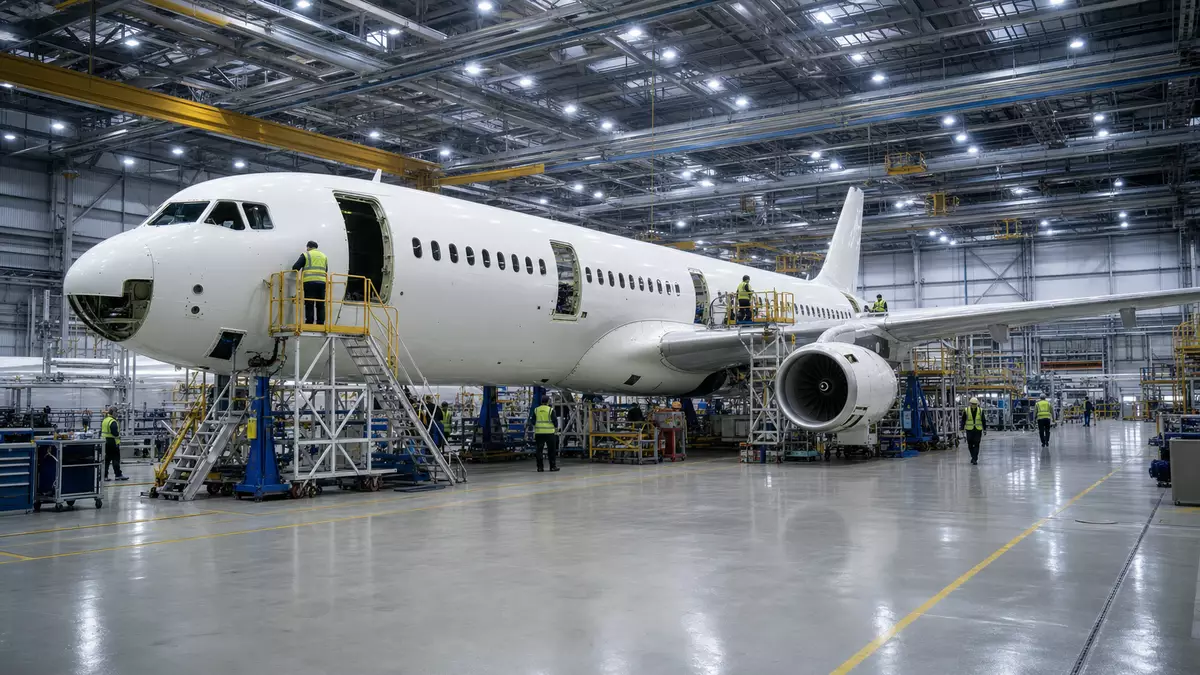
Airbus (ISIN NL0000235190) stock is trading modestly lower on September 3, 2026, after investors digested news that a production quality issue on A330 jets temporarily slowed deliveries in recent months, even as the manufacturer reiterates its ambition to deliver about 870 commercial aircraft in 2026 and works through a strong order backlog according to recent company data.
A330 quality issue weighs on deliveries
According to a report relaying company statements on September 3, 2026, Airbus identified an isolated quality issue on the horizontal tail plane of certain A330 aircraft, which required inspections and forced the group to slow deliveries over the summer while checks were carried out. Deliveries have since resumed after the root cause was identified and corrective measures implemented, with the company emphasizing that the issue is limited in scope and framed as a quality matter rather than a safety concern in a summary of the disclosure.
Market data compiled on September 3, 2026 show that Airbus shares on the Paris Euronext venue traded around 195.82 EUR intraday, with the stock down about 0.55 percent on the day and roughly 1.29 percent lower since the start of 2026, reflecting a modest pullback as investors factor in the temporary disruption to A330 deliveries on a real time quote overview. On the German Xetra market, the Airbus share was recently quoted around 193.74 EUR, equivalent to a decline of about 1.62 percent in that session, underlining the cautious reaction of some European investors to the delivery news based on a German market snapshot.
Summer delivery pattern and A330neo impact
Industry reports dated September 3, 2026 indicate that internal Airbus delivery data for June and July 2026 showed no A330neo deliveries in those two months, while in August 2026 only a single A330neo was delivered to Starlux Airlines as the company concentrated on inspecting aircraft affected by the tail plane quality issue during production. Before August 2026, Airbus had delivered nine A330neo aircraft this year, including three in March 2026, two in April 2026 and four in May 2026, underscoring how the quality checks brought a noticeable pause to what had been a steadily rising A330neo delivery run rate as summarized in an aviation industry analysis.
The same analysis notes that Airbus had previously aimed to deliver around four A330neo aircraft per month in the current phase of its production ramp, with a plan to raise that to about five aircraft a month by 2029, so the absence of A330neo deliveries in June and July 2026 marks a clear deviation from that intended path and highlights the operational impact of the quality inspections. Airbus nevertheless continues to target total commercial aircraft deliveries of roughly 870 units in 2026 and reported that it handed over 67 aircraft in July 2026 to 39 customers, bringing year to date deliveries to 418 versus 373 at the same point in 2025, which represents an increase of about 12.1 percent in overall deliveries despite the temporary A330neo interruption according to the same delivery overview.
More reports and data on Airbus stock
For additional background on Airbus stock, recent figures and regulatory news, you can explore the dedicated overview with further articles, documents and charts.
Half year 2026 figures and profitability
In late July 2026, Airbus published its half year and second quarter 2026 results, confirming that the company remains on track with its financial guidance and delivery ambitions despite supply chain and industrial challenges. For the first half of 2026, Airbus reported revenue of about 32.4 billion EUR, compared with roughly 27.7 billion EUR in the first half of 2025, which corresponds to an increase of close to 17 percent year on year, driven by higher commercial aircraft deliveries and favorable mix in some programs as outlined in financial summaries of the results. Over the same period, adjusted operating profit, often referred to as adjusted EBIT, rose from around 2.6 billion EUR in the first half of 2025 to approximately 3.1 billion EUR in the first half of 2026, reflecting improved profitability as the company scales production on key lines.
For investors, the most closely watched metric remains free cash flow and the implied capacity to fund future investments, dividends and potential shareholder returns. Airbus has indicated for 2026 a target of free cash flow before mergers and acquisitions and customer financing of about 5.0 billion EUR, building on historical performance and supported by the plan to deliver around 870 commercial aircraft this year. That guidance compares with a previously achieved free cash flow figure in the low to mid single digit billion EUR range in prior years, so the 2026 objective confirms managements confidence in working capital discipline and margin resilience even as the group invests in new technologies and capacity expansions.
Order book strength and DACH investor angle
The quality issue on the A330 horizontal tail plane has drawn attention because it temporarily halted deliveries of one of Airbus wide body lines, but analysts point out that the A330 family accounts for only a small fraction of total deliveries compared with the high volume A320 family. Industry data shows that A330 aircraft represented about 5 percent of total Airbus deliveries in a recent full year, while the best selling A320 family contributed the bulk of units handed over, which suggests that the financial impact of the A330 checks is likely to be contained relative to the overall scale of the business as described in a recent report on the delivery disruption.
For investors in the DACH region, the Xetra listing of Airbus under the ticker AIR provides a liquid secondary venue alongside the primary Euronext Paris line, and the stock movements on September 3, 2026 illustrate how the German market closely tracks developments in Toulouse. With Xetra trades around 193.74 EUR and the French quote near 195.82 EUR on the same day, the share price currently sits slightly below a recent closing level of 196.90 EUR referenced in some price overviews, leaving the stock a few euros under that short term reference and signaling that the market has marked down the shares by around 1 to 2 percent since the quality issue came to light according to real time and historical price data.
A320 family as revenue workhorse
While the A330neo quality issue dominates headlines, the backbone of Airbus civil business continues to be the A320 family of single aisle jets, which delivers the majority of the companys commercial aircraft revenue and operating profit. Airbus has long term plans to ramp up A320 family production rates to higher monthly levels over the next several years in order to serve a backlog that spans many years of output, and its training and services infrastructure is being scaled accordingly. For example, industry coverage of Airbus training investments mentions that the manufacturer is expanding capacity at training centers such as its Asia Training Center in Singapore, including full flight simulators for newer models like the A220, to prepare for the expansion of fleets in fast growing regions as highlighted in an aviation industry daily.
The combination of strong single aisle demand, a large installed fleet that generates services revenue and a wide body portfolio that includes the A330neo and A350 families forms the basis for Airbus medium term growth case. From a financial perspective, investors will watch whether the planned increase in A320 family monthly production rates translates into further double digit percentage growth in commercial aircraft revenue beyond the approximately 17 percent expansion reported for the first half of 2026 versus the prior year period, while also monitoring how efficiently the company resolves specific production snags such as the A330 tail plane topic without incurring disproportionate cost.
Airbus commercial aircraft and services
A key representative product in the Airbus portfolio is the A321neo, a stretched member of the A320neo family that offers airlines higher capacity and range, and which has become a popular choice for both short haul and certain long haul routes. The A321neo contributes significantly to the order book and delivery pipeline, and its success supports the companys strategy of capturing more value per aircraft through higher seating density and fuel efficient engines. In various recent orders and fleet plans, airlines have committed to dozens of A321neo jets each, underlining the commercial relevance of this model for the manufacturers revenue mix.
Beyond airframes, Airbus is increasingly focusing on services such as maintenance, training, digital flight operations tools and spare parts management, which can create recurring revenue streams and higher margins compared with purely manufacturing oriented activities. These services are tied to the installed base of aircraft, meaning that as Airbus delivers more planes and its global fleet in service grows, the potential addressable market for aftermarket and digital offerings expands as well, which supports the long term business case even in years when new orders or deliveries fluctuate due to macroeconomic or operational factors.
Airbus stock and current valuation snapshot
As of the most recent completed Xetra trading session on September 2, 2026, electronic order book data show Airbus stock closing at 196.94 EUR, with an intraday trading range around that level and visible bid and ask quotes extending up toward about 212.50 EUR, giving traders a sense of the near term resistance area implied by the order book as documented in a recent trading overview. Against this backdrop, the intraday quote of about 193.74 EUR on September 3, 2026 on Xetra implies that the share price is trading roughly 1.6 percent below that prior close, a move that aligns with reports of a decline between about 0.5 and 1.6 percent on various European venues as the A330 delivery topic unfolded.
For medium term oriented investors, the interplay between Airbus 2026 delivery goal of approximately 870 commercial aircraft, the 12.1 percent year on year increase in deliveries to 418 units by the end of July 2026 compared with 373 at the same point in 2025, and the initial share price reaction of around 1 to 2 percent to the A330 quality issue will be central when weighing the risk and return profile of Airbus stock in the coming quarters.
Airbus stock at a glance
- Company: Airbus SE
- ISIN: NL0000235190
- Ticker: AIR
- Trading venue: Euronext Paris, Xetra
- Price (as of September 3, 2026, 14:48): 195.82 EUR
- Market capitalization: 155,000,000,000 EUR (as of September 3, 2026)
- Sector / Industry: Industrials / Aerospace and Defense
- Index membership: Euro Stoxx 50, CAC 40


