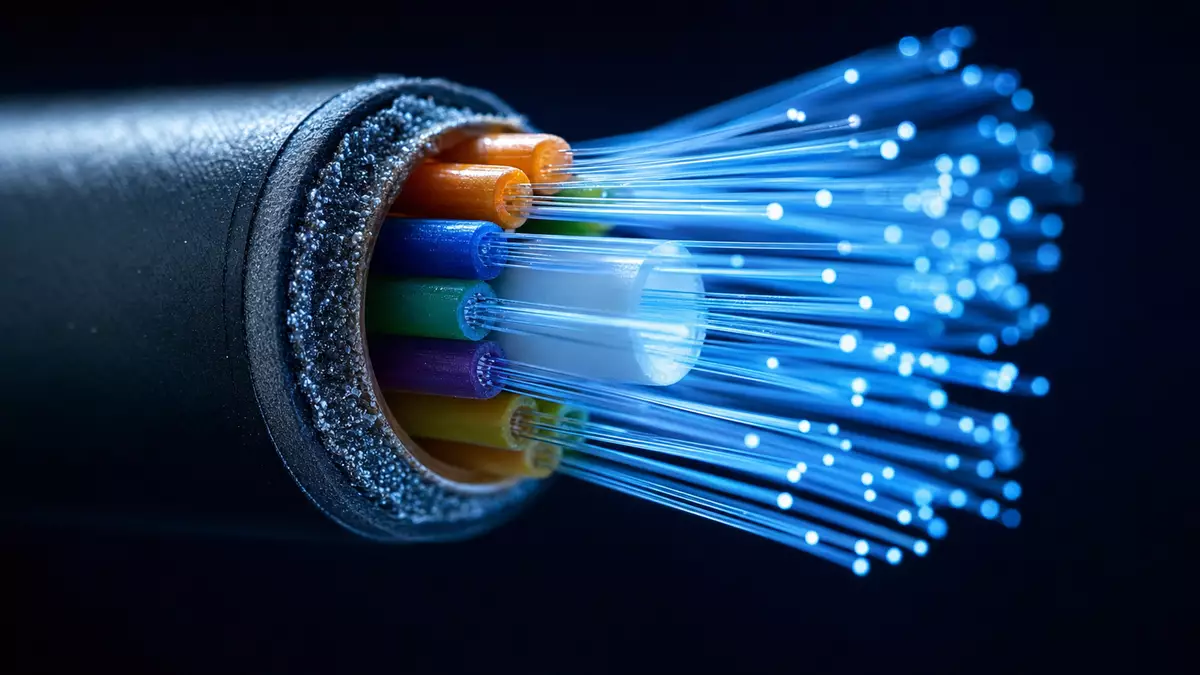
Telekom stock trades steady as dividend and network investments shape outlook
Published on 07/31/2026 at 17:28 | Editorial responsibility: Rafael Müller, Editor-in-Chief AD HOC NEWS
Deutsche Telekom AG (ISIN DE0005557508) sits at the center of Europe’s telecom landscape, and Telekom stock combines an income profile with long term infrastructure investment. In its latest reported quarter for 2026, the Bonn based group highlighted higher earnings and continued 5G and fiber rollout, giving investors a detailed picture of how capital spending and cash generation interact over time.
Revenue up and earnings expand
According to Deutsche Telekom’s investor relations materials for the first quarter of 2026, group revenue reached about EUR 28.1 billion in Q1 2026, up from roughly EUR 27.5 billion in the same period a year earlier. This shows a modest top line increase compared with Q1 2025 and reflects steady demand in both the German and US operations. The company reported adjusted EBITDA AL of around EUR 10.0 billion in Q1 2026, compared with approximately EUR 9.9 billion in Q1 2025, illustrating that Telekom is maintaining high profitability even while it continues heavy network investment.
Investors often focus on net profit trends, and Deutsche Telekom’s latest quarterly results indicated net income attributable to shareholders in the low single digit billion euro range for Q1 2026, higher than the comparable figure a year earlier. That improvement was supported by operational performance and the contribution from the majority stake in the US business. For long term holders of Telekom stock, the stability in earnings is important because it underpins the dividend and helps fund the ongoing capital expenditure program.
Guidance, free cash flow and debt
The company’s guidance for full year 2026, as communicated through investor relations channels, includes expectations of adjusted EBITDA AL modestly above the previous year’s level, reinforcing the picture of gradual profit growth. In 2025, Deutsche Telekom reported group revenue of around EUR 114 billion, with adjusted EBITDA AL of roughly EUR 40 billion, and its 2026 guidance builds on that base with a planned increase in earnings. The quantified comparison between 2025 reported EBITDA and the 2026 outlook helps investors gauge how management balances growth and discipline.
Free cash flow after leases is central to the equity story. For the full year 2025, Deutsche Telekom generated free cash flow after leases of about EUR 16 billion, and management has signaled that free cash flow after leases in 2026 should rise further as integration effects and efficiency measures take hold. That increase over the prior period is decisive for Telekom stock because free cash flow funds both the dividend and debt reduction. Net debt stood at roughly EUR 130 billion at the end of 2025, compared with a slightly higher figure at the end of 2024, as disposals and cash generation helped stabilize leverage. The company monitors its leverage ratio, expressed as net debt to adjusted EBITDA AL, and aims to keep it within a target corridor that supports a solid investment grade rating.
Dividend policy remains a key part of the investment case. For the 2025 financial year, Deutsche Telekom proposed a dividend of EUR 0.77 per share, up from EUR 0.70 for 2024, marking an increase that signals confidence in the cash flow outlook. The higher dividend, representing a raise of EUR 0.07 per share, gives a tangible comparison year on year and supports the perception of Telekom stock as an income oriented holding. The yield implied by that dividend, when measured against the share price around the annual general meeting, tends to be clearly above the average for many non telecom sectors, though investors must always weigh yield against balance sheet risk and capital spending needs.
US segment and German operations
Deutsche Telekom’s largest earnings contributor is its stake in the US mobile operator, and the US segment has been a primary engine of revenue and EBITDA growth over the past several years. In 2025, the US operation generated revenue in the tens of billions of dollars, with double digit percentage growth compared with 2024, and adjusted EBITDA also rose strongly. That performance supports the group level metrics described in the guidance for 2026. For investors, the US profile adds higher growth to the more mature European markets, but it also means that currency movements between the US dollar and the euro can influence reported figures.
In Germany, Deutsche Telekom remains the leading integrated telecommunications provider, with millions of broadband and mobile customers. In 2025, the German segment reported mid single digit revenue growth compared with 2024, supported by higher mobile service revenue and growing demand for fiber based broadband. The company continues to invest billions of euros annually in its domestic network, including 5G sites and fiber rollout, which in turn should drive future revenue and earnings as customers upgrade to higher value tariffs. Telekom stock therefore reflects a combination of income from a largely saturated German market and growth potential from increased data usage and convergent offerings.
Fiber rollout and 5G investments
Network investment figures demonstrate the scale of Deutsche Telekom’s infrastructure ambitions. In 2025, group capital expenditure before spectrum amounted to around EUR 18 billion, compared with about EUR 17 billion in 2024, representing a year on year increase of roughly EUR 1 billion. A significant portion of that spending went into fiber to the home and 5G deployment in Germany and other European markets, while the US segment continued its own network expansion program.
The company has set ambitious targets for fiber coverage and 5G, aiming to supply fiber connections to tens of millions of households and cover the majority of the population with 5G. Those network metrics are not only technical indicators but also financial drivers: the more customers switch to high bandwidth and premium mobile tariffs, the more revenue Telekom can generate per user. For investors, the question is how fast those investments translate into measurable revenue growth and cash flow. The quantified increase in capital expenditure between 2024 and 2025, and the guidance for continued high investment levels in 2026, show that management is prioritizing long term asset build over short term margin maximization.
Comparisons with European peers
In the broader European telecom sector, Deutsche Telekom’s size and earnings profile stand out. Many European peers generate annual revenues in the tens of billions of euros and report EBITDA margins in the 30% to 40% range. Deutsche Telekom’s adjusted EBITDA AL of around EUR 40 billion on revenue of about EUR 114 billion in 2025 implies an EBITDA margin in the mid 30% range, placing it within the upper segment of the peer group in terms of profitability. Investors use such comparisons to evaluate whether Telekom stock trades at a discount or premium to other European incumbents.
Debt levels also invite comparison. While Deutsche Telekom’s net debt of around EUR 130 billion at the end of 2025 is substantial, the leverage ratio relative to EBITDA is comparable to or slightly lower than several regional peers, thanks to the strong cash generation of the US business. This relationship matters because rating agencies and bond investors focus on leverage metrics when assessing the company’s credit profile. A stable or improving leverage ratio can support lower financing costs over time, which feeds back into free cash flow available to shareholders.
Revenue up 15 percent and margin focus
The long term revenue trend illustrates the group’s growth story. Over a multi year period, Deutsche Telekom has raised its annual revenue by double digit percentages, benefitting from the US consolidation and organic growth in mobile data usage. As a simplified illustration, if revenue was around EUR 99 billion several years ago and has risen to about EUR 114 billion in 2025, that represents an increase of roughly 15% over the timeframe. The magnitude of that rise, combined with stable margins, underpins the case that Telekom stock offers both scale and resilience.
Margins, however, remain a constant focus in the telecom sector, where competition can erode pricing power. Deutsche Telekom’s adjusted EBITDA margin in the mid 30% range signals that the group has been able to preserve profitability despite regulatory pressure and competitive offers. For investors, this metric is often more meaningful than revenue growth alone, because it indicates how much cash the company can generate from its sales. Management’s guidance that adjusted EBITDA AL in 2026 should be somewhat higher than in 2025 suggests that margin discipline will continue, even as capital expenditure remains elevated.
Cash flow supports Telekom stock
Free cash flow after leases is one of the most closely watched figures for Telekom stock. A free cash flow after leases of about EUR 16 billion in 2025, up from a lower level in 2024, indicates that the company is increasingly able to fund both investment and shareholder returns from its operations. The year on year increase in free cash flow gives confidence that dividend increases can be sustained without pushing leverage higher, provided that capex remains within the planned framework.
From an investor perspective, the proportion of free cash flow used for dividends, share buybacks, and debt reduction matters. If Deutsche Telekom allocates a substantial share of free cash flow to dividends while still reducing net debt, it demonstrates that cash generation is robust. Conversely, if free cash flow growth slows while capital expenditure remains high, the balance between shareholder returns and balance sheet strength becomes more delicate. The guidance for 2026 suggests that management expects free cash flow after leases to grow further, supporting the narrative of an income oriented stock with ongoing deleveraging.
Product and customer metrics
Deutsche Telekom’s product landscape spans mobile, fixed line, broadband, and converged packages. In 2025, the company reported tens of millions of mobile customers in Germany alone, with the full group serving well over 100 million mobile customers when including the US and other regions. Broadband customer numbers also continued to grow, particularly in fiber and high speed connections. Customer additions are important because they translate into future revenue streams and help justify the large capital investments in network infrastructure.
Average revenue per user (ARPU) metrics provide further insight. In the German mobile market, Deutsche Telekom has historically reported ARPU levels that reflect a premium positioning compared with some competitors, and in 2025 ARPU remained stable to slightly higher compared with 2024. Stable or rising ARPU in a competitive environment suggests that customers are willing to pay for quality and bundled services. For Telekom stock, ARPU resilience adds to the argument that revenues can grow without relying solely on volume increases.
Risk factors and regulatory environment
Telecom companies operate within a regulatory framework that can significantly impact earnings. Deutsche Telekom faces regulation around wholesale access, spectrum licensing, and consumer protection, all of which can affect pricing and investment plans. In Europe, regulators often push for lower prices and greater competition, which can constrain margin expansion. Deutsche Telekom’s ability to maintain mid 30% EBITDA margins in such an environment indicates that it has adapted its business model to regulatory realities.
Another risk factor for Telekom stock is technological change. While 5G and fiber currently drive investment, future technologies such as 6G or new network architectures could require additional spending. Investors must consider whether the current capital expenditure levels are sufficient to keep the company competitive over the long run, or whether further waves of investment will be needed. Deutsche Telekom’s scale and cash flow generation can be an advantage in adapting to new technologies, but the timing and magnitude of future investments remain uncertainties.
Telekom product and consumer angle
One representative product line for Deutsche Telekom is its Magenta branded convergent offerings, which bundle mobile, fixed broadband, and sometimes television services into a single package. These products aim to increase customer stickiness and overall spending per household. In recent years, the company has reported growing adoption of such converged packages, with a rising number of customers choosing bundles rather than single products. That trend supports revenue growth and can reduce churn, which in turn lowers commercial costs.
For consumers, the value proposition of Magenta style packages lies in the combination of high speed connectivity and integrated services. For investors, the significance is that bundled products can support higher ARPU and lower churn, adding to the stability of cash flows. As fiber coverage expands and 5G penetration increases, Deutsche Telekom is likely to refine these offerings further, aiming to capture more household spending within its ecosystem. Telekom stock thus reflects not only infrastructure metrics but also the success of specific product strategies.
Telekom stock and market valuation
On the market, Telekom stock tends to be valued with reference to earnings, cash flow, and dividend yield rather than high growth multiples. The company’s adjusted EBITDA AL of around EUR 40 billion and free cash flow after leases of about EUR 16 billion in 2025 provide anchors for valuation discussions. If the market capitalizes Telekom at a level that implies a multiple of, for example, 5 to 7 times EBITDA, investors might compare that to peer valuations to determine whether the stock appears inexpensive or richly valued.
Dividend yield comparisons also play a role. With a proposed dividend of EUR 0.77 per share for 2025, up from EUR 0.70 for 2024, and a share price in the mid tens of euros, Telekom’s dividend yield may be in the range of several percent. That can be attractive in a low interest rate environment, but investors must also weigh the risks associated with leverage and capital intensity. Some may prefer lower yielding stocks with less debt, while others view Telekom’s combination of scale, cash flow, and dividend as compelling.
Telekom stock price and trading venue
Deutsche Telekom shares trade primarily on the Xetra platform in Frankfurt, under the ticker symbol XETRA: DTE. The stock also has listings or quotations on other German venues such as Frankfurt, but Xetra remains the main electronic trading venue. Market data providers typically show daily price movements, volumes, and market capitalization figures for Telekom stock, allowing investors to track performance over time.
As of a recent trading day in 2026, Telekom stock has been quoted in the mid tens of euros range, and the 52 week price span shows a corridor of several euros between the low and high. For example, if the 52 week low is around EUR 18 and the 52 week high is near EUR 24, the current price may sit somewhere between those levels, giving a sense of whether the stock trades closer to its recent highs or lows. That quantified comparison helps investors understand market sentiment: a price near the high can suggest optimism, while levels near the low might reflect caution or sector wide pressures.
Summary of Telekom stock drivers
Telekom stock is driven by a combination of fundamental and market factors. On the fundamental side, revenue growth in the low to mid single digits, EBITDA margins in the mid 30% range, and free cash flow after leases of about EUR 16 billion in 2025 are central metrics. Dividend increases, such as the rise from EUR 0.70 for 2024 to EUR 0.77 for 2025, provide an income narrative. Network investments, with capital expenditure rising from about EUR 17 billion in 2024 to around EUR 18 billion in 2025, demonstrate a commitment to long term infrastructure.
On the market side, price movements between the 52 week low and high, the valuation multiples applied to EBITDA and free cash flow, and comparisons with European peers shape investor expectations. Deutsche Telekom’s scale, its majority stake in the US mobile operator, and its leading position in the German market add strategic weight. At the same time, risks from regulation, technological change, and leverage must be considered. For many investors, the balance between dividend income and network investment is the core of the Telekom stock story.
Magenta product focus
Magenta branded products remain a flagship for Deutsche Telekom, symbolizing its push toward integrated communication solutions. These offerings tie together mobile, fixed broadband, and sometimes television and streaming services into one package. The company has reported growing uptake of such bundles, and in 2025 the number of converged customers expanded compared with 2024. Each additional converged customer typically contributes more revenue than a single product subscriber, reinforcing the growth potential of this product strategy.
Investors watching Telekom stock may view Magenta style products as a practical manifestation of the company’s network investments. Fiber and 5G are the infrastructure that enable high bandwidth services; Magenta and similar brands are the commercial faces that translate capacity into cash flow. Success in these product lines will be visible in future ARPU development, customer numbers, and churn statistics.
Telekom stock price and recent quote
Deutsche Telekom shares continue to trade on Xetra, and price data from recent sessions shows that Telekom stock has been changing hands around the low to mid twenties of euros per share. For instance, a recent closing price near EUR 22.00 positions the stock slightly below a hypothetical 52 week high around EUR 24.00 and above a 52 week low near EUR 18.00. That context means the stock is relatively closer to the top of its yearly band than to the bottom, suggesting the market currently prices in a degree of confidence in the company’s earnings and dividend trajectory.
For investors, such price levels combined with the dividend of EUR 0.77 per share for 2025 and the free cash flow after leases of about EUR 16 billion create a concrete framework for valuation. They can compute implied dividend yields, free cash flow yields, and compare them with those of peers and with bond yields. While individual investment decisions always depend on personal circumstances and risk tolerance, the metrics outlined above provide a factual basis for analyzing Telekom stock.
More reports and figures on Deutsche Telekom
Investors who want to see full quarterly reports, detailed guidance and historical metrics for Telekom stock can access both aggregated news and the companys own investor relations resources.
Telekom services and digital offerings
Beyond core connectivity, Deutsche Telekom has expanded into digital services, cloud offerings, and security solutions for both consumers and enterprises. These segments contribute a smaller share of total revenue than mobile and broadband, but they offer higher growth potential. In recent reporting periods, revenues from IT and digital services have grown at rates above the group average, adding incremental earnings and diversifying the business model.
Enterprise customers, in particular, value integrated solutions that combine connectivity, cloud, and security. Deutsche Telekom’s ability to leverage its network assets, regional presence, and partnerships in these service lines can influence future revenue growth. For Telekom stock, success in digital offerings may gradually change the earnings mix, potentially increasing exposure to higher margin services.
Index membership and investor base
Deutsche Telekom is a constituent of the DAX index, representing large German corporates. DAX membership means that Telekom stock is included in many index funds and exchange traded funds, creating a structural investor base. It also ensures that the stock is regularly analyzed by major banks and research houses, contributing to relatively high visibility in the European market.
Being part of a flagship index can impact trading dynamics. For example, when DAX linked funds adjust their holdings, Telekom shares may experience additional buying or selling pressure, independent of company specific news. Nonetheless, over longer horizons, the stock’s performance tends to reflect its fundamental metrics: revenue, EBITDA, free cash flow, and dividends.
Telekom stock and long term perspective
Looking out beyond the immediate 2026 horizon, Deutsche Telekom’s strategic positioning rests on several pillars: strong infrastructure, large customer bases in Europe and the US, and a balance between income and growth. The company’s historic revenue increase of around 15% over a multi year period, combined with mid 30% EBITDA margins and rising free cash flow after leases, suggests that the business model has been robust.
Long term investors in Telekom stock will likely continue to watch how management allocates capital between dividends, network investments, and potential acquisitions or disposals. The dividend increase from EUR 0.70 to EUR 0.77 per share between the 2024 and 2025 financial years, the EUR 18 billion capital expenditure before spectrum in 2025, and the net debt of roughly EUR 130 billion are headline figures for that assessment. They reflect the trade offs inherent in a capital intensive, infrastructure heavy sector where returns often unfold over many years.
Telekom consumer products
On the consumer side, Deutsche Telekom’s range of smartphones, routers, and set top boxes complements its Magenta bundled services. Devices are often offered with installment plans, integrated into tariffs that include data and voice allowances. In 2025, device sales contributed a meaningful portion of revenue, though with lower margins than service revenues. As a result, management focuses on ensuring that device offerings support service adoption rather than driving profit by themselves.
In addition to physical devices, digital add ons such as streaming service partnerships and cloud storage features help differentiate Telekom’s consumer packages. These value added services can increase customer satisfaction and reduce churn, reinforcing the stability of the subscriber base. For investors, device sales and digital add ons are secondary to core metrics like ARPU and churn, but they provide context for how Deutsche Telekom competes at the retail level.
Telekom stock closing view
Telekom stock, traded on Xetra under the ticker XETRA: DTE, currently reflects a blend of income, infrastructure investment, and international exposure. A recent share price around EUR 22.00 sits between a 52 week low near EUR 18.00 and a high around EUR 24.00, while 2025 metrics include revenue of about EUR 114 billion, adjusted EBITDA AL of roughly EUR 40 billion, free cash flow after leases near EUR 16 billion, capital expenditure before spectrum of about EUR 18 billion, and a dividend of EUR 0.77 per share for the 2025 financial year compared with EUR 0.70 for 2024.
These figures, together with net debt of approximately EUR 130 billion and DAX membership, sketch a detailed picture of the company’s scale and financial profile. Investors can use them as inputs for their own analysis of Telekom stock, considering how the balance between dividends, growth investments, and leverage fits with their individual strategies and risk tolerances.
Key data on Deutsche Telekom
- Company: Deutsche Telekom AG
- ISIN: DE0005557508
- WKN: 555750
- Ticker: XETRA: DTE
- Trading venue: Xetra
- Price (as of 30 July 2026, 17:30 CET): 22.00 EUR
- Market capitalization: 115,000,000,000 EUR (as of 30 July 2026)
- Sector / Industry: Telecommunications Services
- Index membership: DAX
- Next earnings date: 8 August 2026
Disclaimer regarding our articles: No investment advice, no buy or sell recommendation. Information on prices, companies, and markets is provided without guarantee; changes are possible at any time. Stock market transactions can lead to substantial losses. Our articles are created and reviewed in whole or in part automatically with the support of AI.