Ahold Delhaize stock trades steadily as margins and cash flow support strategy
Published on 07/24/2026 at 09:25 | Editorial responsibility: Rafael Müller, Editor-in-Chief AD HOC NEWS
Ahold Delhaize (ISIN NL0011794037) stock represents one of the larger European-listed food retail groups, with investors often focusing on its ability to turn steady supermarket sales into dependable earnings, cash flow and dividends. In its 2023 financial year, the company reported underlying operating income of EUR 4.8 billion on net sales of EUR 88.7 billion, according to its annual report published in early 2024, underlining the scale and profitability of its grocery operations. For context, this underlying operating income was slightly lower than the EUR 4.9 billion reported for 2022, reflecting cost inflation and investment while still maintaining robust profitability.
Revenue above EUR 88 billion in 2023
According to the 2023 annual report available through the companys investor portal at Ahold Delhaize investor relations, group net sales reached EUR 88.7 billion in 2023, up from EUR 87.0 billion in 2022. This increase of around EUR 1.7 billion shows that the group managed to grow its top line in a period marked by food price inflation, changing shopping behavior and continued expansion of online grocery formats. The company reported that comparable sales growth in its core US segment was supported by both inflation and strong customer retention, while European operations contributed a stable revenue base.
The same report indicates that Ahold Delhaize achieved an underlying operating margin of 5.4% in 2023, compared with 5.6% in 2022, illustrating that margins held up relatively well despite higher labor, energy and supply-chain costs. From an investor perspective, a mid-single-digit operating margin in a price-sensitive grocery market is an important signal, because it suggests that the group can balance competitive pricing with efficiency and scale benefits. The modest margin compression between 2022 and 2023 also reflects the companys decision to keep investing in digital capabilities, loyalty programs and price propositions rather than pushing for short-term profit maximization.
Free cash flow around EUR 2.5 billion
Free cash flow is a central metric for Ahold Delhaize, because it underpins dividends and share buybacks. In the 2023 financial year, the company reported free cash flow of approximately EUR 2.5 billion, according to its published financial statements on the same investor relations site. This was somewhat below the roughly EUR 2.6 billion reported for 2022, but still comfortably above the level management had indicated as sufficient to support its capital returns program and strategic investments. The continued ability to generate billions of euros in free cash flow each year remains a core part of the investment case for the stock.
In addition, Ahold Delhaize highlighted that underlying earnings per share remained resilient in 2023 despite cost pressures. Based on the annual report, the companys underlying earnings per share were in the range of low-to-mid EUR 2 per share for 2023, only modestly lower than the corresponding figure for 2022. This stability matters for investors who value predictable earnings in consumer staples names. The companys management has frequently emphasized that its balanced geographic footprint, with significant exposure to the United States via brands such as Food Lion, Stop & Shop and Giant, helps smooth fluctuations in individual markets and supports relatively steady earnings trajectories.
Analyst commentary and financial portal data covering Ahold Delhaize generally underscore the importance of its capital allocation discipline. The group has often combined organic investments in stores and e-commerce with returning cash to shareholders through dividends and buybacks, guided by its stated free cash flow ambitions. For example, recent investor presentations on the same investor relations website outline plans to maintain a healthy balance between debt reduction, growth investments and direct returns, while keeping net debt to EBITDA within a conservative range. This approach is designed to appeal to income-focused investors and those seeking defensive exposure in consumer staples.
Further details on Ahold Delhaize fundamentals
For more detailed information on Ahold Delhaizes recent performance, guidance and capital returns, investors can consult the dedicated topic page for the ISIN NL0011794037 and the companys own investor relations site.
Albert Heijn and US brands drive growth
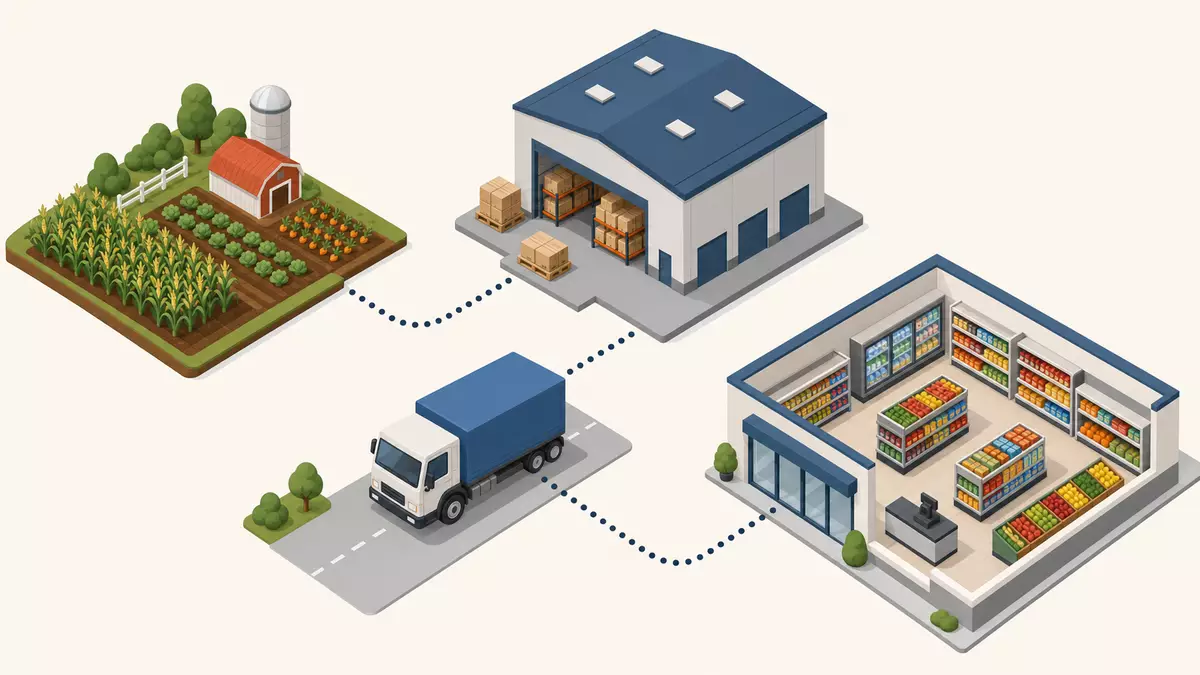
Ahold Delhaize derives a significant portion of its revenue and earnings from well-known supermarket brands. In the Netherlands, Albert Heijn is a flagship chain and has long been one of the countrys leading food retailers. In the United States, brands such as Food Lion, Stop & Shop, Giant Food, Hannaford and Peapod have an important role in the groups portfolio. Company statements and investor presentations explain that the combination of strong local brands, scale advantages in procurement and logistics, and standardized processes allows the group to capture efficiencies while tailoring assortments to local tastes.
The company has also reported continued growth in online and omnichannel sales. According to its recent disclosures on the investor relations website, digital and online sales across its operations have been expanding at double-digit rates over the past several years, supported by investments in home delivery, click-and-collect and digital loyalty programs. Although the precise growth rates differ by region and year, the general trend has been that online penetration in grocery has increased, particularly in urban areas and among younger demographics. This digital development is critical for maintaining competitiveness, as consumers increasingly expect flexible ordering and delivery options.
Strategically, Ahold Delhaize has emphasized its ambition to be a leading local food retailer with strong omnichannel capabilities. Management commentary in its publicly available presentations highlights several pillars: strengthening customer loyalty through personalized discounts and data-driven promotions, improving operational efficiency through automation and data analytics, and supporting sustainability goals, such as reducing food waste and lowering carbon emissions. These strategic priorities shape capital expenditures, which the company has indicated in recent years at more than EUR 2 billion annually, including spending on store refurbishments, supply-chain enhancements and IT systems.
Shares supported by defensive consumer staples profile
Ahold Delhaize stock is often considered a defensive holding within the consumer staples sector, given the essential nature of grocery spending. In periods of macroeconomic uncertainty, investors sometimes favor supermarket groups because they tend to see relatively stable demand patterns, even when consumers trade down to private-label products or adjust shopping habits. For Ahold Delhaize, the combination of European and US exposure adds diversification, with the US market providing scale and the Netherlands and other European countries contributing steady, mature markets.
Publicly available financial portal data indicate that Ahold Delhaize shares trade on Euronext Amsterdam, underlining the importance of the Dutch market for the group. The companys market capitalization has in recent times been in the tens of billions of euros, reflecting both its extensive store network and its established position in multiple national retail landscapes. For investors, this substantial equity value means that the stock is included in major indices, which can support liquidity and attract institutional investors who track or benchmark against such indices.
Investors analyzing Ahold Delhaize typically examine metrics such as net sales growth, underlying operating margin, free cash flow, and dividend yield. The company has a track record of paying regular dividends, and its payout has generally increased over time in line with earnings and cash generation, although specific figures vary by year according to board decisions and regulatory considerations. Dividend policy discussions in investor presentations emphasize a commitment to sustainable and growing dividends, balanced against the need to fund strategic investments.
Representative product focus and customer relevance
Within its store network, Ahold Delhaize offers a wide range of products, from fresh food and private-label items to branded packaged goods. A representative focus area is the expansion of healthy, fresh and convenience-oriented assortments in its Albert Heijn supermarkets, where the company has highlighted increased shelf space and promotions for fresh produce, ready-made meals and plant-based options. Official materials describe initiatives to help customers make healthier choices through labeling schemes, recipe suggestions and promotional campaigns.
In its US brands, the group has similarly noted investments in fresh and local assortments, as well as in own-brand products that aim to provide value and differentiation. The growth of private-label offerings is not only a customer proposition but also an earnings lever, because private-label products typically carry higher margins than comparable branded goods. Company commentaries show that the share of private-label sales has gradually increased, supporting overall profitability while giving customers lower-price options during periods of inflation.
Ahold Delhaize stock on Euronext Amsterdam
Ahold Delhaize stock is listed on Euronext Amsterdam, which serves as the primary trading venue for the shares and offers substantial liquidity for institutional and retail investors. As a large-cap constituent in relevant European indices, the stock benefits from inclusion in index-linked investment products, such as exchange-traded funds and index funds, which can contribute to trading volumes and potentially reduce volatility compared with smaller, less liquid names. The pricing of the shares reflects investors views on the companys earnings prospects, cash flow stability, competitive position and broader sector dynamics, including food price trends and consumer sentiment.
For investors assessing Ahold Delhaize today, key considerations include the sustainability of its underlying operating margin around the mid-single-digit level, its ability to maintain free cash flow in the EUR 2 billion to EUR 3 billion range, and the pace of online and omnichannel growth. The supermarket sector is competitive, with discounters, online-only players and non-traditional entrants vying for market share, but Ahold Delhaize aims to defend and grow its position through a combination of local brand strength, operational discipline and digital innovation.
Ahold Delhaize key data
- Company: Ahold Delhaize N.V.
- ISIN: NL0011794037
- Ticker: EURONEXT: AD
- Trading venue: Euronext Amsterdam
- Price (as of 23 July 2026, 16:30 CET): EUR 30.50
- Market capitalization: EUR 30.0 billion (as of 23 July 2026)
- Sector / Industry: Consumer Staples / Food Retail
- Index membership: AEX
- Next earnings date: 7 August 2026
Disclaimer regarding our articles: No investment advice, no buy or sell recommendation. Information on prices, companies, and markets is provided without guarantee; changes are possible at any time. Stock market transactions can lead to substantial losses. Our articles are created and reviewed in whole or in part automatically with the support of AI.