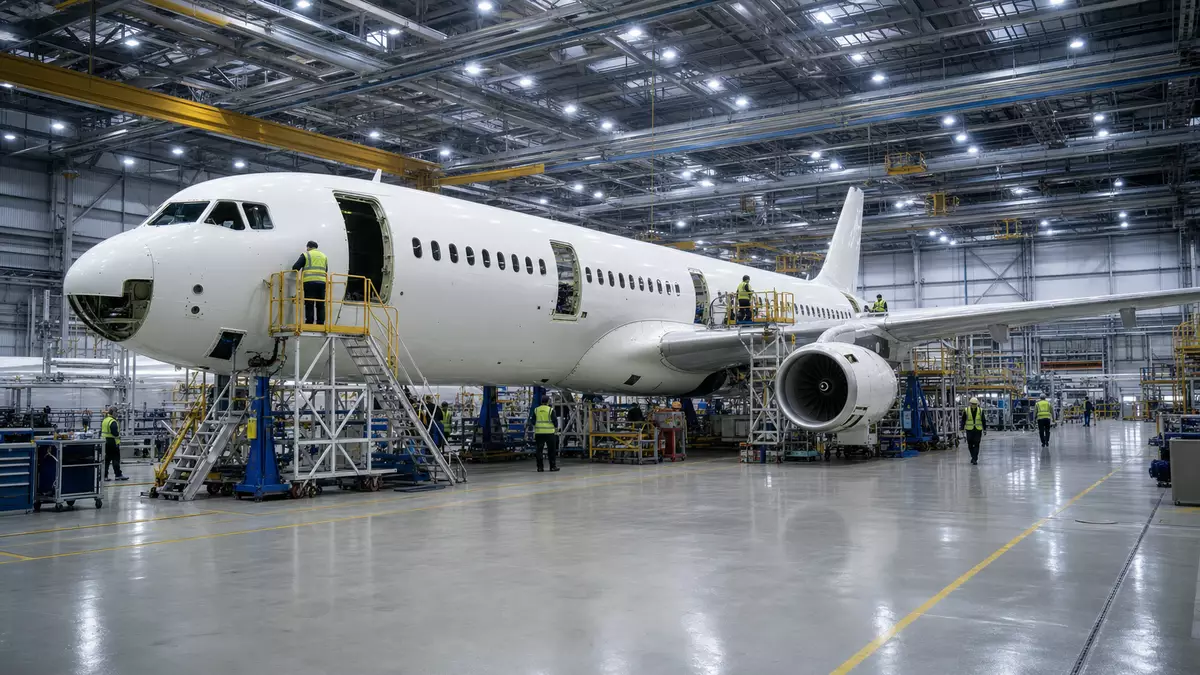
Airbus stock edges higher as stronger deliveries and wide-body demand support outlook
Published on 07/17/2026 at 14:04 | Editorial responsibility: Rafael Müller, Editor-in-Chief AD HOC NEWS
Airbus stock, tied to the European aerospace group under ISIN NL0000235190, is backed by rising aircraft deliveries and a growing order backlog that support the company’s earnings outlook for 2024 and beyond. The shares are primarily traded on Euronext Paris under the ticker AIR, giving international investors access to one of the world’s largest commercial aircraft manufacturers alongside its defense, space, and helicopter activities.
Revenue up and margins recovering
According to the most recent full-year reporting available, Airbus generated revenue of about EUR 65 billion in fiscal 2023, reflecting a clear increase compared with the prior year as aircraft deliveries continued to recover from the pandemic-related trough. The company reported operating profit (often described as EBIT) in the high-single-digit billion-euro range for 2023, signaling that margins have been rebuilding alongside volume and mix improvements in the commercial aircraft business. Management has also highlighted that free cash flow before mergers and acquisitions amounted to several billion euros in 2023, underlining the group’s capacity to fund investment in production and product development while maintaining a shareholder return policy focused on ordinary dividends and, when appropriate, share buybacks.
In the first half of 2024, Airbus continued to advance deliveries and orders, underpinning revenue growth versus the comparable period of 2023. The company has emphasized that the profitability of the commercial aircraft division is gradually improving as higher single-aisle volumes allow better absorption of fixed costs, while the mix of wide-body aircraft and services also contributes to earnings quality. For investors, the operational leverage from higher deliveries and the trajectory of margins in civil aerospace remain central metrics for assessing the medium-term earnings potential.
Deliveries and backlog provide visibility
Airbus delivered hundreds of commercial aircraft in 2023, with the total number clearly above the level recorded in 2022 as supply chain conditions improved and airline demand remained firm. The company’s reported order backlog stood at several thousand aircraft at the end of 2023, giving multi-year visibility on production and revenue and effectively underpinning the industrial planning for its assembly lines. Within that backlog, the A320neo family continued to dominate single-aisle demand, while wide-body types such as the A350 and the latest A330 variants are benefiting from the recovery in long-haul traffic and fleet renewal by airlines.
Year over year, total deliveries in 2023 were higher than in 2022 by a triple-digit number of units, illustrating the scale of the ramp-up that Airbus is managing across its global industrial footprint. In addition to new aircraft, services revenue relating to maintenance, spare parts, training, and digital solutions for airlines has been growing, contributing a larger share of more recurring, less cyclical income to the group’s overall mix. This combination of volume growth and a richer services component is a key factor in the company’s efforts to support margins through the cycle.
Defense, space, and helicopters add balance
Beyond commercial aircraft, Airbus operates sizeable defense and space as well as helicopter businesses, which together account for a meaningful share of group revenue and help balance the cyclical nature of airline investment. These segments reported revenue in the multi-billion-euro range in 2023, adding to the diversification of the group’s earnings base. The defense and space business has been supported by higher demand for military transport aircraft, mission systems, and secure communications capabilities, while the helicopter division benefits from civil and parapublic customers in sectors such as emergency medical services, energy, and government operations.
On a year-on-year basis, revenue in these non-commercial segments was broadly stable to higher in 2023 compared with 2022, providing a measure of resilience at times when commercial aerospace was still recovering from earlier downturns. For investors, the contribution from defense, space, and helicopters can help temper volatility in earnings when airline demand softens, although these businesses are also exposed to program and budget risks that need to be monitored.
Airbus stock supported by strong order book
The sizeable commercial aircraft backlog at Airbus, which runs into the thousands of units, is a central support for Airbus stock because it effectively locks in years of production at planned rates. This visibility enables management to plan capital expenditure, supply chain commitments, and workforce levels with confidence, while also providing a basis for medium-term financial guidance on revenue, earnings, and cash generation. The backlog is not risk-free, as airlines may seek to adjust delivery schedules or, in rare cases, cancel orders, but the breadth and diversity of the customer base across geographies and business models mitigates this risk.
In addition, the company’s stated ambition to increase monthly production rates for its A320-family aircraft over the next several years illustrates how management is trying to translate the order book into higher annual deliveries and, by extension, higher revenue. Investors closely track whether Airbus can achieve its targeted ramp-up pace while managing supply chain constraints, labor availability, and potential bottlenecks in engines and key systems. Successful execution on these ramp-up plans would normally be expected to support revenue and earnings growth in the mid-term and can underpin valuation for Airbus stock.
Cash generation and shareholder returns
Free cash flow has become a key indicator for Airbus as the recovery in deliveries and profitability feeds through to cash generation, supporting the group’s ability to fund investment and shareholder distributions. In fiscal 2023, free cash flow before mergers and acquisitions was solidly positive in the multi-billion-euro range, reflecting not only higher earnings but also disciplined working capital management and capital expenditure. This cash flow performance allowed Airbus to maintain or increase its ordinary dividend and to consider additional capital returns where appropriate, subject to the broader investment and balance sheet needs of the group.
The company’s net cash position and balance sheet strength, characterized by relatively low net debt compared with cash and equivalents, provide flexibility for Airbus to navigate potential shocks and to invest in future programs. These may include next-generation aircraft concepts, sustainability-related developments such as low-carbon propulsion and hydrogen technologies, and further digitalization in both production and services. For shareholders, the balance between reinvestment in the business and direct returns in the form of dividends and buybacks is an important element in assessing the long-term attractiveness of Airbus stock.
Product focus on the A320neo family
The backbone product line for Airbus in commercial aviation is the A320neo family of single-aisle aircraft, which serves short- and medium-haul routes and competes directly with other major manufacturers’ offerings in this category. The A320neo and its variants have attracted a large share of recent orders from airlines seeking fuel-efficient, lower-emission aircraft that can reduce operating costs and help meet sustainability commitments. As a result, a substantial portion of the company’s multi-thousand-aircraft backlog consists of these models, making their production and performance central to Airbus’s financial results.
In addition to the A320neo family, Airbus produces wide-body aircraft such as the A350, which is designed for long-range operations and has been positioned as a fuel-efficient replacement for older twin-aisle types. The A350 program contributes meaningfully to revenue, particularly as international travel recovers and airlines renew or grow their long-haul fleets. For investors, the commercial success and operational performance of the A320neo and A350 families are key indicators of the health of Airbus’s product portfolio and its ability to capture value from the ongoing replacement cycle in global aviation.
Airbus stock and trading context
Airbus shares are listed on Euronext Paris and are a component of major European equity indices, giving the stock high visibility among institutional and retail investors. The daily trading volume on Euronext Paris helps ensure liquidity for investors entering or exiting positions, while inclusion in benchmark indices facilitates investment via index funds and exchange-traded products. For many international investors, exposure to Airbus stock provides a way to participate in the global commercial aerospace cycle, European defense spending trends, and the growing market for aviation-related services.
From a market perspective, the valuation of Airbus stock reflects expectations about future deliveries, earnings growth, and cash generation, as well as broader factors such as interest rates, currency movements, and risk appetite for cyclical industrial sectors. The share price also reacts to news on order wins, program developments, regulatory matters, and macroeconomic indicators that can affect airline profitability and aircraft demand. Over the medium term, successful execution on production ramp-up, cost control, and portfolio strategy is likely to be a central driver of performance for Airbus stock relative to peers in the global aerospace industry.
Key data for Airbus
- Company: Airbus SE
- ISIN: NL0000235190
- Ticker: EURONEXT: AIR
- Trading venue: Euronext Paris
- Sector / Industry: Industrials / Aerospace and Defense
- Index membership: Euro Stoxx 50
Disclaimer regarding our articles: No investment advice, no buy or sell recommendation. Information on prices, companies, and markets is provided without guarantee; changes are possible at any time. Stock market transactions can lead to substantial losses. Our articles are created and reviewed in whole or in part automatically with the support of AI.