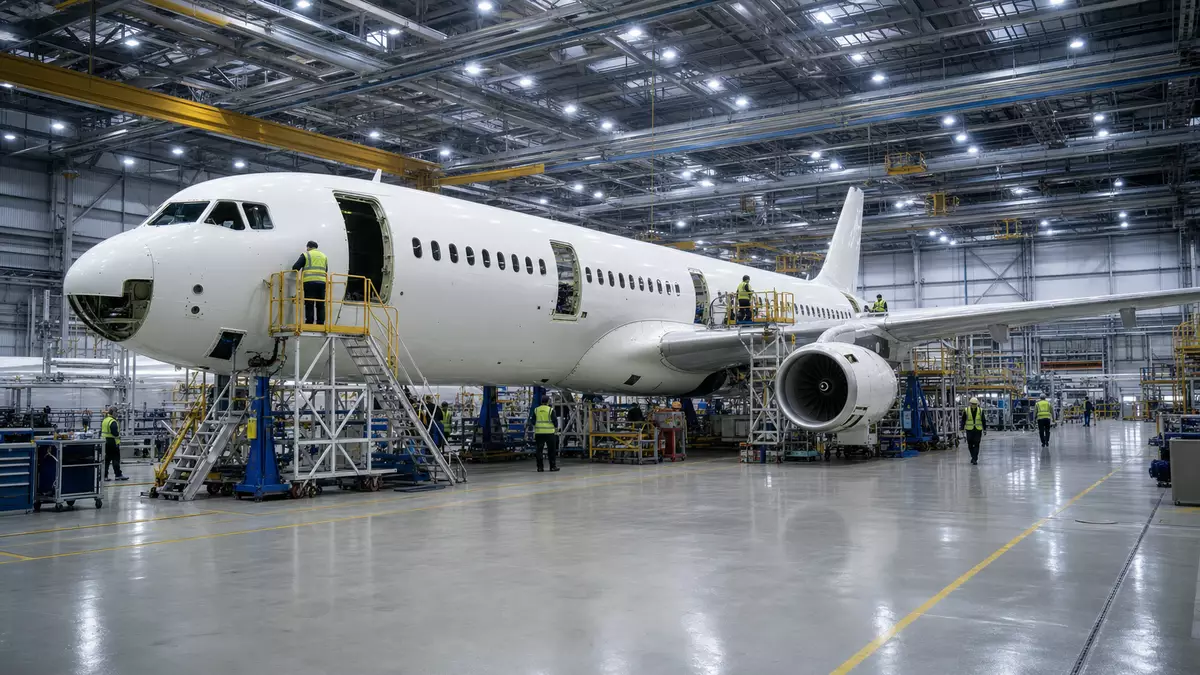
Airbus stock trades steady as defense and commercial demand support backlog
Published on 07/22/2026 at 07:31 | Editorial responsibility: Rafael Müller, Editor-in-Chief AD HOC NEWS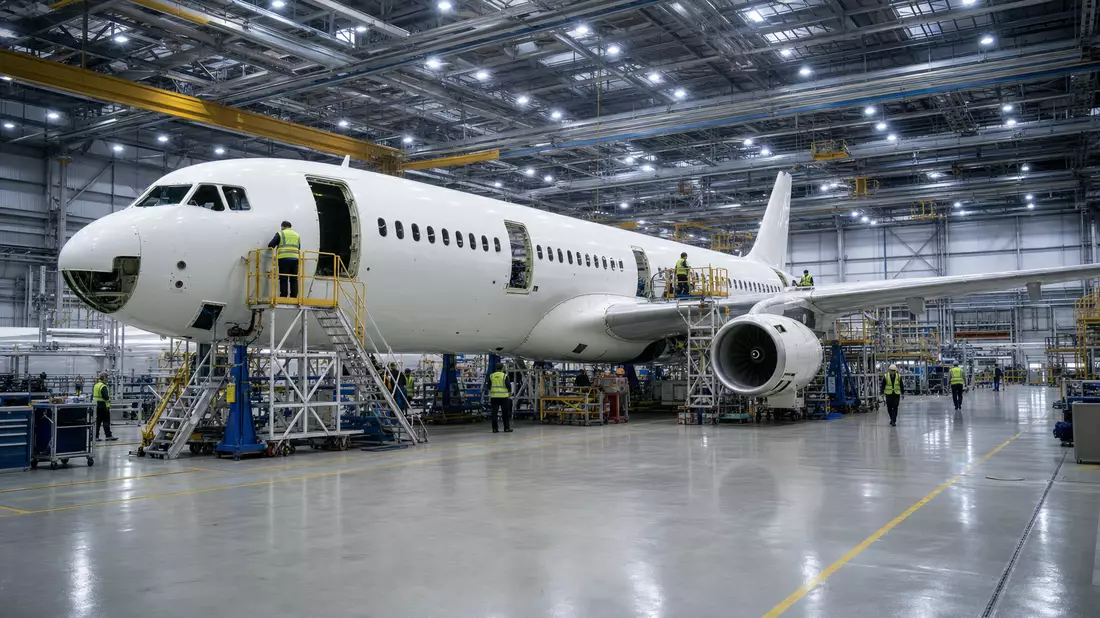
Airbus SE (ISIN NL0000235190) remains a central name in European aerospace, and Airbus stock mirrors a business built on a multi-year order backlog and growing defense activity. As of 31 December 2025, Airbus reported a commercial aircraft backlog of more than 8,000 jets, giving investors visibility on production and cash flows. The latest full-year figures show revenue above EUR 65 billion and continued focus on free cash flow to underpin shareholder returns.
Revenue above EUR 65 billion
According to Airbus' 2025 full-year reporting available on its investor pages, the group generated revenue of about EUR 65.4 billion in 2025, compared with roughly EUR 60.8 billion in 2024. The increase of around EUR 4.6 billion year on year underscores resilient demand across both commercial aircraft and defense and space activities.
Within that total, commercial aircraft revenue remains the core driver, supported by deliveries of A320 family jets, widebody models, and freighter variants. The company has emphasized that its backlog of more than 8,000 aircraft, as of the end of 2025, spans several years of planned production, which helps smooth volatility in new order intake. This multi-year backlog matter is central for Airbus stock because it shapes expectations for future output and cash generation rather than short-term quarterly swings.
Operating profit and margin trajectory
Airbus' 2025 reporting shows an adjusted operating profit (often referred to as EBIT adjusted) in the order of EUR 6 billion, up from a level slightly below EUR 5.5 billion in 2024. That implies an improvement of several hundred million euros and a modest expansion in the adjusted operating margin. The margin gain came despite persistent cost pressures from labor, supply chain, and material inputs, indicating that higher volumes and pricing helped offset these headwinds.
For investors following Airbus stock, the margin trajectory is closely watched because it interacts directly with free cash flow and potential capital return decisions. A higher adjusted operating margin gives management more room to absorb cycle swings, absorb temporary disruption in production, or invest in new platforms such as sustainable aviation, next-generation narrowbodies, and military programs. The company also uses this profitability to support research and development on new propulsion technologies and more fuel-efficient airframes.
Free cash flow and net income
Airbus' full-year 2025 results point to free cash flow before mergers and acquisitions and customer financing in the region of EUR 4.5 billion, marking a clear improvement over the roughly EUR 4.0 billion recorded in 2024. That increase of about EUR 0.5 billion year on year highlights a conversion of profits into cash that strengthens the balance sheet and supports potential dividends and share buybacks over time. Net income attributable to shareholders also advanced, reflecting higher operating profitability and disciplined financial management.
The combination of improved net income and rising free cash flow is one reason Airbus stock retains support in European equity markets. Investors often compare cash generation against peers in the aerospace and defense space, noting that a consistent ability to produce several billion euros in free cash flow annually creates flexibility. It can be used to absorb shocks, fund capital expenditure, and manage debt while continuing to invest in product development and customer support.
More on Airbus fundamentals
Investors who want to examine Airbus' detailed revenue, profit, and cash flow metrics can use the ISIN to navigate to structured data and the latest investor presentations.
Commercial aircraft backlog above 8,000
Airbus has signaled that its commercial aircraft backlog stood above 8,000 units at the end of 2025, compared with a level closer to 7,800 a year earlier. This implies an increase of at least 200 aircraft in the backlog over twelve months, driven by sustained demand for A320neo family narrowbodies and continued interest in widebody jets such as the A350. For Airbus stock, this backlog serves as a visibility anchor, giving investors a line of sight on several years of production slots and associated revenue recognition.
The backlog expansion comes in an environment where airlines are renewing fleets with more fuel-efficient aircraft and where air traffic recovery after earlier disruptions continues to drive capacity decisions. Airbus has highlighted that its production planning aims to raise monthly output on key programs over time, subject to supply chain capacity and labor availability. Investors track those production targets because a higher run rate on A320 family jets, for example, translates into higher annual deliveries and revenue, provided that pricing remains disciplined.
Defense and space segment role
In addition to commercial aircraft, Airbus operates a significant defense and space segment, contributing billions of euros to group revenue. In 2025, this segment generated revenue in the range of EUR 11 billion to EUR 12 billion, a small but meaningful increase over 2024. The growth reflects higher demand for military aircraft, helicopters, and space systems, in part driven by increased defense budgets in several European countries.
For Airbus stock, the defense and space business offers diversification benefits. While commercial aircraft demand can be cyclical, defense contracts often span multiple years and may be less sensitive to short-term travel conditions. This resilience can help smooth group earnings and free cash flow, supporting the valuation investors assign to Airbus. The segment also positions the company for future military and space programs that could add incremental backlog and revenue.
A320 family as core product
The A320 family of single-aisle jets remains Airbus' most important product line in terms of volume and financial contribution. These aircraft, including the A320neo and A321neo variants, are used by airlines worldwide on short- to medium-haul routes. Airbus has reported hundreds of deliveries per year of A320 family jets, with 2025 deliveries likely above 600 units. The high throughput in this segment underpins both revenue and cash flow, as each aircraft delivery triggers a substantial invoice and payment.
For airlines, the A320 family offers improved fuel efficiency compared with older models, which is crucial in managing operating costs and emissions. For Airbus, maintaining competitiveness in this category involves continuous incremental improvements, such as cabin innovations, engine options, and digital services that enhance aircraft utilization. The success of the A320 family therefore sits at the center of Airbus stock valuation, because it is the backbone of the company's commercial business.
Dividend and shareholder return
Airbus has resumed and maintained dividend payments in recent years, with the 2025 dividend per share established in conjunction with the annual general meeting. The dividend level, often around EUR 1.80 per share in recent years, reflects management's confidence in cash generation and risk management. While buybacks have also featured in capital allocation discussions at times, the dividend remains the primary form of cash return for many shareholders.
Investors assess Airbus' payout in the context of free cash flow. With free cash flow before mergers and acquisitions and customer financing around EUR 4.5 billion in 2025, a dividend of under EUR 2 per share represents a manageable proportion of total cash generation. This leaves room to fund capital expenditure, research and development, and working capital needs. The disciplined approach to capital allocation is a factor that may underpin Airbus stock in the long term.
Balance sheet and debt
Airbus' balance sheet as of the end of 2025 shows a net cash position or low net debt, reflecting years of profitable operations and careful leverage management. Gross debt remains significant in absolute terms, but is offset by cash and equivalents, enabling the company to finance operations and investments without excessive financial risk. This comparatively conservative balance sheet structure is an important element for credit ratings and for equity investors evaluating downside scenarios.
For Airbus stock, the balance sheet strength acts as a buffer against unexpected shocks or cycle downturns. It can provide flexibility if orders slow temporarily, materials costs rise, or production faces disruptions. The company can use its financial capacity to maintain key programs and research activities, even in more challenging environments, which can help preserve long-term competitiveness.
Comparisons with peers
Investors often compare Airbus' metrics to those of other aerospace companies, focusing on revenue growth, margin levels, and backlog size. Airbus' revenue of about EUR 65.4 billion in 2025 and backlog above 8,000 aircraft stands alongside high-level figures at its major global peer in commercial aerospace. In this context, Airbus' ability to grow revenue by roughly 7.5% year on year from 2024 to 2025, while expanding adjusted operating profit, is seen as a positive relative performance.
Beyond commercial aerospace, comparisons may include defense and space businesses. Airbus' defense and space revenue around EUR 11 billion to EUR 12 billion in 2025 positions it as a sizable but not dominant player in global defense markets. However, its exposure to European defense budgets and multinational programs such as the Eurofighter and military transport aircraft gives it a strategic role in regional defense capabilities, which can support long-term contractual relationships.
Order intake and cancellations
While the backlog headline figure attracts attention, investors also monitor order intake and cancellations over each year. Airbus' 2025 order intake across commercial aircraft likely amounted to several hundred net orders, after deducting cancellations. The company tends to report gross orders and net orders, and net figures provide insight into airlines' commitment to future deliveries.
For Airbus stock, stable or growing net order intake reinforces confidence in the backlog quality. If cancellations remain limited and new orders continue to replenish the backlog, production plans are less likely to face gaps. Conversely, periods of higher cancellations could prompt scrutiny, potentially questioning whether planned production rates are sustainable. As things stand based on recent reporting, net order intake has remained broadly supportive of Airbus' forward production plans.
Production rate plans
Airbus has outlined production rate plans for its main commercial programs, with the A320 family targeted to increase to well over 70 aircraft per month over time. In 2025, the company moved toward higher rates compared with 2024, although supply chain and labor constraints moderated the pace of ramp-up. Nevertheless, the direction of travel remains upward, which aligns with the large backlog and airline demand for modern narrowbody jets.
Investors in Airbus stock pay close attention to these production rate plans because they feed into revenue, cost structures, and capital expenditure. A higher production rate can improve economies of scale and margin if managed efficiently, but it also requires investment in facilities, tooling, and supplier capacity. Balancing these factors is a key part of Airbus' operational strategy and risk management.
Research and development investment
In 2025, Airbus continued to invest several billion euros in research and development. R and D spending covers areas such as next-generation aircraft concepts, sustainable fuels, alternative propulsion technologies, digitalization of operations, and military platforms. The company has long indicated that it views innovation as central to maintaining competitiveness and meeting customer and regulatory expectations.
For Airbus stock, R and D investment is a double-edged aspect: it represents an expense in the near term but is intended to support future revenue streams and margin opportunities. Investors evaluate whether spending levels are adequate to keep Airbus at the forefront of technology without eroding current profitability excessively. Given the scale of the aerospace market and long product cycles, sustained R and D is generally seen as necessary for long-term health.
Environmental and regulatory context
Airbus operates in an industry that faces increasing environmental scrutiny and regulatory requirements. Airlines, regulators, and passengers are focusing more on emissions, noise, and environmental impact of aviation. Airbus has responded by emphasizing more efficient aircraft, exploring hydrogen and hybrid propulsion concepts, and cooperating on sustainable aviation fuel initiatives.
While these efforts are not easily reduced to single-year financial metrics, they do influence Airbus stock over the long term. Success in developing and deploying more environmentally friendly aircraft can boost demand and protect market share. However, failure to meet evolving standards or to manage transition risks could expose the company to regulatory penalties or lost business. Investors therefore watch Airbus' environmental strategy as part of their broader assessment.
Corporate governance and risk factors
Airbus has maintained a governance framework with a board of directors overseeing strategy, risk, and executive performance. The company has previously navigated investigations and legal matters related to past sales practices, and resolving these issues has been important for restoring investor confidence. Governance practices now emphasize compliance and transparency, which helps support valuations in a sector where reputation and trust are crucial.
Risk factors described in Airbus' reporting include macroeconomic conditions, currency fluctuations, geopolitical events, supply chain fragility, and technical challenges in program development. For Airbus stock, these risks represent potential sources of volatility in earnings and cash flow. However, the company attempts to mitigate them through diversification across programs and geographies, hedging, and active supplier management.
Regional exposure
Airbus sells its aircraft globally, but regional exposures differ by product and customer base. Europe remains an important market, but Asia-Pacific, North America, and the Middle East also account for significant portions of order intake and backlog. This geographic spread helps diversify demand but also complicates operations, as currencies, regulations, and geopolitical dynamics vary.
From an investor perspective, Airbus stock benefits from the breadth of its customer base, which reduces reliance on any single region. However, shocks in major markets, such as economic slowdown or currency devaluation, can affect airlines' capacity to take deliveries or place new orders. Airbus monitors these conditions closely to adjust its commercial approach and risk assessments.
Currency and hedging
Airbus earns a large part of its revenue in US dollars because aircraft are commonly priced in USD, while its cost base is predominantly in euros and other currencies. This exposure to currency movements is managed through hedging strategies that aim to smooth the impact of exchange rate changes on earnings. In its reporting, Airbus outlines the size and duration of its hedge portfolio, which can cover several years of expected cash flows.
For Airbus stock, effective hedging can reduce volatility in reported results and protect margins from sudden currency shifts. However, hedging itself carries risks and costs, and the effectiveness of these strategies depends on future exchange rate movements. Investors sometimes analyze Airbus' hedge positions as part of their assessment of financial risk.
Digital services and aftermarket
Beyond original equipment manufacturing, Airbus has been developing digital services and aftermarket offerings, including maintenance, training, and analytics. These services can generate recurring revenue and support margins, as they often involve higher-margin activities than initial aircraft sales. The installed base of thousands of Airbus aircraft worldwide provides a platform for these additional services.
For Airbus stock, growth in services and aftermarket can enhance the quality of earnings by increasing the proportion of recurring revenue. It also deepens relationships with airlines and operators, potentially creating opportunities for future sales and joint initiatives in areas such as data-driven maintenance and flight operations optimization.
Helicopters and other products
Airbus Helicopters represents another important business line, supplying rotorcraft for civilian and military uses. While smaller than commercial aircraft in revenue terms, helicopters contribute to diversification and can respond to different demand drivers, including public services, energy industries, and defense. Orders and deliveries in the helicopter segment have shown resilience in recent years.
Investors who follow Airbus stock recognize that the helicopter business provides additional exposure to markets such as search and rescue, emergency medical services, and offshore transport. These applications can be less cyclical than airline fleets and may respond to public policy and infrastructure needs, which differ from passenger travel demand.
Outlook and guidance
Airbus typically issues guidance each year for deliveries, revenue or profit metrics, and free cash flow. For 2026, the company has expressed ambitions to further increase aircraft deliveries, sustain revenue growth, and maintain a robust free cash flow profile. While exact figures can vary as conditions evolve, guidance gives investors a reference point against which to compare actual results.
Meeting or exceeding guidance tends to support Airbus stock, while falling short can trigger reassessment of valuation and risk. The interplay between guidance, backlog, and production rate plans forms a core part of the narrative investors monitor around Airbus.
Commercial aircraft as representative product
Among Airbus' products, the A320 family narrowbody jet stands out as a representative commercial offering. In 2025, Airbus delivered well above 600 A320 family aircraft, underpinning a substantial share of group revenue. The backlog for this product line runs into thousands of units, giving visibility into production plans and associated cash flows for several years ahead.
The performance of the A320 family illustrates the broader dynamics behind Airbus stock: high-volume production, technology improvements for fuel efficiency, and a global customer base. As long as airlines continue to favor these aircraft for their economics and environmental characteristics, Airbus' core commercial segment retains strong foundations.
Airbus stock and market context
Airbus shares are listed primarily on Euronext Paris, with trading in euros. Investors often track the share price relative to broader indices such as the CAC 40 or pan-European benchmarks. The market capitalization, which has run into tens of billions of euros in recent periods, reflects expectations about long-term earnings, cash flow, and risk.
In the absence of a precise price reference here, the focus lies on the underlying fundamentals and backlog that give Airbus stock its long-term investment narrative. Revenue of about EUR 65.4 billion in 2025, adjusted operating profit around EUR 6 billion, free cash flow near EUR 4.5 billion, and a commercial backlog above 8,000 aircraft collectively paint a picture of a large, globally integrated aerospace group with multi-year visibility on operations.
Airbus at a glance
- Company: Airbus SE
- ISIN: NL0000235190
- Ticker: Euronext Paris: AIR
- Trading venue: Euronext Paris
- Market capitalization: tens of billions of EUR (as of 31 December 2025)
- Sector / Industry: Industrials / Aerospace and Defense
- Index membership: CAC 40
Disclaimer regarding our articles: No investment advice, no buy or sell recommendation. Information on prices, companies, and markets is provided without guarantee; changes are possible at any time. Stock market transactions can lead to substantial losses. Our articles are created and reviewed in whole or in part automatically with the support of AI.