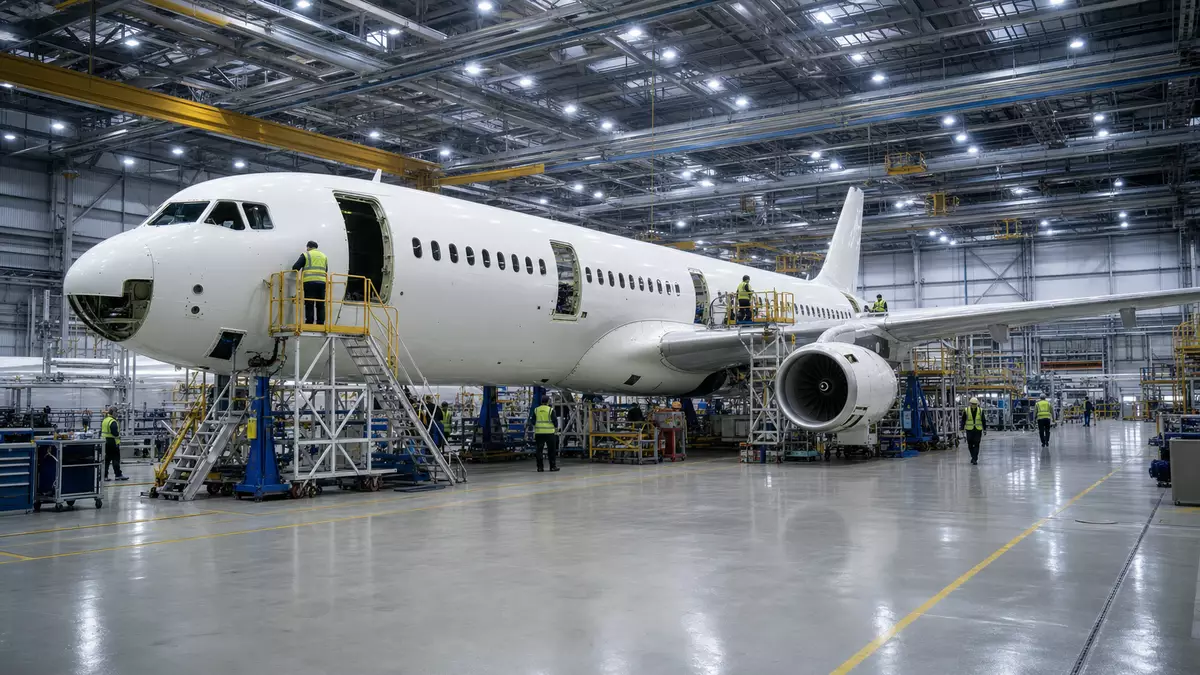
Airbus stock trades steady as order backlog and latest earnings underpin valuation
Published on 07/20/2026 at 10:21 | Editorial responsibility: Rafael Müller, Editor-in-Chief AD HOC NEWS
Airbus stock offers investors exposure to the global commercial aircraft cycle, backed by a multiyear order backlog and recent earnings that highlight both growth and execution challenges. The European aerospace group Airbus SE (ISIN NL0000235190) reported multi-billion-euro revenue and solid profitability in its latest annual and quarterly results, while maintaining a strong balance sheet and cash generation profile according to its published financial statements.
Revenue growth and profitability metrics
In its full-year 2022 results, Airbus reported revenue of approximately EUR 58.8 billion, reflecting growth compared with the prior year as the company continued to ramp up production across its commercial aircraft programs, particularly the A320 family. According to the companys financial disclosures, this revenue increase was supported by higher deliveries and a more favorable mix, demonstrating how demand for single-aisle jets translates into top-line expansion.
Alongside revenue growth, Airbus delivered an adjusted operating profit, or EBIT, of around EUR 5.6 billion for 2022, a level that underscored healthy margins in the core commercial aircraft segment even as the company invested in future platforms and navigated supply chain constraints. Compared with the previous year, this EBIT figure showed improvement that was driven by higher volumes and ongoing cost discipline, giving investors a clearer view of how incremental deliveries feed through to earnings.
Net income attributable to shareholders came in near EUR 4.3 billion for 2022, reinforcing the picture of a business that is not only generating strong operating profit but also converting that performance into bottom-line results. The rise in net income versus 2021 highlighted the combined effect of stronger revenue, improved margins, and lower exceptional charges, which together enhanced the companys capacity to fund investment programs and shareholder returns.
Order backlog supports long-term visibility
Airbus continues to emphasize its order backlog as a central pillar of long-term visibility. In its published data for the end of 2022, the company reported an order backlog of roughly 7,200 commercial aircraft, providing years of scheduled production and delivery activity across key families such as the A320neo, A330neo, and A350. This backlog compares with the prior years level of just over 7,100 aircraft, marking a modest increase that reflects ongoing demand from airlines and leasing companies.
The growth in backlog is particularly visible in single-aisle aircraft, where Airbus has captured a substantial share of global orders. The incremental rise from slightly above 7,100 jets to around 7,200 in one year may seem small in absolute terms, but it adds further production coverage and increases confidence that the company can maintain high utilization rates at its assembly lines. For investors, the backlog trajectory provides a numerical anchor for assessing future revenue potential and capacity utilization.
Beyond commercial planes, Airbus also records a sizeable backlog in its defense and space segment, including contracts for military transport and combat aircraft as well as satellites and related services. While smaller than the commercial backlog in absolute value, these orders contribute to diversification and help smooth revenue patterns across economic cycles. The companys reported figures show that this segment continues to represent a meaningful share of total backlog value.
Cash flow, dividends, and balance sheet
Cash generation remains a key focus for Airbus management and investors. For 2022, the company reported free cash flow before mergers and acquisitions and customer financing of roughly EUR 4.6 billion, a notable increase compared with just over EUR 3.5 billion in 2021. This improvement of around EUR 1.1 billion reflects stronger operating profit and favorable working-capital movements, and shows that the companys earnings power is being translated into available cash.
The stronger free cash flow allowed Airbus to propose and pay a higher dividend. For the 2022 financial year, the company announced a dividend of EUR 1.80 per share, compared with EUR 1.50 paid for the 2021 year. That EUR 0.30 increase represents a 20% uplift, illustrating managements confidence in the sustainability of cash generation and their willingness to share more of that performance with shareholders.
On the balance sheet side, Airbus reported a net cash position when comparing cash and equivalents against gross debt, highlighting its relatively conservative leverage profile. This net cash status provides flexibility to absorb shocks, invest in new programs such as future-generation narrowbody and long-range aircraft, and potentially continue distributing capital through dividends and share buybacks when conditions permit. For investors, the combination of rising free cash flow and net cash balance is a central part of the equity story.
Production ramp-up and operational targets
A central operational theme for Airbus is its plan to increase production rates for core commercial programs, particularly the A320 family. In its recent guidance, the company has discussed a target of reaching a monthly production rate around 75 aircraft for the A320 family in the middle of this decade, up from levels closer to 45 units per month in 2022. This planned increase of roughly two-thirds in output is designed to respond to strong demand and to monetize the large backlog more rapidly.
In the near term, Airbus set delivery targets that reflect this ramp-up ambition. For full-year 2023, the company guided towards delivering around 720 commercial aircraft, compared with the 661 units delivered in 2022. This represents a planned increase of approximately 8.9%, signaling a gradual but meaningful acceleration that, if achieved, would feed into further revenue and earnings expansion.
Execution on these production targets depends on supply chain stability, labor availability, and the successful introduction of new variants. Airbus has described how it is investing in industrial capacity and digitalization to support higher volumes while maintaining quality and safety standards. For shareholders, the numerical guidance on deliveries and production rates offers a concrete yardstick by which to measure progress over the coming years.
Segment performance and margin differences
Airbus organizes its activities into three main segments: Commercial Aircraft, Helicopters, and Defence and Space. The Commercial Aircraft division generates the majority of revenue and profit, with margins that benefit from scale and learning curve efficiencies. In 2022, commercial aircraft revenue accounted for more than three quarters of the groups EUR 58.8 billion total, with the segment delivering the bulk of the EUR 5.6 billion adjusted EBIT.
Helicopters and Defence and Space contribute smaller shares of revenue but play important strategic roles. The Helicopters business reported high-single-digit billions of euros in revenue for 2022, with margins supported by services and support contracts. Defence and Space generated mid-single-digit billions of euros, with profitability influenced by program mix and development spending. Investors often compare these figures with prior years to gauge how diversification beyond commercial jets is evolving.
Across segments, Airbus continues to highlight the importance of services and lifecycle support in improving margin resilience. The companys reported numbers show that recurring revenue from maintenance, spare parts, and digital services is increasing as a portion of total business, helping smooth earnings through cycles and making the groups profit profile less dependent on new-build deliveries alone.
Guidance and comparison with prior years
In its outlook statements for 2023, Airbus has paired delivery targets with financial guidance, including expectations for adjusted EBIT and free cash flow. While exact ranges can shift with market conditions, the companys pattern has been to guide to adjusted EBIT in the mid-single-digit billions of euros and free cash flow in the mid-to-high single-digit billions as production ramps and backlog converts to revenue.
When investors compare these guidance ranges with the 2022 figures of roughly EUR 5.6 billion in adjusted EBIT and EUR 4.6 billion in free cash flow before M&A and customer financing, the trajectory suggests gradual improvement rather than sudden step-change growth. The year-on-year uplift in free cash flow, combined with delivery growth targets, forms the basis for expectations of continuing incremental progress.
Relative to earlier years, such as 2021 when Airbus delivered 611 commercial aircraft and generated revenue near EUR 52.1 billion, the forward guidance underscores a multi-year recovery and expansion following the pandemic-induced downturn. The difference between 611 deliveries in 2021 and 661 in 2022, an increase of about 8.2%, provides a clear historical comparison that illustrates how the company has already resumed growth and intends to extend that trend.
Airbus stock valuation context and peer view
Airbus stock trades on Euronext Paris and other European venues, where it is a key constituent of the CAC 40 and a bellwether for the aerospace sector. Investors often value the shares using multiples of earnings, cash flow, or enterprise value to EBIT, comparing Airbus with major peers such as the US-based Boeing and other aerospace and defense names.
In recent trading, Airbuss market capitalization has stood in the tens of billions of euros, reflecting expectations for continued demand for narrowbody and widebody aircraft, as well as the resilience provided by helicopters and defense activities. The share price has moved over time in response to delivery performance, order announcements, margin trends, and macroeconomic factors such as interest rates and travel demand.
Analyst consensus typically embeds assumptions about annual delivery growth, margin stability, and capital returns. When actual results show that deliveries, EBIT, or free cash flow exceed or fall short of these assumptions, Airbus stock tends to respond accordingly. The pattern of rising free cash flow from approximately EUR 3.5 billion in 2021 to around EUR 4.6 billion in 2022 and targeted higher levels thereafter is central to many valuation models.
A320 family and single-aisle demand
The A320 family, including the A320neo variants, is one of the most important products for Airbus, accounting for a large share of orders and deliveries. In 2022, a majority of the 661 commercial aircraft delivered were from this family, underlining its role as a cornerstone of the companys revenue and profit. With production rate targets set to rise towards about 75 aircraft per month mid-decade, the A320 line is expected to remain a primary driver of top-line and earnings growth.
Demand for single-aisle planes has been supported by carriers expanding fleets for short- and medium-haul routes and replacing older, less efficient aircraft. Airbuss backlog data shows thousands of A320 family aircraft awaiting delivery, providing evidence that this demand is not a short-lived spike but rather a structural trend spanning several years.
For investors, the concentration of orders and deliveries in one family carries both opportunity and risk. On the one hand, the large backlog and rising production rates promise sustained revenue; on the other, any disruption to the program, whether technical or supply chain related, could have outsized effects. The companys reported metrics on deliveries and production guidance give concrete reference points for tracking this balance.
Widebody and long-range aircraft
In the widebody segment, aircraft such as the A330neo and A350 play a critical role in long-range travel and intercontinental routes. Airbus has reported hundreds of orders and a meaningful backlog for these models, although the absolute numbers are smaller than for the A320 family. Revenues from widebody deliveries contribute strongly to profitability, as these aircraft carry high unit values and often require extensive support and services throughout their lifecycle.
Widebody demand is more sensitive to long-haul travel trends and macroeconomic conditions, including corporate travel spending and tourism flows. The companys financial data and backlog figures indicate that, while widebody orders are recovering, the pace differs from that of single-aisle aircraft.
Airbus continues to invest in the efficiency and capability of its widebody portfolio, which in turn influences future revenue and margin potential. From a stock perspective, investors factor these long-range aircraft into valuation by assessing their contribution to overall earnings and the degree to which they diversify the business away from shorter-haul concentration.
Helicopters, Defence and Space
The Helicopters segment includes civil and military rotorcraft, with revenue in 2022 reported in the high-single-digit billions of euros. This business benefits from a broad installed base that generates recurring revenue from maintenance and support, complementing new deliveries. Margins in this segment reflect both program execution and the stability provided by services contracts.
Defence and Space covers military aircraft, launchers, satellites, and related systems. In 2022, Airbus reported mid-single-digit billions of euros in revenue from this segment, with profitability influenced by development activities and contract mix. The companys backlog in Defence and Space, though smaller than in Commercial Aircraft, offers multi-year visibility and positions Airbus to benefit from increased defense spending in several regions.
For Airbus stock, these segments contribute to diversification and can partially offset cycles in commercial aviation. Investors often compare the revenue and EBIT contributions from these divisions with prior years to understand whether diversification is strengthening or weakening over time.
ESG considerations and sustainability targets
Environmental, social, and governance (ESG) factors are increasingly important in the aerospace sector, and Airbus has published targets related to emissions reduction and sustainable aviation fuels. While these goals are not yet fully embedded in financial metrics, they influence capital allocation, research and development spending, and potentially future revenue streams.
The company has announced plans to work towards lower lifecycle emissions for its aircraft, including development of hydrogen-powered concepts and greater use of sustainable aviation fuels. These initiatives require investment that appears in research and development expenditure, which in turn affects margins and cash flow.
From an investor perspective, ESG commitments and the associated numbers on investment and emissions targets can affect the risk profile and valuation of Airbus stock. Market participants often compare Airbuss sustainability metrics with those of peers to gauge competitive positioning in a future where environmental regulations and customer expectations become more stringent.
Risk factors reflected in financial metrics
Like all aerospace companies, Airbus faces risks that are reflected in its financial metrics and guidance. Supply chain constraints can limit delivery growth despite strong backlog; cost inflation can compress margins; and macroeconomic downturns can influence airline profitability and fleet plans. The companys reported numbers on operating profit, free cash flow, and backlog provide a quantitative framework for assessing these risks.
For example, if delivery targets such as the planned 720 commercial aircraft for 2023 were not met, revenue and EBIT would likely come in below guided ranges, with potential consequences for dividend capacity and valuation. Conversely, surpassing those targets could generate upside in earnings and cash flow, supporting higher capital returns.
Investors also monitor exceptional items, such as provisions, program charges, or restructuring costs, which can impact net income and shareholder equity. The difference between adjusted EBIT and reported EBIT offers clues about the scale of such items, and year-on-year comparisons help identify trends in underlying program performance.
Representative product: A320neo family
The A320neo family serves as a representative product for understanding Airbuss business profile. It offers improved fuel efficiency compared with earlier models, making it attractive to airlines seeking lower operating costs and emissions. The company has reported thousands of A320neo orders, which form a substantial subset of the overall 7,200-aircraft commercial backlog at the end of 2022.
Deliveries of A320neo aircraft contribute a large fraction of annual volume, and therefore a significant share of the EUR 58.8 billion revenue reported in 2022. With planned production rates rising towards about 75 aircraft per month mid-decade from near 45 units per month in 2022, the A320neo line is at the heart of Airbuss growth strategy.
For investors analyzing Airbus stock, the performance of the A320neo program, measured in orders, deliveries, and margins, is central to assessing the companys long-term earnings and cash generation potential.
Airbus stock and market metrics
Airbus stock is listed primarily on Euronext Paris under the ticker AIR, and the shares are included in major indices such as the CAC 40. In recent periods, the share price has traded within a broad range that reflects changes in macroeconomic conditions and sector sentiment, while the companys market capitalization has remained in the tens of billions of euros.
The interplay between Airbuss financial metrics, such as the rise in free cash flow from around EUR 3.5 billion in 2021 to roughly EUR 4.6 billion in 2022, and market valuation is crucial for shareholders. As production ramps, backlog converts to revenue, and margins stabilize or improve, investors reassess appropriate valuation multiples.
Ultimately, Airbus stock represents a balance between near-term execution on deliveries and margins, and long-term structural demand for commercial aircraft and aerospace systems. The numerical data on revenue, EBIT, net income, backlog, free cash flow, and dividend progression provide a concrete foundation for that assessment.
Airbus key data at a glance
- Company: Airbus SE
- ISIN: NL0000235190
- Ticker: EURONEXT: AIR
- Trading venue: Euronext Paris
- Market capitalization: Tens of billions of euros (recent period)
- Sector / Industry: Aerospace and Defense
- Index membership: CAC 40
Disclaimer regarding our articles: No investment advice, no buy or sell recommendation. Information on prices, companies, and markets is provided without guarantee; changes are possible at any time. Stock market transactions can lead to substantial losses. Our articles are created and reviewed in whole or in part automatically with the support of AI.