Almonty's Russell Entry Lands in a Sea of Red — But the Passive Buying Mandate Is Already in Motion
Veröffentlicht: 30.06.2026 um 04:03 Uhr, Redaktion boerse-global.de
The arithmetic is brutal and elegant at the same time. Almonty Industries joined the Russell 1000 and Russell 3000 on June 29, 2026 — precisely when its shares were trading roughly a third below the April peak of C$33.35. The stock closed at C$22.33, down more than 15% in the prior 30 days, with a 14-day RSI hovering at 38.8, dangerously close to oversold territory.
That decline is exactly what index funds benchmarked to the Russell suite are now forced to buy into. The numbers are staggering: around US$12.2 trillion in assets track Russell indices. Until last week, many of those funds could not hold Almonty because it fell outside their mandated universe. Now they must weight it. "We earned this spot based on the numbers, not by invitation," CEO Lewis Black said bluntly.
A 221% Revenue Surge Backs the Inclusion
The operational story explains why the stock earned its place. In the first quarter of 2026, revenue jumped to C$25.4 million — a 221% year-over-year explosion. More importantly, operating cash flow swung from negative C$4.4 million to positive C$9.7 million, a clear sign that the Sangdong mine in South Korea is hitting its stride. The net loss narrowed to C$5.3 million from C$34.6 million a year earlier, helped by the absence of a large non-cash warrant revaluation that had weighed on the prior period.
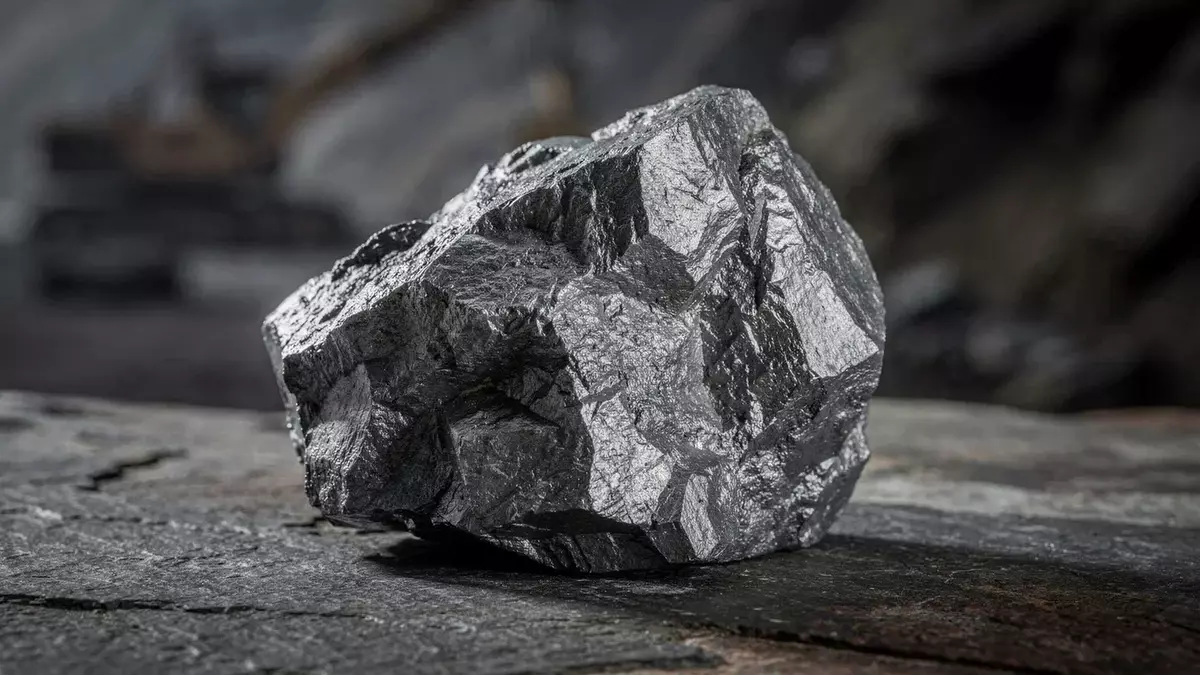
Phase 1 of Sangdong is now processing roughly 640,000 tonnes of ore annually, targeting 2,300 tonnes of tungsten concentrate. Phase 2, slated for 2027, will more than double that to 1.2 million tonnes of ore and about 4,600 tonnes of concentrate — enough to cover an estimated 40% of global tungsten demand ex-China.
Should investors sell immediately? Or is it worth buying Almonty?
Molybdenum Drilling Adds a Second Leg
Adjacent to the tungsten operation, Almonty is drilling the Sangdong molybdenum project. Roughly 37% of the planned 26 holes are complete, and initial assays have confirmed the continuity of known mineralisation. Management sees this as a natural second revenue stream that shares infrastructure and logistics with the tungsten mine.
The Pentagon Clock and a 76.6% Price Spike
The macro catalyst remains the most powerful force in the narrative. From January 2027, the US Department of Defense is prohibited from purchasing tungsten from China, Russia, Iran or North Korea. China controls roughly 88% of global production, and Chinese APT shipments have already collapsed from 782 tonnes to 243 tonnes year-on-year.
The impact on pricing has been dramatic. North American tungsten prices surged from US$19.35 per kilogram in Q1 2025 to US$34.17 in Q1 2026 — a gain of 76.6%. The CICC estimates the global supply gap will exceed 17% of demand between 2026 and 2028. Almonty has locked in supply agreements with Global Tungsten & Powders in Pennsylvania and a binding offtake with Tungsten Parts Wyoming for at least 40 tonnes of tungsten oxide monthly, destined for rockets, drones and ammunition.
Almonty at a turning point? This analysis reveals what investors need to know now.
Technical Setup Meets Structural Demand
With the RSI just above 38 and the stock trading well below its 50-day moving average, the forced buying from passive funds is entering a market that has already de-risked. Oppenheimer raised its price target to US$25.00 and maintained an Outperform rating, citing nearly record-high tungsten and APT prices averaging US$3,040 per MTU.
The convergence is now a matter of timing. Phase 2 of Sangdong is scheduled to come online in the same year the Pentagon's ban takes effect. If the ramp proceeds as planned, Almonty will be delivering into a structural shortage that has few other sources of supply. The passive funds, meanwhile, are just beginning to adjust their portfolios — and they are doing it at a 30% discount to this year's peak.
Ad
Almonty Stock: New Analysis - 30 June
Fresh Almonty information released. What's the impact for investors? Our latest independent report examines recent figures and market trends.
Disclaimer zu unseren Artikeln: Keine Anlageberatung, keine Kauf oder Verkaufsempfehlung. Angaben zu Kursen, Unternehmen und Märkten ohne Gewähr; Änderungen jederzeit möglich. Börsengeschäfte können zu hohen Verlusten führen. Unsere Beiträge werden ganz oder teilweise automatisiert mit Unterstützung von AI erstellt und geprüft.