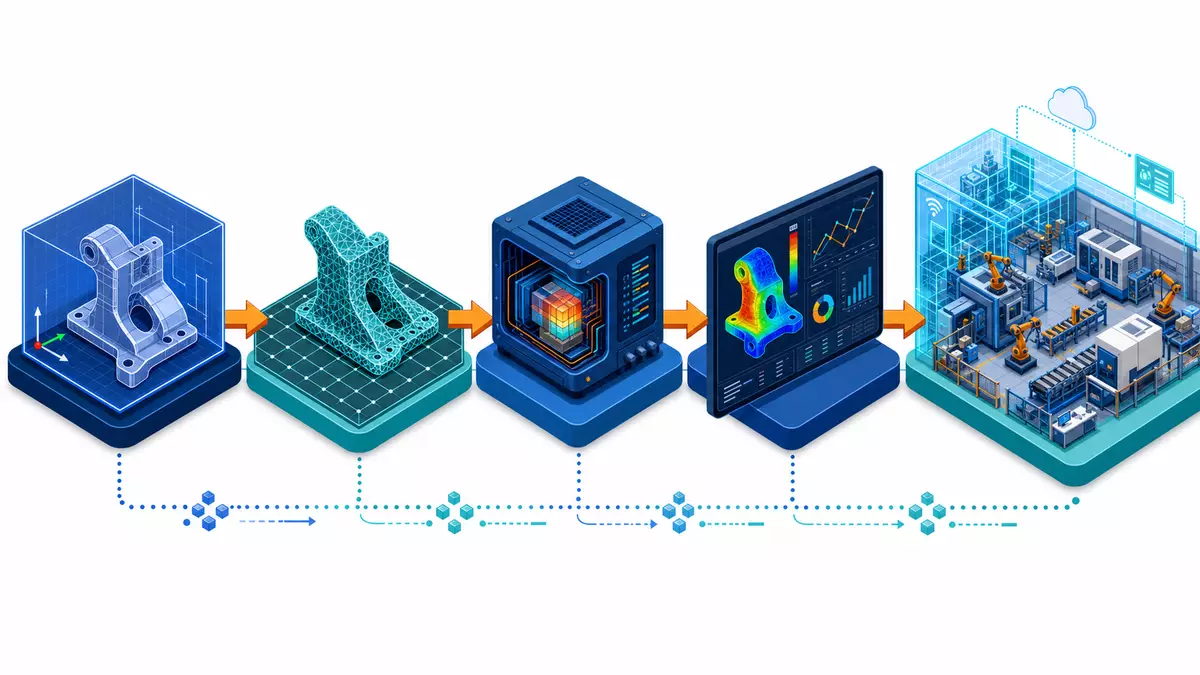
ANSYS stock trades near record levels as simulation demand supports growth
Published on 07/23/2026 at 02:53 | Editorial responsibility: Rafael Müller, Editor-in-Chief AD HOC NEWS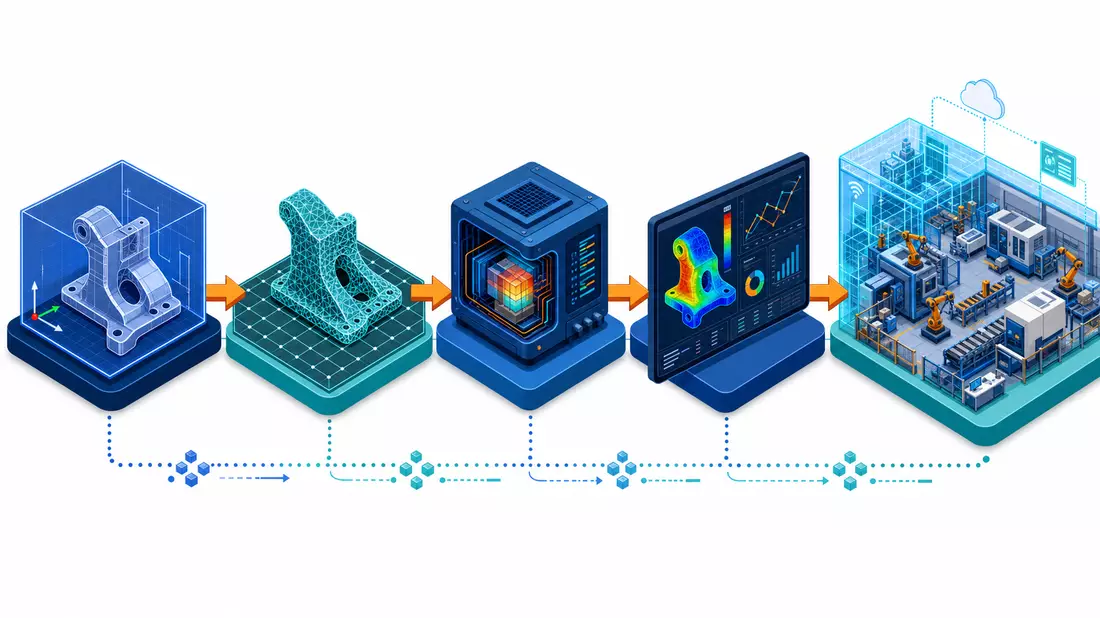
ANSYS Inc. (ISIN US0357101090) is a leading provider of engineering simulation software, and ANSYS stock has benefited from multi-year growth in demand for digital design and verification tools across industries. The company is listed on Nasdaq, where it is widely followed by institutional and retail investors as a specialist in physics-based simulation, high-performance computing and digital twin technology. Investors focus on how ANSYS converts its installed base and long-standing customer relationships into recurring revenue and margin expansion in an environment where product complexity, sustainability requirements and time-to-market pressures increase the relevance of advanced simulation.
Revenue growth shapes ANSYS stock
ANSYS generates the majority of its revenue by licensing its simulation software and related services to engineering and R&D teams in sectors such as aerospace, automotive, industrial machinery, electronics and energy. Over recent years, the company has reported steady revenue growth as more customers adopt its tools deeper in their product development workflows. Recurring revenue from lease licenses and maintenance contracts has become an increasingly important part of the business model, providing visibility and smoothing out cyclicality from one-time perpetual license sales. For ANSYS stock, investors closely watch the balance between new license bookings and recurring revenue to gauge the durability of the company’s growth profile and the potential for operating leverage.
Profitability is another key metric for ANSYS. The company’s software-centric model supports high gross margins, and management typically aims to convert a significant share of incremental revenue into operating income once core development costs and sales infrastructure are in place. Over time, ANSYS has emphasized investments in new simulation capabilities, cloud delivery and integration with third-party platforms, which can mute near-term margin expansion but are designed to sustain competitive positioning. For ANSYS stock, this trade-off between investing for future growth and delivering current margin improvement is central to valuation debates among investors who compare the company to other design software and engineering tools providers.
Simulation portfolio underpins ANSYS stock valuation
The breadth of ANSYS’s simulation portfolio is a core driver of its strategic positioning and, by extension, ANSYS stock valuation. The company offers tools for structural mechanics, fluid dynamics, electromagnetics, semiconductor design, optics, acoustics and multi-physics problems, allowing customers to model how complex products behave under real-world conditions before physical prototypes are built. This capability reduces development time and cost and can improve the reliability and performance of products ranging from aircraft components and automotive powertrains to printed circuit boards and 5G antennas.
ANSYS has also invested in multiphysics simulation and digital twin technology, where virtual representations of physical assets are maintained and analyzed throughout their lifecycle. In industrial contexts, this can support predictive maintenance, performance optimization and energy efficiency improvements. For ANSYS stock, investors see these capabilities as a way to expand the company’s addressable market beyond traditional design engineering into operational analytics and asset management, potentially unlocking new revenue streams and deeper customer relationships.
Integration with other design and data platforms is another pillar of ANSYS’s strategy. The company works with partners and customers to ensure its tools can be embedded in broader product lifecycle management, computer-aided design and enterprise data environments. This integration is important because it makes simulation more accessible to cross-functional teams and aligns ANSYS’s offerings with digital thread and model-based systems engineering initiatives. ANSYS stock is influenced by the company’s ability to remain a central, interoperable toolset in these increasingly complex digital engineering ecosystems.
Cloud delivery and high-performance computing
ANSYS has progressively embraced cloud delivery and high-performance computing (HPC) architectures to meet customer demand for scalable, flexible simulation resources. Complex models, such as those used in aerodynamics or advanced electronics, often require significant computational power, and running these workloads in the cloud allows customers to scale on demand without investing heavily in on-premises infrastructure. For ANSYS stock, the shift toward cloud-enabled offerings and consumption-based licensing can affect revenue recognition patterns, recurring revenue levels and margin dynamics, all of which investors monitor closely.
Cloud-based simulation also opens up opportunities for new types of users, including smaller firms and start-ups that may not have historically had access to enterprise-grade HPC resources. By packaging its solutions in more accessible, user-friendly formats and leveraging digital marketplaces and partner channels, ANSYS aims to broaden its customer base. This diversification across company sizes and regions can help stabilize revenue growth and reduce exposure to any single industry cycle, which is relevant for ANSYS stock holders who assess the resilience of the business through different macroeconomic environments.
Security, data governance and regulatory compliance are key considerations in cloud deployments, especially in industries such as aerospace and defense. ANSYS invests in meeting these requirements so that sensitive designs and performance data can be simulated in secure environments. Successful navigation of these constraints enhances trust among customers and supports adoption of cloud-based simulation, contributing indirectly to the perception of ANSYS stock as a play on secure, scalable engineering capabilities.
Industry diversification supports ANSYS stock
One of ANSYS’s strengths is its diversified industry exposure, which helps mitigate the impact of sector-specific downturns on overall performance. In aerospace and defense, simulation tools are used to optimize aircraft structures, propulsion systems, avionics and stealth characteristics, where safety, reliability and regulatory compliance are critical. In automotive and transportation, ANSYS software supports the design of powertrains, chassis, autonomous driving systems and electrification components, areas where the transition to electric vehicles and advanced driver assistance systems increases complexity and simulation demand.
In electronics and semiconductors, ANSYS offers tools for signal integrity, power integrity, electromagnetic compatibility and thermal management, all of which are essential for high-speed, high-density designs. As components become smaller and more powerful, the risk of interference, overheating and performance degradation grows, and detailed simulation becomes indispensable. For ANSYS stock, exposure to electronics and semiconductor demand is significant because these industries are central to trends such as 5G, data centers, cloud computing and consumer devices.
Energy and industrial sectors also rely on ANSYS solutions to design turbines, compressors, pipelines, renewable energy systems and complex machinery. These applications involve fluid dynamics, structural loads and multi-physics interactions under varying conditions, where simulation can help optimize efficiency and reliability. By serving customers across aerospace, automotive, electronics, energy and industrial machinery, ANSYS reduces dependency on any single vertical, which is a positive factor in how ANSYS stock is viewed in terms of risk diversification and long-term growth potential.
Digital transformation and sustainability trends
ANSYS is positioned at the intersection of digital transformation and sustainability initiatives in engineering and manufacturing. Companies across industries are digitizing their development processes, seeking to create connected, data-driven workflows that reduce cycle times and improve collaboration between teams. Simulation sits at the heart of these efforts because it allows engineers to test design options virtually, identify issues early and iterate quickly without constructing multiple physical prototypes.
Sustainability goals, such as reducing energy consumption, minimizing material waste and lowering emissions, can be advanced through simulation by optimizing designs for efficiency and environmental impact. For example, aerodynamics improvements in vehicles, optimized heat management in electronics and more efficient industrial machinery can all be achieved with the help of ANSYS tools. Investors who see sustainability as a driver of long-term demand for engineering solutions may regard ANSYS stock as an indirect beneficiary of regulatory and corporate commitments to environmental performance.
Regulatory requirements in industries ranging from automotive safety to aerospace certification often mandate rigorous testing and validation of designs. Simulation can complement physical testing by providing additional data and scenarios that might be impractical or too costly to replicate physically. As regulators grow more familiar with simulation tools and methodologies, the acceptance of virtual testing in certification processes can increase. This trend is relevant for ANSYS stock because it further institutionalizes the use of the company’s software in mission-critical workflows.
ANSYS product family and flagship tools
ANSYS offers a wide range of products that form its core simulation portfolio and serve as key revenue drivers. Flagship tools include ANSYS Mechanical for structural analysis, ANSYS Fluent for computational fluid dynamics (CFD), ANSYS HFSS for high-frequency electromagnetics and ANSYS Electronics Desktop for integrated electronics design workflows. These solutions allow customers to model stress, vibration, heat transfer, fluid flow, electromagnetic propagation and other physical phenomena in complex geometries and operational conditions.
The company’s products often work together in multiphysics scenarios, where different types of physics are coupled to capture the full behavior of a system. For example, thermal and structural simulations may be combined to analyze how temperature changes affect mechanical properties over time, or electromagnetic and thermal models may be integrated in high-power electronics design. This multiphysics capability differentiates ANSYS from more narrowly focused tools and supports its positioning in high-end engineering applications, which in turn influences how ANSYS stock is regarded relative to other software vendors.
ANSYS also provides tools for optimization and design exploration, enabling customers to automatically vary design parameters and evaluate performance across broad design spaces. These capabilities are important in industries where weight, cost, efficiency and safety must be balanced, and they align with trends toward generative design and AI-assisted engineering. By embedding optimization and exploration in its workflow, ANSYS enhances the value of its core solvers and encourages deeper usage, which supports software license and services revenue.
Licensing models and recurring revenue
ANSYS’s licensing model has evolved over time from a focus on perpetual licenses toward a mix that includes leases, subscriptions and maintenance contracts. Perpetual licenses typically involve a one-time payment plus ongoing maintenance, while subscription and lease models spread costs over time and can be more flexible for customers whose project pipelines fluctuate. For ANSYS stock, the increasing share of recurring revenue is a key point of interest because it contributes to revenue visibility, smooths quarterly results and can support higher valuation multiples compared to more transaction-driven software businesses.
Maintenance and support contracts provide customers with access to updates, technical assistance and, in some cases, additional tools and resources. These contracts are often renewed annually or over multi-year terms, and high renewal rates indicate strong customer satisfaction and embeddedness of ANSYS products in workflows. Investors monitor renewal rates as an indirect measure of the health of the installed base and the likelihood of upselling advanced modules or expanding deployments to new teams and sites, which matters for ANSYS stock’s growth outlook.
ANSYS also offers enterprise agreements and customized arrangements for large customers who deploy simulation extensively across their organizations. These agreements can involve complex pricing and usage structures, including global license pools, shared resources and dedicated support. While they can introduce variability in revenue recognition, they also deepen relationships with strategic accounts and may lead to long-term embedded positions. The balance between standardized subscription offerings and tailored enterprise deals is part of how investors analyze ANSYS’s revenue composition and margin profile.
Competitive landscape and ANSYS stock
ANSYS competes in a dynamic market for engineering simulation and design tools. Other software companies offer overlapping capabilities in areas such as structural analysis, fluid dynamics and electronics simulation, and customers often evaluate multiple vendors when selecting tools for their workflows. ANSYS’s reputation for accuracy, robustness and breadth of physics coverage is a significant advantage, especially in industries where simulation outcomes inform high-stakes decisions about safety, performance and regulatory compliance.
The company’s position in the competitive landscape partly depends on its ability to innovate and maintain computational performance advantages. As hardware evolves, especially in areas such as GPUs and distributed computing, ANSYS must adapt its solvers to harness new architectures efficiently. Doing so can improve throughput and scalability, making it more attractive to customers who run large numbers of simulations or highly complex models. This technical leadership supports ANSYS stock by reinforcing the company’s long-term relevance in a field where performance and accuracy are critical.
Strategic partnerships and ecosystem participation also matter in the competitive landscape. ANSYS works with hardware vendors, cloud providers and other software companies to optimize its tools for different platforms and workflows. These relationships can enhance flexibility for customers and extend the reach of ANSYS’s products into specialized niches or emerging application areas. Investors consider the depth and quality of these partnerships when evaluating ANSYS stock because ecosystem strength can be a differentiator in enterprise software selection.
Innovation, R&D and ANSYS stock
Research and development (R&D) investment is central to ANSYS’s strategy. The company allocates significant resources to improving solver algorithms, expanding physics coverage, refining user interfaces and embedding advanced technologies such as AI and machine learning in simulation workflows. By constantly refining its tools and addressing new engineering challenges, ANSYS aims to stay ahead of emerging requirements and maintain its reputation as a high-end simulation provider.
Innovation in user experience is another focus area. While core solvers remain highly technical, ANSYS invests in interfaces, templates and workflows that make complex capabilities more accessible to a broader range of users. This can include preconfigured environments for specific industries, guided simulation setups and visualization tools that help non-expert stakeholders understand results. Such improvements support adoption across engineering disciplines and management levels, potentially increasing per-customer usage and supporting ANSYS stock’s growth trajectory.
Long-term innovation initiatives may involve exploring new domains such as bioengineering, advanced materials, additive manufacturing or emerging energy systems. As industries experiment with novel materials, manufacturing techniques and system architectures, simulation becomes essential to understanding behavior under varied conditions. ANSYS’s ability to adapt its tools to these new areas, and to integrate them into existing workflows, influences its future growth potential and indirectly affects investor perceptions of ANSYS stock.
ANSYS products in focus
ANSYS Mechanical is one of the flagship products that illustrates the company’s role in structural analysis. Engineers use it to simulate how parts and assemblies respond to loads, vibrations, thermal effects and other forces, helping to ensure that designs meet safety and performance requirements before physical testing. In aerospace, automotive and industrial machinery, such simulations can reduce the risk of failures and optimize material usage, which is aligned with both cost and sustainability objectives.
ANSYS Fluent, a widely used CFD tool, enables the simulation of fluid flow, heat transfer and related phenomena in applications such as aerodynamics, HVAC systems, internal combustion engines and process equipment. Engineers can model turbulence, compressible flows, reacting gases and multiphase fluids, among other scenarios. The ability to visualize flow patterns, temperature distributions and pressure fields empowers designers to refine shapes and configurations, improving efficiency and performance.
ANSYS HFSS, focused on high-frequency electromagnetics, is critical in designing antennas, RF components, microwave circuits and high-speed interconnects. As wireless communication standards evolve and data rates increase, ensuring signal integrity, minimizing interference and complying with regulatory limits becomes more complex. HFSS provides detailed field-level simulations that help engineers design and validate components and systems for applications ranging from smartphones and networking equipment to radar and satellite communications.
Investor perspective on ANSYS stock
From an investor standpoint, ANSYS stock represents exposure to the broader trend of digitization in engineering and manufacturing. As companies move more design and testing activities into virtual environments, simulation tools become embedded in core processes, increasing switching costs and the importance of reliable, accurate solutions. ANSYS’s long history and reputation in this domain contribute to its appeal as a long-term holding for investors who seek participation in industrial digital transformation.
Valuation discussions around ANSYS stock often center on the balance between growth and profitability, the resilience of recurring revenue and the competitive positioning of its product portfolio. Some investors view the stock as a premium-valued asset due to its high margins, specialized capabilities and strategic role in customer workflows. Others scrutinize the pace of innovation, integration and cloud adoption, looking for evidence that ANSYS can maintain or expand its market share as new technologies and competitors emerge.
Risk factors considered by investors include macroeconomic slowdowns that could affect capital spending on engineering tools, regulatory changes that influence how simulation is used, and competitive introductions that challenge ANSYS’s product set. However, the fundamental drivers of product complexity, efficiency requirements and sustainability pressures provide a structural backdrop that continues to support demand for advanced simulation over long horizons.
Representative product line: ANSYS Mechanical
Among the company’s products, ANSYS Mechanical provides a clear example of how ANSYS translates physics-based simulation into customer value. Engineers use ANSYS Mechanical to model stresses, strains, deformation and vibration in structural components and assemblies under a wide range of load cases, including static loads, dynamic events and thermal effects. This allows them to identify weak points in a design, optimize material distribution and ensure compliance with safety and performance criteria before building prototypes.
ANSYS Mechanical supports linear and nonlinear analysis, including plasticity, contact problems and large deformation scenarios that are common in many industrial applications. It can be integrated with optimization tools to automatically adjust design parameters in pursuit of objectives such as weight reduction, stiffness improvement or fatigue life extension. By enabling virtual testing of multiple design variants, ANSYS Mechanical reduces reliance on iterative physical testing, saving time and cost in development programs.
In multi-disciplinary contexts, ANSYS Mechanical can be part of broader multiphysics workflows, for example when structural and thermal analyses are combined to evaluate how heat affects material behavior, or when acoustic simulations are linked to structural vibrations in automotive or consumer product designs. These capabilities exemplify ANSYS’s broader value proposition: enabling customers to understand and optimize complex systems holistically, which supports not only performance and reliability but also sustainability and cost goals.
ANSYS stock and market context
ANSYS stock trades on Nasdaq, where technology, software and semiconductor-related companies play a significant role in index composition and investor attention. The company’s exposure to electronics, high-performance computing and engineering software situates it among firms that benefit from digital infrastructure investments, R&D spending and industrial modernization initiatives. For market participants, ANSYS stock offers a way to gain exposure to simulation and design trends without directly investing in hardware manufacturers or industrial operators.
The stock’s performance over time reflects both company-specific developments and broader market conditions, including interest-rate environments, risk appetite and sector rotations between growth and value. As a software company with specialized capabilities and high margins, ANSYS can be sensitive to shifts in investor preferences regarding valuation multiples for technology and software stocks. Nevertheless, its focus on mission-critical tools and recurring revenue can support resilience compared to more discretionary technology offerings.
Investors who monitor ANSYS stock often consider technical chart patterns, such as long-term support and resistance levels, alongside fundamental analysis. While specific price levels, support zones and trading ranges can change over time, the combination of chart-based and fundamental perspectives provides a richer view of how the market interprets ANSYS’s business trajectory and risk profile.
Closing view on ANSYS stock
ANSYS stock represents a specialized position in the software segment, tied to engineering simulation, digital product development and multiphysics analysis. The company’s extensive product portfolio, industry diversification and emphasis on innovation support its role as a key supplier in high-end engineering workflows. For investors, understanding how ANSYS balances growth, margins, recurring revenue and competitive dynamics is central to evaluating the stock’s long-term potential and its place within diversified portfolios.
As simulation becomes further embedded in product lifecycle management, regulatory compliance and sustainability strategies, ANSYS’s tools are likely to remain relevant across multiple industries. The company’s efforts in cloud delivery, high-performance computing, multiphysics and digital twins align with broader trends in industrial digitization. These factors contribute to the perception of ANSYS stock as a way to participate in the ongoing evolution of engineering and manufacturing practices centered on virtual modeling and analysis.
ANSYS stock fact box
- Company: ANSYS Inc.
- ISIN: US0357101090
- Ticker: NASDAQ: ANSS
- Trading venue: Nasdaq
- Sector / Industry: Software - Application / Engineering simulation
- Index membership: S&P 500
Disclaimer regarding our articles: No investment advice, no buy or sell recommendation. Information on prices, companies, and markets is provided without guarantee; changes are possible at any time. Stock market transactions can lead to substantial losses. Our articles are created and reviewed in whole or in part automatically with the support of AI.