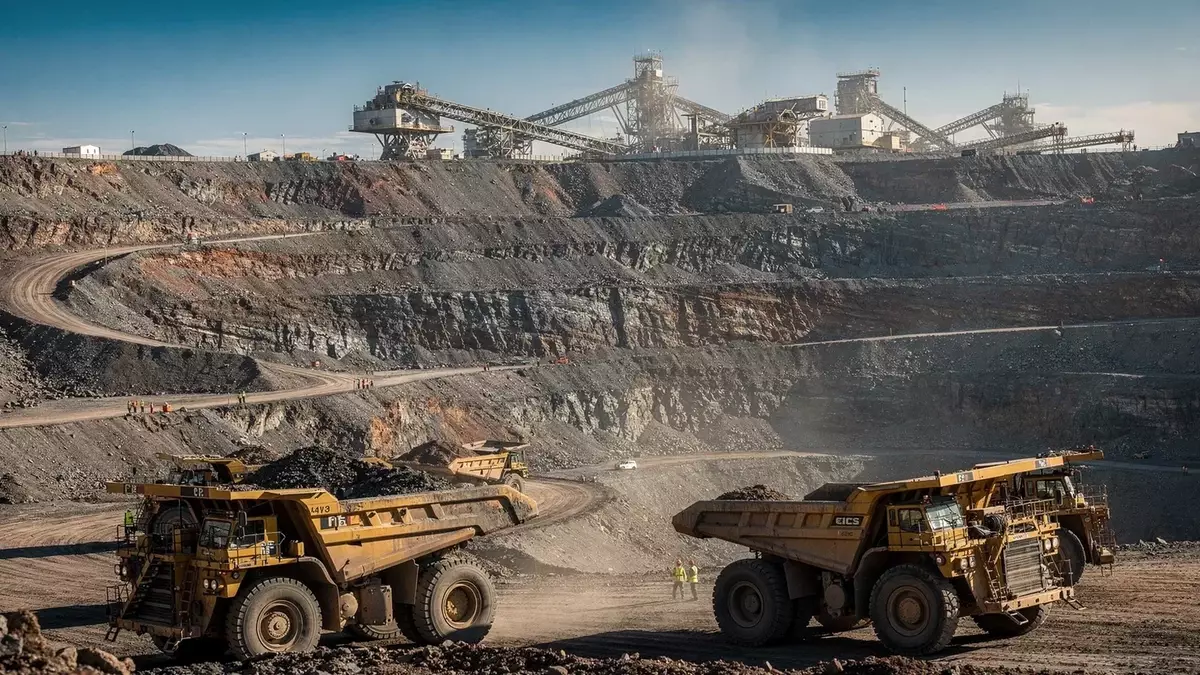
Antimony Resources Faces a Market Paradox: High-Grade Trench Hits, Yet Investors Head for the Exit
26.06.2026 - 13:52:52 | boerse-global.de
The disconnect between exploration success and share price performance at Antimony Resources is becoming hard to ignore. On June 25, the Canadian junior released assay results from a spring trenching program at its Bald Hill antimony project in New Brunswick – and the market responded by dumping its stock. The shares lost roughly 17 percent on the day, extending a monthly decline to around 30 percent. At roughly €0.35, the equity now sits 67 percent below the March 2026 high of €1.05.
The trench results themselves were anything but disappointing. Across a 170-metre strike in the Central Zone, 24 samples returned an average antimony grade of 4.5 percent, with a peak value of 20.5 percent. Gold also showed up as a by-product: grades averaged 0.43 grams per tonne, with individual samples reaching 4.72 g/t. The trenches follow a northwest-southeast orientation and provide the first reliable surface data for the zone.
The Central Zone sits roughly 150 metres south of the already-known Main Zone. Company geologists see evidence that the two mineralised bodies could be connected. If that continuity holds, the combined strike length would exceed 1,000 metres. A drilling programme is currently testing exactly that link, and first assay results from the core samples are expected in three to four weeks.
Should investors sell immediately? Or is it worth buying Antimony Resources?
Those results will be decisive. Surface sampling is encouraging but cannot prove an economically viable deposit. Only core drilling can confirm thickness, depth continuity, and grade consistency. With the stock’s relative strength index at 35.6 and annualised volatility running close to 100 percent, the shares are balanced on a knife’s edge.
The strategic backdrop adds another layer. Antimony is classified as a critical mineral by the G7, used in flame retardants and military applications. Recent export restrictions by China – the dominant producer – have tightened supply. A high-grade deposit in a politically stable jurisdiction would be a scarce asset, but Antimony Resources remains a pure explorer. Future capital raisings are a structural risk that will dilute existing holders, regardless of project success.
A second major catalyst is on the horizon: the maiden mineral resource estimate for Bald Hill. The company hired SRK Consultants in March 2026 to prepare the study. A conceptual exploration target from a 2025 technical report pointed to roughly 2.7 million tonnes at 3–4 percent antimony – not a resource, but a guideline. Should SRK’s estimate confirm similar tonnage and grade, it would mark a formal revaluation event.
For now, the market is selling every positive headline. The trench data was strong, but investors are waiting for proof that the mineralisation extends in depth. The next three to four weeks will deliver that answer. If the drill core confirms high grades and continuity, a re-rating is likely. If the intercepts disappoint, the gap to the 52-week high will only widen further.
Ad
Antimony Resources Stock: New Analysis - 26 June
Fresh Antimony Resources information released. What's the impact for investors? Our latest independent report examines recent figures and market trends.