Antimony Resources: Surface Grades of 20.5% Antimony Can’t Shake Lock-Up Overhang
27.06.2026 - 13:26:15 | boerse-global.de
The market’s attention has drifted away from the latest high-grade rock chip results at Bald Hill and settled firmly on the calendar. Antimony Resources is staring at a June 29 lock-up expiry that hangs over the stock like a dark cloud, even as exploration data from the Central Zone continues to impress.
Investors have turned skittish. The stock closed at EUR 0.35 on Friday, shedding nearly 27% over the past 30 days and falling decisively below both its 50-day and 200-day moving averages. That marks a stark retreat from the 52-week high of EUR 1.05 reached in March — a level that now seems distant despite a year-to-date gain of more than 424% from the cycle lows. The relative strength index has slipped to 36.0, technically oversold, yet buyers remain on the sidelines. Annualized volatility sits at a punishing 97%.
The cause of the anxiety is a block of roughly 21 million shares and broker warrants set to come free from lock-up restrictions. These units stem from a December 2025 private placement that raised CAD 9.5 million at CAD 0.45 per unit, each unit containing one common share and a warrant exercisable at CAD 0.75. With the current stock trading well below that exercise price, those who participated are sitting on paper losses — a recipe for potential selling pressure once the lock-up lifts.
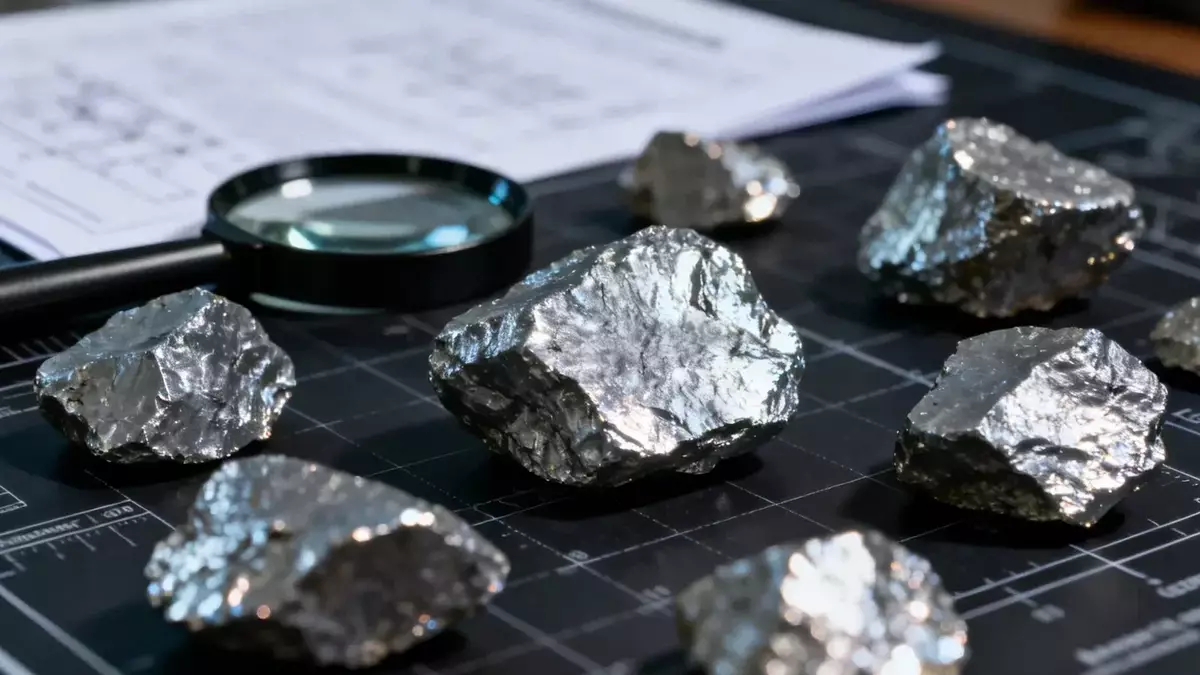
None of this has diminished the geological story at Bald Hill. On June 25, Antimony Resources released assays from 24 rock samples collected in the Central Zone, a target roughly 150 metres south of the Main Zone. The samples, taken from surface trenches spanning about 170 metres of strike length, averaged 4.5% antimony, with individual samples hitting up to 20.5% antimony. Gold also appeared, averaging 0.43 g/t and peaking at 4.72 g/t.
Should investors sell immediately? Or is it worth buying Antimony Resources?
The mineralization style — stibnite hosted in brecciated sediments — mirrors the Main Zone, which has already been tagged as high-grade. A string of recent drill holes only reinforced that pattern. Hole BHW-26-04 returned 36.0% antimony, and BH-26-15 delivered 27.0% antimony, both extending the Main Zone southward. Meanwhile, in the South Zone, roughly 900 metres from the Main Zone, 38 samples over a 200-metre interval averaged 19.5% antimony with a peak of 44.2%.
But surface samples and scout drilling only go so far. The company is waiting on the next big catalyst: comprehensive laboratory results from its Central Zone drill program, expected in three to four weeks — roughly mid-July. These will determine whether the surface highs translate into continuity and width at depth. Management has cautioned against drawing premature conclusions, noting that surface assays alone cannot underpin a viable mine model.
Alongside the drilling data, a formal NI 43-101 resource estimate from SRK Consultants in Toronto is also due. Originally scheduled for April or May, the report slipped to June and is designed to certify — or revise — a conceptual exploration target of approximately 2.7 million tonnes grading 3% to 4% antimony. That document will be a critical benchmark for the project’s economic potential.
Regulatory work is already moving in parallel. GEMTEC Consulting Engineers of Fredericton is preparing a permitting roadmap, and early discussions with government agencies and the Department of Indigenous Affairs have begun. Antimony Resources aims to submit a formal permit application in the fourth quarter of 2026 or the first quarter of 2027. Preliminary talks with metal traders about potential offtake agreements have also been initiated.
Antimony Resources at a turning point? This analysis reveals what investors need to know now.
Geopolitical dynamics remain firmly in the company’s favour. China imposed antimony export restrictions in two phases in late 2024, and a full export ban to the United States is currently suspended until 27 November 2026 — with only 11 Chinese companies licensed to ship the metal. The U.S. imports between 20,000 and 25,000 tonnes of antimony annually and has no domestic primary production since the Sunshine Mine in Idaho closed in 2001. The strategic importance of the metal was underscored in May when the U.S. Export-Import Bank extended a secured loan of roughly $2.9 billion to Perpetua Resources for the Stibnite project in Idaho.
For Antimony Resources, the next two weeks are a tightrope. If the lock-up expires without a major sell-off, the market may refocus on the project’s exploration trajectory and the impending resource estimate and drill results. If selling materialises, the technical picture could worsen before it improves. Either way, June 29 is the immediate test — and everything after that depends on what happens once the overhang is lifted.
Ad
Antimony Resources Stock: New Analysis - 27 June
Fresh Antimony Resources information released. What's the impact for investors? Our latest independent report examines recent figures and market trends.