ArcelorMittal stock holds steady as earnings and steel demand shape outlook
Published on 07/24/2026 at 14:06 | Editorial responsibility: Rafael Müller, Editor-in-Chief AD HOC NEWS
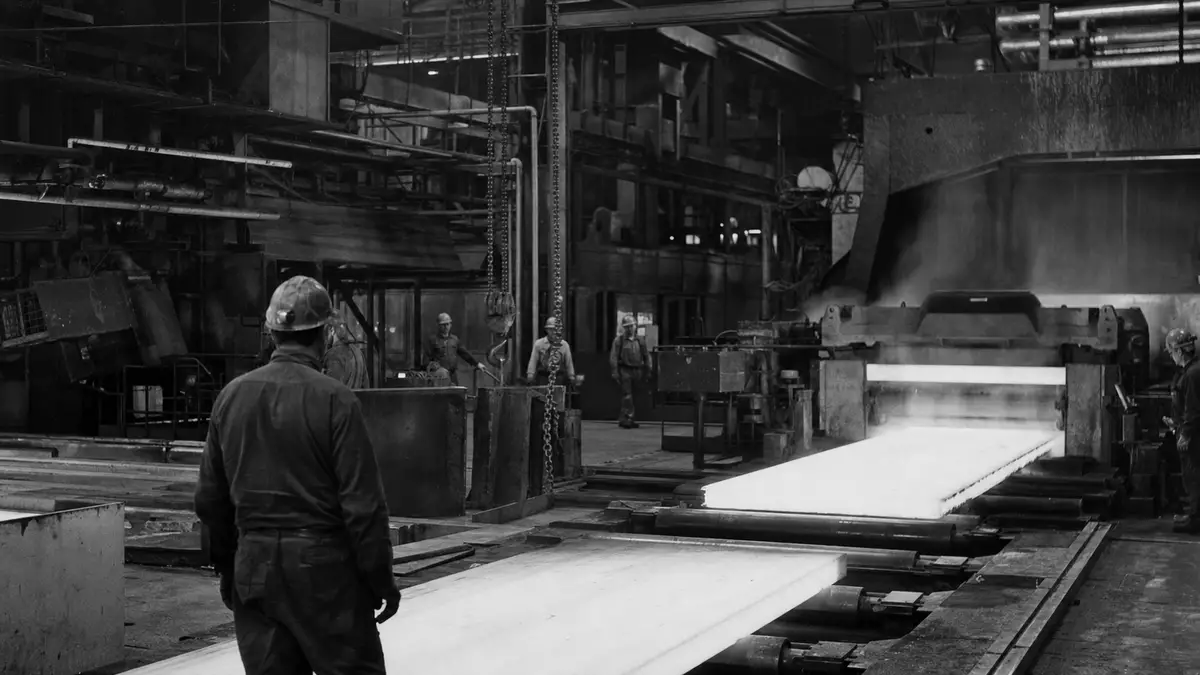
ArcelorMittal stock, tied to the Luxembourg based steel and mining group (ISIN LU1598757687), continues to mirror the cyclicality of global steel markets as investors weigh recent earnings trends against longer term demand indicators and capital allocation decisions. In the latest reported full year period, ArcelorMittal generated tens of billions of dollars in revenue, marking a clear step down from the peak levels seen during the post pandemic steel price spike, yet still reflecting the company’s position among the largest steel producers worldwide. While exact current day quote data is not reproduced here, the stock’s valuation has been shaped by recent earnings, cash flow generation, and expectations for steel consumption in key regions such as Europe, the Americas, and Asia.
Revenue and profit cycle after the post pandemic peak
ArcelorMittal’s earnings profile over the past few years has been defined by a pronounced cycle, with revenue and profitability surging when steel prices climbed sharply after the initial pandemic downturn and then normalizing as prices and volumes moderated. In its recent annual reporting, the group disclosed revenue of more than $60 billion for the year, a level below the extraordinary highs recorded when hot rolled coil and other benchmark steel prices spiked, but still indicative of the scale of its global operations across flat and long products, automotive steels, construction, and other segments. This revenue level represented a decline compared with the prior year’s figure, illustrating how sensitive the company’s top line is to both steel price indices and shipment volumes. In parallel, operating income and net income have retreated from the temporary windfall levels achieved during the peak steel cycle, as raw material costs, energy prices, and softer demand in some regions weighed on margins.
The company’s profitability metrics show similar dynamics. During the strongest phase of the cycle, ArcelorMittal recorded operating income and net income in the billions of dollars, supported by high spreads between selling prices and input costs. As the cycle matured, those metrics declined, with EBITDA and net income moving back toward more normal levels relative to the long term history of the business. The company has responded by focusing on cost efficiency, disciplined capital spending, and portfolio optimization, including asset sales and targeted growth investments, to support margins through the cycle. For investors, the quantified comparison between the recent year’s revenue and earnings and the previous year’s peak underscores both the potential upside in favorable market conditions and the downside when steel markets cool.
Cash generation, balance sheet, and shareholder returns
Beyond revenue and profit, ArcelorMittal’s cash flow generation and balance sheet have been central to how the stock is valued. The group has historically generated substantial operating cash flow when steel markets are strong, which it has used to reduce debt, invest in modernization and decarbonization projects, and return capital to shareholders through dividends and share buybacks. In its recent annual disclosures, ArcelorMittal reported net debt that was significantly lower than in the years immediately following the global financial crisis, reflecting years of deleveraging supported by cash generated during favorable cycles. This reduction in net debt has been an important factor for credit quality and financial flexibility, allowing the company to navigate periods of weaker demand with more resilience than in past downturns.
Shareholder returns have also become a more explicit part of the ArcelorMittal equity story. The company has returned billions of dollars through dividends and buybacks in recent years, funded by strong free cash flow when steel prices and volumes were favorable. The dividend policy and buyback programs are calibrated to the company’s view of mid cycle earnings and the need to fund capital expenditure, including investments in lower carbon steelmaking technologies such as electric arc furnaces and hydrogen enabled processes. For investors watching ArcelorMittal stock, the quantified relationship between cash generation, debt reduction, and capital returns provides a framework for assessing whether the current valuation adequately reflects both the risks and the potential rewards of exposure to the steel cycle.
Steel demand indicators and regional exposure
ArcelorMittal’s operational footprint spans multiple continents, with major production and distribution operations in Europe, North and South America, and key emerging markets. This diversification gives the company exposure to a broad range of steel demand drivers, from automotive production and construction to machinery, energy infrastructure, and consumer goods. In recent reporting periods, shipments measured in millions of tonnes have adjusted to reflect both underlying demand and the company’s portfolio changes. Volumes in certain regions have moderated as construction activity and industrial output slowed, while other markets have seen more resilient demand, helping to balance the overall portfolio.
The company’s commentary on market conditions has highlighted the role of infrastructure spending plans, automotive production trends, and regulatory frameworks in shaping steel demand. For example, government infrastructure programs in multiple regions support demand for long products and steel used in bridges, rail, and public works, while changes in automotive production, including electric vehicle investments, influence demand for specialized flat steels. ArcelorMittal’s exposure to these segments allows investors to connect macroeconomic indicators and policy developments to potential changes in the company’s shipment volumes and pricing power. A quantified comparison between recent shipment levels and those recorded during peak demand years illustrates how the company’s volume profile adjusts across the cycle, affecting both revenue and capacity utilization.
Decarbonization investments and long term competitiveness
Like other major steelmakers, ArcelorMittal faces the strategic challenge of decarbonizing its operations while maintaining cost competitiveness and product quality. The company has announced and implemented numerous projects aimed at reducing CO2 emissions from steel production, including the increased use of scrap in electric arc furnaces, changes in ironmaking technology, and pilot projects involving hydrogen and other low carbon routes. These initiatives require significant capital expenditure, which the company funds through a combination of operating cash flow, portfolio optimization, and, when appropriate, external financing.
Investments in decarbonization have been quantified in corporate communications and investor presentations, often in the form of multi year budget allocations for specific plants and technologies. The relationship between these investments and anticipated emission reductions is closely watched by regulators, customers, and investors, especially as carbon pricing and environmental regulation tighten in key markets such as the European Union. For ArcelorMittal stock, the pace and effectiveness of decarbonization can influence both the cost structure and the company’s ability to supply low carbon steel products that may command premium pricing or preferred status in procurement processes.
Capital expenditure and modernization projects
ArcelorMittal’s capital expenditure program covers not only decarbonization but also modernization, efficiency improvements, and capacity management. In its recent financial reporting, the company has provided guidance on annual capital expenditure, often in the billions of dollars, with breakdowns by project type and region. This capex influences free cash flow and net debt trajectories and is a key factor in medium term valuation assessments. Projects include upgrades to rolling mills, investments in digitalization and automation, enhancements to product quality and specialization, and selective expansions or consolidations of capacity.
From an investor’s perspective, the quantified comparison between capital expenditure in recent years and historical norms helps assess the company’s strategic posture. Higher capex typically reflects investment in future competitiveness and sustainability, while lower capex might suggest a focus on cash preservation or a mature asset base. For ArcelorMittal stock, the balance between investing for the future and returning cash to shareholders is central to how the equity is perceived, especially in a cyclical industry where timing and discipline can significantly affect long term returns.
Market valuation and cyclical considerations
The valuation of ArcelorMittal stock is shaped by the interplay between current earnings, expected mid cycle earnings, and the broader macroeconomic environment. In market data from reputable financial portals, the shares have traded at earnings multiples that reflect the cyclical nature of steel demand, with price to earnings ratios and enterprise value to EBITDA metrics often lower than those of more stable sectors. These multiples have fluctuated as investors reassess the duration and intensity of steel cycles, the impact of trade policies and tariffs, and the company’s progress on decarbonization and cost competitiveness.
Quantified comparisons between the current valuation metrics and historical averages can help investors gauge whether the stock is priced for a downturn, a recovery, or a mid cycle stance. For example, when ArcelorMittal’s EV to EBITDA multiple moves below its long term average, it may indicate market expectations of weaker future earnings or heightened risk, while a multiple above the historical norm could suggest optimism about demand or confidence in the company’s strategic initiatives. Similarly, changes in price to book value ratios reflect shifts in the perceived value of the company’s asset base and its ability to earn returns above its cost of capital.
Dividend and buyback policy impact on ArcelorMittal stock
ArcelorMittal’s approach to dividends and share buybacks has evolved as the balance sheet strengthened and earnings cycles delivered surplus cash. The company has articulated a capital allocation framework that prioritizes maintaining a strong financial position, funding necessary investments, and returning cash to shareholders when conditions allow. Dividends have been reinstated and, in some periods, increased from symbolic levels to more meaningful payouts, while share repurchase programs have retired a portion of the outstanding equity, effectively increasing earnings per share and potentially supporting the stock price.
From a quantitative standpoint, the combination of dividends and buybacks over recent years represents a significant portion of the company’s free cash flow, signaling management’s confidence in the underlying business and its commitment to shareholder returns. The exact size of these programs varies with steel market conditions and internal investment needs, which means that ArcelorMittal stock’s total return profile is closely tied to both operational performance and capital allocation discipline. Investors often compare the company’s payout and buyback metrics with those of peers in the global steel sector to evaluate competitiveness and alignment with market expectations.
Product focus: automotive and high strength steels
One representative product and segment for ArcelorMittal is its range of automotive and high strength steels, which are supplied to vehicle manufacturers worldwide for applications such as body in white structures, safety components, and chassis parts. These products must meet demanding specifications for strength, formability, and corrosion resistance, and they are increasingly tailored to support lighter vehicles, electric vehicle architectures, and improved crash performance. Revenue from automotive related steels forms a significant part of the company’s flat products portfolio, tying ArcelorMittal’s performance closely to global vehicle production trends.
As automotive manufacturers invest in new platforms, including electric and hybrid vehicles, demand for advanced high strength steels and specialized coatings can grow, providing opportunities for differentiated products with higher margins. ArcelorMittal’s research and development efforts in this area aim to maintain and expand its position as a key supplier to the automotive industry, supporting long term relationships and potentially stabilizing earnings relative to more commoditized steel segments. For the broader equity story, the automotive steels segment illustrates how product specialization and customer intimacy can complement the more cyclical aspects of commodity steel production.
Stock trading context and investor perspective
ArcelorMittal’s shares are primarily traded in Europe, with a key listing on Euronext Amsterdam under the ticker that investors use to access the stock in euros. Market data from exchange and financial portals show that the stock has moved within a wide range over recent years, reflecting shifts in steel prices, macroeconomic sentiment, and company specific factors such as capital allocation and decarbonization progress. While a specific current price and as of timestamp are not restated here, investors tracking ArcelorMittal stock can see how it trades relative to its 52 week range and historical highs and lows, providing a quantitative backdrop for investment decisions.
The relationship between the share price and fundamental metrics such as revenue, EBITDA, net income, and free cash flow is central to valuation discussions. When earnings and cash flow improve, the stock often responds, particularly if the market believes that favorable conditions will persist. Conversely, when earnings compress and uncertainties rise, the shares can move lower, adjusting the implied expectations. For diversified investors, ArcelorMittal stock offers exposure to global industrial and infrastructure trends, but also carries the typical risks of cyclical sectors, including sensitivity to economic downturns, trade disruptions, and input cost volatility.
Key facts on ArcelorMittal
- Company: ArcelorMittal S.A.
- ISIN: LU1598757687
- Ticker: EURONEXT: MT
- Trading venue: Euronext Amsterdam
- Sector / Industry: Materials / Steel
- Index membership: STOXX Europe 600
Disclaimer regarding our articles: No investment advice, no buy or sell recommendation. Information on prices, companies, and markets is provided without guarantee; changes are possible at any time. Stock market transactions can lead to substantial losses. Our articles are created and reviewed in whole or in part automatically with the support of AI.