ASML stock steadies as investors weigh EU export probe and demand outlook
Published on 07/24/2026 at 07:02 | Editorial responsibility: Rafael Müller, Editor-in-Chief AD HOC NEWS
ASML stock reflects a balance between regulatory uncertainty and resilient chip-equipment demand as investors digest recent headlines about European scrutiny of export controls to China alongside a recovering order pipeline for advanced lithography tools. In its earnings release for Q2 2024, ASML Holding N.V. (ISIN NL0010273215) reported that net sales reached around EUR 5.3 billion in the quarter, compared with roughly EUR 6.9 billion in Q2 2023, illustrating how the current down-cycle and export restrictions have temporarily weighed on revenue.
Revenue around EUR 5.3 billion in Q2 2024
According to the company’s Q2 2024 financial update on its investor relations page, ASML generated approximately EUR 5.3 billion of net sales in the quarter, with a gross margin in the low to mid forty percent range, underscoring its structurally high profitability even in a softer demand environment. The same company disclosure shows that on a year-on-year basis, quarterly net sales declined from about EUR 6.9 billion in Q2 2023, a reduction of roughly EUR 1.6 billion, as logic and memory customers adjusted their investment plans and as shipments to certain Chinese customers faced tighter export licensing.
The earnings materials further indicate that net income for Q2 2024 remained solid at around EUR 1.2 billion, versus approximately EUR 1.9 billion in the prior-year quarter, demonstrating that the company’s profitability has moved with the revenue cycle but continues to support significant cash generation and shareholder returns. Management reiterated that full-year 2024 should be a transition year for the semiconductor equipment industry, with a more meaningful recovery anticipated into 2025 as customers prepare for new technology nodes and expand capacity for high-performance computing, automotive chips, and AI-related workloads. For investors, the key question is how quickly order intake for high-end lithography systems, particularly EUV tools, will translate into stronger revenue growth as macro headwinds ease.
Order book, EUV tools and China exposure
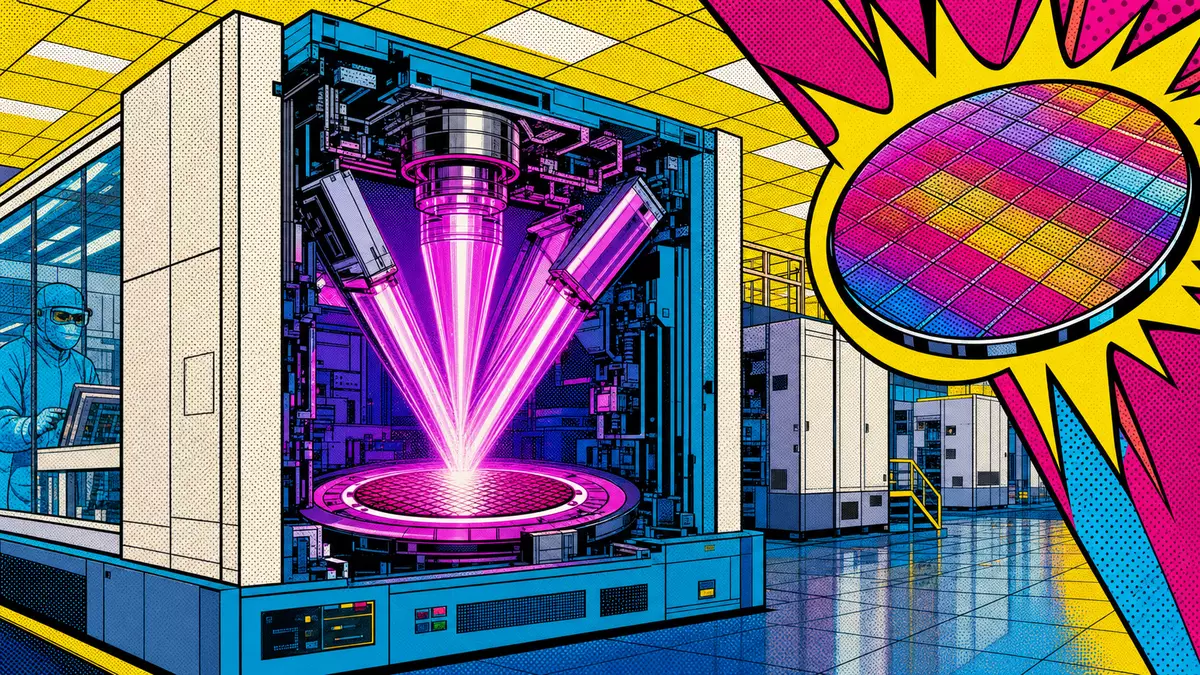
ASML’s investor materials highlight a substantial order backlog, which management has previously described as representing several quarters of future revenue and providing good visibility despite near-term market volatility. Within that backlog, demand for extreme ultraviolet (EUV) lithography systems remains central: EUV tools can reach price tags of well over EUR 150 million per unit, and a limited number of systems shipped or deferred can therefore materially move quarterly revenue. In prior reporting periods, the company has noted that a growing share of its sales is tied to EUV and high-NA EUV systems that enable customers to manufacture chips at the most advanced process nodes.
At the same time, exposure to China continues to be a focal point for investors. Public disclosures by the company and European authorities have emphasized that certain advanced systems, especially state-of-the-art EUV tools, are not licensed for shipment to some Chinese customers under US and Dutch export rules, while other, less advanced deep ultraviolet (DUV) equipment can still be supplied subject to case-by-case regulatory approval. Recent media coverage in Europe has reported that regulators are examining whether aspects of export controls and related industry practices could raise competition questions under EU law, adding another layer of uncertainty to ASML’s China-related revenue trajectory. For shareholders, this backdrop means that monitoring both regulatory developments and the mix of bookings between China, Taiwan, South Korea, the United States, and Europe remains important for understanding medium-term growth.
Further details on ASML earnings and guidance
The latest investor presentations and quarterly reports provide additional breakdowns of ASML’s regional revenue, order backlog, and EUV system shipments, which can help investors better assess the balance between regulatory risk and structural chip-demand growth.
EUV systems underpin long-term growth
A key pillar of ASML’s long-term investment case is the role of its EUV systems in enabling ever-smaller transistor geometries and higher transistor densities on advanced chips. Company disclosures have previously indicated that EUV-related revenue represented a significant fraction of total system sales in recent years, with dozens of systems shipped annually and each tool capable of generating hundreds of millions of euros over its life cycle when including upgrades and service. The transition toward high-NA EUV, designed for even smaller features and improved productivity, is expected to open an additional multi-year replacement and expansion cycle among leading-edge chipmakers.
Beyond EUV, ASML’s business model includes deep ultraviolet lithography systems, installed-base management, and software and computational lithography offerings that help customers improve yield and throughput. Recurring revenue from service and installed-base activities provides a stabilizing element to cash flows, particularly when new-system bookings temporarily soften. In previous fiscal years, management has pointed out that service and field-option revenue has grown as the global installed base of ASML systems has expanded, providing a buffer against cyclical swings in new equipment orders. From an investor perspective, the combination of cyclical new-tool demand and more resilient service revenue is a central feature of how ASML weathers semiconductor down-cycles.
ASML stock and market positioning
On its primary listing in Amsterdam, ASML stock continues to trade as one of the largest components of the AEX index and is also included in major international benchmarks such as the Euro Stoxx 50, underscoring its importance for European equity portfolios. The company’s market capitalization has in recent periods been in the range of several hundred billion euros, placing it among the most valuable semiconductor equipment manufacturers globally. Over the past twelve months, ASML stock has traded within a wide range alongside swings in broader chip names and AI-related beneficiaries, with the share price moving between a lower bound well below its all-time high and peaks that reflect optimism about a coming upturn in capital expenditure by leading chipmakers.
For many investors, the key variables for ASML stock over the next few quarters are the pace at which customers resume large-scale expansion projects, particularly for advanced logic and high-bandwidth memory, and how export-license decisions affect the regional mix of shipments. A faster rebound in logic and memory spending, combined with clarity on Chinese export rules, could support stronger order intake and a steeper revenue recovery. Conversely, prolonged uncertainty around regulatory approvals or a slower capital spending cycle would likely keep earnings more muted despite the company’s strong structural position. Against that backdrop, ASML’s regular communication of quarterly bookings, backlog, and regional revenue splits in its investor materials will remain central reference points for market participants.
High-NA EUV as a flagship product
ASML’s most technologically advanced products today are its high-NA EUV lithography systems, which are designed to support the next generations of semiconductor process nodes and provide customers with higher resolution and productivity than current EUV tools. These flagship systems are expected to be used initially by a small group of leading chip manufacturers, reflecting their high cost and the complexity of integrating them into existing fabs. Over time, as experience accumulates and process technologies mature, the addressable market for high-NA EUV could expand, mirroring the earlier trajectory of standard EUV adoption across the industry.
ASML stock on Euronext Amsterdam
ASML stock is listed on Euronext Amsterdam under the ticker ASML, with an additional Nasdaq listing in the United States via the same symbol, providing broad access for international investors and inclusion in both European and US-based indices. The dual listing structure supports liquidity across time zones and allows the company to tap into a diverse global shareholder base ranging from large institutional investors to retail shareholders. For investors analyzing ASML stock, tracking trading volumes and price action across both Amsterdam and New York can offer a more complete view of how new information is being reflected in market valuations.
ASML stock at a glance
- Company: ASML Holding N.V.
- ISIN: NL0010273215
- Ticker: EURONEXT: ASML
- Trading venue: Euronext Amsterdam
- Sector / Industry: Information Technology / Semiconductor Equipment
- Index membership: AEX, Euro Stoxx 50, Nasdaq 100 (via US listing)
Disclaimer regarding our articles: No investment advice, no buy or sell recommendation. Information on prices, companies, and markets is provided without guarantee; changes are possible at any time. Stock market transactions can lead to substantial losses. Our articles are created and reviewed in whole or in part automatically with the support of AI.