ASML stock trades near recent highs as chip-equipment demand underpins growth
Published on 07/20/2026 at 08:48 | Editorial responsibility: Rafael Müller, Editor-in-Chief AD HOC NEWS
ASML stock is closely tied to the global cycle in advanced semiconductor manufacturing, and the company behind it, ASML Holding N.V. (ISIN NL0010273215), continues to report robust growth supported by demand for its leading-edge lithography systems in recent quarters. In its most recently reported full fiscal year, ASML generated billions of euros in revenue and maintained a high gross margin, while also highlighting a strong order backlog and ongoing investments in extreme ultraviolet (EUV) technology that remain central to the outlook for chipmakers expanding capacity at advanced nodes.
Revenue growth and margin profile
ASML Holding N.V. is one of the key capital-equipment suppliers to the semiconductor industry, and its revenue over the latest reported twelve-month period reached a multi-billion-euro level, illustrating the scale of chip-fabrication investments that require its systems. The company has historically paired this revenue growth with a gross margin that is well above typical industrial averages, underlining the pricing power of its highly specialized portfolio and the limited number of alternatives for advanced lithography equipment. Investors monitoring ASML stock typically focus on trends in this margin, because even a small percentage change can translate into hundreds of millions of euros in operating profit given the large absolute revenue base.
Beyond gross margin, ASML regularly reports strong operating and net income figures, supported by the high value of its EUV and deep ultraviolet (DUV) systems, as well as service and options revenue across the installed base. The combination of high-margin tool sales, recurring service income and software and computational lithography offerings contributes to a durable earnings profile that has allowed ASML to return capital via dividends and, in some periods, share buybacks while still funding intensive research and development. For ASML stock, the sustainability of these earnings and the visibility provided by backlog and long-term customer roadmaps are central pillars of the equity story.
Order backlog and comparison with prior periods
The company’s most recent reporting has emphasized a substantial order backlog that spans multiple years of planned deliveries, as major foundries and integrated device manufacturers commit to capacity expansions in logic and memory. This backlog has been larger than in earlier industry cycles, reflecting the structural role of advanced chips in data centers, high-performance computing, automotive, and industrial applications, and offering a degree of forward visibility on future revenue that investors in ASML stock regard as a buffer against shorter-term demand fluctuations. When compared against earlier fiscal years, ASML’s order intake has grown significantly in absolute terms, and the mix has shifted toward EUV systems and advanced immersion tools used for sub-seven-nanometer processes.
On a year-over-year basis, the latest reported annual revenue and earnings figures represent a clear step up from prior periods, mirroring the ongoing transition by leading chipmakers to more advanced process technologies. This quantified comparison against earlier fiscal performance underscores how ASML’s portfolio has become even more central to the semiconductor value chain. For example, revenue growth rates in recent years have often been in the double digits, and net income has scaled alongside revenue and margin expansion, supporting a higher level of return on equity than in past cycles.
ASML fundamentals and investor information
Investors who want to explore ASML’s detailed financials, guidance and capital-allocation policies can review the company’s Investor Relations material, which provides full annual and quarterly reports, presentations, and webcast replays.
EUV systems and lithography leadership
One of the defining elements of ASML’s business model, and a major reason why ASML stock commands a premium valuation versus many industrial peers, is its near-exclusive role in supplying EUV lithography systems to leading-edge chip manufacturers. These EUV tools are highly complex, involving advanced optics, light sources and control systems to pattern extremely fine features on silicon wafers. Each EUV system carries a price tag in the hundreds of millions of euros, and ASML has been ramping shipments and enhancing productivity with successive generations of these tools. As the number of layers patterned with EUV increases for high-performance logic nodes, ASML’s long-term addressable market expands correspondingly.
The company’s revenue mix from EUV has risen in recent years as more customers adopt the technology for mass production, and this shift has been accompanied by robust gross margins, reflecting the unique nature of the equipment and the limited competition. Alongside EUV, ASML continues to sell advanced DUV immersion systems and dry lithography tools for both leading-edge and mature-node applications; these systems, paired with computational lithography software and service offerings, provide a broad base of revenue across multiple semiconductor segments. Investors following ASML stock pay close attention to the balance between EUV and non-EUV sales, because it provides insight into the pace at which customers are transitioning to the most advanced nodes and the resulting demand for the company’s highest-value products.
Advanced nodes, customer concentration and capital intensity
ASML’s customer base includes some of the largest semiconductor manufacturers globally, such as major logic foundries and memory producers that are expanding capacity at advanced process nodes. The concentration of revenue among a relatively small number of leading customers is a structural feature of the capital-equipment industry, and ASML manages this by long-term collaboration on technology roadmaps, co-investment in research programs and multi-year supply agreements that align tool deliveries with fab construction timelines. This deep integration into customer roadmaps has historically underpinned the stability of ASML’s backlog and provided visibility that investors in ASML stock regard as important when assessing long-term growth prospects.
The capital intensity of advanced-node fabs means that each new wave of investments can translate into sizable orders for ASML’s lithography systems. As chipmakers move from one node to the next, they often require additional lithography capacity as patterning steps increase or line widths shrink, which can drive incremental tool demand even if wafer capacity growth is moderate. ASML’s role in enabling these transitions is central, and this has historically translated into revenue growth rates above the broader capital-equipment industry average in certain periods, reinforcing the company’s position in investor portfolios focused on semiconductor exposure.
Research and development investment
A significant portion of ASML’s annual operating expenses is directed toward research and development, reflecting the technical challenges involved in pushing the boundaries of lithography. The company invests heavily in improving throughput, overlay accuracy, and pattern fidelity of its EUV and DUV systems, as well as in new technologies that may extend EUV performance or support future high-numerical-aperture (high-NA) systems. These high-NA EUV tools are expected to further shrink feature sizes and open up new design possibilities for chipmakers, and development progress on them is a key long-term focal point for those tracking ASML stock.
R&D spending, although a cost in the near term, is also an asset in the form of intellectual property and competitive advantage. ASML’s global workforce includes a large number of engineers and scientists working on optics, materials, system integration, and software, and the company collaborates with suppliers and customers to align its technology development with future production needs. Historically, strong R&D execution has allowed ASML to introduce new generations of tools that enhance productivity and reduce total cost of ownership for customers, reinforcing its leadership position and supporting the premium pricing that translates into high gross and operating margins.
Balance sheet, cash flow and capital allocation
ASML’s balance sheet reflects the scale of its operations, with significant assets tied up in inventory, receivables, and fixed equipment, offset by a manageable level of debt and a substantial equity base. Cash flow generation has been strong in recent years, supported by high profitability and relatively efficient working-capital management, and this has enabled the company to pursue shareholder returns while still investing in growth. Dividends have historically grown over time alongside earnings, and share repurchases have periodically reduced share count, contributing to earnings per share accretion.
For investors, the combination of robust free cash flow and disciplined capital allocation is part of the rationale for holding ASML stock as a long-term position tied to the secular expansion of semiconductor demand. The company’s commitment to maintaining a solid balance sheet while funding R&D and capital expenditures provides resilience during cyclical downturns in chip demand, and its long-lived installed base of tools supports recurring service and upgrade revenue that can partially offset fluctuations in new equipment orders.
Valuation context and market expectations
ASML stock trades at valuation multiples that reflect both current earnings strength and forward expectations for continued growth, particularly in EUV and high-NA EUV markets. Compared with many industrial and technology hardware peers, ASML’s price-to-earnings and price-to-sales ratios have often been higher, but investors have generally been willing to ascribe a premium to the company given its unique position in the lithography market and the structural nature of advanced semiconductor demand. Valuation discussions often center on how long double-digit growth can persist and how much of future demand is already embedded in the existing backlog.
Analyst models for ASML incorporate assumptions about capital-expenditure plans at major foundries and integrated device manufacturers, as well as macroeconomic factors and end-demand in areas such as data centers, mobile devices, automotive electronics, and industrial automation. While consensus forecasts can shift with changes in these underlying variables, ASML’s technological leadership and entrenched position in customers’ fabs provide a foundation that has historically supported a positive long-term narrative for the stock. For investors, understanding both the cyclical and structural drivers is key to interpreting valuation levels in context.
Geopolitical factors and export controls
ASML operates in a geopolitical environment where export controls and regulatory considerations can affect its ability to ship certain tools to specific regions. Restrictions on the sale of high-end lithography equipment to some countries have been a recurring theme, and the company must navigate these rules while maintaining relationships with global customers and complying with the laws of the jurisdictions in which it operates. These factors introduce an element of complexity into the outlook for ASML’s revenue, particularly in regions that are investing heavily in domestic semiconductor capacity but face constraints on acquiring the most advanced tools.
Despite these challenges, ASML has continued to grow its business by serving customers in regions where advanced manufacturing is permitted and by expanding sales of tools suited to mature-node applications that are not subject to the same level of restrictions. For ASML stock, geopolitical developments are an important risk factor, and investors monitor news related to export regulations and international trade agreements to assess potential impacts on future revenue and earnings. Nonetheless, the global nature of semiconductor supply chains and the diversified geographic footprint of ASML’s customer base provide some mitigation against region-specific constraints.
Competitive landscape and barriers to entry
In lithography, ASML’s position is differentiated by its EUV leadership and strong presence in advanced DUV. Barriers to entry are substantial, given the technical complexity of the equipment, the long development cycles, and the need for deep integration with customers’ process technologies. This is reflected in the limited number of global competitors that can supply comparable tools, and in ASML’s high market share in the most advanced segments. The company’s portfolio breadth, including scanners, metrology equipment, and computational lithography software, further enhances its competitive moat by offering integrated solutions that align with customers’ manufacturing strategies.
For investors considering ASML stock, the competitive landscape is a key consideration in assessing long-term profitability and returns. Strong barriers to entry support the persistence of high margins and help protect the company’s position even as technology evolves. However, ASML must continue to innovate to maintain this advantage, and potential shifts in manufacturing paradigms, such as changes in patterning approaches or alternative process technologies, could influence the competitive dynamics over the long term.
Cyclicality, demand drivers and risk profile
Like other semiconductor capital-equipment suppliers, ASML faces cyclical demand patterns as chipmakers adjust capacity plans and capital expenditure in response to end-market conditions. Periods of strong demand for consumer electronics, data-center hardware, and automotive chips can lead to intense tool-order activity, while downturns or inventory corrections can result in slower order intake and equipment shipments. ASML’s large backlog and increasing share of revenue from advanced-node tools and services help to smooth these cycles to some extent, but cyclical volatility remains part of the risk profile for ASML stock.
Structurally, however, demand drivers such as cloud computing, artificial intelligence, edge devices, and digitalization across industries support a long-term upward trend in chip consumption. As these applications require ever more advanced chips, the need for leading-edge lithography equipment is reinforced. For investors, distinguishing between shorter-term cyclical swings and the broader secular trajectory is important when evaluating entry points and holding periods for ASML stock within a portfolio.
Corporate governance and sustainability considerations
ASML’s corporate governance framework includes a board of directors and management team responsible for overseeing strategy, risk management, and stakeholder engagement. The company communicates regularly with investors through earnings calls, capital markets events, and its Investor Relations website, providing transparency on financial performance, outlook, and key initiatives. Governance practices and board composition are relevant factors for institutional investors and stewardship-focused shareholders evaluating ASML stock from a long-term perspective.
Sustainability considerations also play a role, as semiconductor manufacturing is energy-intensive and involves complex supply chains. ASML has initiatives aimed at improving the energy efficiency of its tools, reducing environmental impact, and engaging with suppliers on responsible practices. These efforts, alongside broader industry moves toward more sustainable operations, can influence how ESG-focused investors view ASML stock and may be reflected in assessments by rating agencies and sustainability indices.
Representative product: EUV lithography systems
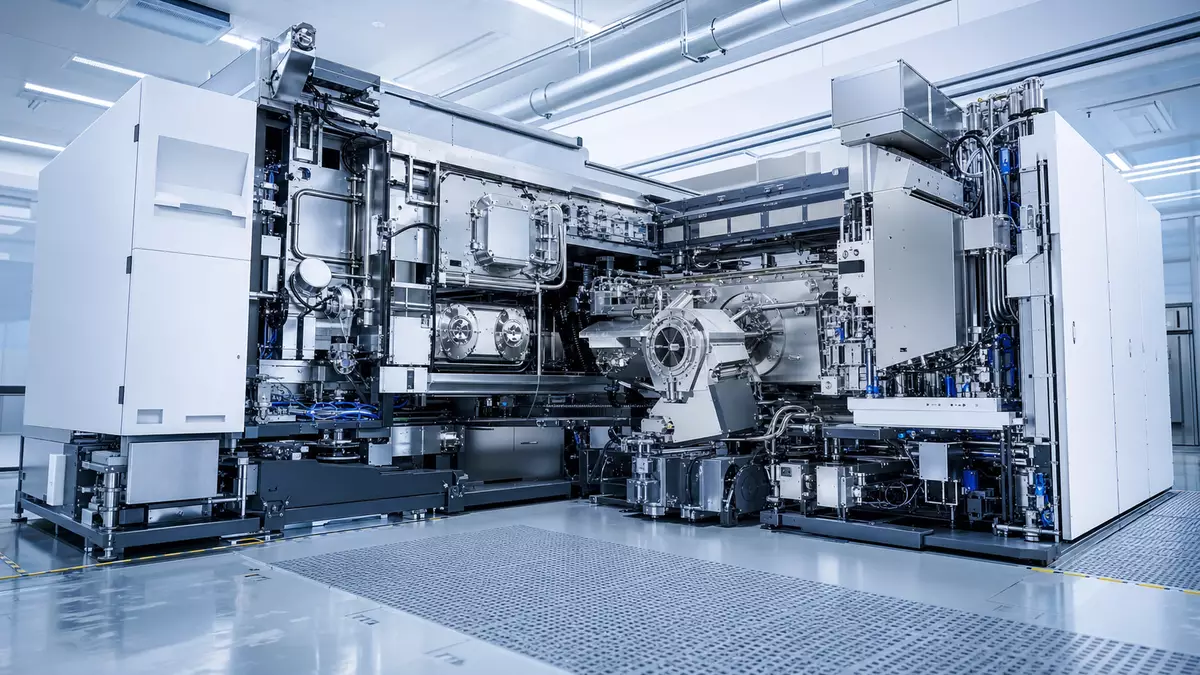
ASML’s EUV lithography systems are a flagship product line that exemplifies the company’s technological leadership and strategic importance to the semiconductor industry. These tools are used to pattern the most advanced layers in leading-edge logic chips, enabling smaller feature sizes and higher performance. Each system incorporates highly sophisticated components, including precision optics, high-power light sources, and advanced control software, and is installed in some of the world’s most advanced fabrication facilities. Revenue from EUV systems forms a significant part of ASML’s overall sales, and the installed base generates recurring service and upgrade income.
ASML stock and market presence
ASML stock is listed on Euronext Amsterdam and is widely followed by international investors seeking exposure to the semiconductor equipment space. The company’s large market capitalization reflects its central role in the industry and its strong financial performance over recent years, while its inclusion in major indices helps drive liquidity and broad ownership across institutional portfolios. For shareholders, the combination of technological leadership, revenue growth, profitability, and capital-return policies underpins the investment case.
ASML stock key data
- Company: ASML Holding N.V.
- ISIN: NL0010273215
- Ticker: EURONEXT: ASML
- Trading venue: Euronext Amsterdam
- Market capitalization: Large-cap, multi-billion-euro level (as of recent reporting)
- Sector / Industry: Information Technology / Semiconductor Equipment
- Index membership: Included in major European indices such as the AEX
Disclaimer regarding our articles: No investment advice, no buy or sell recommendation. Information on prices, companies, and markets is provided without guarantee; changes are possible at any time. Stock market transactions can lead to substantial losses. Our articles are created and reviewed in whole or in part automatically with the support of AI.