Befesa stock trades steadily as recycling specialist leans on higher 2025 earnings and dividend growth
Published on 07/23/2026 at 05:22 | Editorial responsibility: Rafael Müller, Editor-in-Chief AD HOC NEWS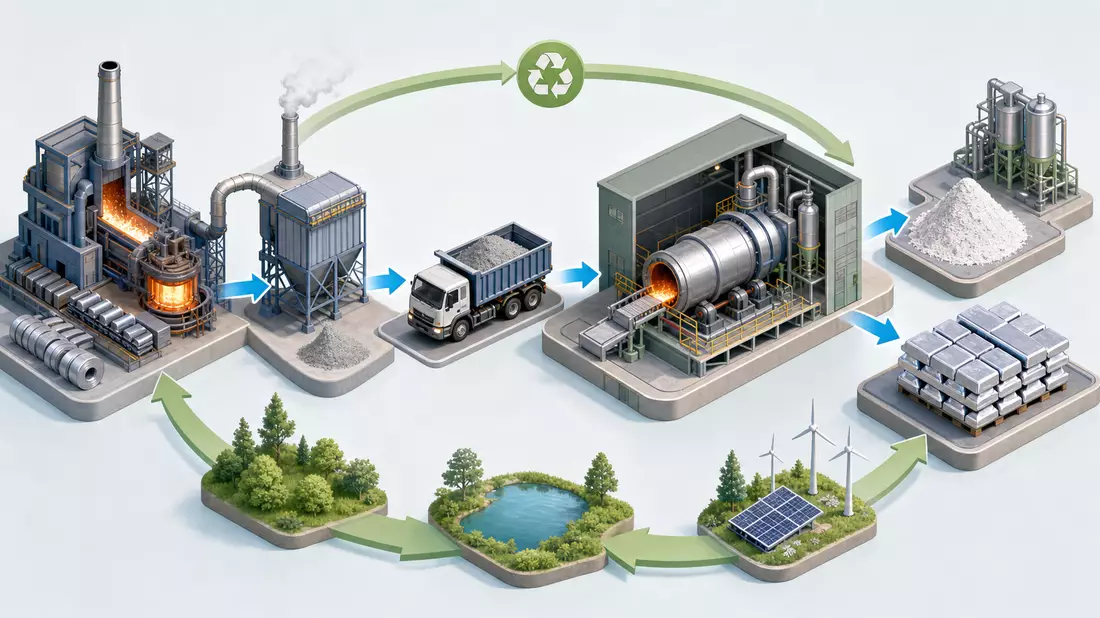
Befesa stock reflects a recycling and environmental services group that has been rebuilding profitability while keeping leverage under control. Befesa S.A. (ISIN LU1704650164) focuses on hazardous waste recycling for the steel and aluminum industries, and its recent earnings and dividend signals give investors a clearer picture of cash generation and balance-sheet strength in 2025.
Earnings recovery in 2025
For investors, the most important anchor is Befesa’s latest full-year results, which show how the business has adjusted to market conditions in steel and non-ferrous metals. In its recent reporting cycle for fiscal 2025, Befesa has highlighted that profitability improved compared with the prior year, supported by operational discipline, cost management, and a favorable mix of contracts in its main recycling segments. The company’s earnings profile is closely tied to industrial activity and metal prices, so any change in those variables quickly appears in margins and cash flow.
Across its steel dust recycling operations, Befesa typically secures long-term contracts with European, Asian, and American steelmakers that send dust from electric arc furnaces to its plants for treatment. Revenue and earnings from this division are influenced both by volumes and by the zinc content in the dust, as the recovered material can be sold as secondary raw material. When steel production is stable or growing, Befesa benefits from higher throughput; when output slows, it must rely more on efficiency gains to preserve profitability.
Revenue, earnings, and margin signals
In the latest annual cycle, Befesa’s revenue reflected both industrial demand and the pricing environment for recovered metals. A key point for investors is how earnings before interest, tax, depreciation, and amortization (EBITDA) and net income evolved versus the prior year, as this shows whether the company is successfully translating volumes and prices into cash-generative growth. Befesa’s management has generally emphasized maintaining a robust EBITDA margin by optimizing plant utilization, negotiating contract terms, and managing energy and logistics costs, which are significant in waste treatment and recycling.
Net income performance, in turn, is shaped not only by operating profitability but also by interest expenses on net debt and any non-recurring items related to investments or restructuring. Befesa’s ability to grow net profit faster than revenue depends on the degree of operating leverage in its business model: once fixed costs are covered, additional volumes and better pricing can drive disproportionate gains at the bottom line. This dynamic is particularly important in capital-intensive industrial services.
Dividend progression supports investor returns
Dividend policy is another core factor in assessing Befesa stock. The company’s board has drawn attention to its dividend trajectory, aiming to share a portion of growing earnings with shareholders while retaining enough cash to fund expansion and maintain financial flexibility. An observable pattern over recent years has been a gradual increase in the per-share dividend, reflecting both the normalization of post-pandemic industrial activity and Befesa’s confidence in its cash generation.
For income-focused investors, the dividend trend offers a tangible return component alongside any share-price movement. In periods when the stock price consolidates rather than moving sharply, dividends can represent a material part of total return. Befesa’s management therefore balances its desire to reward shareholders against the need to finance capex for plant upgrades, new facilities, and environmental compliance.
Balance sheet and leverage profile
The balance sheet remains central to Befesa’s investment story. The company operates an asset-heavy industrial platform, with multiple plants across Europe and other regions, meaning that net debt and leverage ratios are natural areas of attention. A moderate leverage level allows Befesa to weather fluctuations in metal prices and industrial volumes without needing to cut back too aggressively on investment or dividends.
Over recent reporting periods, Befesa has signaled its intention to keep net debt within a range consistent with investment-grade characteristics for similar industrial service providers. This involves active management of refinancing, interest costs, and maturity profiles, often supported by long-term relationships with banks and capital markets investors. The company also benefits from relatively predictable cash inflows from long-term contracts, which can offer stability when broader economic conditions are volatile.
Operations and regional diversification
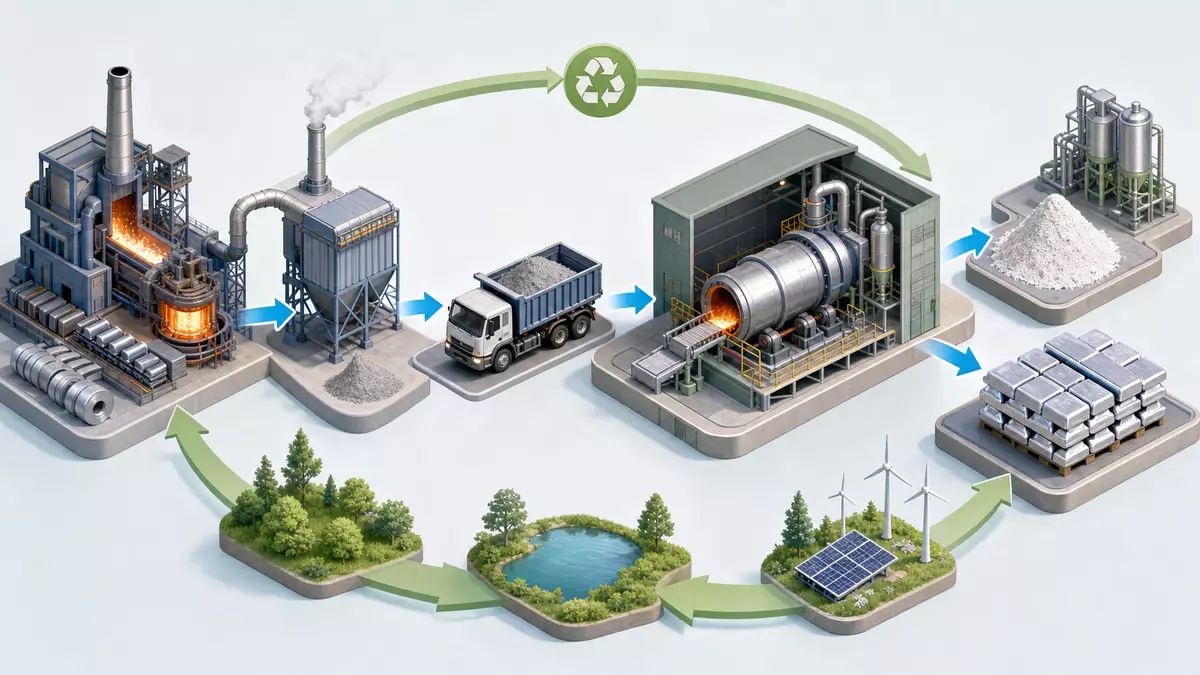
Befesa’s business model is built on providing essential recycling and environmental services to industrial clients, particularly steel mills and aluminum producers. Its core steel dust recycling segment processes dust from electric arc furnaces, capturing zinc and other materials that would otherwise represent hazardous waste. The aluminum salt slag and dross recycling segment applies similar logic to the aluminum industry, treating residues to recover aluminum and produce fluxes and other products.
Geographically, Befesa has pursued a strategy of diversification, operating plants in several European countries and expanding into Asia and North America. This spreads exposure across different industrial cycles and regulatory environments, reducing dependency on any single market. The company typically enters new regions through a combination of acquisitions, joint ventures, or greenfield projects, often following its key customers as they invest in new capacity.
The environmental regulatory framework, especially in Europe, also shapes Befesa’s growth prospects. Stricter rules on waste treatment and recycling tend to favor specialized providers like Befesa that can offer compliant, cost-effective solutions. As regulators tighten standards, steel and aluminum producers may have fewer options to manage their residues, increasing the value of Befesa’s services.
Market positioning within industrial recycling
Within the industrial recycling landscape, Befesa occupies a niche focused on hazardous residues from steel and aluminum production, rather than broader consumer or municipal waste. This specialization allows it to develop deep technical expertise, tailor plants to specific waste streams, and build strong relationships with large industrial customers. In the steel dust segment, Befesa is one of the leading global providers of recycling solutions, handling significant volumes of dust and recovering substantial quantities of zinc-bearing material.
Competition in these segments generally comes from other specialized recyclers and, in some cases, from in-house solutions developed by large industrial groups. However, the complexity and regulatory requirements associated with hazardous waste treatment make it challenging for industrial producers to replicate the full capabilities of dedicated recyclers. This gives Befesa a structural advantage and supports its long-term contract model.
Strategic investments and capacity expansion
To sustain and grow its business, Befesa invests regularly in upgrading plants, expanding capacity, and adopting new technologies. Investments may include building new facilities near major industrial clusters, enhancing process efficiency, or improving environmental performance to meet evolving regulatory standards. Over recent years, the company has pursued several expansion projects, particularly in regions where electric arc furnace steelmaking is increasing.
These investments aim to position Befesa to capture future growth in industrial recycling. As steel producers shift towards electric arc furnaces for environmental and economic reasons, the volume of steel dust suitable for Befesa’s processes is expected to rise. Similarly, trends in aluminum production and recycling can influence the demand for salt slag and dross treatment, offering additional avenues for growth.
Risks: metal prices and industrial cycles
Befesa’s earnings are inherently linked to metal prices and the health of industrial production. When steel and aluminum producers reduce output due to weaker demand, the volumes of residues sent to Befesa’s plants decline, putting pressure on revenue and margins. Moreover, the prices of recovered metals such as zinc and aluminum affect the revenue from selling recycled products, introducing another layer of volatility.
To mitigate these risks, Befesa uses a combination of contractual arrangements and operational flexibility. Long-term contracts can include price adjustment mechanisms or volume commitments that smooth the impact of short-term fluctuations. Operationally, the company adjusts plant utilization, cost structures, and investment timing to align with market conditions. Nonetheless, investors in Befesa stock need to recognize the cyclical nature of the underlying industries.
Regulatory and environmental considerations
Environmental regulations represent both an opportunity and a risk for Befesa. On the one hand, more stringent rules on hazardous waste handling and recycling can increase demand for its services, as industrial producers seek compliant partners. On the other hand, new regulations may require additional investment in emissions control, waste management, and reporting, raising operating costs.
Befesa has historically navigated this landscape by proactively engaging with regulators, investing in best-available technologies, and positioning itself as a responsible environmental services provider. This approach helps it maintain licenses, avoid penalties, and build trust with customers and communities. Environmental, social, and governance (ESG) considerations have also become more prominent among investors, and Befesa’s role in recycling and waste reduction can be a positive factor in ESG assessments.
Investor perspective on Befesa stock
When analyzing Befesa stock, investors typically focus on a combination of earnings trends, dividend development, balance-sheet strength, and exposure to metal-price and industrial cycles. The company’s niche positioning in hazardous waste recycling offers structural demand drivers, but the cyclical elements mean that earnings and cash flow can fluctuate with macroeconomic conditions. As a result, valuation multiples for Befesa often reflect both the quality of its business model and the perceived risk associated with cyclicality.
In this context, recent improvements in profitability and dividend growth can be seen as positive signals, suggesting that the company is successfully managing through cyclical challenges and capturing structural opportunities. At the same time, the evolution of net debt, leverage ratios, and capital expenditure plans provides insight into the sustainability of this trajectory. Investors may compare Befesa’s metrics with those of other industrial service providers and recyclers to gauge relative valuation and risk.
Product focus: steel dust recycling
A representative part of Befesa’s business is its steel dust recycling service. In this segment, the company receives dust from electric arc furnaces, which contains zinc and other metals, and processes it into useful products while neutralizing hazardous components. The service helps steel producers meet environmental obligations by ensuring that their residues are treated in compliance with regulations, rather than being landfilled or inadequately managed.
This product line underpins a significant portion of Befesa’s revenue and earnings, and its performance is closely tied to electric arc furnace steel production. As more steelmakers adopt this technology to reduce emissions and improve efficiency, the potential volume of dust available for recycling increases, creating a growth opportunity for Befesa. The company’s established plants and expertise give it a strong starting position in this evolving market.
Befesa stock and market context
The trading behavior of Befesa stock on its primary listing venue reflects the balance between cyclical risks and structural environmental tailwinds. In periods when industrial production is healthy and metal prices support the economics of recycling, the stock can benefit from improved earnings visibility and investor confidence. Conversely, when macroeconomic uncertainty weighs on industrial activity, the stock may experience phases of consolidation as investors reassess growth and earnings trajectories.
For long-term holders, Befesa’s strategy of combining operational efficiency, disciplined capital allocation, and selective expansion aims to deliver a mix of earnings growth and dividends over time. The company’s focus on essential environmental services gives it a role in broader industrial and sustainability trends, which can support its relevance in portfolios that consider ESG dimensions alongside financial metrics.
Overall, Befesa stock represents exposure to industrial recycling, environmental regulation, and metal-price dynamics, anchored by a business that converts hazardous residues into valuable products. The interaction of these factors will continue to shape the company’s financial performance and market valuation in the coming years.
Looking ahead, investors will watch how Befesa executes its expansion projects, manages leverage, and navigates evolving regulatory requirements. Successful delivery on these fronts, combined with stable or growing industrial output, would support further development of earnings and dividends, while setbacks or adverse macro conditions could lead to periods of adjustment. In this sense, Befesa stock encapsulates both the opportunities and challenges inherent in providing environmental services to heavy industry.
Stock closing view
Befesa stock remains a specialized industrial and environmental services investment, reflecting the group’s position in steel dust and aluminum residue recycling. The combination of earnings recovery, dividend progression, and managed leverage provides a framework for assessing the shares within the context of industrial cycles and environmental regulation.
Befesa at a glance
- Company: Befesa S.A.
- ISIN: LU1704650164
- Ticker:
- Trading venue:
- Sector / Industry: Industrial services / recycling
- Index membership:
Disclaimer regarding our articles: No investment advice, no buy or sell recommendation. Information on prices, companies, and markets is provided without guarantee; changes are possible at any time. Stock market transactions can lead to substantial losses. Our articles are created and reviewed in whole or in part automatically with the support of AI.