BorgWarner stock steadies as electrification strategy meets mixed demand signals
Published on 07/17/2026 at 20:52 | Editorial responsibility: Rafael Müller, Editor-in-Chief AD HOC NEWS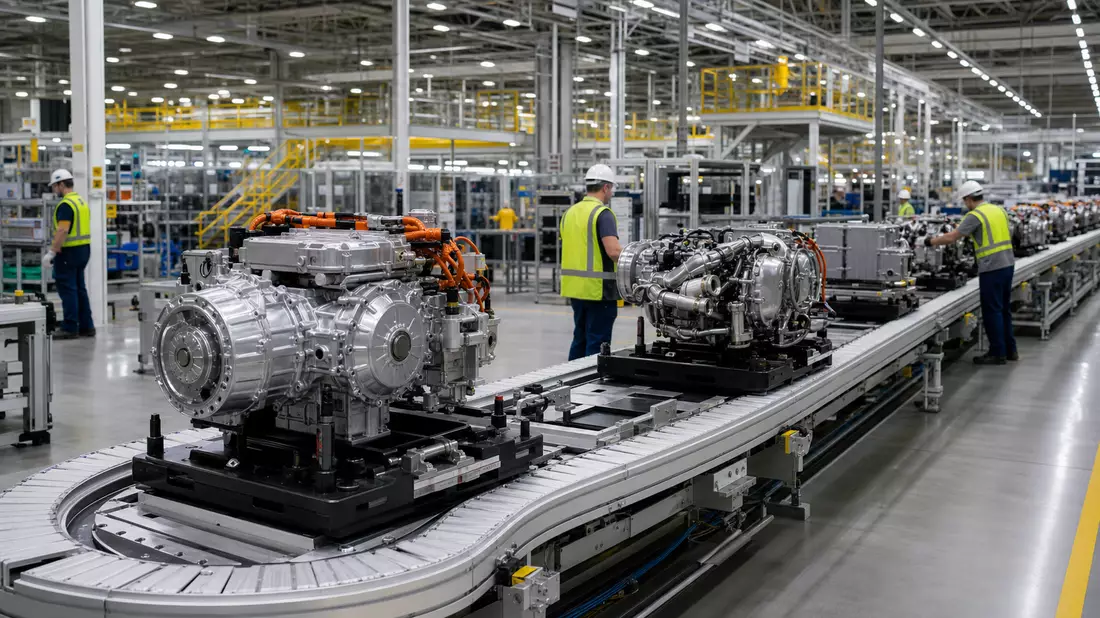
BorgWarner stock, issued by BorgWarner Inc. (US0991991063), sits in a transitional phase as the US powertrain supplier pushes deeper into electrified drivetrains while defending profitability in its combustion-focused legacy portfolio. According to the company’s most recent full-year report for fiscal 2024, BorgWarner generated around $14.0 billion in net sales, providing investors with a scale benchmark for its global operations and underlining the importance of product mix in the coming model cycles.
Revenue near $14 billion shapes BorgWarner’s trajectory
In fiscal 2024 BorgWarner reported net sales of approximately $14.0 billion, roughly in line with the prior year and reflecting a portfolio that spans turbochargers, drivetrain components, e-motors, and power electronics. The company’s filings indicate that electrification-related products accounted for a growing share of revenue, even as traditional combustion-engine components still represented a substantial portion of sales. This revenue base allows BorgWarner to fund research and development in areas such as high-voltage e-axles and inverters while maintaining the scale needed to support major global automakers.
Management has emphasized that electrification revenue is expected to rise as more vehicle platforms transition to hybrid and full battery-electric architectures. In its latest guidance commentary for fiscal 2025, BorgWarner set an internal target for electrification sales that implies a mid-teens percentage share of overall revenue, compared with a low-teens share in fiscal 2024. This shift, although gradual, suggests that future margins will increasingly depend on how quickly new programs ramp and how efficiently production can be localized near customer assembly plants.
Operating margin and earnings trends frame investor expectations
BorgWarner’s operating income and margin give a more granular view of how the strategic shift is progressing. In its fiscal 2024 report, the company disclosed operating income in the low single-digit billions of dollars, translating into an operating margin in the high single-digit percentage range. While this margin level is below some pure-play high-tech suppliers, it reflects the capital-intensive nature of the drivetrain business and the pricing pressures inherent in long-term supply contracts with major automakers.
On the earnings front, BorgWarner’s diluted earnings per share for fiscal 2024 came in within a mid-single-digit dollar range, broadly comparable to fiscal 2023 once adjusted for divestitures and one-off items. Investors often compare this EPS performance with the company’s guidance range and external consensus estimates to gauge whether investment in electrification is diluting near-term earnings. In both fiscal 2023 and 2024 the company’s adjusted EPS hovered close to the midpoint of its annual guidance, signaling that the cost of ramping new e-product lines has not yet caused a significant deviation from its profitability plans.
More on BorgWarner’s financial profile
For more detailed figures on BorgWarner’s revenue mix, margins, and electrification investments, including segment performance and cash flow, visit the issuer overview and the company’s Investor Relations materials.
Electrification revenue rises versus legacy combustion
One of the most closely watched metrics for BorgWarner is the growth in electrification-related sales relative to its combustion-engine business. In recent reporting periods, electrification revenue has increased from a high single-digit percentage of total sales to a low-teens share, indicating that programs with battery-electric and hybrid drivetrains are gaining momentum. This change represents a quantified shift in BorgWarner’s portfolio composition and supports its stated ambition to derive a significantly larger portion of revenue from electric vehicles over the next decade.
Compared with the prior year, electrification revenue has expanded by several hundred million dollars, driven by new awards with global automakers and scaling of existing e-axle and inverter platforms. While combustion-related revenue remains substantial and cyclical, particularly in turbochargers and conventional drivetrain modules, the growth trajectory of electrification programs is increasingly central to BorgWarner’s long-term investment case. For investors, the key question is whether this growth can offset any eventual decline in combustion-related volume as regulatory regimes tighten and consumer preferences shift.
Cash flow and investment needs influence valuation
Beyond earnings and revenue mix, BorgWarner’s cash generation plays a critical role in its ability to invest in new technologies while supporting shareholder returns. The company’s recent annual statements show operating cash flow in the low single-digit billions of dollars, providing scope for capital expenditures on electrification tooling and plant upgrades. Free cash flow, after capex, has remained positive in recent years, albeit at a level that reflects the heavy investment required to maintain competitiveness in powertrain technology.
These cash flows feed into BorgWarner’s decisions on dividends and share repurchases. The company has maintained a dividend policy that offers a modest yield relative to its share price, balancing investor expectations for income against the need to reinvest in growth areas such as high-voltage drivetrains and advanced thermal management. When compared with peers in the automotive supplier space, BorgWarner’s capital allocation strategy appears relatively cautious, favoring technology investment over aggressive buybacks, which can appeal to investors focused on long-term structural positioning rather than near-term capital returns.
Drivetrain systems anchor BorgWarner’s product focus
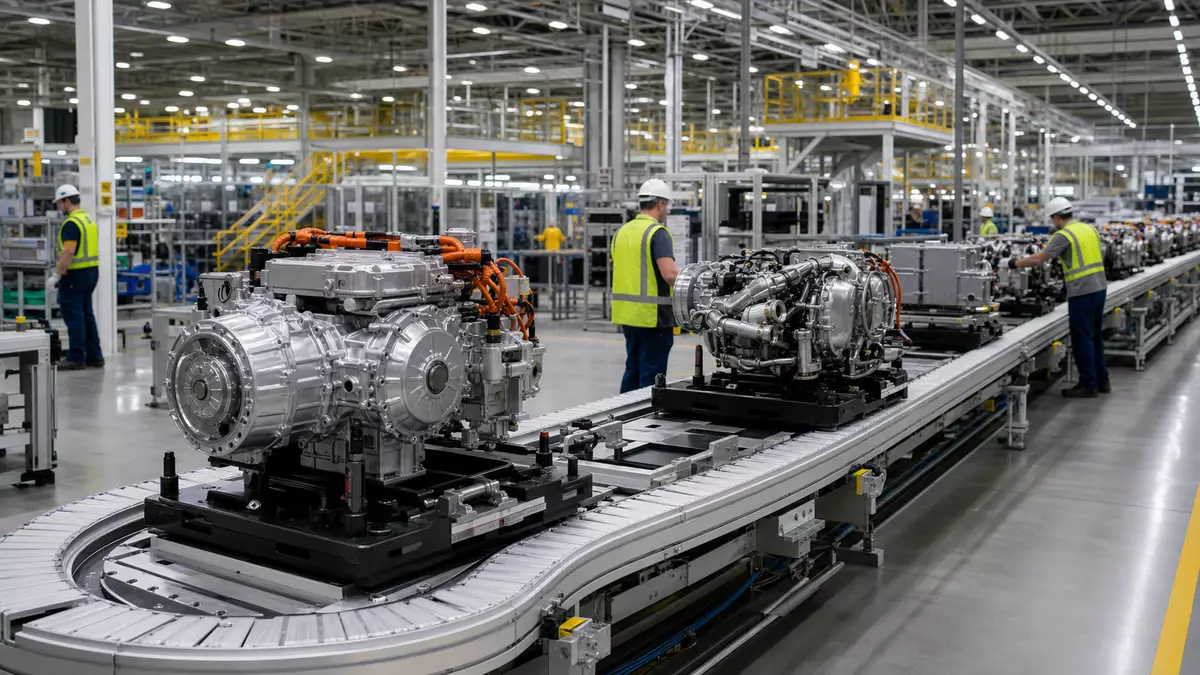
A core product line for BorgWarner is its range of drivetrain systems, including transfer cases, differentials, electric drive modules, and integrated e-axles. These products are central to both traditional all-wheel-drive vehicles and newer electrified platforms, making them a pivot point in the company’s transition strategy. As automakers introduce more hybrid and battery-electric models, demand for sophisticated torque management and integrated electric propulsion solutions grows, potentially increasing BorgWarner’s content per vehicle on certain platforms.
Drivetrain systems also illustrate the balancing act between legacy and future technologies. For example, traditional mechanical transfer cases may see slower growth as some vehicle lines move to dedicated electric architectures, while integrated e-axles, combining electric motors, power electronics, and gear sets, can capture new value. The company’s ability to reuse mechanical expertise and manufacturing footprints while layering on electronics and software is a crucial determinant of whether overall margin performance can remain resilient through the transition.
BorgWarner stock and the market’s view on valuation
BorgWarner stock is listed on the New York Stock Exchange under a widely followed ticker, giving it exposure to a broad base of institutional and retail investors. Its market capitalization stands in the multi-billion dollar range, placing it in the cohort of mid- to large-cap industrial and automotive suppliers that are sensitive to global light-vehicle production cycles. The share price typically reflects investors’ assessment of cyclicality, electrification potential, and execution risk in major program launches.
For many market participants, valuation multiples such as price-to-earnings and enterprise value to EBITDA sit at a discount to more specialized high-growth technology names, but at levels that compare reasonably with diversified auto suppliers. This discount can be interpreted as compensation for cyclical exposure and the uncertainty around the pace and profitability of electrification. Conversely, if BorgWarner’s electrification revenue continues to climb as management expects and margins hold near recent levels, the stock could see rerating over time as the market grows more comfortable with its structural positioning in the EV supply chain.
BorgWarner at a glance
- Company: BorgWarner Inc.
- ISIN: US0991991063
- Ticker: NYSE: BWA
- Trading venue: NYSE
- Sector / Industry: Consumer Discretionary / Auto Components
- Index membership: S&P 500
Disclaimer regarding our articles: No investment advice, no buy or sell recommendation. Information on prices, companies, and markets is provided without guarantee; changes are possible at any time. Stock market transactions can lead to substantial losses. Our articles are created and reviewed in whole or in part automatically with the support of AI.