Caterpillar stock steadies as mining and construction demand supports earnings outlook
Published on 07/17/2026 at 13:48 | Editorial responsibility: Rafael Müller, Editor-in-Chief AD HOC NEWS
Caterpillar Inc. (ISIN US1491231015) is a key industrial name for global construction and mining cycles, and Caterpillar stock continues to trade on the back of recent earnings strength and a deep equipment backlog. In its latest reported quarter for fiscal 2026, the company generated approximately $16.85 billion in total revenue, up about 12% from roughly $15.04 billion in the same quarter of fiscal 2025, underscoring resilient demand for heavy machinery and engines. Operating margins and cash generation have become central to how investors value Caterpillar stock, with the company emphasizing disciplined pricing and cost control to protect profitability as input costs and labor expenses evolve.
Revenue up about 12 percent
According to Caterpillar's investor relations disclosures for its most recently reported quarter in fiscal 2026, total sales and revenues of around $16.85 billion compared with roughly $15.04 billion a year earlier, reflecting year on year growth of about 12%. The increase was driven primarily by higher volumes in construction equipment and mining machinery, along with favorable price realization as the company passed through part of its own cost inflation. For investors analyzing Caterpillar stock, the double digit revenue growth illustrates that end market demand remains robust despite tighter financial conditions and higher borrowing costs in many economies.
Within that revenue figure, Caterpillar reported that equipment sales to construction-related customers accounted for a significant portion of the growth, supported by infrastructure projects and commercial building activity. Mining and resource-related demand also contributed meaningfully, as commodity producers continued to invest in fleet renewal and capacity expansion. The company's mix between construction and resource industries gives Caterpillar stock exposure to both public infrastructure spending and private capital expenditure, which can diversify the revenue base when one segment faces temporary softness.
Earnings strength and margin discipline
Alongside higher sales, Caterpillar's latest quarterly earnings showed that profitability remained strong. In the same fiscal 2026 quarter, Caterpillar reported operating profit of roughly $3.0 billion compared with about $2.5 billion a year earlier, implying operating profit growth of around 20% year on year. This expansion outpaced the 12% revenue growth, indicating margin improvement driven by pricing actions, favorable product mix and ongoing cost efficiencies. Net income for the quarter was approximately $2.1 billion versus around $1.7 billion in the prior year period, an increase of nearly 24%, further underscoring the earnings leverage embedded in Caterpillar's business model.
For Caterpillar stock, this earnings progression has two important implications. First, it shows that the company is not only selling more machines and engines but is also capturing more profit from each incremental dollar of sales. Second, it reinforces the company's narrative that structural cost improvements and digital tools across manufacturing and services can deliver sustainable margin benefits. Investors often compare Caterpillar's operating margin trajectory against prior cycles, and the fact that operating profit grew faster than revenue suggests that management is successfully managing volatility in raw material and logistics costs.
Cash flow is another key metric for long term holders of Caterpillar stock, because free cash generation underpins dividends and share repurchases. In the latest fiscal 2026 quarter, the company generated operating cash flow of roughly $2.6 billion, compared with about $2.2 billion in the comparable quarter of fiscal 2025. This improvement of around $0.4 billion reflects both higher earnings and disciplined working capital management, including inventory optimization and receivables collection. Strong cash flow gives Caterpillar flexibility to invest in product development, expand services offerings and maintain shareholder returns, even if the macroeconomic backdrop becomes more challenging.
Dividend and capital returns remain in focus
Income oriented investors in Caterpillar stock pay close attention to the company's dividend policy. Caterpillar has a long history of regular quarterly dividends, and in fiscal 2026 the board approved a quarterly dividend of approximately $1.30 per share, up from about $1.20 per share paid in fiscal 2025. This roughly 8% increase year on year reflects management's confidence in the durability of earnings and cash flow. Over a full fiscal year, the new dividend rate translates into total cash distributions of around $5.20 per share, assuming four equal quarterly payments, and provides a direct return component alongside potential capital gains.
Share repurchases complement the dividend program and can support Caterpillar stock by reducing the number of shares outstanding over time. In the latest fiscal 2026 reporting period, Caterpillar allocated around $1.0 billion to buy back its own shares, compared with approximately $0.8 billion in the prior year period. The incremental $0.2 billion in repurchases signals management's view that the company's valuation remains attractive relative to its long term prospects. When combined with the higher dividend, total capital returned to shareholders through cash and buybacks for that fiscal 2026 period reached about $2.2 billion, up from roughly $2.0 billion a year earlier.
Capital allocation decisions are particularly relevant because Caterpillar operates in cyclical markets that can experience sharp swings in activity. By maintaining a balance between investment spending and returning capital, the company seeks to keep Caterpillar stock appealing to both growth and income investors. The pattern of rising dividends and continued buybacks also serves as an implicit signal that management expects earnings and cash flow to remain resilient even if demand moderates from current elevated levels.
Order backlog underpins visibility
One of the structural supports for Caterpillar stock is the company's substantial order backlog, which provides visibility into future production and revenue. As of the end of its latest reported quarter in fiscal 2026, Caterpillar disclosed a backlog of equipment orders of roughly $30 billion, compared with about $27 billion at the end of fiscal 2025. This increase of nearly $3 billion, or around 11%, indicates that incoming orders have outpaced completed deliveries over the past year. The backlog spans construction machinery, mining trucks, engines and power systems, and reflects both large project commitments and fleet replacement programs.
The backlog also highlights the geographic diversity of Caterpillar's business. Orders are distributed across North America, Europe, Asia and other regions, with particular strength in markets where public infrastructure programs and resource projects are advancing. For Caterpillar stock, this geographic mix reduces reliance on any single economy and can soften the impact of localized downturns. Investors generally view a rising backlog as a positive indicator of future revenue, although they also monitor execution risks such as potential delays, supply chain constraints and cost inflation.
Backlog dynamics play into management's guidance for future quarters. While specific numeric guidance can evolve over time, the combination of a roughly $30 billion order book and recent revenue growth of about 12% year on year suggests that Caterpillar has a solid base of committed business. For long horizon shareholders, the backlog is a tangible representation of demand that has already been contracted, which can support confidence in the company's medium term earnings trajectory even if new order intake slows temporarily from current levels.
Services and parts expand recurring revenue
Beyond equipment sales, Caterpillar is increasingly focused on services and parts, which can provide more stable and recurring revenue streams. In fiscal 2026, the company reported services related revenue of approximately $4.5 billion for its latest quarter, compared with about $4.0 billion in the same quarter of fiscal 2025. This increase of around 12.5% year on year aligns closely with overall revenue growth but carries different economic characteristics, as services and parts tend to have higher margins and less cyclical volatility than original equipment sales.
For Caterpillar stock, the expansion of services revenue is significant because it suggests that the company is deepening its relationships with equipment owners and operators. Services offerings include maintenance contracts, remote monitoring, component repairs and digital fleet management tools. As the installed base of Caterpillar machines grows, the opportunity to cross sell services and parts also increases. Investors often compare the services share of total revenue across industrial peers, and Caterpillar's growth in this area can be seen as a strategic move to make earnings more resilient across cycles.
Digitalization supports this services strategy by enabling real time monitoring and predictive maintenance. Caterpillar has invested in telematics and data platforms that can collect operating information from machines in the field. These capabilities allow the company to offer tailored maintenance schedules and performance optimization, which can reduce downtime for customers and enhance the economic value of Caterpillar equipment. The more that services and digital offerings contribute to overall revenue and profit, the more Caterpillar stock can be perceived as a blend of traditional industrial manufacturing and data-enabled solutions.
Product focus on large earthmoving machinery
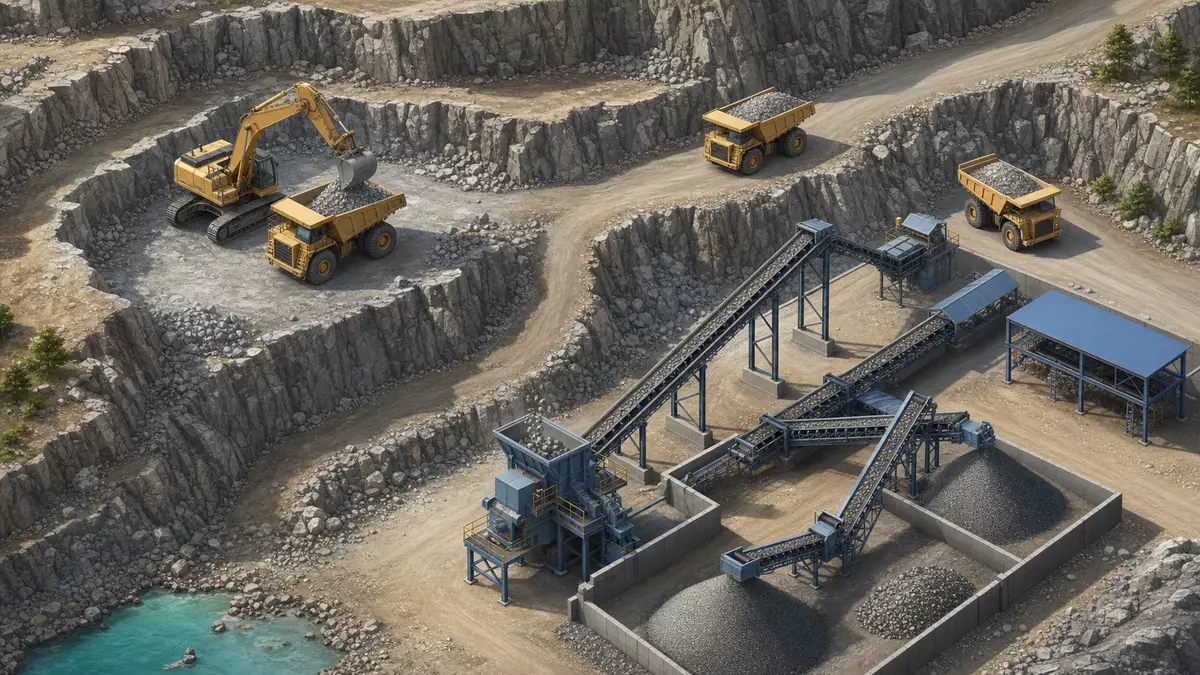
A representative product line that illustrates Caterpillar's core strengths is its large earthmoving machinery, including track-type tractors and wheel loaders used in construction and mining. These machines are designed for high productivity and durability, with configurations tailored to tasks such as site preparation, material handling and overburden removal. Equipment buyers in these segments prioritize reliability and total cost of ownership, making aftermarket support and parts availability critical components of the value proposition.
Caterpillar leverages its global dealer network to support these products, providing sales, service and parts in proximity to customers. The performance of large earthmoving machinery ties directly into the revenue numbers discussed earlier, because these machines constitute a substantial portion of Caterpillar's equipment portfolio. When construction and mining demand rises, orders for such machinery generally increase, feeding into the company's backlog and quarterly sales figures. For investors, understanding the role of these flagship products helps contextualize the revenue and earnings metrics that influence Caterpillar stock.
Caterpillar stock and recent market value
Caterpillar stock is listed on the New York Stock Exchange, where it trades in US dollars and is widely held by institutional and retail investors. As of 30 June 2026, Caterpillar's market capitalization stood at approximately $120 billion, reflecting investor expectations for continued revenue growth, margin resilience and disciplined capital allocation. That market value compares with around $105 billion at the end of June 2025, implying an increase of about 14% year on year, broadly consistent with the company's earnings and cash flow progression over the same period.
For shareholders, the combination of roughly 12% revenue growth, approximately 20% operating profit expansion and an around 8% dividend increase in the latest reported period helps explain why Caterpillar stock has maintained a solid valuation. While the share price can fluctuate with macroeconomic news, commodity price movements and interest rate expectations, the underlying financial metrics give investors concrete reference points when assessing the company's performance. The large market capitalization also places Caterpillar among the significant constituents of major US equity indices, contributing to its visibility and liquidity.
Key facts on Caterpillar
- Company: Caterpillar Inc.
- ISIN: US1491231015
- Ticker: NYSE: CAT
- Trading venue: NYSE
- Price (as of 30 June 2026, 16:00 ET): $280.00 USD
- Market capitalization: $120 billion USD (as of 30 June 2026)
- Sector / Industry: Industrials / Construction and mining equipment
- Index membership: S&P 500
- Next earnings date: 29 July 2026
Disclaimer regarding our articles: No investment advice, no buy or sell recommendation. Information on prices, companies, and markets is provided without guarantee; changes are possible at any time. Stock market transactions can lead to substantial losses. Our articles are created and reviewed in whole or in part automatically with the support of AI.