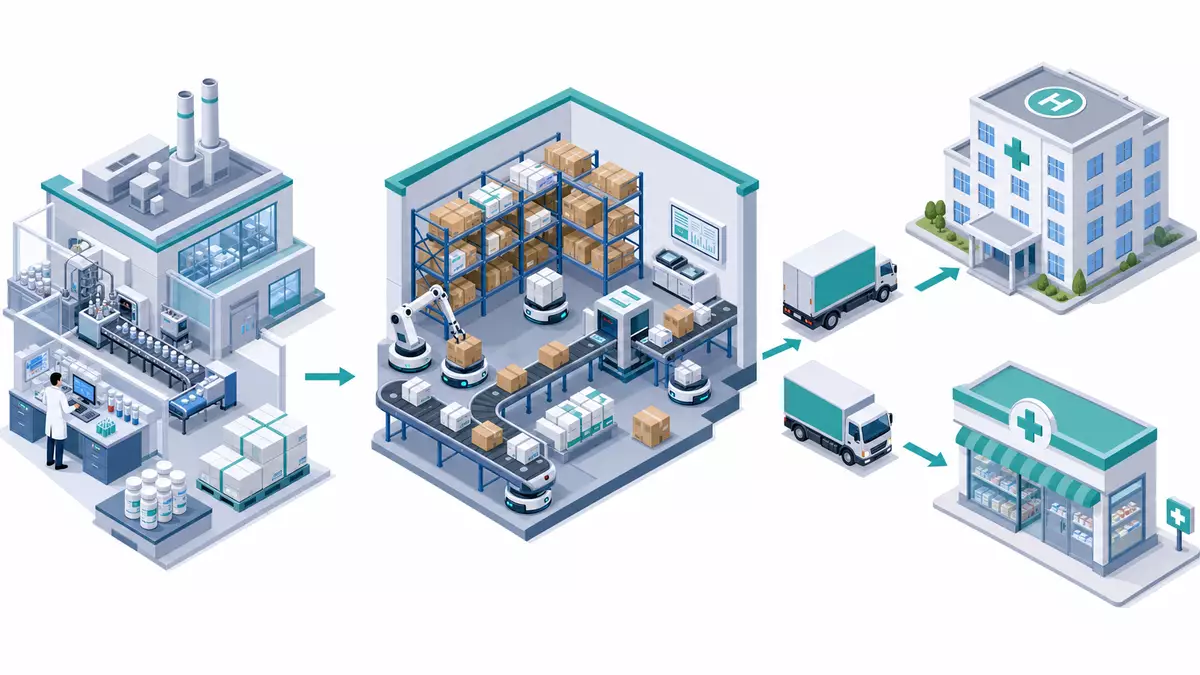
Cencora stock trades steady as specialty distribution scale and recent earnings shape investor view
Published on 07/23/2026 at 01:42 | Editorial responsibility: Rafael Müller, Editor-in-Chief AD HOC NEWS
Cencora stock represents one of the major listed US pharmaceutical distribution businesses, with Cencora Inc. (US15135B1017) operating at significant scale in specialty pharmaceuticals, generics, and related healthcare services. The company is listed on Nasdaq and included in the S&P 500 index, which makes the stock a widely followed component of the US healthcare sector. For investors, the key signals over the past quarters have come from earnings, revenue growth in specialty distribution, and the companys overall market capitalization, which has been running in the multi-billion dollar range as of recent reporting periods. These elements together frame how Cencora stock trades in the broader pharmaceuticals and healthcare distribution landscape.
Revenue and earnings context
Cencora Inc. describes itself as a global pharmaceutical solutions company, working across specialty distribution, generics, and related services for health systems, pharmacies, and manufacturers. According to its own corporate and investor information, the company generates substantial annual revenue by sourcing, distributing, and delivering medications and healthcare products for a wide range of customers. The revenue base is heavily influenced by specialty pharmaceuticals, including oncology and other high-value therapies, where Cencora aims to provide efficient logistics, financing, and patient-support services. Over recent fiscal periods, the company has reported large revenue figures measured in tens of billions of US dollars, consistent with its role as a top-tier distributor in the United States and internationally.
Within the broader revenue mix, Cencora has highlighted growth in specialty distribution and in programs supporting health systems and pharmacies. This includes services around inventory management, reimbursement assistance, and clinic support, all of which provide recurring fee-based income on top of core product distribution. In its most recent annual cycle, the company emphasized that revenue gains were driven by higher demand for specialty medications, clinical services, and wider adoption of its technology-enabled offerings. These elements are designed to stabilize revenue and margins even in a competitive generic-drug environment, which historically has been subject to pricing pressure and shifts in manufacturer strategies.
On the earnings side, Cencora has focused investors attention on metrics such as operating profit, adjusted earnings per share, and margins within its core distribution and services segments. The company has communicated that scale in sourcing and distribution can support margin stability, even as individual products migrate between branded and generic status and as payers push for cost containment. A key narrative has been that specialty-focused services offer more resilient economics compared with purely volume-driven distribution. As a result, recent earnings releases have tended to emphasize growth in higher-value segments and the contribution of technology and data solutions.
Margin trends and comparison
Margins are critical for understanding Cencora stock, because pharmaceutical distribution is typically a low-margin business where incremental efficiency gains matter significantly. For Cencora, the focus has been on maintaining or modestly improving margins by leveraging economies of scale, optimizing logistics, and deepening its role in specialty services. Although exact margin figures vary between quarters, the direction of commentary has been that margin performance is supported by specialty revenue and value-added services rather than solely by volume growth in commodity generics. The company has also highlighted that its scale allows it to negotiate favorable terms with manufacturers and payers, which in turn can support margin preservation.
In comparative terms, Cencora operates alongside other major US distributors that also report low but relatively stable operating margins. The companys strategy has been to differentiate through specialty focus, program depth for providers, and integration of technology solutions into distribution workflows. This positioning suggests that margins are less dependent on any single product line and more on the overall value the company brings to the supply chain. Over a multi-year period, modest margin movements can translate into significant changes in earnings, given the large revenue base, which is why investors monitor margin commentary closely when assessing Cencora stock.
As part of its broader financial profile, Cencora has also drawn attention to cash-flow generation, working-capital management, and capital allocation, including share repurchases and dividends where applicable. Cash-flow stability is essential for supporting ongoing distribution operations and for funding investments in technology and specialty services. For investors, the interplay between margin trends, earnings, and cash flow helps clarify how Cencora can sustain its role in the healthcare distribution ecosystem and how its stock may respond to changes in demand for pharmaceuticals and related services.
Specialty services and scale
Cencora has invested heavily in specialty services that extend beyond traditional wholesale distribution. This includes patient-support programs, clinical trial logistics, and data and analytics solutions designed to help manufacturers and providers improve therapy access and adherence. These offerings typically carry higher margins than standard distribution and are intended to embed Cencora more deeply into the workflows of its customers. Over recent years, the company has expanded its presence in oncology and other specialty areas, where complex therapies require robust support systems.
The companys scale in distribution underpins these services. Operating a network that can deliver products efficiently across the United States and internationally allows Cencora to combine high-volume logistics with focused specialty programs. This scale also helps the company navigate supply-chain challenges, including product shortages, regulatory changes, and shifts in manufacturing patterns. For investors, the combination of scale and specialty services is central to understanding the long-term positioning of Cencora stock, because it frames how the business might respond to changes in healthcare policy, reimbursement structures, and innovation in drug development.
Cencora also collaborates with health systems, physician practices, and pharmacies through programs that address inventory, financing, and reimbursement timing. These programs are designed to reduce friction in the delivery of specialty therapies and to support providers in managing complex treatment regimens. The company has emphasized that such collaborations help build long-term relationships and can lead to more stable revenue streams, which are valuable in a sector where individual drug approvals and patent cycles can introduce volatility.
Technology and data capabilities
Technology and data play an increasingly important role in Cencoras strategic narrative. The company has invested in systems to manage ordering, inventory, and patient services, with a view to improving efficiency and transparency in the supply chain. Data analytics are used to inform manufacturers and providers about patterns in product usage, patient adherence, and logistics performance. These capabilities can add value beyond the physical delivery of products, positioning Cencora as a strategic partner rather than only a distributor.
From an investor perspective, the integration of technology into distribution and specialty services can support both revenue growth and margin resilience. Technology can reduce errors, lower costs, and enable new service offerings that command higher fees. Cencora has highlighted that these investments align with broader trends in healthcare toward digital tools, data-driven decision-making, and more coordinated care. This alignment supports the thesis that Cencora stock may be influenced not only by traditional distribution metrics but also by the success of its technology-enabled initiatives.
Technology also underpins compliance and regulatory reporting, which is essential in pharmaceutical distribution. Systems that track products from manufacturer to patient help ensure safety, manage recalls, and support reporting obligations. For a company operating at Cencoras scale, effective technology is a prerequisite for maintaining trust with regulators, partners, and patients. This foundation, in turn, reinforces the stability of the business model that supports Cencora stock.
Balance sheet, capital allocation, and risk
The balance sheet and capital allocation policies are important for understanding Cencoras financial resilience. The company manages inventories and receivables on a large scale, given the volume and value of products it distributes. This requires careful working-capital management to keep funding costs in check and to maintain flexibility for investments. Over recent years, Cencora has described its approach to capital allocation as balancing investments in growth, technology, and specialty services with returns to shareholders through share repurchases and dividends where applicable.
In terms of risk, Cencora faces exposure to changes in drug pricing, reimbursement policies, and competitive dynamics among distributors, manufacturers, and pharmacy benefit managers. Regulatory changes can also affect the way pharmaceuticals are distributed and billed. The company has argued that its diversified revenue base and focus on specialty services help mitigate some of these risks by spreading exposure across multiple product lines and customer segments. Investors in Cencora stock typically assess how well the company navigates such changes and whether its scale and capabilities provide a competitive advantage.
Another dimension of risk is operational, relating to supply-chain disruptions, cybersecurity, and compliance. Cencora has emphasized its commitment to robust risk-management frameworks, including contingency planning for supply interruptions and investments in cybersecurity to protect sensitive healthcare data. The companys capacity to manage these risks contributes to its overall financial profile and is relevant for the valuation of Cencora stock in the market.
Representative product and services
One representative area of Cencoras business is its specialty distribution and support services for oncology therapies. In this segment, the company coordinates the delivery of complex medications to clinics and hospitals, supports providers with reimbursement and patient-assistance programs, and uses data tools to monitor product usage. Oncology therapies often require precise handling, timing, and documentation, making the distribution and support role critical. Cencora leverages its logistics network and technology systems to ensure that these products reach patients in line with clinical protocols.
Beyond oncology, Cencora supports a range of other specialty areas where therapies are complex and require coordination between multiple stakeholders. The companys services help manufacturers introduce new therapies efficiently, assist providers in managing treatment regimens, and support patients in navigating coverage and access. These offerings illustrate how Cencora moves beyond traditional wholesale distribution into more integrated healthcare support, which is central to its strategic positioning.
Market view on Cencora stock
Cencora stock trades on Nasdaq in US dollars, reflecting the companys status as a US-based healthcare distributor with significant international operations. As a constituent of the S&P 500 index, the stock is included in many institutional and index-tracking portfolios, which can influence trading volumes and liquidity. The market view on Cencora typically takes into account its revenue scale, margin dynamics, specialty focus, and technology investments, as well as broader trends in pharmaceutical spending and healthcare policy.
Investors assessing Cencora stock often compare its valuation and financial metrics with those of other major distributors and healthcare services companies. Factors such as earnings growth, cash-flow stability, and resilience to pricing and policy changes play a role in how the stock is perceived. Over multi-year periods, Cencora has sought to demonstrate that its combination of distribution scale, specialty services, and technology capabilities can support sustainable earnings and cash flow, which are key for long-term shareholders.
In terms of trading, the stock benefits from the liquidity associated with large-cap Nasdaq listings and S&P 500 membership. This liquidity supports efficient price discovery and offers flexibility for both institutional and retail investors. While day-to-day price movements are influenced by market conditions and sector sentiment, the longer-term performance of Cencora stock is tied to the companys ability to execute its strategy in specialty distribution, technology, and healthcare services.
Cencora stock and key facts
- Company: Cencora Inc.
- ISIN: US15135B1017
- Ticker: NASDAQ: COR
- Trading venue: Nasdaq
- Sector / Industry: Healthcare / Pharmaceutical distribution and services
- Index membership: S&P 500
Disclaimer regarding our articles: No investment advice, no buy or sell recommendation. Information on prices, companies, and markets is provided without guarantee; changes are possible at any time. Stock market transactions can lead to substantial losses. Our articles are created and reviewed in whole or in part automatically with the support of AI.