Central Banks Double Down on Gold as ETF Investors Retreat and Geopolitical Tensions Simmer
Published on 07/07/2026 at 22:34 | Redaktion boerse-global.de
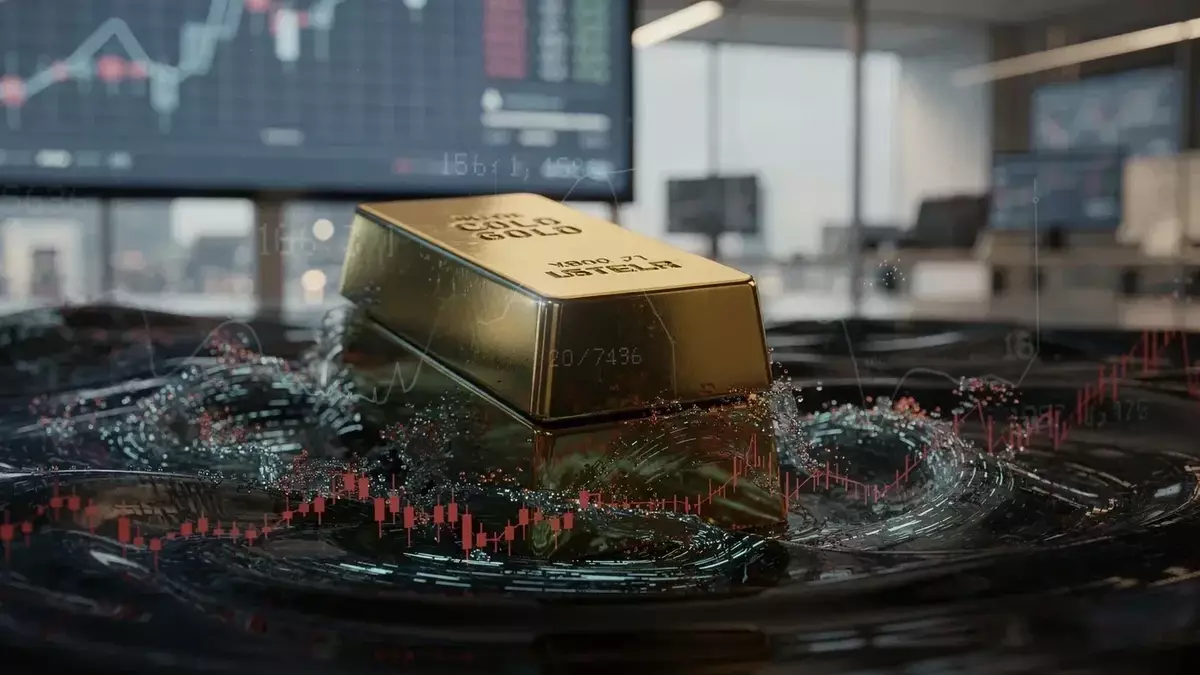
Gold is caught in a tug-of-war between two vastly different sets of buyers. While exchange-traded fund investors yanked roughly $2 billion out of gold products in May alone, central banks continue to hoard the metal at a pace that shows no signs of slowing. The People's Bank of China added another 480,000 fine ounces (14.9 tonnes) to its reserves in June, marking the 20th consecutive month of purchases and pushing its total holdings to 75.4 million ounces. The contrasting behavior underscores a market that remains deeply split between short-term bearishness and long-term institutional conviction.
The spot price hovered around $4,156.70 an ounce on Tuesday, down 0.48% on the day but still up 3.35% for the week. It remains 26.13% below the record high of $5,626.80 set in January, a gap that reflects the punishing impact of elevated interest rates and a stubbornly strong dollar. The dollar index held near 100.9 points, making gold more expensive for non-dollar buyers. Technical indicators paint a neutral picture: the 14-day relative strength index sits at 44.6, while the metal trades 5.43% below its 50-day moving average and 8.43% below the 200-day line. Volatility, measured on a 30-day basis, remains elevated at 27.47%.
Geopolitical headlines from the Middle East have done little to ignite a safe-haven bid. On July 6, U.S. authorities reported that Iran's Revolutionary Guard fired at least two missiles at commercial shipping in the Strait of Hormuz, striking the tanker Al Rekayyat. A drone attack hit another vessel the following day. Such incidents typically drive investors into gold, but this time the market is paying more attention to the inflationary implications of rising oil prices and what that means for Federal Reserve policy. The risk of persistently high energy costs could keep U.S. interest rates elevated, a headwind for a non-yielding asset like gold.
Should investors sell immediately? Or is it worth buying Gold?
The Fed's June meeting minutes, due Wednesday, are the next major catalyst. According to the CME FedWatch Tool, traders assign a 75% probability that the central bank will hold rates steady in July, yet they also price in a 58% chance of a hike in September. That uncertainty is curbing any sustained recovery. Even as Fed President Williams has expressed confidence that falling oil prices will bring inflation down medium-term, the recent escalation in the Strait of Hormuz casts doubt on that benign outlook.
Analyst projections reflect the confusion. Goldman Sachs cut its year-end forecast to $4,900, while Deutsche Bank pegs the fourth quarter at $4,800. JPMorgan Chase executed the most dramatic revision, slashing its target to $4,500 from a previous $6,000. Morgan Stanley and UBS remain more optimistic, seeing gold at $5,200 by the end of 2026 or over a 12-month horizon. The wide range — from $4,000 to $5,200 — underscores the market's inability to agree on the path of monetary policy.
A broader World Gold Council survey offers insight into central bank thinking: 89% of the institutions polled said they plan to increase their reserves over the next year, while a separate measure from the same survey suggests 45% of all central banks globally are pursuing stockpiling strategies. This institutional bid provides a solid floor under prices, even as speculative and ETF-linked demand wanes. In May, North American gold ETFs suffered outflows of $1.1 billion, and Asian products shed $1.2 billion.
For now, gold is treading water in the $4,100–$4,200 zone. The Fed minutes could tip the balance either way: a confirmation of the July pause might push prices above $4,150 resistance, while any hawkish surprise risks a test of the seven-month low near $3,890. With central banks buying and investors selling, the metal's next move hinges on which force proves stronger.
Ad
Gold Stock: New Analysis - 7 July
Fresh Gold information released. What's the impact for investors? Our latest independent report examines recent figures and market trends.
Disclaimer regarding our articles: No investment advice, no buy or sell recommendation. Information on prices, companies, and markets is provided without guarantee; changes are possible at any time. Stock market transactions can lead to substantial losses. Our articles are created and reviewed in whole or in part automatically with the support of AI.