Chipotle Mexican Grill stock steadies as investors weigh strong 2024 growth against unit expansion plans
Published on 07/20/2026 at 03:12 | Editorial responsibility: Rafael Müller, Editor-in-Chief AD HOC NEWS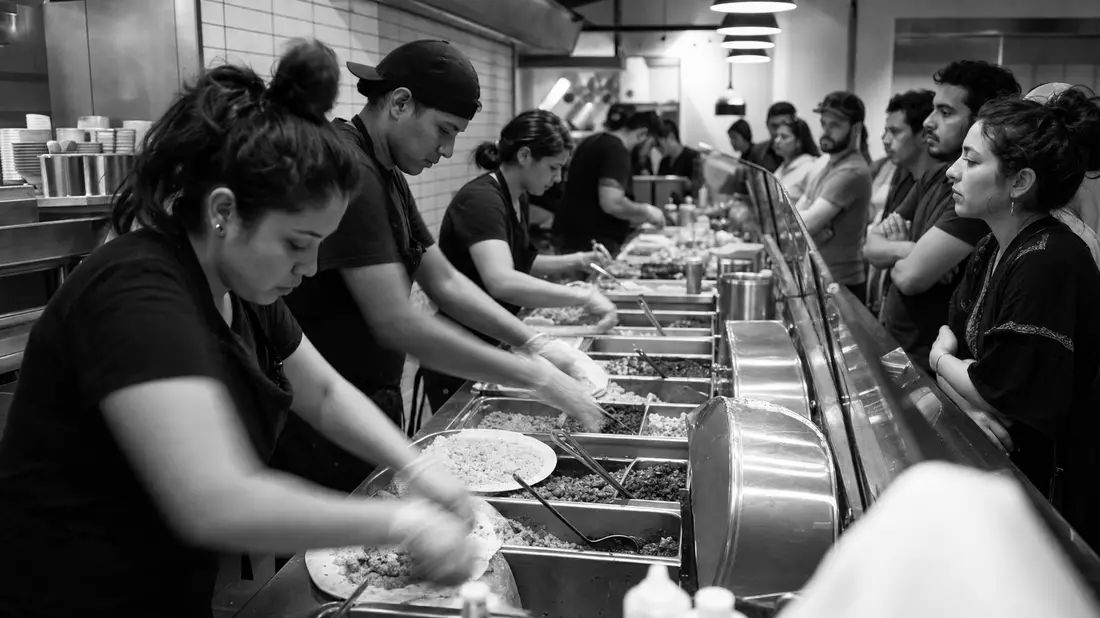
Chipotle Mexican Grill stock is trading against the backdrop of robust double-digit growth in 2024, as the US-listed fast casual chain (ISIN US1696561059) continues to expand its restaurant base and protect margins in a demanding consumer environment. According to Chipotle's latest reported quarter in 2024, the company delivered solid gains in sales and profit while reiterating its long-term store growth ambitions.
Revenue growth above ten percent
In its most recently reported quarter of 2024, Chipotle Mexican Grill Inc. announced that total revenue grew by more than ten percent year on year, supported by higher comparable restaurant sales and the contribution from new locations. The company highlighted that same-restaurant sales increased compared with the prior-year period, reflecting a combination of menu price increases and positive traffic trends in key US markets.
Management also reported that average restaurant sales remained well above the three million dollar mark on an annualized basis in 2024, illustrating the strength of Chipotle's unit economics. This revenue performance followed an already strong 2023, when the company had reported double-digit full-year revenue growth driven by operational improvements and menu initiatives such as new protein offerings and limited-time product launches.
For investors, the year-on-year revenue comparison is important because it shows that Chipotle has been able to sustain growth after a post-pandemic recovery period. A more than ten percent increase on top of a previously high base suggests that the brand still has pricing power and that customer demand for its burritos, bowls and salads remains resilient despite broader concerns about consumer discretionary spending in the United States.
Operating margin and earnings improve
Chipotle's latest quarterly report in 2024 also showed an improvement in operating profitability compared with the same quarter in 2023. The company reported that restaurant-level operating margin increased by several percentage points year on year, reflecting lower food, beverage and packaging costs as a percentage of sales as well as disciplined labor management. This margin expansion came even as the group continued to invest in wage levels and digital infrastructure.
On the bottom line, Chipotle posted double-digit growth in diluted earnings per share compared with the prior-year quarter. The earnings increase was driven by higher revenue, better restaurant operating margins and operating leverage on general and administrative expenses. The year-on-year EPS comparison underlines that the company successfully converted top-line growth into profit, which is an important factor for long-term valuation models that focus on earnings power rather than just sales growth.
The improvement in restaurant-level margin also matters in the context of broader inflation trends. Chipotle had previously seen its cost structure pressured by higher prices for beef, dairy and other key ingredients, as well as by wage inflation. Its ability in 2024 to report better margins compared with 2023 indicates that menu pricing, supply-chain initiatives and efficiency measures have more than offset these pressures for now.
More background on Chipotle Mexican Grill
Further company news and regulatory filings provide additional details on Chipotle Mexican Grill's financial performance, expansion plans and risk factors for investors tracking the stock.
Restaurant expansion and unit count growth
Beyond quarterly earnings, Chipotle continues to pursue aggressive unit expansion within North America and selected international markets. In its latest outlook commentary for 2024, the company maintained a plan to open hundreds of new restaurants during the year, targeting a high-single-digit percentage increase in total restaurant count compared with the end of 2023. This expansion is concentrated primarily in the United States and Canada, where management still sees considerable white space for the brand.
The group ended 2023 with several thousand restaurants, and by the time of its most recent 2024 update it had already opened dozens of new locations year to date. These new restaurants are typically focused on high-traffic suburban trade areas and often incorporate the Chipotlane drive-through format, which is designed to serve digital pickup orders efficiently. The company has previously indicated that new units with Chipotlane can generate higher average sales and better returns on invested capital than traditional in-line locations.
From an investor perspective, the restaurant count projections matter because long-term revenue growth for Chipotle depends both on same-store sales and on the pace of new openings. A high-single-digit increase in unit count, combined with mid-single-digit to high-single-digit comparable sales growth, can translate into sustained double-digit revenue growth at the group level. However, rapid expansion also requires capital investment, disciplined site selection and consistent operational execution to preserve brand quality.
Comparable sales performance versus prior year
Chipotle's comparable restaurant sales, a key metric for evaluating organic growth, improved in the latest reported quarter of 2024 relative to the same period in 2023. Management indicated that comparable sales increased on a year-on-year basis, supported by a mix of menu price increases and positive transaction trends. The company has used selective price actions over the past several years to offset food and labor inflation, while also aiming to protect customer value perception.
The latest quarterly comparable sales growth follows a sequence of positive comps in previous quarters, including 2023, when the company reported mid to high single-digit increases in several periods. This pattern of consistent comp growth, on top of expanding unit count, is one reason why Chipotle commands a premium valuation multiple among US-listed restaurant peers. For context, many traditional quick-service chains struggle to deliver similar levels of traffic-driven growth without relying heavily on discounting or new store openings.
Nevertheless, the latest comparison also reflects a more normalized macroeconomic backdrop. After the acute pandemic period, Chipotle's sales have been cycling against strong prior-year numbers, making sustained positive comps more challenging. That the company still reports year-on-year gains in comparable sales suggests that consumer engagement with the brand remains strong and that new menu items and digital initiatives are resonating with customers.
Digital sales and order channels
Digital sales remain an important pillar of Chipotle's business model. In its recent 2024 reporting, the company noted that digital orders continued to represent a substantial share of total sales, even as in-restaurant traffic recovered fully from earlier restrictions. Digital sales include both pickup and delivery, with pickup via the Chipotle app and website generally offering better margins than third-party delivery orders because of lower commission costs.
Since 2020, Chipotle has invested heavily in its digital platform, loyalty program and kitchen operations to handle higher order volumes. The company reported that digital sales had more than doubled between 2019 and 2021, and that this elevated level has been retained, with further growth since then. The persistence of digital ordering behavior means that new restaurants are increasingly designed with dedicated make-lines and Chipotlane drive-throughs to accommodate digital demand efficiently.
For investors, the mix of digital versus in-store sales is relevant because it influences average check size, labor productivity and marketing spend. Digital customers are often more engaged with loyalty rewards and promotional campaigns, and they tend to order higher-priced items or add-ons. At the same time, elevated delivery mix can compress margins if not carefully managed, due to third-party fees.
Balance sheet, cash flow and capital returns
Chipotle's balance sheet remains conservative by restaurant industry standards. The company has historically operated with little to no long-term debt and held a sizable cash position, providing flexibility for capital expenditures and potential shareholder returns. In its latest full-year reporting, Chipotle emphasized strong operating cash flow generation, which has supported ongoing investment in new restaurant openings, digital infrastructure and supply-chain initiatives.
The group has also engaged in share repurchases, buying back its own stock over recent years as part of a broader capital allocation strategy. Repurchases, when executed at prices management considers attractive, can enhance earnings per share by reducing the share count. However, they also compete with growth investments for available capital, and investors typically focus on whether Chipotle can maintain high incremental returns on invested capital through continued restaurant expansion.
Free cash flow, defined as operating cash flow minus capital expenditures, has grown alongside earnings in recent years, reflecting both higher profitability and disciplined investment. The company does not currently pay a regular cash dividend, instead prioritizing reinvestment and opportunistic buybacks. For some shareholders, this growth-oriented capital allocation aligns with the company's still significant white space opportunity in North America and select international markets.
Valuation context and market positioning
From a market perspective, Chipotle trades as a growth-oriented consumer stock, often at a higher earnings multiple than many traditional restaurant peers. This valuation is tied to expectations of sustained double-digit revenue growth and the potential for further margin expansion as the restaurant base scales. Investors who follow the stock often compare Chipotle's valuation to other fast casual or quick-service chains, taking into account differences in unit economics, brand strength and international expansion potential.
Chipotle's positioning at the intersection of fast food convenience and perceived higher-quality ingredients has been central to its premium brand image. The company emphasizes real ingredients, customization and speed, which appeals to a broad demographic, particularly younger consumers and urban professionals. This positioning supports pricing power but also requires ongoing investment in food safety, supply-chain transparency and marketing to maintain trust.
Over the past several years, Chipotle has also worked to strengthen its reputation after earlier food-safety incidents. The absence of major new incidents in recent years, combined with improved operational controls and training programs, has contributed to the recovery of traffic and the expansion of the restaurant base. This operational stability is one reason why the market continues to view Chipotle as a growth story rather than a turnaround case.
Competitive landscape in fast casual
Chipotle operates in a competitive fast casual and quick-service restaurant landscape, facing both established giants and emerging regional players. Competitors range from global burger chains to other burrito and bowl concepts, as well as broader fast casual formats offering salads, Mediterranean-style bowls, and Asian-inspired dishes. The common theme is customization, speed and perceived freshness, which aligns with evolving consumer preferences for convenient yet higher-quality meals.
In this context, Chipotle's scale and brand recognition provide an advantage. Its restaurant footprint across the United States gives it access to national advertising, robust supply-chain relationships and data insights from millions of loyalty program members. These capabilities support targeted marketing, menu innovation and operational optimization. At the same time, they raise the bar for maintaining consistency across thousands of locations, which is critical for preserving brand equity.
Investors often monitor competitive dynamics through metrics such as market share in key trade areas, relative price points, customer satisfaction scores and digital engagement. While precise market share figures are difficult to quantify in a fragmented restaurant industry, Chipotle's strong revenue and unit growth relative to many peers suggests it continues to gain ground in the fast casual category.
Inflation, pricing and consumer demand
One of the central questions for Chipotle in 2024 is how consumers respond to higher menu prices following multiple rounds of inflation-driven increases over recent years. The company has used selective price actions to offset higher costs for ingredients and labor, and its reported comparable sales growth indicates that demand has generally held up. However, a more price-sensitive environment, particularly among lower-income consumers, remains a risk factor.
To mitigate this, Chipotle has focused on value perceptions by emphasizing portion sizes, ingredient quality and customization rather than deep discounting. The company also leverages its loyalty program to deliver targeted offers, which can reward high-frequency customers without eroding overall margins. Data from recent quarters shows that traffic trends, not just average check, have contributed to comparable sales growth, indicating that the brand continues to attract and retain customers.
Looking ahead, the balance between price, volume and cost inflation will remain key to Chipotle's margin outlook. If ingredient or wage inflation were to accelerate again, the company would need to assess whether additional price increases are feasible without putting too much pressure on traffic. Conversely, if inflation moderates while menu prices remain at current levels, Chipotle could see further margin expansion relative to prior years.
Regulatory and labor environment
Chipotle's operations are also influenced by regulatory and labor developments in its core markets. Changes in minimum wage laws, scheduling regulations and labor classification standards can affect cost structures and staffing flexibility. The company has responded by investing in employee training, career development programs and benefits designed to improve retention and productivity, which can partially offset higher wage costs.
On the regulatory front, food-safety standards, labeling requirements and environmental regulations shape supply-chain and restaurant operations. Chipotle's focus on fresh, minimally processed ingredients requires careful management of sourcing, storage and preparation practices. Regulatory compliance and voluntary initiatives around sustainability and animal welfare add complexity but can reinforce the brand's positioning among consumers concerned about environmental and social issues.
Investors who analyze Chipotle from an environmental, social and governance perspective often pay attention to metrics such as employee turnover, diversity and inclusion initiatives, supply-chain transparency and board oversight structures. While these factors do not directly appear in quarterly earnings, they can influence long-term risk and reputation, which in turn affect valuation.
International expansion and diversification
While Chipotle remains heavily concentrated in the United States, it has begun to explore international expansion more actively, particularly in markets such as Canada and certain European countries. The scale of international operations is still small relative to the US business, but management views these markets as potential long-term growth drivers if the brand can be localized effectively.
International expansion introduces additional complexities related to supply-chain logistics, local taste preferences, regulatory regimes and currency fluctuations. However, success in a few key markets could support a multi-decade growth runway beyond the maturing US footprint. For now, investor expectations for Chipotle's international business remain more modest than for its domestic expansion, with the primary focus still on North American unit growth.
Diversification also extends to new restaurant formats and potential adjacent brands. Chipotle has experimented with varied restaurant sizes and layouts, including smaller urban footprints and locations that emphasize digital pickup and delivery. The company has historically been cautious about launching entirely new brands, choosing instead to refine and scale its core Chipotle concept, but any future moves into adjacent categories would likely attract investor scrutiny.
Key risks and opportunities for Chipotle Mexican Grill stock
For holders of Chipotle Mexican Grill stock, the investment case hinges on a combination of continued unit expansion, sustained comparable sales growth and disciplined margin management. The company has demonstrated in recent years that it can grow revenue at a double-digit rate while expanding restaurant-level operating margin and earnings per share, supported by strong brand equity and a scalable fast casual model.
At the same time, the stock is exposed to several risks, including potential shifts in consumer behavior, intensified competition, cost inflation, regulatory changes and reputational issues. A significant downturn in consumer spending, for example, could pressure traffic and limit the company's ability to raise prices further. Likewise, operational missteps at scale, such as supply-chain disruptions or food-safety incidents, could impact both sales and valuation.
On the opportunity side, Chipotle's ability to leverage digital ordering, loyalty data and the Chipotlane format may support further increases in average unit volume and returns on invested capital. If the company also succeeds in building a meaningful international presence over time, this could add an additional leg to the growth story. For now, the market's focus remains on execution in North America and the sustainability of the current growth and margin profile.
Signature burrito bowls anchor the brand
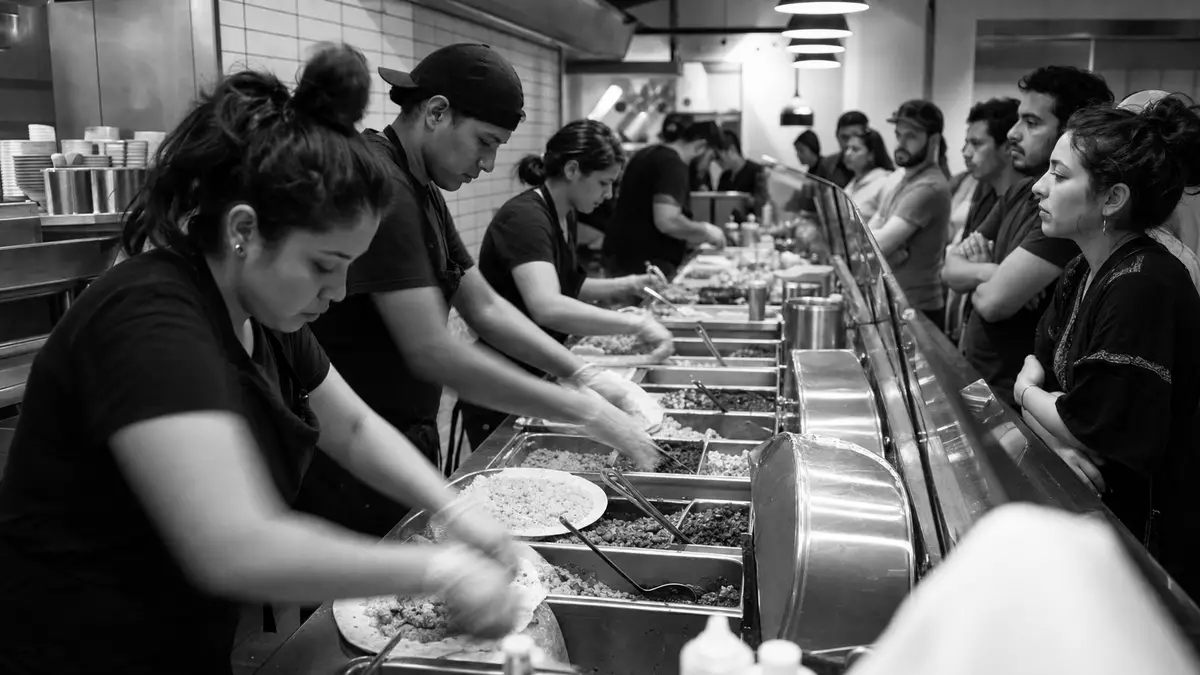
Chipotle's menu is built around customizable burritos, burrito bowls, tacos and salads, with burrito bowls serving as a flagship product for the brand. Customers can choose from a range of ingredients, including rice, beans, grilled meats or plant-based options, salsas and toppings, allowing for a high degree of personalization. The simplicity of the menu and the assembly-line format enable fast service and consistent preparation across thousands of locations.
Over time, Chipotle has refreshed its menu with limited-time proteins and regional variations, while keeping the core structure intact. This approach helps maintain operational efficiency and supply-chain reliability while giving customers reasons to return and try new items. The burrito bowl format has been particularly well suited to digital ordering and delivery, as it travels better than some other products and can be easily customized in the app.
Chipotle Mexican Grill stock and market value
Chipotle Mexican Grill stock is listed in the United States and is part of major US equity indices, reflecting its position as one of the larger consumer discretionary companies in the market. The company has a multi-billion dollar market capitalization, making it a significant component of restaurant and consumer-focused exchange-traded funds and mutual funds. This index and fund inclusion provides a base of institutional ownership that can support liquidity and trading volumes.
The stock's valuation incorporates expectations for ongoing revenue and earnings growth, as well as the risks inherent in a growth-oriented consumer business. Price fluctuations around earnings releases and macroeconomic data points often reflect changes in investor assumptions about comparable sales, new restaurant openings, margin trends and capital allocation priorities. As with other growth stocks, Chipotle's share price can be sensitive to changes in interest rates and risk appetite, which affect discount rates applied in valuation models.
Key data for Chipotle Mexican Grill
- Company: Chipotle Mexican Grill Inc.
- ISIN: US1696561059
- Ticker: NYSE: CMG
- Trading venue: NYSE
- Sector / Industry: Consumer Discretionary / Restaurants
- Index membership: S&P 500
Disclaimer regarding our articles: No investment advice, no buy or sell recommendation. Information on prices, companies, and markets is provided without guarantee; changes are possible at any time. Stock market transactions can lead to substantial losses. Our articles are created and reviewed in whole or in part automatically with the support of AI.