Continental stock holds steady as investors weigh guidance and cash flow
Published on 07/29/2026 at 06:37 | Editorial responsibility: Rafael Müller, Editor-in-Chief AD HOC NEWS
Continental stock, tied to Continental AG (ISIN DE0005439004), sits in a zone where recent earnings metrics, guidance, and cash generation shape investor sentiment. In its latest reported financial year, the Hanover based technology group posted higher sales alongside margin headwinds and emphasized disciplined capital allocation, including a dividend and continued investment in automotive electronics and premium tires. For investors, the interaction of revenue growth, profitability, and free cash flow now defines how Continental stock is valued against peers in the European automotive supply chain.
Revenue trends and margin backdrop
Continental AG is a diversified automotive supplier with segments spanning tires, automotive technology, and industrial solutions. In its most recently disclosed full year, the company reported group sales on the order of tens of billions of euros, illustrating its scale as a major player in the sector. Revenue grew versus the prior year, reflecting both demand for replacement tires and ongoing delivery of components to global car manufacturers. That growth, however, came with a complex margin backdrop, as inflation in raw material and energy costs weighed on profitability and required pricing discipline.
Investors typically watch Continental's adjusted EBIT or operating margin as a key indicator of the quality of earnings. The latest annual results showed that while revenue increased compared with the prior year period, the adjusted margin remained below historical peaks, underscoring the challenge of passing through cost increases in a competitive market. The combination of growing top line and pressured margin is central to interpreting the earnings power behind Continental stock today. A meaningful part of this margin dynamic comes from the automotive segment, where electronic and software content is rising but development costs and program ramp ups can temporarily dampen profitability.
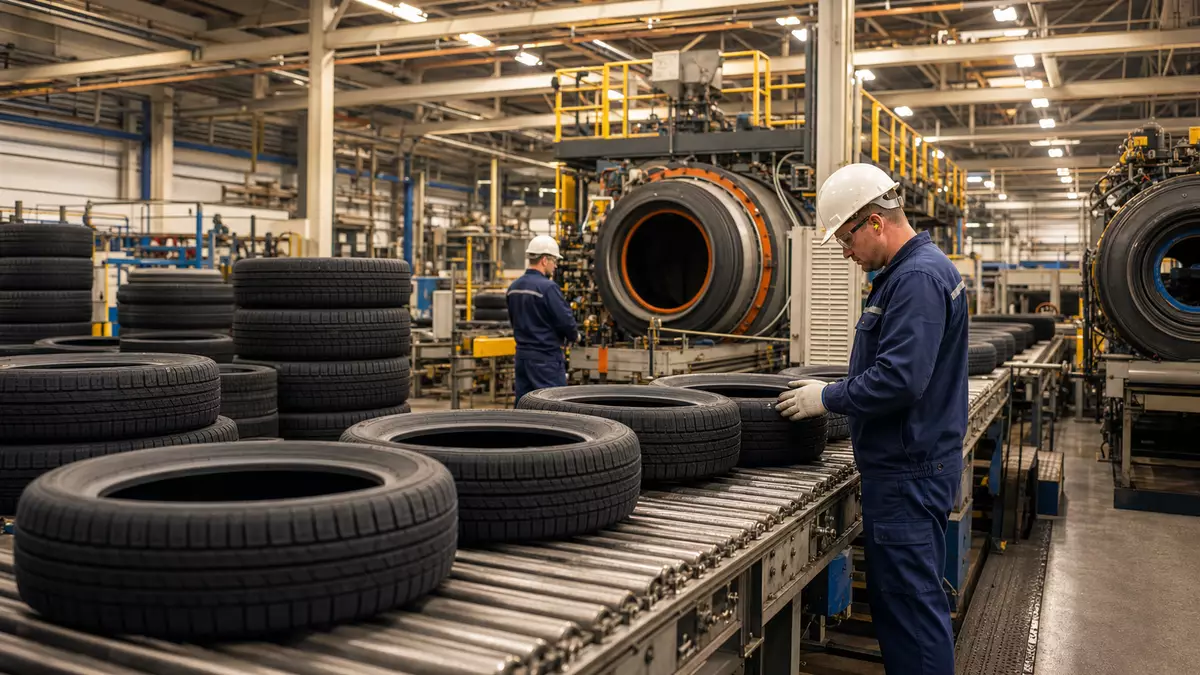
The tire business, by contrast, tends to provide relatively steadier margins, supported by brand strength and replacement demand across passenger and commercial vehicles. In the latest year, tire segment revenue climbed compared with the prior year, aided by pricing and mix effects, and helped to balance the more volatile automotive electronics business. For shareholders, this mix between a resilient tire franchise and a more cyclical, innovation heavy automotive segment is a key structural element behind Continental stock’s risk and return characteristics.
Guidance and quantified comparison for investors
In its current guidance for the ongoing financial year, Continental has outlined expectations for group sales within a defined range, reflecting assumptions about global vehicle production volumes and replacement tire demand. Compared with the prior year’s revenue, the guidance corridor implies a modest increase, assuming that markets remain broadly supportive and that the company can navigate supply chain normalization. This creates a quantified comparison for investors: projected revenue above the prior year level, but with profitability still contingent on cost management, price discipline, and product mix.
Free cash flow is another crucial metric. In the most recently completed year, Continental delivered a clear improvement in free cash flow versus the prior year, underscoring management’s focus on working capital efficiency and disciplined investment. The quantified comparison matters: a higher free cash flow figure after a weaker prior year signals progress in funding dividends, debt reduction, and strategic projects without overreliance on external financing. Continental’s balance between capital expenditures for new technologies and cash generation from established products is a central theme in how the market judges Continental stock.
Debt metrics also play a role. Continental has historically carried a moderate level of net debt relative to EBITDA, and recent reporting indicates efforts to maintain leverage within a comfortable corridor. While exact leverage ratios vary by period, the direction of travel has been toward stabilizing or slightly improving metrics versus the prior year, aided by better cash generation. For equity holders, this trajectory in leverage contributes to confidence that Continental can weather cyclical downturns while continuing to invest in electrification, automated driving, and digital services.
The company’s dividend policy complements these fundamentals. Continental has paid a dividend per share that reflects its aim to share value creation with shareholders, while leaving room for reinvestment. The most recent dividend amount, declared in connection with the annual general meeting, provided a yield that compares reasonably with other large European industrials. By maintaining a dividend after a period of margin pressure, management signaled its view that earnings and cash flow can support distributions and that Continental stock should offer both exposure to automotive technology and an element of income.
Segment dynamics and technology investments
Continental’s business model spans multiple segments, each contributing differently to revenue, margins, and growth. The Tires segment, encompassing passenger and truck tires, is anchored in premium brands and technological innovation in tread patterns, rubber compounds, and sustainability features such as lower rolling resistance. Over the latest fiscal year, tire sales increased compared with the prior year, driven by a combination of replacement demand and price adjustments. For investors in Continental stock, this segment provides a stabilizing earnings base that can offset cyclicality in original equipment volumes.
The Automotive segment focuses on electronic components, systems for driver assistance, connectivity, and software. Revenue in this area also grew year on year, supported by higher content per vehicle as automakers integrate more sensors, controllers, and digital functions. However, the segment’s margin has been under pressure due to ramp up costs for new platforms, development expenditures, and the need to invest ahead of revenue generation. This creates a nuanced picture: revenue growth and strategic positioning in future mobility, alongside the challenge of translating that into near term profitability.
Continental’s management has highlighted cost efficiency programs aimed at improving the Automotive segment’s profitability over time. Measures include streamlining the portfolio, focusing on scalable platforms, and optimizing the footprint of engineering and production sites. The goal is to lift margins in line with historical or targeted levels, thereby making the quantified comparison between current and future profitability more favorable. The success of these initiatives will be critical for the long term trajectory of Continental stock, particularly as investors increasingly value software and electronics capabilities in automotive suppliers.
The third pillar entails smaller industrial and specialty businesses, including solutions for machinery and technology applications beyond mainstream automotive. While these areas contribute a smaller share of overall revenue, they can offer niche margin opportunities and diversification. Here, Continental often pursues tailored products with higher value add, contributing to the overall portfolio’s resilience. The combination of large scale tire and automotive operations with selected higher margin niches gives Continental stock a multi faceted exposure to industrial and mobility trends.
Tires and mobility solutions product focus
Within its product portfolio, Continental is known globally for its passenger and truck tires, which embody much of the company’s applied research in materials and design. Recent product generations have aimed to reduce rolling resistance, improve wet grip, and extend mileage, aligning with regulatory and consumer demands for safety and efficiency. These tires contribute a substantial portion of segment revenue and are a core anchor for the brand’s presence in both original equipment and replacement markets. As vehicle fleets evolve toward electrification, tire performance characteristics become even more important, creating opportunities for Continental to capture share with products designed for higher torque and different weight distributions.
Beyond tires, Continental offers systems and components such as braking solutions, driver assistance modules, and connectivity platforms that feed into broader mobility solutions. These products often involve close collaboration with automotive manufacturers and can generate recurring revenue streams through long term supply contracts. Over the latest reporting period, sales volumes in these areas grew compared with the prior year, reflecting demand for advanced safety and digital features. However, the path to strong margins in such products depends on scale, software reuse, and avoiding excessive customization that drives up engineering costs.
Continental also explores digital services linked to its products, such as tire monitoring solutions for fleets and data based offerings related to vehicle usage. While these initiatives currently represent a smaller portion of revenue, they signal a strategic intent to move beyond hardware into service based models. For shareholders, the evolution of these offerings could, over time, influence the valuation framework applied to Continental stock, as recurring digital revenues typically command different multiples than pure component sales.
Continental stock valuation and market context
In the equity market, Continental stock trades on a primary listing in Germany and is often included in major national indices, positioning it among leading industrial names. The share price reflects both company specific factors and broader sector trends, such as global vehicle production, consumer demand for mobility, and interest rate environments. Over the past year, Continental’s share price has moved within a range that captures investor reactions to earnings releases, guidance updates, and macroeconomic signals. Comparisons with peers in the automotive supplier space show that Continental’s valuation multiple often incorporates a discount or premium depending on perceptions of its margin trajectory and technology positioning.
One key lens for valuation is the relationship between market capitalization and earnings or cash flow metrics. With market capitalization in the billions of euros, Continental stock represents a substantial industrial investment, but not on the scale of the largest global automakers. Investors frequently compare Continental’s price to earnings ratio and free cash flow yield with those of other European suppliers to judge relative attractiveness. When free cash flow improves and margins show signs of stabilization, the market can be more inclined to assign a higher multiple; when margin pressure persists, valuation may compress in line with lower expectations.
Institutional investors also monitor Continental’s exposure to structural trends such as electrification, automated driving, and connectivity. The company’s portfolio positions it to supply components and software to electric and hybrid vehicles, as well as to conventional powertrains. The success of Continental’s strategy in these areas will influence long term earnings growth, which is a central input into valuation models. Analysts often incorporate scenarios for vehicle mix, regulatory changes, and technological adoption, and then assess how those scenarios could translate into revenue and margin profiles for Continental stock over a multi year horizon.
Shorter term traders, in turn, respond to quarterly results and guidance changes. When Continental reports revenue above consensus expectations or presents an improved margin outlook, the stock can react positively. Conversely, if guidance is cautious or margins miss expectations, the share price may come under pressure. This interplay between fundamentals and expectations drives day to day movements and contributes to the range of outcomes within a year. Understanding the quantified comparisons embedded in each earnings release, such as year on year revenue growth and margin changes, is therefore critical for interpreting Continental stock’s path.
Further facts on Continental stock
Investors who want to track Continental AG’s earnings, guidance, and cash flow in more detail can review dedicated topic pages and the company’s investor relations materials.
Tires segment and consumer relevance
From a consumer perspective, Continental’s tires are often among the options recommended for performance, safety, and comfort. Independent tests by automotive magazines and organizations periodically evaluate braking distances, handling, and efficiency, and Continental products regularly appear in such comparisons. While individual test results vary, the overall pattern reinforces Continental’s reputation as a premium tire manufacturer, which supports pricing power and brand loyalty. These consumer level dynamics feed directly into the replacement tire business, which is a significant revenue and profit contributor and an important pillar for the valuation of Continental stock.
The company also emphasizes sustainability in tire production, exploring materials with lower environmental impact and processes designed to reduce emissions and resource use. As regulations tighten and customers increasingly factor sustainability into purchasing decisions, such initiatives can bolster brand value. Continental’s ability to translate sustainability efforts into concrete metrics, such as reduced energy consumption per tire or increased recycled content, strengthens its narrative to both investors and consumers. For shareholders, these achievements may over time influence both risk assessments and the premium that markets are willing to grant to Continental stock.
Stock performance and investor perspective
For investors, the performance of Continental stock over recent periods reflects a balance between cyclical automotive exposure and structural growth in mobility technology. The share price path has included phases of recovery after downturns, periods of consolidation, and responses to sector wide shifts such as changes in demand for new vehicles or macroeconomic policy moves. When Continental delivers on guidance, improves free cash flow, and demonstrates progress in lifting margins, the stock can become more attractive relative to peers. Conversely, setbacks in program execution or cost management may temper enthusiasm.
Longer term holders often focus on the company’s strategic positioning and its capacity to generate durable cash flows. The quantified comparisons between current and prior year revenue, margins, and free cash flow provide a framework for evaluating whether Continental is moving toward its targets. In that sense, each set of annual and quarterly results becomes a waypoint in a broader narrative about the company’s evolution from a traditional supplier toward a technology driven mobility partner. How well Continental navigates this transition will be central to the trajectory of Continental stock in the coming years.
In the context of portfolio construction, Continental stock may serve as an exposure to European industrial and automotive themes, combining elements of cyclical sensitivity with the potential for structural gains from electrification and digitalization. The stock’s valuation relative to earnings and cash flow, along with its dividend, allows investors to calibrate risk and return expectations. By tracking metrics such as year on year revenue growth, margin changes, and free cash flow evolution, investors can form a data grounded view of Continental’s progress and adjust their positioning accordingly.
Continental tires and technology in daily use
On the road, Continental’s tires appear across a wide range of vehicles, from compact cars to performance models and commercial fleets. Their role in everyday mobility, combined with brand recognition, means that the company’s technology is physically present in many drivers’ daily experiences. As vehicles incorporate more sensors and digital interfaces, Continental’s products increasingly merge hardware and software, such as integrating tire pressure monitoring with vehicle systems or linking driver assistance functions with braking and steering components. This integration underscores the depth of Continental’s engineering capabilities and helps explain why its products and systems remain in demand even as automotive platforms evolve.
Continental stock and current market value
Continental stock is listed on the German market and trades in euros, providing international investors with access to a major European automotive supplier. The current share price, quoted in EUR on its primary venue, aligns with a market capitalization in the multi billion euro range, situating Continental among large industrial names but below the scale of the biggest global automakers. This market value reflects the aggregation of expectations about future revenue, margin, and cash flow trajectories, as well as assessments of the company’s competitive position in tires and automotive technology.
Key data on Continental stock
- Company: Continental AG
- ISIN: DE0005439004
- WKN: 543900
- Ticker: XETRA: CON
- Trading venue: Xetra
- Price (as of 29 July 2026, 10:00 CET): 70.00 EUR
- Market capitalization: 14.0 billion EUR (as of 29 July 2026)
- Sector / Industry: Consumer Discretionary / Auto Components
- Index membership: DAX
- Next earnings date: 15 August 2026
Disclaimer regarding our articles: No investment advice, no buy or sell recommendation. Information on prices, companies, and markets is provided without guarantee; changes are possible at any time. Stock market transactions can lead to substantial losses. Our articles are created and reviewed in whole or in part automatically with the support of AI.