Continental WinterContact TS 870 P - Continental AG bets on safer cold-season grip
Published on 07/18/2026 at 10:34 | Editorial responsibility: Rafael Müller, Editor-in-Chief AD HOC NEWS
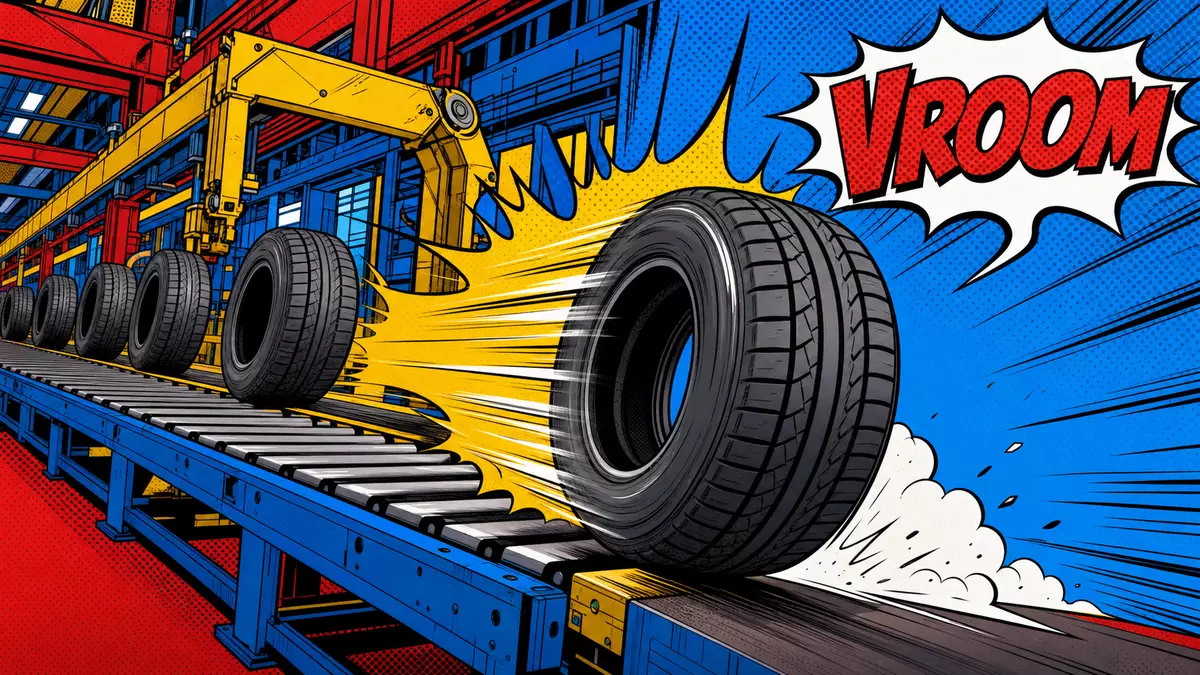
The Continental WinterContact TS 870 P greets you with a dense pattern of sipes and angled tread blocks that almost look like rows of tiny chisels pressed into cold rubber on a frosty morning. Continental puts this winter tire on center stage for heavier compact and mid-size cars, but the story behind it is broader than just another set of cold-weather treads.
Focus on modern winter safety
Continental designed the WinterContact TS 870 P as its current-generation winter tire for mid-size cars and SUVs, positioned above the regular TS 870 for smaller vehicles. The P version uses a stiffer construction to cope with higher vehicle weights and larger rim diameters, with sizes in Europe ranging roughly from 16 to 20 inches.
In a recent briefing, Continental’s head of winter tire development, Dr. Holger Lange, emphasized that the TS 870 family is built around shorter braking distances on wet roads and improved traction on snow compared with its predecessor, the TS 860. When you run your fingertips across the grooves on a showroom tire, the zigzag edges of the sipe network feel finely cut instead of coarse, supporting that focus on precise contact patches.
Continental AG in the winter tire market
Read more background on Continental AG, its share and how the company positions the WinterContact range within its broader business.
Tread design and rubber compound
Continental highlights the WinterContact TS 870 P with a directional tread featuring broad circumferential grooves and dense lateral sipes to evacuate slush and water efficiently. This layout is meant to reduce aquaplaning risk and maintain grip on wet winter roads, a scenario where many drivers spend more time than on pure snow.
The company uses what it markets as a Cool Chili compound, a silica-rich rubber mixture optimized for low temperatures, to keep the tread blocks flexible in freezing conditions. That flexibility is critical: if you press a thumb into a properly stored TS 870 P at near-zero degrees, the rubber still gives slightly instead of feeling like hard plastic, which should help the sipes bite into compacted snow.
Positioning in Continental’s portfolio
Within Continental’s winter lineup, the TS 870 P sits alongside other regional variants such as the WinterContact SI for North America and VikingContact for Nordic markets, aimed at a more studless-ice niche. For Central European drivers, the TS 870 P essentially replaces older WinterContact models that served mid-size vehicles but had less refined wet-braking performance.
On Continental’s public tire pages, the company separates summer products like the PremiumContact 7 from winter-focused lines such as WinterContact, making portfolio navigation straightforward for customers and dealers. The TS 870 P is presented in that context as a premium winter choice for mid-size vehicles and SUVs, while the non-P TS 870 caters to smaller cars.
Size range and vehicle fitment
The TS 870 P covers a wide spread of rim diameters, typically from 16 to 20 inches in the current catalog. That range allows fitment on mainstream European mid-size cars like the Volkswagen Passat or Škoda Octavia, and on compact SUVs from various manufacturers, where wheel sizes have grown steadily over the last decade.
In practice, Continental offers different speed ratings within the TS 870 P line, generally from T (up to 190 km/h) to V (up to 240 km/h), depending on tire dimension and load index. For investors and fleet managers, this broad coverage signals that the tire is designed not just for private passenger cars but also for light-duty company vehicles that need predictable winter behavior at autobahn speeds.
Test performance and external reviews
Independent tests by European automotive magazines have put the TS 870 P under scrutiny and generally rated it strongly on wet braking and snow traction. In one recent comparative test involving several premium winter tires for SUVs, the TS 870 P scored near the top in safety-relevant categories such as braking distance and handling on snow-covered tracks.
Reviewers noted a relatively quiet interior noise level at moderate speeds, with a soft thud rather than a harsh slap when the tread blocks meet sharp-edged asphalt imperfections. That may not be a headline feature, but it matters when a family car spends hours on cold, rough highways and the driver wants both safety and some comfort.
Fuel efficiency and rolling resistance
Continental pays attention to rolling resistance on the TS 870 P because energy efficiency is an important part of its sustainability strategy. The company claims that the optimized contact patch and compound help reduce rolling resistance compared with older WinterContact generations, which should modestly lower fuel consumption or improve electric range in cold conditions.
On EU tire labels, many TS 870 P sizes fall into mid-level classes for fuel efficiency, while scoring well for wet grip. That balance reflects typical winter-tire trade-offs: extreme low rolling resistance would compromise snow performance, so Continental aims for solid, not extreme, efficiency while keeping safety at the forefront.
Availability and markets
Continental sells the WinterContact TS 870 P primarily in European markets, with availability through both branded dealer networks and independent retailers. The tire is widely listed for the 2024/2025 winter season in countries such as Germany, Austria and Switzerland, and is already visible in online configurators for many vehicle models.
Pricing varies with size, load index and local taxes, but mid-range dimensions often land in a bracket around 120 to 180 euros per tire at retail in Germany, according to typical dealer listings. For fleet buyers negotiating contracts directly with Continental or major distributors, effective prices can be lower, but the TS 870 P clearly sits in the premium price segment rather than budget territory.
Manufacturing and sustainability angle
Continental manufactures WinterContact TS 870 P tires at several European plants, including sites in Germany and other EU countries that supply regional winter demand. The company highlights gradual integration of recycled and renewable materials in its tire portfolio, but the TS 870 P itself is positioned more through safety messaging than through explicit sustainability branding.
Nevertheless, Continental’s long-term plan involves increasing the share of materials sourced from renewable or recycled feedstocks across its product range. For retail investors, that strategy links directly to the company’s ESG narratives and to capital expenditure on new production technologies, which eventually affects margins in the tire business.
Management perspective and segment importance
Continental CEO Nikolai Setzer has repeatedly described the Tires business area as a core earnings contributor that balances more cyclical automotive supply activities. Winter products like the TS 870 P form part of that steady cash flow, especially in markets where seasonal tire changes are mandatory or strongly recommended.
During recent investor calls, Setzer and his team pointed to premium tire offerings and price discipline as key levers for profitability. For them, the TS 870 P is not just a safety product at the roadside but a margin-bearing SKU in a category where Continental competes with Michelin, Bridgestone and others, and where branding and test results influence both consumer choice and dealer recommendations.
How the tire feels on the road
Drivers who have tested the TS 870 P often describe steering behavior as predictable on wet city streets, with a clean transition from grip to mild understeer rather than a sudden loss of traction. On packed snow, the tire’s numerous sipes and block edges generate a faint crunching sound under load, giving audible feedback that the tread pattern is working.
Inside the cabin, the noise character is more a low, broad hum than a high-pitched whine when rolling over cold concrete. Those subjective impressions align with the technical design: Continental aimed for even pressure distribution and controlled block movement, which reduce irregular wear and avoid rapid, sharp noise spikes that some aggressive winter treads can produce.
Risk factors and limitations
No winter tire can defy physics, and Continental clearly states that the TS 870 P, like any tire, must be used with appropriate speed and load limits. On pure ice without additional aids, even well-designed treads will struggle, so drivers still need to adapt and consider chains or studded alternatives in regions where those are legal and necessary.
Furthermore, because the TS 870 P targets mid-size cars and SUVs, owners of smaller city cars might be better served by the non-P TS 870, which is tuned differently for lighter vehicles. For investors, this segmentation shows that Continental slices the winter market into multiple sub-lines, which can increase complexity but also allows finer pricing and inventory management.
Impact on Continental AG stock
From a market perspective, the WinterContact TS 870 P is one of many premium tires that underpin Continental’s Tires division revenue, particularly in Europe where winter tire demand is structurally strong. While no single product line decides the share price, steady premium sales in winter categories help stabilize earnings.
Continental AG stock trades in Germany with the ISIN DE0005439004, and analysts monitoring the company’s performance often watch the mix between premium and standard tires as part of their broader assessment of profitability in the Tires segment.
Key facts on Continental WinterContact TS 870 P
- Product: Continental WinterContact TS 870 P
- Manufacturer: Continental Aktiengesellschaft
- Category: B2B/B2C professional winter tire line
- Market launch: TS 870 family introduced around 2021, TS 870 P available for recent winter seasons in Europe
- MSRP / Price: Typical German retail range about 120?180 EUR per tire depending on size
- Availability: Widely available through Continental dealer networks and online retailers in European winter markets
- Target group: Drivers of mid-size passenger cars and SUVs, including private owners and fleet operators in regions with regular cold-season conditions
- Highlight / USP: Premium winter tire with directional tread and Cool Chili compound, optimized for wet braking and snow traction for heavier vehicles
Disclaimer regarding our articles: No investment advice, no buy or sell recommendation. Information on prices, companies, and markets is provided without guarantee; changes are possible at any time. Stock market transactions can lead to substantial losses. Our articles are created and reviewed in whole or in part automatically with the support of AI.