DroneShield Loses JPMorgan, BlackRock as ASIC Probe Overshadows World Cup Role
Veröffentlicht: 30.06.2026 um 15:47 Uhr, Redaktion boerse-global.de
The contrasting forces pulling at DroneShield have rarely been starker. One the one hand, the counter-drone specialist is protecting airspace over the FIFA World Cup in Kansas City and has just opened a European headquarters in Amsterdam. On the other, its stock has slumped 60% from a 52-week high of €3.65 to trade at €1.44, with a 3% decline on the latest session alone. The culprit: an investigation by the Australian Securities and Investments Commission that has spooked some of the world’s largest asset managers.
JPMorgan, Citigroup and BlackRock each exited their positions entirely during the spring, according to the company’s latest shareholder filings. At the annual meeting, nearly half of investors voted against the remuneration report — a stinging rebuke that underscores the depth of the confidence crisis. The stock now sits about 23% below its 50-day moving average and 28% below its 200-day mean, with an annualised volatility of 75% that leaves it vulnerable to sharp moves in either direction.
The regulatory shadow grew darker in May 2026, when ASIC launched a formal probe into events from November 2025. The regulator is examining share sales by former chief executive Oleg Vornik and other directors that coincided with the abrupt withdrawal of a large customer order within hours. A separate line of inquiry centres on allegations that the company may have double-counted revenues. DroneShield has pledged full cooperation; no formal charges have been brought, but the damage to broker trust is already palpable.
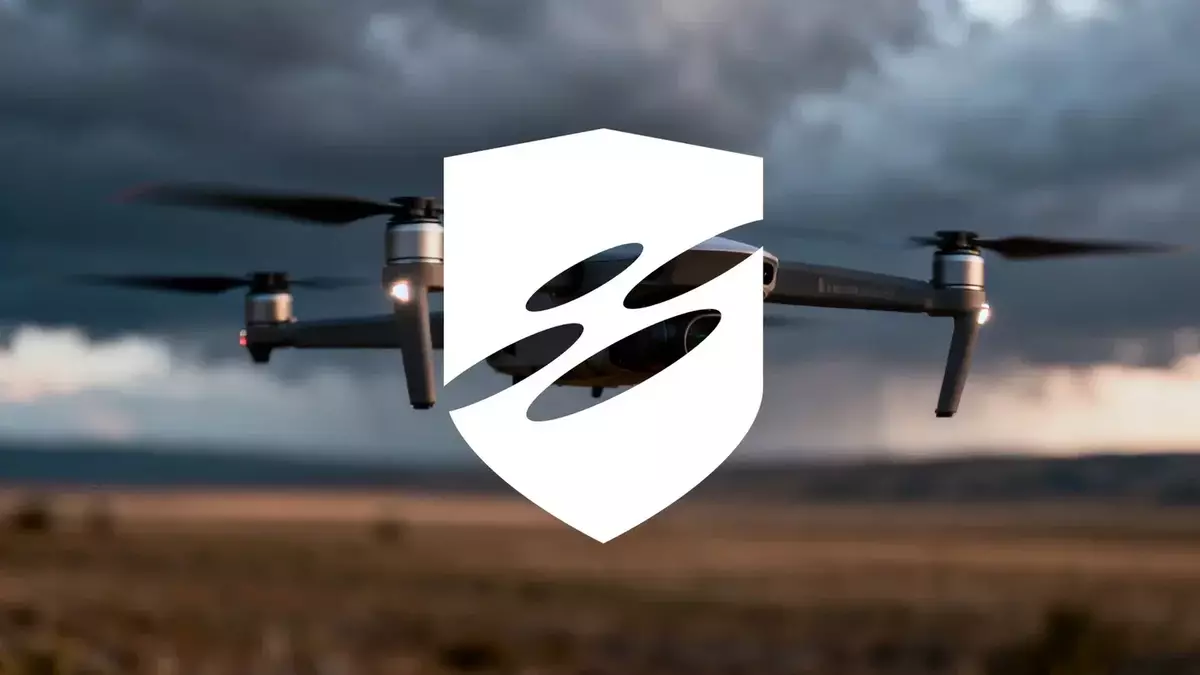
Yet the operational side of the story could hardly be more bullish. In Kansas City, DroneShield’s detection and threat-mitigation systems serve as the primary protection layer across Arrowhead Stadium, fan zones and public spaces during six World Cup matches. The deployment, funded by the federal C-UAS programme and coordinated by the Department of Homeland Security and FEMA, is not a one-off event contract. Local authorities have built a permanent regional airspace monitoring infrastructure that stretches across multiple city districts and law enforcement agencies — a blueprint for recurring revenue from public safety budgets long after the final whistle.
Should investors sell immediately? Or is it worth buying DroneShield?
The global tailwind is equally powerful. The counter-drone market is forecast to grow from $6.64 billion this year to $20 billion by 2030 and $36 billion by 2035. The US government alone plans to spend at least $1.8 billion on such technologies in 2026, while the Pentagon has requested $3.1 billion for fiscal year 2026. In a sign of the sector’s maturation, Motorola Solutions recently agreed to acquire rival D-Fend Solutions for $1.5 billion, and new legislation such as the Safer Skies Act is fuelling investment.
DroneShield’s own financials reflect this momentum. The company ended the last quarter with operating cash flow of 24.1 million Australian dollars, is debt-free, and holds roughly A$223 million in cash. Its order backlog stands at A$154 million, and management is currently negotiating 13 individual contracts worth more than A$20 million each. The largest single programme, valued at A$730 million, is expected to receive a decision in the second half of the year. The firm aims to quintuple annual production capacity to A$2.4 billion by the end of 2026.
Europe now accounts for nearly half of group revenue, and the newly operational Amsterdam office is already shipping the first locally produced systems. At the Eurosatory defence exhibition in Paris, DroneShield struck a strategic partnership with Dutch vehicle specialist Defenture to develop mobile counter-drone platforms. The company is also expanding its product suite through AI-powered classification and passive detection, though it faces stiff competition from well-funded players such as Anduril, Dedrone and large defence primes.
DroneShield at a turning point? This analysis reveals what investors need to know now.
With a market capitalisation of €1.27 billion, the stock has already priced in considerable risk. The question for investors is whether that discount fully captures the ASIC uncertainty — or whether the operational trajectory from Kansas City to Amsterdam has been unfairly penalised. The answer will ultimately come not from a trade show or a football stadium, but from the regulator’s office in Canberra.
Ad
DroneShield Stock: New Analysis - 30 June
Fresh DroneShield information released. What's the impact for investors? Our latest independent report examines recent figures and market trends.
Disclaimer zu unseren Artikeln: Keine Anlageberatung, keine Kauf oder Verkaufsempfehlung. Angaben zu Kursen, Unternehmen und Märkten ohne Gewähr; Änderungen jederzeit möglich. Börsengeschäfte können zu hohen Verlusten führen. Unsere Beiträge werden ganz oder teilweise automatisiert mit Unterstützung von AI erstellt und geprüft.