DroneShield's Paradox: A Billion-Dollar Pipeline Meets a Governance Iceberg
Veröffentlicht: 12.06.2026 um 06:04 Uhr, Redaktion boerse-global.de
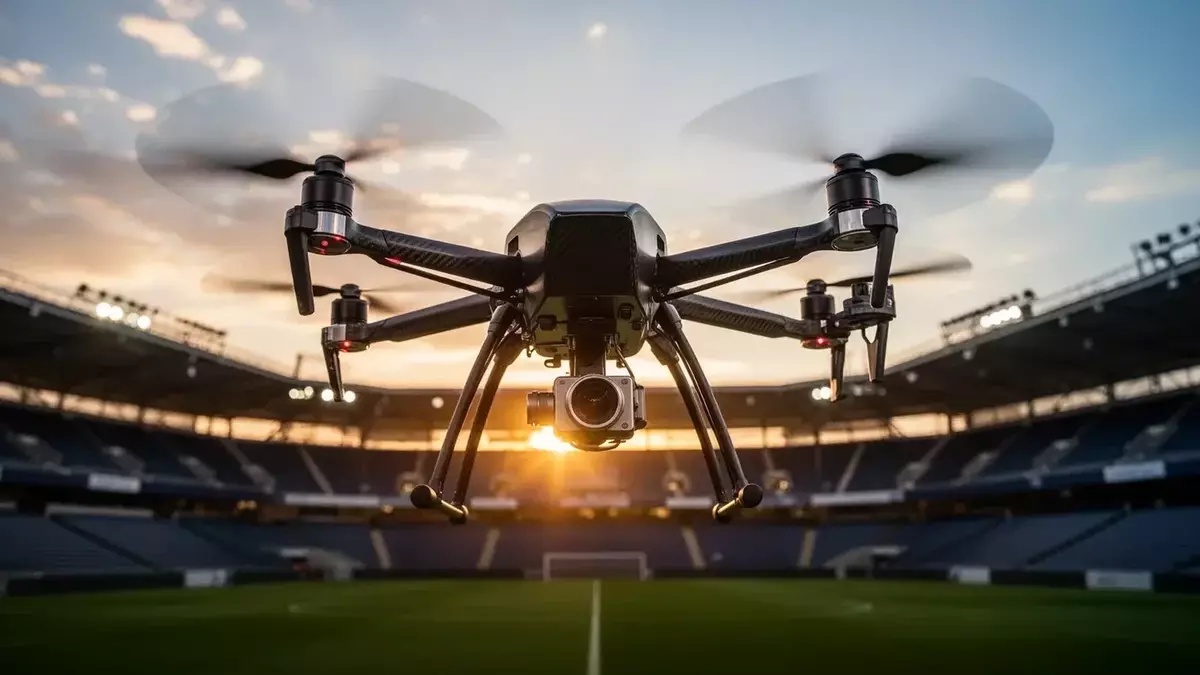
On the surface, DroneShield looks like an investment banker's dream. The counter-drone specialist just locked in a $24.9 million contract with the US Department of Defense's Joint Interagency Task Force 401, is guarding the airspace over this summer's FIFA World Cup in Kansas City, and posted a 121% revenue surge to A$74.1 million in the first quarter. Its cash pile sits at A$223 million with zero debt, and the company plans to quintuple manufacturing capacity to A$2.4 billion by year-end. Yet the stock trades at €1.68 – roughly 54% below its 52-week high – and has shed over 17% in the past month alone.
The culprit is not commercial but regulatory. Australia's securities watchdog ASIC is investigating whether DroneShield delayed the disclosure of a contract in November 2025 and whether insider share sales around that time breached corporate law. The episode began when the company announced US government contracts worth about A$7.6 million, only to retract the statement hours later, calling it an administrative reissue. Former chief executive Oleg Vornik and former chairman Peter James sold their entire holdings near the stock's peak in that same period, with combined proceeds estimated at between A$67 million and A$70 million. James left the board on May 29.
The market's reaction has been swift and brutal. On June 4, Citigroup and related entities cut their stake below the 5% reporting threshold, and the share now sits among the ten most-shorted stocks on the ASX, with a short interest of 11.4%. At the annual general meeting in late May, 48% of shareholders voted against the remuneration report – a "first strike" under Australian law that could lead to a board spill if repeated next year. A separate 43% opposed the option package for newly appointed CEO Angus Bean. The narrative of operational excellence is being systematically neutralised by what analysts call a "governance discount".
Should investors sell immediately? Or is it worth buying DroneShield?
Technically, the stock is severely oversold. The relative strength index reads 33.2, and the price is roughly 19% below both its 50-day and 200-day moving averages. Despite these levels, buyers remain scarce. The regulatory overhang outweighs the fundamental tailwinds – tailwinds that include a global counter-drone market expected to expand from US$6.6 billion in 2025 to US$20.3 billion by 2030, and a Pentagon that has requested US$3.1 billion for counter-UAS systems in fiscal 2026 alone. The World Cup itself has unlocked US$115 million in drone-specific funding from the Department of Homeland Security and FEMA.
The next major test comes in August with the half-year results. The order book is growing, customer payments surged 360% to A$77.4 million in Q1, and the US team has doubled in size. But until the ASIC probe reaches a conclusion – and trust is rebuilt – every contract win seems destined to be overshadowed by the same question: can a company with the right product at the right decade overcome a crisis of confidence that runs this deep?
Ad
DroneShield Stock: New Analysis - 12 June
Fresh DroneShield information released. What's the impact for investors? Our latest independent report examines recent figures and market trends.
Disclaimer zu unseren Artikeln: Keine Anlageberatung, keine Kauf oder Verkaufsempfehlung. Angaben zu Kursen, Unternehmen und Märkten ohne Gewähr; Änderungen jederzeit möglich. Börsengeschäfte können zu hohen Verlusten führen. Unsere Beiträge werden ganz oder teilweise automatisiert mit Unterstützung von AI erstellt und geprüft.