DroneShield stock reflects growing demand for counter-drone technology
Veröffentlicht: 15.07.2026 um 20:52 Uhr, Redaktion AD HOC NEWS, Redaktionelle Verantwortung: Rafael Müller (Chefredaktion)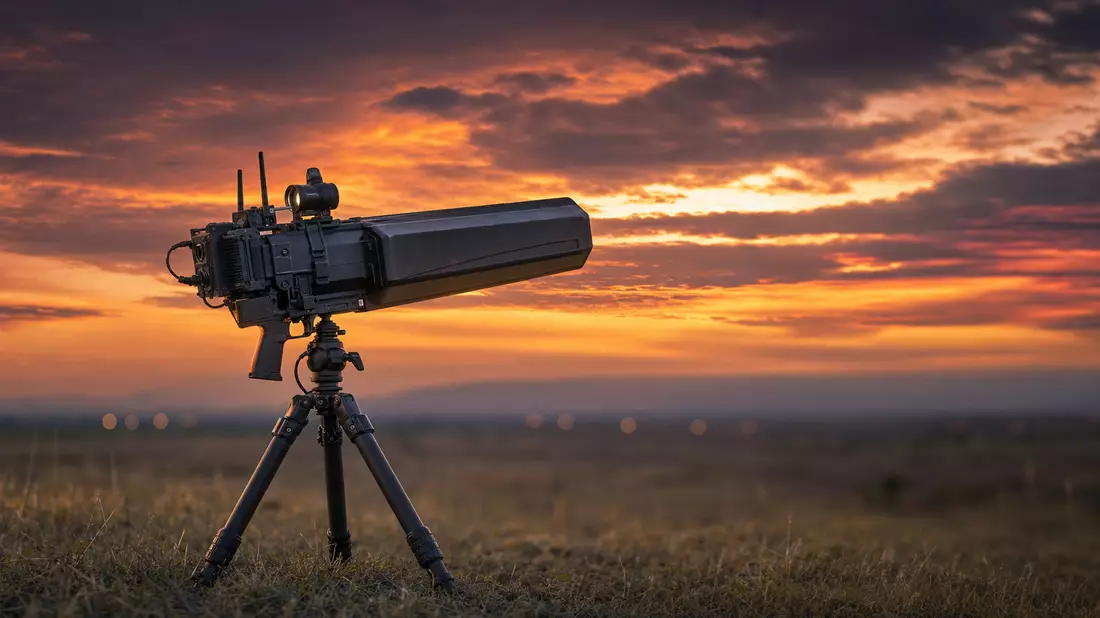
DroneShield stock is closely aligned with the accelerating global demand for counter-drone and electronic warfare solutions, as governments and security-critical industries invest in protecting airspace, infrastructure, and military assets from emerging unmanned aerial threats.
Counter-drone focus underpins DroneShield
DroneShield is an Australian defence technology company that specializes in detecting, identifying, and defeating hostile drones and related electronic threats for military, government, and commercial customers. Its systems typically combine radio-frequency sensing, radar, acoustic sensors, optical cameras, and software analytics to build a layered picture of the airspace and to help operators respond to unauthorized or hostile drones.
The company focuses on modular systems that can be deployed at fixed sites, integrated with vehicles, or used as portable solutions by military personnel and security teams. Its offerings are generally built to work in complex environments where civilian and military signals overlap, making accurate classification and rapid decision-making essential.
For investors, the core story around DroneShield stock is that spending on counter-drone technology and electronic warfare has become a structural feature of defence budgets rather than a short-term trend. Defence and security planners increasingly treat drones and low-cost unmanned systems as persistent threats that must be countered with dedicated sensors, software, and mitigation tools.
Defence spending and market positioning
DroneShield’s business model is centered on supplying mission-critical systems and software to defence ministries, border agencies, critical infrastructure operators, and law enforcement organizations. These customers typically operate under multi-year procurement cycles, which can support recurring revenue through service, software, and upgrades once systems are deployed.
Recent defence planning documents and public discussions in multiple countries highlight unmanned systems and electronic warfare as key capability areas. Counter-drone solutions, radio-frequency surveillance, and signal intelligence are regularly named as priority investment themes, and this broader context is highly relevant for DroneShield’s positioning.
Within the defence technology sector, companies with specialized expertise in sensing, data fusion, and command-and-control software tend to benefit when procurement shifts from traditional hardware toward more agile, software-driven systems. DroneShield’s focus on integrating sensors with analytics and user interfaces positions it within this transition from purely physical defences to intelligent, adaptive systems.
In practical terms, DroneShield competes with both traditional defence contractors and emerging specialist firms in the niche of counter-drone and electronic warfare technologies. Its ability to differentiate through proprietary algorithms, real-time threat libraries, ruggedized hardware, and ease of integration into existing command networks can influence the long-term trajectory of DroneShield stock.
Further context on DroneShield stock
DroneShield operates in a specialised segment of the defence technology market, where counter-drone and electronic warfare capabilities are gaining prominence in national security planning.
Business model and revenue drivers
DroneShield’s revenue typically comes from hardware systems, software licenses, and ongoing support and upgrades. Hardware systems often include fixed installations protecting bases, airports, and critical infrastructure, as well as mobile units mounted on vehicles or deployed with tactical teams. Software and data services underpin detection, classification, and decision-making, allowing users to differentiate harmless drones from those that present a security risk.
The company’s customer base is diversified across defence, government, and commercial sectors. Defence forces may use DroneShield systems to protect forward operating bases, convoys, or training ranges. Border and customs authorities can deploy similar technology to monitor sensitive border areas where small drones might be used for smuggling or surveillance. Critical infrastructure operators, such as power plants, ports, and major events venues, also have an interest in counter-drone protection due to the potential safety and security risks posed by unmanned aircraft.
DroneShield competes in a global market where procurement decisions are heavily influenced by regulatory requirements, interoperability standards, and the ability to integrate with existing security and command systems. Winning tenders often requires demonstrating effectiveness in complex environments, compliance with technical standards, and the capacity to support ongoing training and maintenance.
For DroneShield stock, one interpretive angle is that as more countries and industries formalize rules around drone use and protection, demand for standardized, scalable counter-drone solutions can grow. Over time, that may reward companies that can turn bespoke projects into platform-based offerings, reducing complexity for customers while increasing recurring revenue potential.
Technology, innovation, and competitive landscape
DroneShield devotes significant attention to research and development in sensor fusion, software analytics, and mitigation capabilities. The core technical challenge in counter-drone technology lies in accurately detecting and distinguishing drones within busy environments that may include birds, aircraft, and diverse radio-frequency signals. Addressing this challenge requires advances in signal processing, machine learning, and real-time data visualization.
Sensor fusion is an important competitive differentiator. By combining radio-frequency detection with radar, optical cameras, acoustic sensors, and sometimes thermal imaging, DroneShield systems can cross-check multiple data points to reduce false positives and improve threat classification. The resulting information is typically presented in user interfaces that allow operators to understand where a potential threat is, what type of platform it represents, and what mitigation options are available.
Mitigation methods can include jamming or disrupting the communication link between the drone and its operator, taking over control via protocol manipulation, or coordinating kinetic countermeasures from other systems in the security architecture. The choice of mitigation is often constrained by legal and safety considerations, especially in civilian environments, and so software must support operators in making decisions that meet regulatory standards.
In the broader competitive landscape, DroneShield sits among a range of suppliers providing counter-drone and electronic warfare products. Large defence primes offer integrated solutions that may include counter-drone functionality as part of wider air defence or electronic warfare suites. Smaller specialist companies compete directly in niches like localized detection systems or portable jamming devices. DroneShield’s focus on dedicated counter-drone capabilities, combined with ability to tailor solutions for specific customers, is part of its strategy to remain visible in this evolving market.
For investors following DroneShield stock, the trajectory of innovation in detection accuracy, range, reliability, and ease of use can be just as important as headline contract wins. Systems that are easy to deploy, maintain, and integrate into existing command structures are more likely to be replicated across multiple sites and customers, supporting repeat orders and expansions.
Representative product and applications
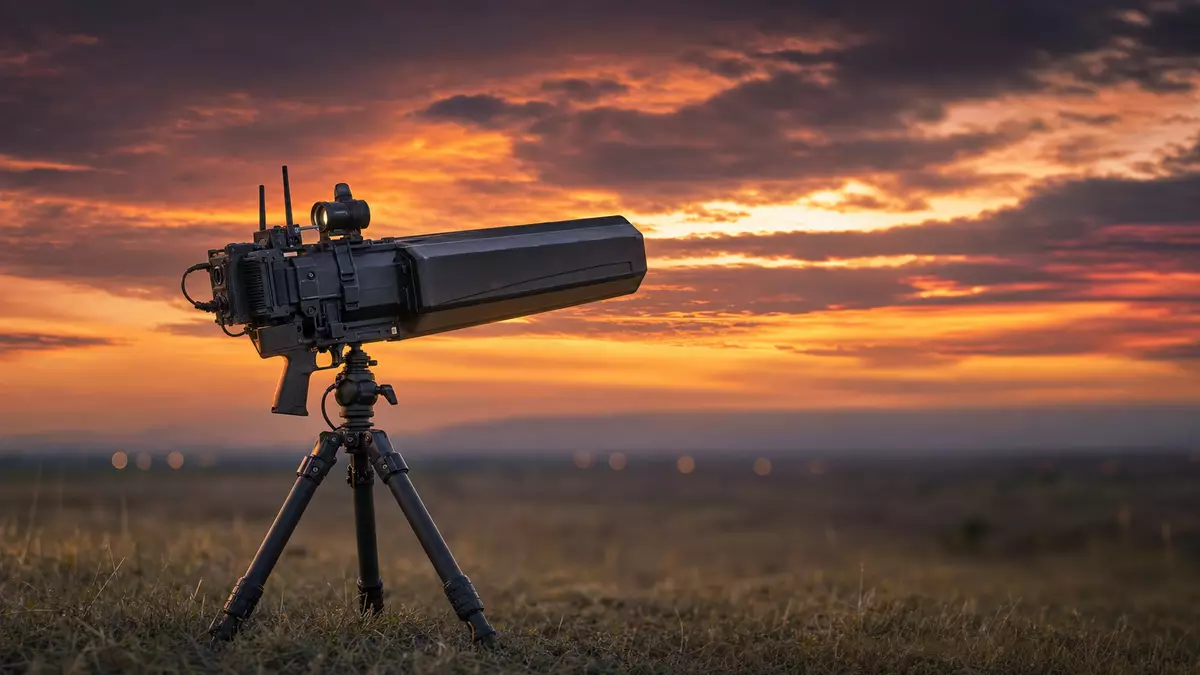
A representative DroneShield product is a fixed-site counter-drone system that integrates multiple sensors into a single command interface, designed to protect bases, airports, and critical infrastructure from hostile or unauthorized drones. This type of system typically uses radar to detect airborne objects, radio-frequency sensors to identify communication signals, optical cameras to provide visual confirmation, and software analytics to classify and track threats.
Such systems are usually built with modular hardware components that can be scaled to cover larger areas or adapted for specific environments, such as urban centers, coastal installations, or remote border sites. They are designed to operate continuously, feeding data into security operations centers and supporting response decisions when a drone is detected.
In addition to fixed-site solutions, DroneShield offers portable and vehicle-mounted systems that allow military and security teams to deploy counter-drone capabilities in dynamic scenarios. These units can accompany patrols, convoys, or temporary deployments, giving operators greater flexibility to monitor and respond to drone activity beyond permanent infrastructure.
DroneShield stock and trading context
DroneShield stock is listed in Australia under the ISIN AU000000DRO1 and trades on the Australian Securities Exchange, giving international investors access through local brokers or global platforms that support trading on that venue. The stock reflects both the company’s contract pipeline and investors’ views on the broader counter-drone and electronic warfare markets.
Because DroneShield operates in a specialised sector adjacent to larger defence and aerospace peers, its share price can be sensitive to announcements of new contracts, regulatory changes around drone usage, and broader defence spending trends. Investors often watch how its order flow, backlog, and recurring revenue develop over time, alongside margins and investment in research and development.
DroneShield stock at a glance
- Company: DroneShield Ltd.
- ISIN: AU000000DRO1
- Ticker: DRO
- Exchange: Australian Securities Exchange (ASX)
- Sector / Industry: Defence technology / electronic warfare and counter-drone systems
- Next earnings date: not yet officially scheduled
Disclaimer zu unseren Artikeln: Keine Anlageberatung, keine Kauf oder Verkaufsempfehlung. Angaben zu Kursen, Unternehmen und Märkten ohne Gewähr; Änderungen jederzeit möglich. Börsengeschäfte können zu hohen Verlusten führen. Unsere Beiträge werden ganz oder teilweise automatisiert mit Unterstützung von AI erstellt und geprüft.