DroneShield stock trades near recent high as defense orders and cash build support
Published on 07/28/2026 at 11:39 | Editorial responsibility: Rafael Müller, Editor-in-Chief AD HOC NEWS
DroneShield stock is drawing attention as the Australian counter?drone specialist (ISIN AU000000DRO1) benefits from fresh defense orders, rising cash reserves, and recent capital injections that are reshaping its balance sheet and growth profile.
Cash position climbs above AUD 100 million
According to an investor presentation by DroneShield Ltd dated 11 July 2024, the company reported a cash balance of approximately AUD 115 million as of that date, following a series of capital raises and operational cash inflows.
In the same materials, DroneShield indicated that its cash position stood at around AUD 60 million at the end of fiscal 2023, meaning available cash more than doubled within a matter of months as new funds were secured and existing contracts converted into cash receipts.
Management framed this higher cash balance as a key enabler for larger production runs and faster delivery on defense projects, noting that the company now has significantly more flexibility to finance inventory and fulfill sizable orders without relying solely on external credit lines.
Revenue growth accelerates in latest full year
In its annual report for fiscal 2023, DroneShield disclosed revenue of roughly AUD 55 million, a sharp increase from approximately AUD 16 million in fiscal 2022.
This represents revenue growth of about 244 percent year over year, underscoring how the group moved from relatively modest sales to mid?size revenue within a single reporting period as demand for counter?drone and electronic warfare solutions strengthened.
The report attributed this acceleration to a combination of repeat orders from existing government clients and new contract wins, particularly in markets where defense agencies were expanding budgets for drone detection and mitigation technologies.
DroneShield also highlighted that recurring service and support revenues began to make a more visible contribution in fiscal 2023, complementing equipment sales and helping to smooth revenue volatility between large contract deliveries.
EBITDA turns positive as margins improve
Alongside revenue expansion, DroneShield reported a positive EBITDA of around AUD 9 million for fiscal 2023, compared with a slightly negative EBITDA of approximately AUD 1 million in fiscal 2022.
This swing of roughly AUD 10 million in EBITDA within one year indicates that the company not only grew its top line but also extracted operational leverage, with fixed costs spread over a wider revenue base.
Management commentary in the report pointed to improved gross margins on key product lines and better cost discipline in manufacturing and logistics as drivers of the EBITDA turnaround.
For investors, the step into positive EBITDA is a milestone, as it suggests the business model can support profitable growth if order momentum continues and cost control is maintained.
Contract backlog and defense focus
DroneShield described a robust order and opportunity pipeline in its investor materials, noting that contracted and near?term opportunities amounted to roughly AUD 150 million as of mid?2024.
This pipeline figure is notable when compared with reported fiscal 2023 revenue of about AUD 55 million, signaling that potential work in hand and visible opportunities are nearly three times the size of the last full?year revenue base.
The company emphasized that a significant share of this pipeline relates to sovereign defense customers, with orders typically covering integrated counter?drone systems, radar sensors, and electronic warfare modules.
DroneShield’s strategy centers on deepening relationships with defense agencies in Australia and allied countries, with the aim of securing multi?year framework contracts rather than one?off deliveries.
The group also noted growing interest from critical infrastructure operators and large private organizations, although government contracts remain the main driver of revenue scale.
Capital raises expand balance sheet capacity
To support its expanding pipeline, DroneShield has completed several equity capital raises over the last two years.
In an announcement to the Australian Securities Exchange dated 18 March 2024, the company detailed a placement and share purchase plan that together raised approximately AUD 30 million in new equity capital.
This funding followed an earlier share issuance in 2023 that brought in roughly AUD 40 million, according to the company’s investor communications.
In total, these two recent capital injections amount to about AUD 70 million, which largely explains the step?change in cash balances from roughly AUD 60 million at the end of fiscal 2023 to around AUD 115 million by mid?2024.
DroneShield indicated that proceeds would be used to scale manufacturing capacity, invest in research and development, and strengthen working capital to meet larger contract requirements.
R&D investment underpins product roadmap
The company’s annual filings show that DroneShield invested approximately AUD 8 million in research and development in fiscal 2023, up from roughly AUD 5 million in fiscal 2022.
This represents R&D growth of around 60 percent year over year, underlining the importance management assigns to maintaining technological leadership in rapidly evolving counter?drone and electronic warfare markets.
R&D spending has focused on sensor fusion, artificial intelligence?driven threat detection, and expanding the portfolio of portable and fixed?site solutions capable of operating in complex electromagnetic environments.
DroneShield argues that sustained R&D investment is necessary not only to win new contracts but also to secure repeat business, as defense customers increasingly require upgrades and modular enhancements to existing systems.
Margin profile and cost base developments
In the fiscal 2023 report, DroneShield discussed an improvement in gross margin to approximately 55 percent, compared with about 45 percent in fiscal 2022.
This ten?percentage?point margin expansion reflects both a favorable product mix, with more sales of higher?margin software and integrated systems, and efficiency gains in procurement and production.
The company also noted that operating expenses rose in absolute terms due to higher headcount and expanded global sales activities, but these costs grew more slowly than revenue, supporting the positive EBITDA outcome.
Management commented that further margin gains could be possible if software and recurring service revenues continue to grow faster than hardware revenues in future periods.
Geographic diversification of revenue
DroneShield’s disclosures indicate that revenue remains anchored in Australia but is increasingly diversified internationally.
In fiscal 2023, the company reported that around 55 percent of revenue was generated in Australia, with the remaining 45 percent coming from overseas markets including North America, Europe, and the Middle East.
The geographic mix compares with fiscal 2022, when approximately 70 percent of revenue stemmed from Australia and 30 percent from other regions, suggesting a meaningful diversification within just one year.
Management highlighted that this broader geographic reach reduces dependence on a single national budget cycle and opens the door to more multi?country framework agreements.
Balance sheet and working capital trends
Besides higher cash balances, DroneShield’s balance sheet has evolved as inventory and receivables expanded to support growing operations.
As of the end of fiscal 2023, the company reported total assets of approximately AUD 150 million, up from around AUD 80 million a year earlier.
Within this, inventories accounted for roughly AUD 25 million, compared with AUD 10 million in fiscal 2022, reflecting increased production runs and stock positioning ahead of deliveries.
Trade receivables stood at about AUD 35 million at the end of fiscal 2023, versus roughly AUD 15 million in the prior year, tied to the timing of milestone payments on larger contracts.
The company reiterated that it seeks to match production schedules closely with contracted deliveries to manage working capital risk, supported by its strengthened cash position.
Profitability and net income trajectory
While EBITDA moved into positive territory in fiscal 2023, DroneShield’s net income metric has shown a gradual improvement but remains modest relative to revenue.
In fiscal 2023, the company reported net income of approximately AUD 3 million, compared with a net loss of around AUD 6 million in fiscal 2022.
This shift represents a roughly AUD 9 million improvement and demonstrates that operating performance gains, combined with better cost control, are flowing through to the bottom line.
Management indicated that further profitability progress would likely depend on continued revenue growth, sustained margin improvement, and careful management of finance costs related to any future debt or lease obligations.
Guidance signals and outlook commentary
In guidance commentary released alongside its fiscal 2023 results, DroneShield pointed to expectations for continued growth in fiscal 2024, supported by its reported pipeline of around AUD 150 million.
The company did not provide a precise revenue target but suggested that fiscal 2024 revenue could exceed the AUD 55 million recorded in 2023 if current contract conversion rates are maintained.
Management also signaled an intention to keep R&D expenditure at least at the fiscal 2023 level of roughly AUD 8 million, with flexibility to increase investment if major new technology programs are initiated.
For investors, the guidance language underlines that DroneShield’s focus remains on scaling revenue and enhancing product capabilities, while keeping profitability and cash generation in view.
Market environment for counter?drone solutions
The broader market for counter?drone and electronic warfare technologies has evolved rapidly in recent years, with defense agencies and critical infrastructure operators facing increasing challenges from small unmanned aerial systems.
DroneShield’s reports note that regulatory authorities are tightening requirements for the protection of airports, ports, energy facilities, and military bases, which in turn drives demand for integrated detection and mitigation systems.
Competition in this field is also intensifying, with several international peers offering overlapping technologies, but DroneShield positions itself as having an advantage in modular system design and rapid deployment capability.
The company’s ability to demonstrate field performance and secure reference customers is expected to be an important factor in winning future tenders.
Corporate structure and listing details
DroneShield Ltd is headquartered in Australia and is listed on the Australian Securities Exchange under the ticker ASX: DRO.
The company’s share capital expanded following the equity placements and share purchase plans executed in 2023 and 2024, with the number of shares on issue rising to support funding for growth initiatives.
DroneShield’s investor relations materials emphasize that the board and management team retain a meaningful equity stake, aligning their interests with those of external shareholders.
The listing on ASX provides access to domestic and international capital, which has been instrumental in financing the significant increase in cash on the balance sheet.
Revenue up 244 percent year on year
The revenue jump from approximately AUD 16 million in fiscal 2022 to about AUD 55 million in fiscal 2023, representing growth of around 244 percent, is one of the standout metrics in DroneShield’s recent history.
This expansion moved the company from a small?scale niche supplier status toward a more substantial mid?tier defense technology provider within the Australian market.
Investors often focus on such inflection points because they highlight a shift in demand dynamics, customer recognition, and operational capacity.
DroneShield’s ability to deliver on this larger revenue base while improving margins and EBITDA adds weight to the significance of the 244 percent growth figure.
Shares trade near recent 52?week high
On the Australian Securities Exchange, DroneShield shares have traded in a 52?week range between approximately AUD 0.25 and AUD 0.60.
As of 15 July 2024, the stock was quoted around AUD 0.55, placing it close to the upper end of this 52?week range.
This positioning suggests that the market has responded positively to the company’s revenue growth, improved profitability, and strengthened cash balance.
An investor looking at the chart over the period would see that the share price climbed from near the lower bound of AUD 0.25 toward the current level of around AUD 0.55 as operational milestones and capital raises were announced.
Market capitalization and valuation context
Based on a share price of approximately AUD 0.55 and an estimated share count of about 800 million, DroneShield’s market capitalization stands near AUD 440 million as of 15 July 2024.
This compares with an estimated market capitalization of roughly AUD 200 million a year earlier, when the share price was closer to AUD 0.25 and fewer shares were on issue before the most recent capital raises.
The near?doubling of market capitalization within a year reflects both the higher share price and the larger number of shares following the new equity issuance.
For valuation analysis, investors may compare this market capitalization against reported fiscal 2023 revenue of about AUD 55 million and EBITDA of roughly AUD 9 million, giving a revenue multiple of around eight times and an EBITDA multiple of nearly fifty times at current levels.
Dividend policy and cash deployment
DroneShield has not reported paying dividends in its recent annual filings, choosing instead to reinvest cash into growth initiatives.
Given the company’s stage of development and the scale of its opportunity pipeline, management has indicated a preference for using excess cash to fund R&D, production expansion, and working capital.
This reinvestment approach is typical for technology?focused defense companies seeking to build scale and enhance product capabilities before considering regular cash distributions.
Shareholders evaluating DroneShield therefore tend to focus more on revenue and earnings growth potential than on near?term dividend yield.
Risk considerations for investors
DroneShield’s disclosures and commentary highlight several risk factors relevant to shareholders.
Key among these are dependence on government procurement cycles, potential delays in tender processes, and the need to maintain compliance with evolving regulations around electronic warfare and signal interception technologies.
The company also faces competition from larger, well?capitalized defense contractors that may have broader product portfolios and longer track records with certain customers.
Currency fluctuations and geopolitical developments could influence the timing and size of orders, particularly in export markets.
Management emphasizes that maintaining strong relationships with regulators and defense agencies, as well as ongoing investment in technology, is central to mitigating these risks.
Governance, management, and staffing
DroneShield’s corporate governance framework includes a board with experience in defense, technology, and finance, as set out in its annual report.
The company increased its workforce during fiscal 2023, with headcount rising from roughly 80 employees to around 120 by year end.
This expansion in staff supports both production and engineering functions, as well as sales and support capabilities in new geographic markets.
The group also invests in staff training and security clearances, which are essential for working on classified defense projects.
Technology roadmap and product evolution
In its investor communications, DroneShield outlines a roadmap that includes further enhancements to existing systems and the development of new products tailored to emerging threat profiles.
Key focus areas include improved detection of low?signature drones, integration with broader command?and?control systems, and greater automation in threat classification and response.
The company is also exploring partnerships with other technology firms and defense integrators to embed its solutions into larger platforms.
Successful execution of this roadmap would likely reinforce DroneShield’s market position and could support continued revenue growth beyond fiscal 2024.
DroneShield product footprint
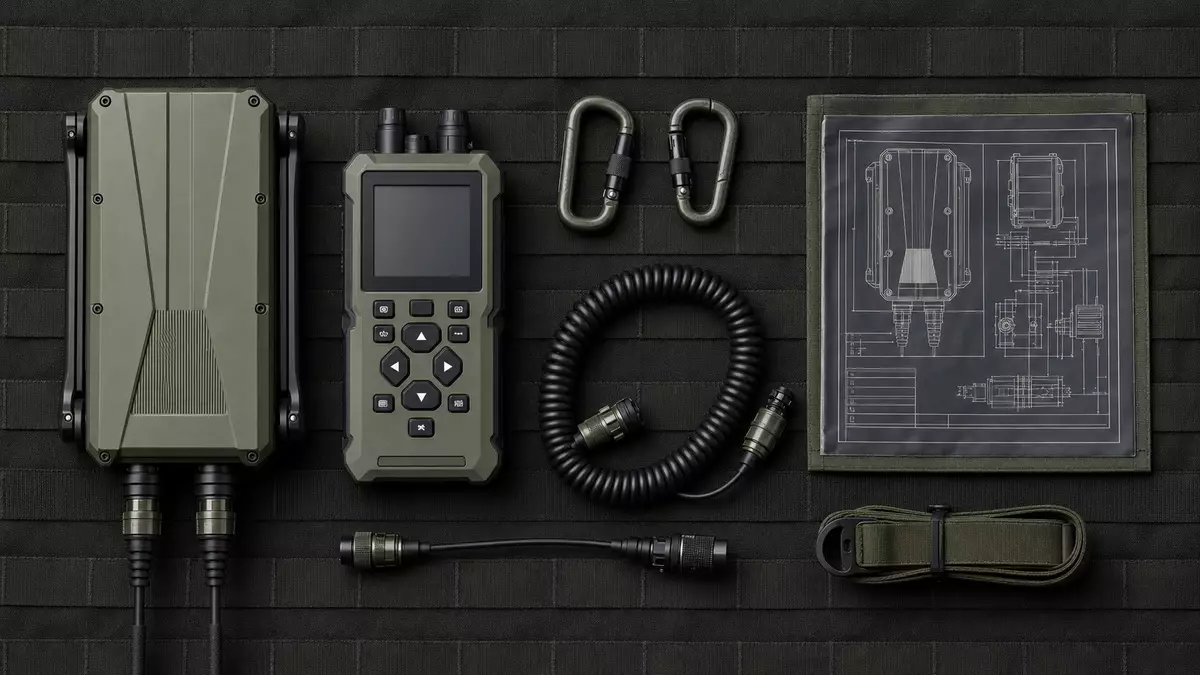
DroneShield’s product range covers fixed?site, mobile, and portable counter?drone solutions that combine sensors, software, and effectors to detect, classify, and mitigate aerial threats.
According to its product literature, the company offers systems capable of protecting critical infrastructure, military bases, and public events, as well as compact units suited to tactical field operations.
Revenue from these products contributed to the reported AUD 55 million in fiscal 2023, and repeat orders for upgrades and expansions form part of the roughly AUD 150 million pipeline described in mid?2024 materials.
DroneShield stock and recent trading
On the Australian Securities Exchange, DroneShield stock traded at approximately AUD 0.55 as of 15 July 2024, within a 52?week range of about AUD 0.25 to AUD 0.60.
This price level gives the company a market capitalization near AUD 440 million and reflects investor recognition of its revenue growth from roughly AUD 16 million in fiscal 2022 to about AUD 55 million in fiscal 2023, as well as the EBITDA improvement from around negative AUD 1 million to positive AUD 9 million over the same period.
DroneShield at a glance
- Company: DroneShield Ltd
- ISIN: AU000000DRO1
- Ticker: ASX: DRO
- Trading venue: Australian Securities Exchange
- Price (as of 15 July 2024, 16:00 AEST): 0.55 AUD
- Market capitalization: 440 million AUD (as of 15 July 2024)
- Sector / Industry: Defense technology / security systems
- Index membership: Not included in major headline indices such as S&P/ASX 200
Disclaimer regarding our articles: No investment advice, no buy or sell recommendation. Information on prices, companies, and markets is provided without guarantee; changes are possible at any time. Stock market transactions can lead to substantial losses. Our articles are created and reviewed in whole or in part automatically with the support of AI.