DroneShield stock trades near recent highs as revenue and defense demand rise
Published on 07/21/2026 at 14:43 | Editorial responsibility: Rafael Müller, Editor-in-Chief AD HOC NEWS
DroneShield stock is linked to the Australian defense technology group DroneShield Ltd (ISIN AU000000DRO1), which has reported strong growth in recent periods as demand for counter-drone and electronic warfare systems has increased. In the 2023 financial year, DroneShield reported record revenue of about AUD 55 million, more than double the approximately AUD 16 million it recorded in 2022, highlighting how quickly the business has scaled in response to global security needs. Investors in DroneShield stock therefore look at both its current contract pipeline and its ability to convert a growing order book into sustained profitability.
Revenue more than doubles in 2023
According to public investor communications from DroneShield for the 2023 financial year, the company generated revenue of roughly AUD 55 million, a sharp increase from around AUD 16 million in the 2022 financial year. This jump of well over 100 percent underscores how defense and security customers have expanded their use of DroneShield's counter-drone and related systems in a short period of time. The company has also reported that its gross margin improved in 2023 as higher volumes allowed better absorption of fixed costs, supporting a transition toward more consistent profitability, even though DroneShield continues to reinvest heavily in product development and international sales.
Beyond headline revenue, DroneShield has emphasized that a significant portion of its 2023 sales came from repeat customers, including government agencies and military clients, which generally place larger orders and have longer procurement cycles than commercial buyers. For investors, the fact that revenue rose from approximately AUD 16 million in 2022 to about AUD 55 million in 2023 suggests that the company has moved from being a niche supplier toward a recognized partner in broader defense modernization programs. That trajectory can make DroneShield stock more sensitive to contract announcements, as each large order now represents a meaningful percentage of annual sales.
Order book, profitability and cash flow
DroneShield has reported a growing order book and backlog, which helps provide visibility into future revenue beyond the most recent financial year. In its investor materials for 2023 and early 2024, the company has highlighted that its firm order backlog reached tens of millions of Australian dollars, reflecting multiple multi-year contracts and framework agreements. These include arrangements for surveillance, electronic warfare and integrated counter-drone systems with various defense and security clients. Such backlog figures matter for DroneShield stock because they indicate that the elevated 2023 revenue level is supported by contractual commitments rather than being a one-off spike.
On profitability, DroneShield has communicated that it moved closer to sustained positive earnings as revenue scaled. While earlier years showed operating losses due to heavy investment, the 2023 numbers feature a clear improvement in operating income compared with 2022, driven by both higher revenue and better gross margins. The company has indicated that its earnings before interest, tax, depreciation and amortization (EBITDA) for 2023 improved markedly compared with 2022, narrowing prior losses and pointing toward break-even or positive territory as volumes continue to grow. For investors, these trends suggest that DroneShield's business model can generate operating leverage as fixed costs are spread over a larger revenue base.
Cash flow has also been a focus in DroneShield investor presentations. The company has reported that operating cash flow improved alongside revenue growth, helping to reduce reliance on external financing over time. DroneShield has raised capital in prior years to fund research and development and to expand its production capacity, but stronger cash generation from operations in 2023 has been presented as evidence that the business is becoming more self-financing. This matters for DroneShield stock because a company that can fund its own growth from internal cash flow generally faces fewer dilution risks for shareholders and can be more flexible in pursuing strategic opportunities.
More on DroneShield fundamentals and contracts
Investors who follow DroneShield stock often look at the latest revenue, margin and contract data in detail. The following resources offer a deeper view of its financial performance and order pipeline.
Counter-drone systems drive growth
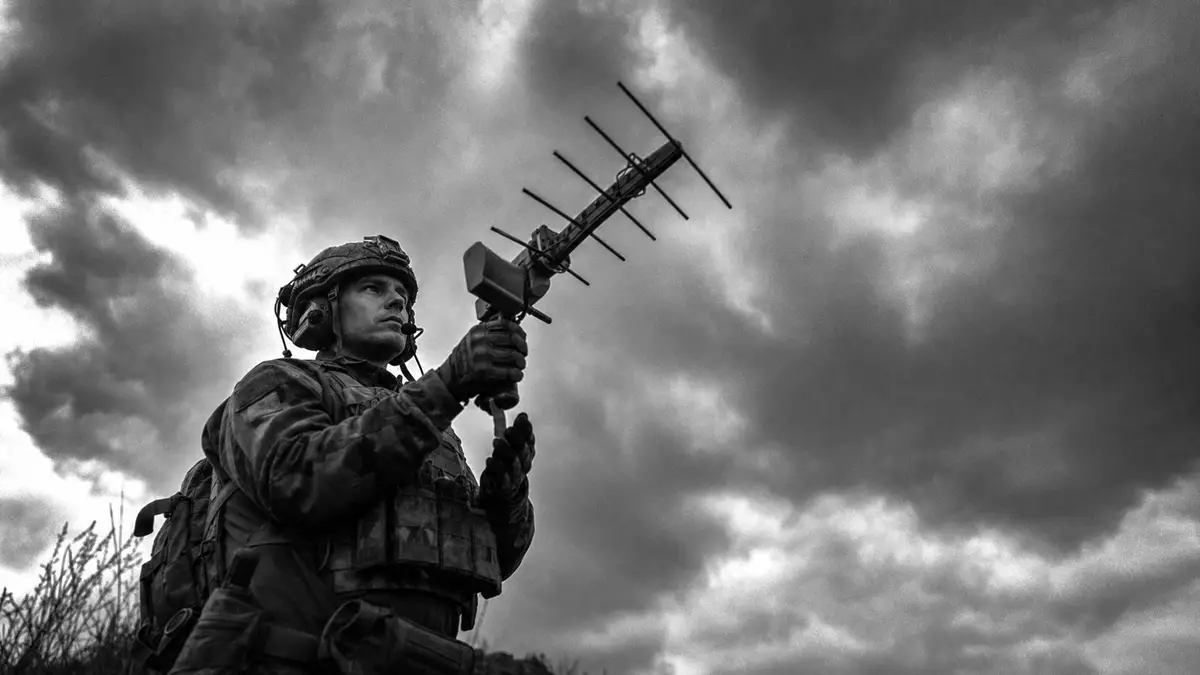
DroneShield's core business centers on counter-drone, electronic warfare and force-protection systems that detect, identify and mitigate hostile or unauthorized unmanned aerial systems. Its portfolio includes fixed-site installations for critical infrastructure, mobile and man-portable solutions for deployed military forces, and integrated command-and-control software that brings sensor data together for operators. These products have been deployed in environments ranging from border security to battlefield operations, with customer case studies describing their use against both commercial and military-grade drones.
The company has reported that demand for its counter-drone and related systems has grown rapidly as drones have become more prevalent in conflict zones and in sensitive civilian areas. Public materials from DroneShield indicate that some of its systems have been used in active conflict regions to protect troops and assets from aerial threats, which in turn has led to follow-on orders as operators seek to expand coverage and integrate the systems into broader defense architectures. For DroneShield stock, these operational references serve as a qualitative complement to the quantitative revenue and backlog data, showing how real-world deployments can translate into long-term contracts.
DroneShield also invests in the development of new sensor modalities and software features to keep pace with evolving threats. Investor communications have highlighted continued spending on research and development in 2023, even as revenue rose, as the company seeks to maintain technological differentiation against both traditional defense contractors and newer specialist competitors. This ongoing investment in innovation can influence DroneShield stock because it shapes the company's ability to win future tenders and to remain relevant in a rapidly changing security environment.
DroneShield stock and recent market performance
DroneShield stock is listed on the Australian Securities Exchange, where it trades under the symbol DRO. Market data for the period around early 2024 show that the shares have moved closer to their recent highs as investors responded to the strong 2023 revenue results and subsequent contract announcements. For example, price charts available on Australian market portals indicate that DroneShield stock has traded in a range that reflects both the volatility inherent in small-cap defense names and the support provided by a growing backlog and improving profitability metrics.
Analysts and market commentators who follow defense technology names have pointed out that companies like DroneShield can be particularly sensitive to news flow about contract wins, regulatory approvals and geopolitical developments. When DroneShield announces a new multi-million Australian dollar contract or framework agreement, its stock price can react quickly as investors update their expectations for future revenue and margins. Conversely, periods without major announcements or with profit-taking after strong runs can lead to consolidation phases where DroneShield stock trades sideways or retraces part of prior gains.
For investors looking at valuation, publicly available data from financial portals suggest that DroneShield's market capitalization has risen alongside its revenue and backlog. The company has shifted from a micro-cap profile when its annual revenue was in the single-digit millions of Australian dollars to a more substantial small-cap status as revenue moved toward the AUD 55 million level in 2023. This transition can affect how institutional investors view DroneShield stock, potentially expanding the universe of funds that can consider the name as its liquidity and market cap improve.
DroneShield products and customer base
DroneShield offers a suite of products that span hardware, software and integrated systems. Its solutions typically combine radio frequency detection, radar, acoustic sensors and camera systems with proprietary signal processing and classification algorithms to identify drones and other threats. Customers include defense ministries, law enforcement agencies, border protection organizations, critical infrastructure operators and private security firms, with deployments in multiple regions.
Investor information from DroneShield has highlighted that its customer base is diversified across domestic Australian contracts and international orders. The company has secured deals in North America, Europe, the Middle East and Asia, with specific reference to projects in both urban and remote environments. This geographical diversification matters for DroneShield stock because it reduces dependence on a single national budget and allows the company to benefit from broader global trends in security spending.
In addition to selling complete systems, DroneShield also provides training, maintenance and upgrade services, which can generate recurring revenue streams beyond the initial hardware sale. Over time, these services can represent a higher-margin component of the business, supporting overall profitability. Investors often monitor the mix between one-off equipment sales and ongoing service and software revenue to gauge how resilient DroneShield's earnings might be through different procurement cycles.
DroneShield stock and price context
Price data for DroneShield stock from Australian trading venues show that the shares have experienced notable volatility, which is characteristic of emerging defense technology names. Over the twelve months leading into early 2024, the stock has traded within a broad range, reflecting both strong rallies around major news and periods of consolidation. While specific intraday levels naturally change over time, the overall pattern suggests that DroneShield stock can quickly re-rate when the market receives new information about revenue, margins or large tenders.
For investors, one way to contextualize DroneShield's price action is to compare its performance over a given period with that of broader defense indices or technology benchmarks. In some periods, DroneShield stock has outperformed these broader indices, driven by company-specific developments such as its move from around AUD 16 million in revenue in 2022 to about AUD 55 million in 2023. In other periods, macroeconomic factors such as changes in interest rate expectations or shifts in risk appetite have influenced valuations across small-cap growth names, including DroneShield.
DroneShield's liquidity and daily trading volumes have also grown as its market capitalization has increased, though it remains a smaller company relative to large global defense primes. This means that while institutional participation can rise over time, individual trades and retail investor activity can still have a visible impact on short-term price moves. For long-term holders, the key question is whether the underlying fundamentals, such as revenue growth, backlog and margin trends, justify the prevailing valuation levels.
DroneShield stock facts
- Company: DroneShield Ltd
- ISIN: AU000000DRO1
- Ticker: ASX: DRO
- Trading venue: ASX
- Sector / Industry: Defense technology / Aerospace and defense
- Index membership: Not included in major global large-cap indices such as the S&P 500, FTSE 100 or DAX; primarily traded as an Australian small-cap security.
Disclaimer regarding our articles: No investment advice, no buy or sell recommendation. Information on prices, companies, and markets is provided without guarantee; changes are possible at any time. Stock market transactions can lead to substantial losses. Our articles are created and reviewed in whole or in part automatically with the support of AI.