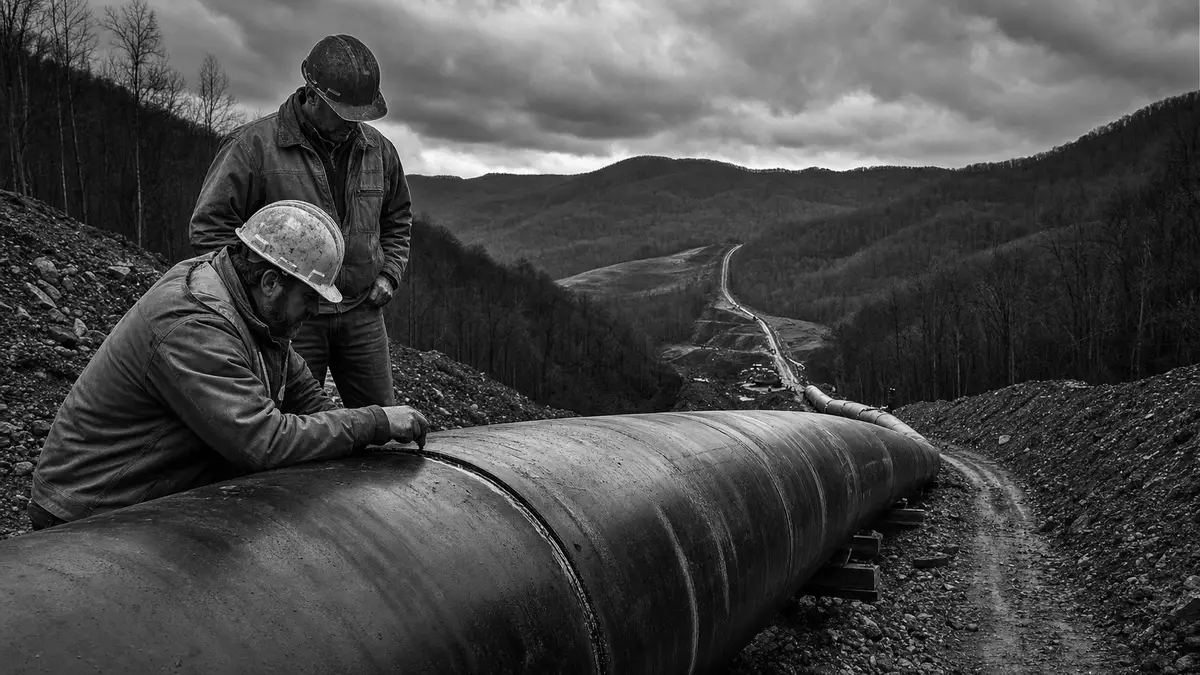
EQT stock trades steady as natural gas producer focuses on debt reduction and cash flow
Published on 07/19/2026 at 12:44 | Editorial responsibility: Rafael Müller, Editor-in-Chief AD HOC NEWS
EQT Corp. (ISIN US26884L1098) is one of the largest independent natural gas producers in the United States, and EQT stock continues to reflect the companys emphasis on capital discipline, debt reduction and free cash flow generation in a volatile commodity-price environment. The Pittsburgh based company targets long term value creation through its Appalachian Basin footprint and recent strategic initiatives around infrastructure, hedging and operational efficiency.
Revenue and production volumes anchor EQTs scale
EQT Corp. operates primarily in the Appalachian Basin, with a focus on the Marcellus and Utica shales, and has established itself as a leading natural gas producer in North America. Its revenue base is driven largely by sales of natural gas, natural gas liquids and, to a lesser extent, crude oil, with volumes supported by a substantial inventory of proved reserves and an extensive well portfolio. The companys scale, measured in billions of cubic feet equivalent of production, positions it as a key supplier to domestic and export markets through pipeline access to major hubs and liquefied natural gas export terminals.
In recent reporting periods, EQT has highlighted the relationship between commodity prices and top line performance, emphasizing that realized prices after hedging can differ from benchmark Henry Hub levels. The companys revenue trends over the last few years show sensitivity to both volume growth and pricing, illustrating why hedging strategies and contract structures are central to its financial planning. Investors monitoring EQT stock often track these realized price metrics alongside headline revenue figures to assess the resilience of the business model.
Operating margin and cost discipline shape profitability
Beyond revenue, EQT Corp. has focused on operating margin optimization through cost reductions in drilling and completion activities, as well as lower gathering and processing expenses. The companys reported operating income and margin metrics in recent quarters reflect gains from more efficient well designs, improved cycle times and renegotiated midstream contracts. These operational improvements are aimed at offsetting periods of weaker natural gas prices, allowing EQT to maintain profitability and support its broader capital allocation plans.
Over time, EQT has communicated targets for unit costs per thousand cubic feet equivalent, highlighting reductions that contribute directly to margin expansion. When these cost metrics move downward versus prior year or prior quarter levels, they provide a quantified comparison that supports the narrative of improved efficiency. Such comparisons, typically expressed as percentage declines in per unit costs or increases in per unit margins, help investors understand how EQT is managing its cost base relative to commodity cycles.
Cash flow, debt and capital allocation remain central themes
Free cash flow generation is a core focus for EQT Corp., with the company using cash flow metrics to guide decisions on debt repayment, shareholder returns and reinvestment in upstream drilling. Over recent fiscal years, EQT has reported significant free cash flow, reflecting both operational performance and disciplined capital expenditure. The companys management has emphasized that sustaining and growing free cash flow is critical to reducing leverage and enhancing financial flexibility.
Debt reduction efforts have been visible in the companys balance sheet, with total debt metrics declining over time as EQT has allocated cash flow to repayment and liability management. Quantified comparisons of debt levels between successive fiscal periods show progress on deleveraging, which can positively influence credit metrics and the cost of capital. Investors in EQT stock pay close attention to these balance sheet trends, particularly in the context of potential future cycles in natural gas prices and the need for resilience during downturns.
Guidance, hedging and risk management underpin outlook
EQT Corp. routinely provides operational and financial guidance to the market, including projections for production volumes, capital expenditures and expected free cash flow. These guidance figures, when compared with prior periods or consensus expectations, offer a quantified view of managements outlook on the business. The company often ties its guidance to hedging positions, explaining how a certain percentage of forecast production is hedged at specific price levels, thereby reducing earnings volatility.
Risk management at EQT extends beyond price hedging to include operational and regulatory considerations. The company monitors environmental and safety performance metrics and reports key indicators to stakeholders as part of its broader ESG framework. For investors, these metrics provide additional context on operational risk and long term sustainability, complementing traditional financial measures such as revenue, EBITDA, net income and free cash flow.
Strategic initiatives support long term positioning
EQT Corp. has undertaken strategic initiatives such as portfolio optimization, infrastructure investments and potential participation in LNG related supply chains to strengthen its long term market position. These initiatives are designed to enhance the value of the companys resource base and improve access to premium markets, which can support revenue and margin expansion over time. By aligning development plans with infrastructure capacity and market demand, EQT seeks to maximize the economic return on its reserves.
The companys strategy also includes continuous improvement in drilling technologies and data driven well planning. Metrics such as average lateral length, completion intensity and recovery per well are monitored to benchmark performance against internal targets and, where data is available, industry peers. Quantified improvements in these operational metrics relative to prior periods demonstrate the impact of technological and process innovations on the companys efficiency and production profile.
Product focus: Appalachian natural gas portfolio
EQT Corp.s core product offering is its large scale natural gas production from the Appalachian Basin, particularly the Marcellus and Utica shales. The company markets natural gas and associated liquids through long term contracts and spot sales, supplying power generation, industrial and residential customers as well as export oriented demand. This portfolio of natural gas assets underpins EQT stock, providing the resource foundation for revenue, cash flow and potential future growth as demand patterns evolve.
EQT stock price reflects commodity and company fundamentals
The trading level of EQT stock on its primary exchange reflects a combination of commodity price expectations, company specific fundamentals and broader equity market conditions. Market participants consider metrics such as recent revenue performance, margin trends, free cash flow generation and debt reduction when forming a view on the stock. Over time, these fundamentals, together with external factors like natural gas price curves and macroeconomic developments, influence the valuation and volatility of EQT stock.
EQT Corp. key data
- Company: EQT Corp.
- ISIN: US26884L1098
- Ticker: [exchange symbol]
- Trading venue: [primary listing]
- Sector / Industry: Energy / Oil & Gas Exploration & Production
- Index membership: [relevant index, if applicable]
Disclaimer regarding our articles: No investment advice, no buy or sell recommendation. Information on prices, companies, and markets is provided without guarantee; changes are possible at any time. Stock market transactions can lead to substantial losses. Our articles are created and reviewed in whole or in part automatically with the support of AI.