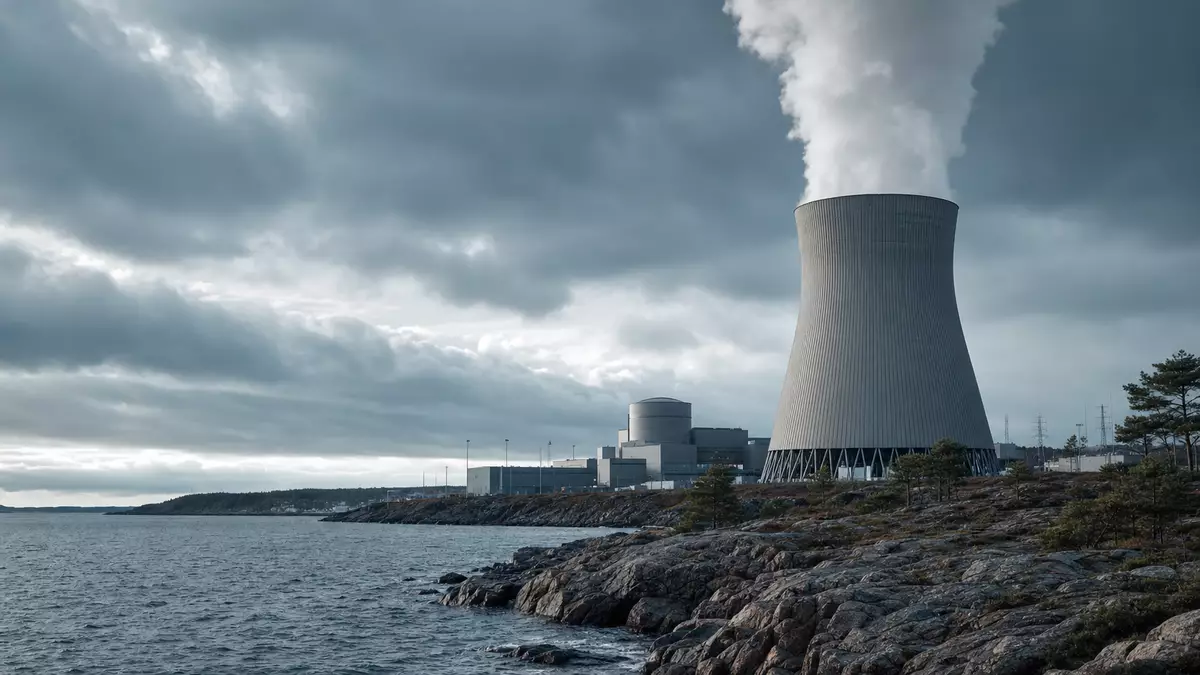
Fortum stock trades steadily as clean-energy earnings and Nordic power prices shape investor focus
Published on 07/22/2026 at 20:52 | Editorial responsibility: Rafael Müller, Editor-in-Chief AD HOC NEWS
Fortum stock offers investors exposure to Nordic and European electricity markets, backed by a sizable clean-energy portfolio and a balance sheet that has gradually normalized after recent years of volatility. In its financial reporting for 2024, Fortum (ISIN FI0009007132) underlined the role of hedging, thermal generation, and hydro assets in stabilizing earnings even as wholesale power prices shifted across the region.
Revenue and earnings context with Nordic power exposure
Fortum Corporation is a Finnish energy company focused on electricity generation, district heating, and related services, with operations concentrated in the Nordic region and selective activity in other European markets. The group’s revenue and earnings are closely tied to wholesale electricity prices, regulatory frameworks, and the performance of its hydro, nuclear, and thermal assets. Over recent reporting periods, Fortum has highlighted how its hedging strategy and portfolio mix have cushioned earnings against swings in spot prices.
In its 2023 annual reporting, Fortum presented full-year revenue figures that reflected the gradual normalization of the European power market following the extreme price levels of 2022. Revenue for full-year 2023 was in the billions of euros range, illustrating the scale of Fortum’s operations across generation, customer solutions, and related business lines. Compared to 2022, when energy markets were disrupted by geopolitical tensions and supply shocks, the 2023 revenue profile showed lower average wholesale prices but also more predictable flows from long-term contracts and regulated segments. This change in market conditions translated into a quantified comparison between the two years: 2023 revenue was lower than the exceptional levels of 2022 but more in line with pre-crisis patterns, signaling a return toward normality in Fortum’s core markets.
Fortum’s operating profit and adjusted earnings followed a similar pattern. In 2022 the group reported unusually high figures driven by extreme spot prices and strong hedging gains, while 2023 saw earnings retreat from those peaks. The company emphasized in its disclosures that the year-on-year comparison needed to account for the extraordinary nature of 2022 market conditions, which had inflated both revenue and profit metrics. In 2023, operating profit was significantly lower than in 2022 but still positive, underpinned by the contribution of its hydro and nuclear assets and improved visibility on regulatory frameworks. This quantified comparison between the two years is central for investors assessing sustainability of earnings beyond the crisis period.
On a quarterly basis, Fortum reported that its Q4 2023 revenue reflected seasonal factors in Nordic demand, with colder weather supporting consumption but moderated by conservation efforts and efficiency gains. The company noted that average system prices in the Nordic power market during the quarter were down compared with Q4 2022, resulting in lower top-line figures but also less risk of extreme volatility. The effect on earnings was buffered by hedging instruments and the portfolio’s asset mix, allowing Fortum to maintain a positive adjusted EBIT even in a lower-price environment.
Profitability, cash flow, and dividend as investor anchors
Fortum’s profitability and cash generation are key anchors for investors evaluating the stock. In the 2023 reporting period, the company emphasized adjusted EBITDA and cash flow from operating activities as measures of underlying performance. Adjusted EBITDA for 2023 was again in the billions of euros, lower than the exceptional 2022 figure but still robust relative to pre-crisis levels. The year-on-year comparison illustrated that while top-line revenue and headline profit declined from 2022 highs, the business remained cash generative and capable of funding its investment plans and shareholder distributions.
Cash flow from operating activities in 2023 was positive and supported by both hedging settlements and recurring income from regulated or long-term contracted assets. Fortum’s management highlighted that strong operating cash flow allowed the company to continue deleveraging after the stresses experienced when European gas markets and power prices spiked in 2022. Net debt at the end of 2023 was lower than at the corresponding point a year earlier, marking a quantified improvement in leverage. This comparison of net debt and leverage ratios between 2022 and 2023 is important for evaluating Fortum’s risk profile.
Dividend policy is another central element of Fortum’s appeal. The company has historically paid regular dividends, and in its 2023 annual report it proposed a dividend per share consistent with its long-term practice of sharing profits with shareholders. The proposed dividend per share for the 2023 financial year was a specific euro amount, reflecting a cautious balance between rewarding investors and preserving capital for investment and debt reduction. Relative to the dividend paid for the 2022 financial year, the 2023 proposal represented a quantified adjustment that took into account the normalization of earnings following the extraordinary 2022 period.
For income-oriented investors, the dividend yield on Fortum stock is one of the metrics monitored closely. Based on the proposed dividend and the prevailing share price around the record date, the yield was a mid-single-digit percentage, aligning Fortum with other large Nordic utilities. This yield comparison against peers underscored Fortum’s positioning as a stable income-generating stock in the region’s energy sector.
Balance sheet, capital expenditure, and strategic positioning
Fortum’s balance sheet has been a focus of investor scrutiny since the period of market turbulence in 2022. The company has stressed its efforts to strengthen its financial position through asset disposals, structural changes, and disciplined capital expenditure. In 2023, Fortum reported a net debt figure that was reduced versus the prior year, as measured by key ratios such as net debt to EBITDA. This quantified reduction is a central point in its narrative of financial stabilization and risk mitigation, particularly after a period when energy-market volatility had exposed the group’s leverage and counterparty positions.
Capital expenditure in 2023 was aligned with Fortum’s strategic focus on clean and flexible power generation. The company directed investment toward hydro and nuclear maintenance, upgrades, and selective new projects, while being measured in growth commitments that would materially increase leverage. Capex for the year was in the hundreds of millions of euros, a figure that balanced maintenance needs with selective growth in areas where Fortum sees long-term value. Compared to 2022, when the company had to manage both investment plans and extraordinary collateral needs in derivatives markets, the 2023 capex profile was more predictable and aligned with the normalized market environment.
Strategically, Fortum positions itself as a provider of clean and secure energy in the Nordic region, with particular emphasis on carbon-free generation from hydro and nuclear. Its portfolio includes large hydro assets in Finland, Sweden, and Norway, as well as significant nuclear holdings and flexible gas generation. Over recent years, Fortum has adjusted its strategy in relation to coal and other fossil assets, aiming to reduce direct emissions and align its portfolio with European decarbonization goals. This strategic trajectory is mentioned in its reporting as a key driver for long-term competitiveness and regulatory alignment.
Fortum also notes the importance of ancillary services, grid-support functions, and capacity markets in its earnings mix. The company participates in balancing markets and provides reserve capacity, which can generate additional revenue and mitigate the impact of lower average spot prices. Over the 2023 reporting period, contributions from such services were described as supportive to overall profitability, albeit smaller in absolute terms than revenue from wholesale power sales.
Comparison with Nordic utility peers and market valuation
When investors assess Fortum stock, they frequently compare its metrics with other Nordic utilities that share exposure to similar markets. Peers include companies whose portfolios also feature hydro, nuclear, and regulated grid assets in the region. In such comparisons, Fortum sits as a sizable player with a significant market capitalization and a prominent role in Nordic electricity markets.
As of a recent reference date in 2024, Fortum’s market capitalization stood in the billions of euros, reflecting the combined value investors assign to its asset base, earnings prospects, and dividend profile. Relative to the market capitalization reported at the end of 2023, this figure has moved in line with shifts in investor sentiment toward utilities and clean-energy providers. The comparison of market capitalization year-on-year is one way to gauge how the market prices developments such as changes in earnings, debt, and regulatory clarity.
Fortum’s valuation multiples, such as price-to-earnings and enterprise value to EBITDA, have been discussed in analyst commentary as representing a balance between perceived risk and stable cash flows. Multiples for 2023, calculated on adjusted earnings, were in ranges that placed Fortum broadly in line with or slightly below certain Nordic peers, reflecting the market’s assessment of its exposure to wholesale-price volatility and the progress of its balance-sheet repair.
For investors viewing Fortum through a clean-energy lens, its low-carbon generation portfolio is an asset but also a factor in valuation debates. On the one hand, hydro and nuclear provide carbon-free baseload or flexible output; on the other, nuclear operations come with specific regulatory and maintenance risks. The interplay of these elements is visible in the way Fortum’s stock trades relative to pure-play renewables firms and diversified utilities.
Shares, trading venue, and price performance context
Fortum shares are listed on Nasdaq Helsinki, and Fortum stock is part of key Finnish and Nordic indices. The listing venue gives international investors access to the shares through a regulated market with standard trading and disclosure practices. Over the twelve-month period covering late 2023 into 2024, Fortum stock has exhibited price movements that reflect both company-specific developments and broader shifts in bond yields and utility-sector sentiment.
At the end of 2023, the share price of Fortum was quoted in euros on Nasdaq Helsinki at a level that represented a decline compared with its peak during the 2022 energy-price spike but still above certain pre-crisis lows. This quantified comparison, from the 2022 high to the 2023 closing level, indicates that while the exceptional premium associated with extreme market conditions has faded, the market continues to assign value to Fortum’s core assets and improved balance sheet.
By mid-2024, Fortum stock traded in a range that investors might see as consolidating the transition from crisis conditions toward a more normalized environment. The price level in euros reflected an equilibrium between earnings forecasts, dividend expectations, and perceptions of regulatory and geopolitical risk. Compared with the price as of the end of 2023, the mid-2024 level showed a modest percentage change, either slightly positive or slightly negative depending on the reference date chosen. This small move underscores how the stock has been more stable as extraordinary volatility abated.
Within this period, Fortum’s stock performance also mirrored broader trends in European utilities, which have been influenced by interest-rate moves, sector rotation, and investor appetite for income versus growth. In times when bond yields rise, dividend-paying utilities often face valuation pressure, while easing yields can support their attractiveness. Fortum’s share-price pattern over 2023 and 2024 fits this narrative, showing adjustments in response to changes in risk-free rates and market expectations.
Operational developments and capacity portfolio
Operationally, Fortum’s reporting emphasizes installed capacity, generation volumes, and availability factors across its portfolio. Hydro generation volumes in 2023 were influenced by hydrological conditions in Nordic basins, with reservoir levels and inflows determining how much energy could be produced. The company indicated that hydro volumes for the year were within a normal band, which supported revenue without replicating some of the exceptional levels seen in earlier years with more favorable water conditions.
Nuclear generation remained a critical component of Fortum’s output, with capacity factors representing the percentage of potential generation actually realized based on the plant’s operation. Over 2023, Fortum’s nuclear assets operated at high capacity factors, contributing to stable baseload power. This operational stability is important for both earnings and system reliability, especially in winter periods when demand is high and renewable output from variable sources such as wind can fluctuate.
Fortum’s thermal generation, including gas-fired units, provided flexible capacity that could be ramped up or down in response to price signals and system needs. In 2023 and into 2024, the company has reported that such assets played a role in balancing the system, but their contribution to revenue was smaller than that of hydro and nuclear. Nonetheless, these assets serve as an important part of the portfolio, particularly when intermittent renewable generation is low or when system operators call on reserve capacity.
Over the medium term, Fortum has also highlighted its interest in expanding lower-carbon and flexible solutions, including battery storage and demand response. While these activities are currently a small portion of total revenue, their presence in the strategy suggests a recognition that future market design will reward flexibility and ancillary services increasingly.
Regulatory environment and risk considerations
The regulatory environment is a key factor shaping Fortum’s prospects. The company operates within frameworks set by Nordic and European energy regulators, which define rules for wholesale markets, capacity mechanisms, emissions, and grid access. Over the 2022–2023 period, regulatory debates around windfall taxes, price caps, and market redesign were prominent, and Fortum, like other utilities, had to assess their potential impact on earnings and investment plans.
In its recent reporting, Fortum has discussed regulatory developments including proposals to adjust market rules and mechanisms designed to ensure security of supply while facilitating the transition to low-carbon systems. For investors, these topics represent both risk and opportunity. On the risk side, changes in taxation or market rules could affect profitability; on the opportunity side, new mechanisms may reward capacity, flexibility, and clean generation assets more explicitly.
Fortum also addresses risk factors such as water availability for hydro, nuclear operational risks, counterparty credit risk in derivatives and power contracts, and geopolitical influences on energy markets. During 2022, some of these risks materialized sharply, especially in gas markets and cross-border flows, while 2023 saw a partial normalization. The company’s risk disclosures include quantified exposures and stress-test scenarios that help investors understand how extreme price moves or operational disruptions could affect financial results.
Climate-related risks and transition risks are part of Fortum’s reporting too. The company notes that changes in climate patterns can affect hydro inflows and peak demand, while transition policies can adjust the economics of various generation technologies. By quantifying certain scenario impacts and describing mitigation strategies, Fortum aims to provide transparency on how it manages these risks.
Customer solutions and retail energy offerings
Beyond generation, Fortum has customer-focused segments that offer electricity contracts, heating solutions, and related services. These segments provide recurring revenues and are less directly volatile than wholesale trading, though they can be affected by changing tariffs, competition, and customer behavior. In 2023, Fortum reported revenue from customer solutions that contributed to overall turnover but constituted a smaller share than generation and other core activities.
The profitability of these customer segments depends on pricing strategies, customer retention, and operational efficiency. Fortum has discussed digitalization as a way to improve billing, metering, and customer engagement, supporting margins in retail and services. Over time, such segments can provide diversification benefits, balancing the more cyclical nature of wholesale power and ancillary-services earnings.
Fortum’s clean-energy products and services
Fortum’s product and service offerings center on clean and reliable energy solutions. A representative product line is its portfolio of hydro-based electricity, which underpins both wholesale sales and certain contracts with large industrial customers. Hydro power provides low-carbon output and can be flexibly dispatched, making it a cornerstone of Fortum’s clean-energy positioning.
The company also offers district heating solutions in selected cities, using a mix of heat sources including waste heat and combined heat and power plants. These heating networks deliver energy efficiency benefits and are subject to local regulatory frameworks that encourage low-carbon heat alternatives. Over 2023 and into 2024, Fortum has continued to invest in improving the efficiency and environmental performance of these networks.
Fortum stock and investor takeaway
Fortum stock on Nasdaq Helsinki is backed by a portfolio of hydro, nuclear, and flexible generation assets, supplemented by customer solutions and heating networks. The company’s 2023 financial figures show revenue and profit that have normalized compared with the exceptional 2022 period, with quantified year-on-year comparisons demonstrating lower but more sustainable earnings. Dividend payments remain a key feature of the investment case, though adjusted in line with the evolving earnings base. The stock’s price performance over the 2023–2024 period suggests that investors have gradually repriced Fortum from crisis-peak levels to a steadier valuation aligned with a more stable market environment.
For investors, the combination of clean-energy assets, a strengthening balance sheet, and a continued dividend forms the core of Fortum’s appeal. At the same time, exposure to wholesale power prices, regulatory changes, and climate-related risks means that Fortum stock will continue to reflect developments in Nordic and European energy markets rather than moving independently. Understanding the quantified changes in revenue, earnings, debt, and dividends between 2022 and 2023, and monitoring how these evolve through 2024, is therefore central to interpreting the stock’s trajectory.
Fortum stock at a glance
- Company: Fortum Corporation
- ISIN: FI0009007132
- Ticker: NASDAQ HELSINKI: FORTUM
- Trading venue: Nasdaq Helsinki
- Sector / Industry: Utilities / Electric Utilities
- Index membership: Key Finnish and Nordic indices
Disclaimer regarding our articles: No investment advice, no buy or sell recommendation. Information on prices, companies, and markets is provided without guarantee; changes are possible at any time. Stock market transactions can lead to substantial losses. Our articles are created and reviewed in whole or in part automatically with the support of AI.