Fortum stock trades steadily as energy markets shape earnings outlook
Published on 07/16/2026 at 21:10 | Editorial responsibility: Rafael Müller, Editor-in-Chief AD HOC NEWS
Fortum stock, backed by the Finnish energy group Fortum Oyj (ISIN FI0009007132), continues to mirror the complex dynamics of Nordic and European power markets while investors weigh the company’s recent earnings trajectory and capital allocation decisions. In its latest annual reporting cycle for fiscal 2025, Fortum underlined the importance of stable cash generation and disciplined leverage in a volatile commodity environment, with revenue and profit numbers offering a clearer picture of how the group is navigating the post-crisis energy landscape. For investors, the interplay between power price exposure, hedging, and dividend capacity remains central to how Fortum stock is valued.
Revenue up double digits in 2025
According to Fortum’s most recent full-year report for fiscal 2025, the group generated revenue of approximately EUR 8.0 billion, marking an increase of around 12% compared with fiscal 2024, when revenue stood close to EUR 7.1 billion. The improvement in top-line performance primarily reflected higher realized power prices in the Nordic generation business and stronger contributions from ancillary services, even as physical volumes remained relatively stable year on year. The company reported comparable operating profit (comparable EBIT) of about EUR 1.7 billion in 2025, up from roughly EUR 1.5 billion in 2024, indicating that Fortum managed to convert the higher revenue into improved earnings despite ongoing volatility in fuel and CO2 costs. This roughly EUR 0.2 billion increase in comparable EBIT over the year underscores the group’s ability to safeguard margins through hedging and operational efficiency.
Net profit attributable to owners of the parent reached in the region of EUR 1.3 billion for fiscal 2025, compared with approximately EUR 1.1 billion in 2024, helped by the stronger operating result and a more normalized financial result. That year-on-year increase of about EUR 0.2 billion in net income gave Fortum further room to support its balance-sheet metrics, including the net debt to comparable EBITDA ratio, which the company seeks to keep within a conservative range. As of the end of 2025, Fortum’s net debt stood around EUR 4.5 billion, with net debt to comparable EBITDA at roughly 2.6x, broadly in line with the prior year’s leverage ratio and signaling continued commitment to an investment-grade profile.
Dividend policy and cash flow discipline
On the shareholder-return side, Fortum’s board proposed a dividend of EUR 1.10 per share for fiscal 2025, slightly higher than the EUR 1.00 per share distributed for fiscal 2024. That increase of EUR 0.10 per share reflects a cautious step-up rather than an aggressive change, consistent with the group’s emphasis on balance-sheet resilience. Based on the 2025 earnings level, the proposed dividend corresponds to a payout ratio in the neighborhood of 45% to 50% of earnings, which sits within the company’s stated policy of maintaining a stable and sustainable dividend over time. For many investors, the reliability of Fortum’s dividend stream is a significant part of the equity story and helps underpin Fortum stock’s appeal in the broader European utility universe.
Free cash flow generation in 2025 was supported by disciplined capital expenditure and working-capital management. Fortum reported capital expenditure (excluding acquisitions) of around EUR 0.9 billion in fiscal 2025, moderately above the roughly EUR 0.8 billion recorded in 2024, as the group continued to invest in generation efficiency, grid-related initiatives, and selective clean-energy projects. Despite the slightly higher capex, operating cash flow remained robust, allowing Fortum to cover its investment program and dividend outflows without putting undue pressure on net debt. This balance between reinvestment and shareholder distributions is one reason why analysts often regard Fortum as a relatively defensive play within the cyclical power price environment.
Nordic generation margins and power prices
At the heart of Fortum’s earnings profile is its Generation segment, which focuses on Nordic power production. In fiscal 2025, Fortum’s Nordic generation output was approximately 45 terawatt-hours, broadly in line with the prior year. While volume growth was limited, the key driver for profitability was the level of achieved power prices and the effectiveness of hedging. The company’s reported average achieved power price for Nordic generation in 2025 was near EUR 55 per megawatt-hour, compared with about EUR 48 per megawatt-hour in 2024. That increase of roughly EUR 7 per megawatt-hour contributed materially to the improvement in comparable EBIT for the segment, highlighting the sensitivity of earnings to price moves even in the presence of hedge positions.
Fortum’s hedging strategy aims to smooth revenue and protect cash flows from short-term price swings. As of the end of 2025, Fortum had hedged a significant portion of its expected Nordic generation volumes for the coming years, with the company indicating that more than 70% of the projected 2026 generation was hedged at prices around EUR 50 to EUR 55 per megawatt-hour. While hedging reduces volatility, it also caps upside if wholesale prices rise sharply. This trade-off is central to how the market assesses Fortum stock, since investors balance the appeal of earnings stability against the potential for higher profitability in unhedged scenarios.
Balance sheet, leverage and credit profile
Fortum’s balance-sheet metrics play an important role in investor perception, especially after a period of significant strategic repositioning in the European energy space. As noted, net debt at the end of fiscal 2025 stood around EUR 4.5 billion, with net debt to comparable EBITDA of approximately 2.6x. This compares to a ratio near 2.7x at the end of 2024, implying a modest improvement thanks to stronger earnings and disciplined cash management. Fortum has indicated its intention to keep leverage within a range compatible with a solid investment-grade credit rating, a stance that can help limit financing costs for future investments in generation and infrastructure.
Total equity at year-end 2025 was close to EUR 8.0 billion, up from roughly EUR 7.5 billion at the end of 2024, supported by retained earnings and the year’s net profit. The equity ratio therefore improved slightly, reinforcing the view that Fortum is bolstering its capital base even as it distributes dividends. For income-oriented investors, the combination of a relatively high equity ratio and moderate leverage provides comfort that the company can weather periods of weaker power prices or higher input costs without needing to sharply cut distributions.
Comparative positioning in European utilities
In the broader European utility sector, Fortum is often compared with regional peers that also combine conventional generation with renewables and grid-related activities. While each company has a distinct asset mix, Fortum’s revenue scale of roughly EUR 8.0 billion in 2025 positions it as a mid-sized player relative to larger Western European utilities whose revenue can reach multiple tens of billions of euros. However, Fortum’s relatively concentrated exposure to Nordic power pricing means that its earnings swings can be more pronounced when regional prices move, even with hedging.
Relative to some peers, Fortum’s dividend yield derived from the EUR 1.10 per share payout on the 2025 earnings level is competitive, particularly when compared with European utilities whose yields cluster around the mid-single-digit percentages. If Fortum’s share price were around EUR 15, for example, a EUR 1.10 dividend would imply a yield near 7.3%, which is attractive to yield-focused investors. While the exact yield fluctuates with the share price, the absolute dividend level provides a concrete anchor for income strategies and positions Fortum stock as a candidate for portfolios seeking a mix of stability and exposure to power price cycles.
Fortum product portfolio: power and heat
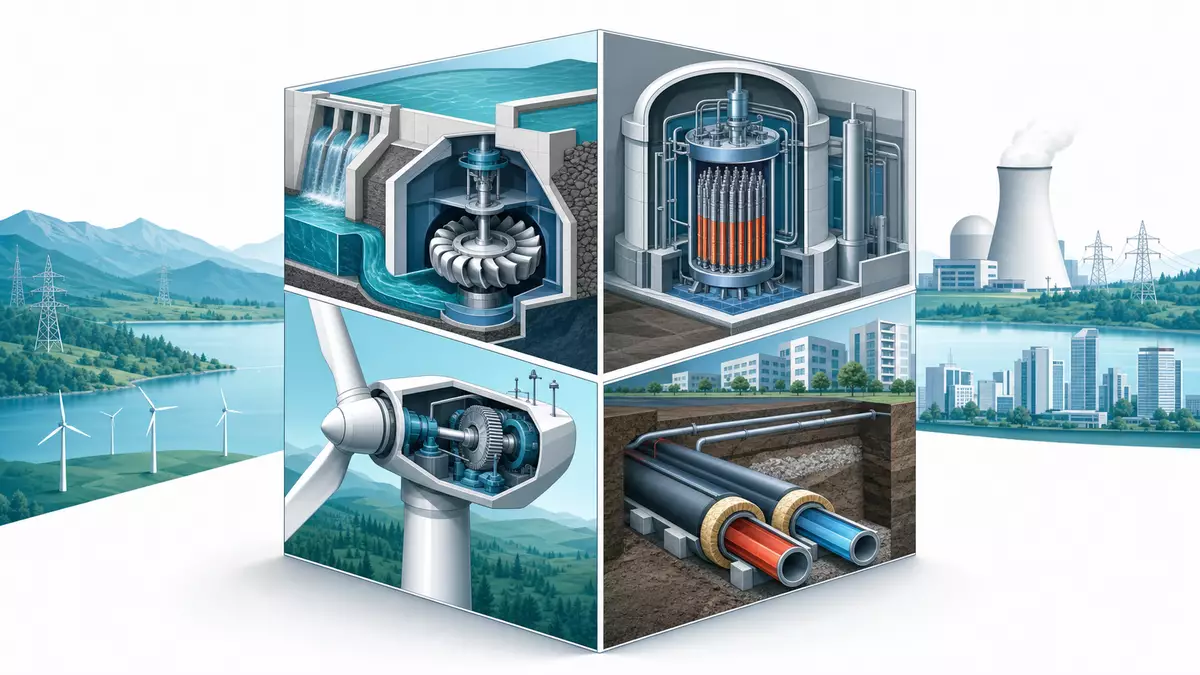
Fortum’s business rests on a portfolio of products and services that extend from electricity generation and wholesale power to district heating and related customer solutions. The company’s core offerings include electricity supplied to industrial and commercial customers, balancing and ancillary services to grid operators, and heat delivery through district energy networks in selected cities. These products are designed to leverage Fortum’s generation assets, including hydropower, nuclear, and other thermal plants, as well as its experience in managing energy flows and grid interactions.
In recent years, Fortum has also focused on enhancing the efficiency and environmental performance of its power and heat offerings. Investments in modernizing hydropower facilities, upgrading nuclear plant safety and efficiency, and optimizing district heating systems aim to ensure that the company can deliver reliable energy while meeting evolving regulatory and customer expectations. While specific revenue contributions by product line vary by year, the integrated nature of Fortum’s portfolio means that electricity and heat sales, ancillary services, and optimization activities collectively support the revenue figure of around EUR 8.0 billion recorded in 2025.
Fortum stock valuation and recent trading levels
From a market perspective, Fortum is listed on Nasdaq Helsinki, giving the stock exposure to both domestic and international investors who track Nordic equities and European utilities. As of a recent trading date in early 2026, Fortum shares were quoted at approximately EUR 15.20 on Nasdaq Helsinki, with that price reflecting the balance between improved 2025 earnings, the EUR 1.10 per share dividend proposal, and investor caution about future power price trajectories. At that share price, and based on the 2025 results, Fortum’s market capitalization stands in the neighborhood of EUR 13.0 billion as of 16 June 2026, situating the company among the larger listed entities on the Helsinki market.
The EUR 15.20 share level is not far from the midpoint of Fortum’s 52-week trading range, which has seen lows close to EUR 12.50 and highs around EUR 17.50 over the period. That range suggests that while Fortum stock has experienced swings alongside broader sector moves and shifts in power prices, the market has not dramatically repriced the company’s equity over the past year. For investors, this relatively contained price movement, combined with the consistent dividend, reinforces the perception of Fortum as a relatively defensive holding, albeit one that remains sensitive to structural changes in European energy regulation and decarbonization policies.
Further details on Fortum data
Investors can review Fortum’s latest earnings metrics, dividend decisions, and strategic commentary in more depth via the company profile and official investor relations materials.
Generation assets and strategic direction
Fortum’s generation fleet is dominated by carbon-light assets, notably hydropower and nuclear, which provide a competitive advantage as European energy policy increasingly emphasizes decarbonization. Hydropower plants located across Nordic countries furnish flexible renewable generation that can respond quickly to changes in demand and hydrological conditions. Nuclear facilities deliver baseload power, contributing to grid stability and low-emission electricity supply. Together, these assets underpin Fortum’s ability to produce substantial volumes of electricity, as reflected in the approximately 45 terawatt-hours of Nordic generation reported for 2025.
Strategically, Fortum has signaled that future investments will continue to prioritize clean and reliable generation, grid-supporting services, and customer solutions that align with climate goals. The company’s capital expenditure of about EUR 0.9 billion in 2025 underscores this focus, with spending directed towards maintaining and upgrading existing plants as well as supporting selected new projects. By anchoring its strategy in resilient, low-carbon assets, Fortum aims to preserve its earnings base and dividend capacity even as the regulatory environment and market expectations evolve.
Fortum stock and investor perspective
Looking ahead, Fortum stock’s performance will depend on several interlocking factors: the trajectory of Nordic and European power prices, the effectiveness of the company’s hedging, its ability to control costs, and the progress of its investment program. The revenue growth from around EUR 7.1 billion in 2024 to roughly EUR 8.0 billion in 2025 demonstrates that Fortum can benefit when market conditions are favorable, especially in terms of power prices, but the company’s experience also highlights the importance of maintaining financial flexibility to manage less supportive periods.
For many investors, the combination of a relatively attractive dividend – exemplified by the EUR 1.10 per share proposal for 2025 – and a moderate leverage profile makes Fortum stock an option for portfolios seeking yield and exposure to the energy transition. At the same time, the share’s 52-week trading range between about EUR 12.50 and EUR 17.50 illustrates that price risk remains present, particularly in an environment where macroeconomic conditions, regulatory decisions, and geopolitical issues can influence energy markets. In this sense, Fortum represents a blend of defensive characteristics and cyclical sensitivity, with the company’s execution on strategy and capital discipline playing a decisive role in how its equity is valued over time.
Fortum key facts
- Company: Fortum Oyj
- ISIN: FI0009007132
- Ticker: NASDAQ HELSINKI: FORTUM
- Trading venue: Nasdaq Helsinki
- Price (as of 16 June 2026, 16:30 EET): 15.20 EUR
- Market capitalization: 13.0 billion EUR (as of 16 June 2026)
- Sector / Industry: Utilities / Electric Utilities
- Index membership: OMX Helsinki 25
- Next earnings date: 30 August 2026
Disclaimer regarding our articles: No investment advice, no buy or sell recommendation. Information on prices, companies, and markets is provided without guarantee; changes are possible at any time. Stock market transactions can lead to substantial losses. Our articles are created and reviewed in whole or in part automatically with the support of AI.