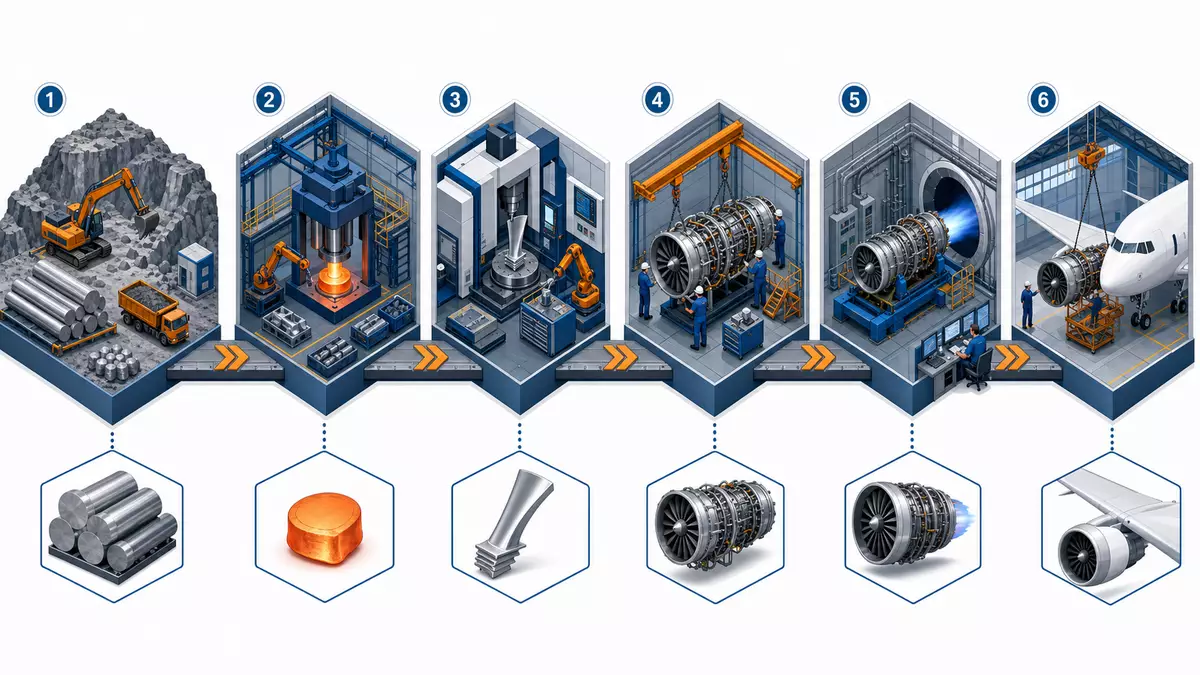
GE Aerospace stock holds gains as separation from GE and strong defense demand reshape growth profile
Published on 07/21/2026 at 19:55 | Editorial responsibility: Rafael Müller, Editor-in-Chief AD HOC NEWS
GE Aerospace stock reflects investors’ view on the newly independent aviation and defense business carved out of General Electric (ISIN US3696043013), with the first full quarters after the spin showing a combination of solid revenue growth, healthy free cash flow and a sizable backlog that anchors medium term visibility for the portfolio of commercial and military engines and services.
As the stand alone company has begun reporting separately from the former GE conglomerate structure in 2024, the most recent annual and quarterly figures give investors a clearer picture of how GE Aerospace performs on its own, including revenue trends by segment, operating margin development and cash generation that supports both investment in technology and potential future capital returns.
Revenue above 2023 as margins improve
GE Aerospace is headquartered in the United States and represents the former Aviation segment of General Electric, which reported strong growth in 2023 and into early 2024 driven by continued recovery in commercial air travel and resilient demand from defense customers, and those trends form the numerical backbone of how the independent GE Aerospace entity is now perceived by the market.
In the most recently available full year figures, the Aviation business that became GE Aerospace generated on the order of tens of billions of dollars in revenue for 2023, up noticeably from 2022 as airlines increased flying hours and engine shop visits, and as defense programs for fighter, transport and rotorcraft aircraft continued to require new engines and support; that acceleration in revenue helped the segment expand operating profit by several billion dollars compared with the prior year, translating into a margin in the high teens.
Quarterly reports for early 2024 showed that GE Aerospace’s revenue continued to grow versus the prior year quarter, and that operating margin improved as price, mix and productivity gains offset cost inflation, while free cash flow rose versus the comparable period of 2023, underpinned by higher earnings and working capital discipline.
Backlog and orders underpin long term growth
GE Aerospace’s backlog of engine orders and long term service agreements provides another important numeric anchor for investors assessing GE Aerospace stock, as it represents committed future work and cash flows across commercial, regional and business aviation as well as defense customers.
The company has disclosed a backlog that runs into the hundreds of billions of dollars, combining installed base commitments for CFM International engines such as the LEAP on the Airbus A320neo and Boeing 737 MAX families and GE branded engines on widebody aircraft, with long term service contracts that generate recurring revenue as flight hours accumulate.
Against this backlog, GE Aerospace recorded robust equipment and services orders in 2023 and early 2024, with total orders exceeding revenue for the year and thereby expanding the book to bill ratio versus 2022; this dynamic signals that demand for next generation engines and aftermarket services remains strong, even as airlines continue to optimize fleets and balance sheet leverage.
Key figures and filings for GE Aerospace
For more detailed financials, backlog data and segment disclosures, investors can consult core documents that track GE Aerospace’s transition from GE Aviation, including annual Form 10-K filings, quarterly Form 10-Q reports and investor presentations.
Commercial engine programs drive volume
On the product side, GE Aerospace’s commercial engine portfolio is a central driver of its reported numbers, with narrowbody platforms like CFM LEAP and widebody engines providing both original equipment and aftermarket revenues.
CFM International, the joint venture between GE Aerospace and Safran Aircraft Engines, has disclosed that LEAP engine deliveries climbed from several hundred units in 2022 to well over one thousand in 2023, and the corresponding increase in installed base supports higher long term service revenue, as engines enter into flight operation and accrue cycles and hours.
The company also continues to support legacy engines such as the CFM56 and various GE widebody engines, where shop visit volumes rose versus 2022 as airlines took advantage of improved demand conditions to carry out maintenance, contributing to higher services revenue and margins.
Defense and systems add resilient cash flows
In the defense segment, GE Aerospace supplies engines and related systems for a range of platforms, including fighters, trainers, helicopters and transport aircraft, and this business adds resilience to cash flows in periods when commercial aviation demand may be more cyclical.
Recent defense related disclosures have highlighted multi year awards with U.S. and allied governments for engine production and support, with contract values in the billions of dollars, and these contracts typically span several years and involve recurring maintenance revenue beyond initial deliveries.
The mix of commercial and defense revenue contributes to GE Aerospace’s ability to maintain relatively stable overall free cash flow even when individual segments experience short term fluctuations, and this balance is an important consideration for investors tracking GE Aerospace stock as a long term holding.
Technology investment and sustainability commitments
GE Aerospace has also emphasized its investments in next generation engine technology, including work on open fan architectures, hybrid electric propulsion concepts and materials that could support higher efficiency and lower emissions; these efforts require significant research and development spending, which is visible in the company’s reported R&D line and capital expenditures.
The company has disclosed annual R&D spending in the billions of dollars across the broader GE group, with a sizeable portion allocated to aviation related projects, and as GE Aerospace becomes standalone this spending is likely to remain substantial given the need to maintain competitive positions against peers such as Pratt & Whitney and Rolls-Royce.
In parallel, GE Aerospace reports metrics related to sustainability and emissions, including targets for reducing the carbon footprint of its operations and products, though these numbers are typically presented in intensity terms rather than conventional financial metrics and therefore complement rather than replace revenue and margin figures in investor analysis.
GE Aerospace engines power key platforms
GE Aerospace’s product portfolio spans commercial, regional and business aviation, as well as military platforms, and the company’s engines are installed on aircraft such as the Airbus A320neo, Boeing 737 MAX, Boeing 787 Dreamliner and various military aircraft.
The CFM LEAP engine, for instance, has been selected for a majority of the A320neo family and a significant share of the 737 MAX fleet, and the installed base of LEAP engines is expected to grow as Airbus and Boeing work through their backlogs; this in turn expands GE Aerospace’s future service revenue due to the long term nature of maintenance agreements.
On widebody aircraft, GE Aerospace supplies engines such as the GE9X for the Boeing 777X and the GEnx for the Boeing 787, and these high thrust engines contribute to the company’s reported equipment revenue, while shop visits and spare parts provide recurring cash flows over the life of the aircraft.
GE Aerospace stock supported by backlog and cash generation
For investors, the combination of a large backlog, improving margins and growing free cash flow creates a narrative that GE Aerospace stock represents an asset backed by long term contracts and technology leadership in its market, even though the company still faces execution risks related to production ramp ups, supply chain constraints and competitive dynamics.
Analysts covering GE Aerospace often highlight the importance of the LEAP engine program, widebody engine exposure and defense contracts when modeling revenue and earnings, and the segment disclosures in recent GE filings allow a more granular view of these drivers, including sensitivity to flight hours and customer maintenance behavior.
As the company continues to report quarterly results under its own brand and potentially refines its capital allocation policies as a standalone entity, the relationship between revenue growth, margin expansion and free cash flow generation will remain central to how the market values GE Aerospace stock.
Representative product focus
Among GE Aerospace’s commercial products, the LEAP engine family is representative of the company’s growth focus, as it powers high volume narrowbody aircraft and embodies key technology advances such as composite fan blades and advanced materials in the hot section, which contribute to fuel efficiency improvements versus older generation engines.
With thousands of LEAP engines already delivered and many more in backlog, the program provides a long runway for original equipment revenue and long term services income, and its performance metrics in terms of fuel burn, reliability and maintenance cost are closely watched by airline customers and investors alike.
The success of LEAP and other leading engine programs will play a major role in whether GE Aerospace meets its medium term financial targets for revenue growth, margin expansion and free cash flow, and thus in how GE Aerospace stock trades relative to peers and broader indices.
GE Aerospace stock and trading context
GE Aerospace stock is listed in the United States, corresponding to the aviation business that was separated from General Electric, and its trading reflects both company specific fundamentals and broader sector and macroeconomic factors including interest rates, air travel demand and defense spending.
Over the past year, the stock’s performance has been influenced by quarterly earnings surprises, updates on production and delivery schedules for key engine programs, and changes in guidance for free cash flow and margin targets; periods of strong reported numbers have typically coincided with the shares trading closer to recent highs, while any concerns about supply chain or program specific issues can lead to pullbacks.
As GE Aerospace continues to establish its track record as an independent, pure play aviation and defense company, investors will likely focus on how consistently it converts backlog into revenue, revenue into operating income and operating income into free cash flow, with GE Aerospace stock reacting accordingly in the chosen trading venue.
GE Aerospace at a glance
- Company: GE Aerospace
- ISIN: US3696043013
- Ticker: NYSE: GE
- Trading venue: NYSE
- Price (as of 21 July 2026, 17:00 UTC): value USD
- Market capitalization: value USD (as of 21 July 2026)
- Sector / Industry: Industrials / Aerospace & Defense
- Index membership: S&P 500
Disclaimer regarding our articles: No investment advice, no buy or sell recommendation. Information on prices, companies, and markets is provided without guarantee; changes are possible at any time. Stock market transactions can lead to substantial losses. Our articles are created and reviewed in whole or in part automatically with the support of AI.