GEA stock holds steady as food and pharma equipment demand underpins the long-term story
Veröffentlicht: 15.07.2026 um 20:54 Uhr, Redaktion AD HOC NEWS, Redaktionelle Verantwortung: Rafael Müller (Chefredaktion)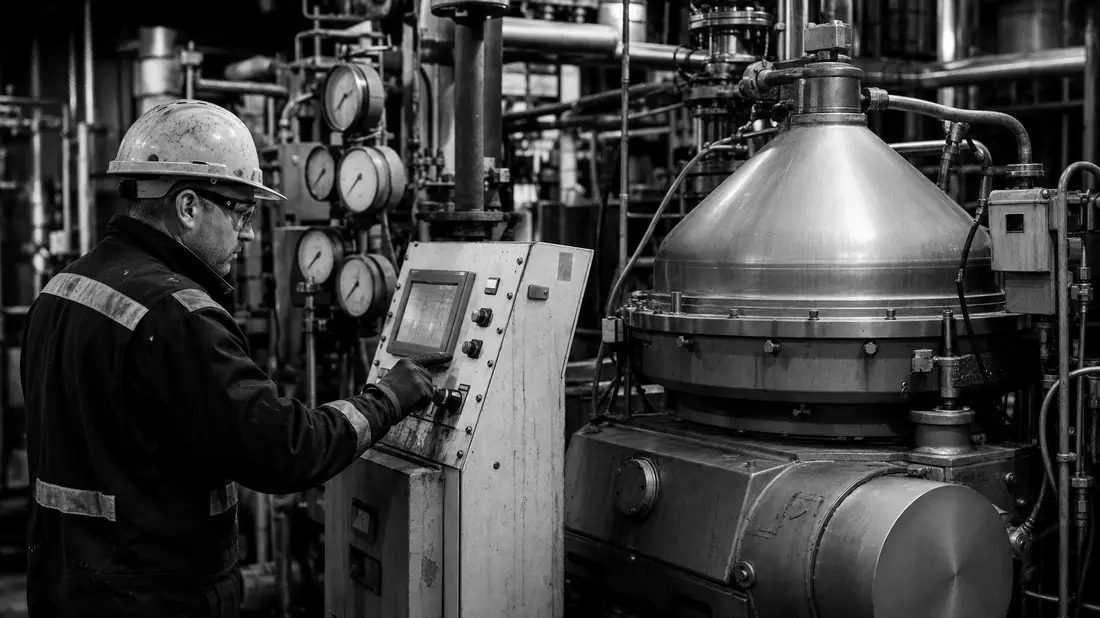
GEA Group Aktiengesellschaft (ISIN DE0006602006) is one of Europe’s major suppliers of process technology and components for the food and pharmaceutical industries, and GEA stock represents a long-duration exposure to these end markets. The company’s business model is tied to global demand for safe, efficient and resource-conscious processing equipment, which tends to be more stable than cyclical capital goods spending. For investors, the core story is that food and pharma customers must keep investing in production and quality infrastructure even when broader industrial cycles soften.
Process technology focus supports GEA stock
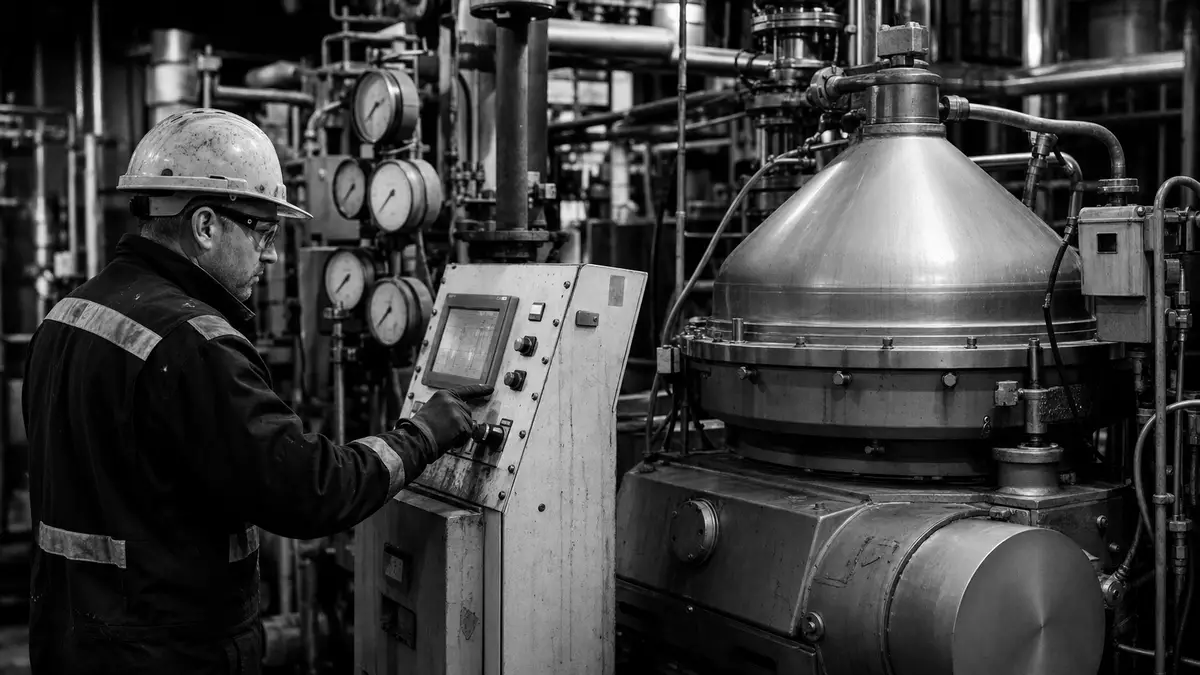
GEA’s portfolio spans equipment for processing, packaging and refrigeration, with a particular emphasis on applications where hygiene, consistency and energy efficiency are crucial. This includes solutions for dairy processing, meat and alternative proteins, beverages and many other segments that require strict quality standards. Because many of these products sit at the heart of production lines, customers generally plan investments on multi-year horizons, which helps smooth the revenue profile relative to highly cyclical machinery niches.
The company’s long history in mechanical engineering, combined with domain expertise in thermal processes, separation and fluid handling, gives it a defensible position in food and beverage plants and pharmaceutical production facilities. GEA often competes on reliability and lifecycle cost rather than purely on upfront price, which can support margins when customers evaluate suppliers on total cost of ownership. For investors, this positioning means GEA stock is closely linked to structural trends such as rising global protein consumption, urbanization and the push for safer, traceable food supply chains.
Global footprint and exposure to growth regions
GEA serves customers around the world, with a footprint that spans Europe, the Americas and Asia-Pacific. In practice, that global reach gives the company exposure to growth in emerging markets where rising incomes drive consumption of processed food and beverages, as well as to mature markets where efficiency upgrades and regulatory compliance drive investment. The mix of geographies can balance regional economic swings, so weakness in one region may be offset by resilience or growth in another.
The company’s installed base of equipment is another long-term anchor for the business. Once GEA machinery is in place, customers need regular maintenance, spare parts and service upgrades to keep production running smoothly. That support activity can create recurring revenue streams that are less volatile than new equipment orders. Investors who look at industrial companies often differentiate between one-off project revenue and higher-quality service revenue, and GEA’s combination of both provides a nuanced profile for GEA stock.
Efficiency and sustainability as investment drivers
Across food and pharma plants, operators face pressure to reduce energy and water consumption, cut waste and lower emissions. GEA’s systems often aim to improve resource efficiency, whether through more precise temperature control, better separation processes or optimized cleaning cycles. As sustainability regulations tighten and brands commit to climate and resource goals, investments in such equipment can become non-discretionary rather than optional.
From an investor perspective, this backdrop introduces a structural driver for equipment upgrades. If customers must invest to meet regulatory thresholds or corporate sustainability commitments, GEA’s solutions can capture a portion of that spend. That dynamic supports the view that GEA stock is exposed not only to traditional capex cycles but also to regulatory and ESG-linked investment programs. While those programs may ebb and flow in intensity, the direction of travel toward more efficient production is clear, and companies that provide enabling technology can benefit over time.
Order intake, backlog and revenue visibility
Industrial investors often focus on order intake and backlog as indicators of future revenue. For GEA, a healthy backlog in food and pharma projects can provide visibility over several quarters, helping management plan capacity and giving shareholders a clearer view of near-term sales. A balanced mix of small and large projects is generally helpful: large projects can anchor capacity, while a flow of smaller orders keeps factories and service teams engaged.
Because food and pharma customers emphasize reliability and regulatory compliance, projects can be complex and multi-stage, from engineering and design through installation and validation. That complexity can lengthen project cycles but also deepen customer relationships, potentially leading to follow-on work and multi-site rollouts. Investors viewing GEA stock through this lens often pay attention to how the backlog evolves across sub-segments, such as dairy, beverages or pharmaceuticals, to understand the mix of future revenue.
Margin profile and operational efficiency
Operating margins are central to the investment case for GEA stock. In equipment manufacturing and process engineering, margin performance reflects pricing discipline, cost efficiency and the balance between equipment and service revenue. Companies like GEA can work on several levers simultaneously: standardizing modules to reduce engineering effort, improving procurement, optimizing factory utilization and increasing service penetration in the installed base.
For example, a shift toward more standardized solutions within recurring application areas can help control engineering costs and reduce lead times. At the same time, digital tools for design, simulation and project management can enhance productivity. On the service side, offerings such as condition monitoring and planned maintenance programs can increase attachment rates and improve utilization of field-service teams. Investors often interpret sustained improvement in margins as evidence that such operational measures are bearing fruit.
Balance sheet and investment capacity
For any industrial company, the strength of the balance sheet influences its flexibility to invest in new technologies, expand capacity or pursue acquisitions. GEA’s business model requires ongoing investment in engineering, testing facilities and sometimes manufacturing footprint adjustments to align with regional demand. A solid financial position gives management more options to respond to shifts in customer needs, such as rising demand for plant-based proteins or growth in injectable pharmaceuticals.
In addition, balance sheet strength underpins decisions about shareholder returns such as dividends. For long-term holders of GEA stock, dividend consistency and the prospect of gradual growth can be an important part of the total-return profile, especially in comparison with pure growth stocks that reinvest heavily but may not distribute cash. Investors balancing income and growth may therefore view GEA as a blended proposition, combining exposure to structural end-market expansion with the possibility of cash returns when conditions allow.
Competitive landscape in food and pharma equipment
The markets GEA serves are competitive, with a range of global and regional players offering overlapping solutions in areas such as processing, packaging and refrigeration. Competition can sharpen innovation and push companies to differentiate their offerings based on performance, reliability, integration and lifecycle support. GEA’s engineering heritage and focus on demanding applications can be advantages when customers award contracts based on technical criteria and risk management rather than purely on price.
At the same time, competition introduces pressure on pricing and project terms, which can affect margins if not managed carefully. Investors tracking GEA stock need to consider how the company positions itself and whether it can maintain pricing discipline while still winning strategically important projects. Strong references, repeat business with key customers and a robust installed base can help defend margins even in crowded fields.
Innovation, automation and digitalization
Innovation is a core element of GEA’s strategy. In process technology, advances can include more compact equipment, improved thermal efficiency, better separation performance and enhanced clean-in-place systems. The company also has scope to integrate more automation and digital capabilities into its offerings, such as advanced control systems, monitoring dashboards and analytics that help customers optimize production.
The trend toward digitalization across industrial plants is favorable for suppliers that can offer integrated solutions rather than standalone machines. For GEA, embedding sensors, connectivity and software into equipment can create new value propositions and data-driven services. This evolution matters for GEA stock because investors increasingly reward industrial companies that combine mechanical engineering strengths with digital and automation capabilities, viewing them as better positioned for the next generation of smart factories.
Food industry trends and GEA’s role
The global food industry is undergoing several notable shifts. Consumers are seeking more convenient, ready-to-eat products, while also demanding higher transparency on ingredients and production practices. Meanwhile, producers are under pressure to reduce waste, improve energy efficiency and comply with stricter food safety regulations. These trends all require robust and adaptable process technology.
GEA’s equipment can help address these needs, from systems for pasteurizing and homogenizing dairy products to technologies for processing meat substitutes and handling sensitive ingredients. As portfolios of food brands evolve to include more plant-based and functional products, production lines may require reconfiguration or entirely new solutions. That generates demand for engineering expertise and equipment suppliers capable of supporting transitions without compromising safety or quality. By playing this role, GEA strengthens its position as a key partner and reinforces the relevance of GEA stock as a way to participate in these shifts.
Pharmaceutical end markets and hygiene standards
Pharmaceutical production involves strict hygiene, consistency and documentation requirements, especially for sterile and injectable products. Equipment suppliers must design systems that enable controlled environments, reliable cleaning and precise processing conditions. GEA’s offerings in this segment can involve technologies for freeze drying, sterile processing and related applications, all of which support reliable and compliant production.
Because pharmaceutical investments often have long lead times and must meet intense regulatory scrutiny, customers tend to choose suppliers with strong technical track records. Once relationships are established, repeat projects and lifecycle support can follow. For investors, this makes pharma exposure an important complement to GEA’s food portfolio, adding another layer of structural demand where health-care needs and drug development pipelines shape long-term investment patterns.
Long-term structural drivers for GEA stock
Beyond short-term economic fluctuations, several structural drivers underpin the demand outlook for GEA’s products. Population growth and rising incomes increase demand for safe and processed food. Urbanization changes consumption patterns toward packaged and convenience products. Aging populations and health-care expansion support pharmaceutical production. Simultaneously, climate and resource constraints push producers to seek more efficient, less wasteful technologies.
GEA occupies a space where these forces intersect. It supplies the equipment and engineering needed to transform raw inputs into safe, branded products while controlling energy and water use. Investors who focus on long-term themes rather than short-term cycles may view GEA stock as a way to align with these trends, provided the company continues to innovate and manage its operations effectively.
Representative product: dairy processing systems
One representative area of GEA’s portfolio is its dairy processing technology, including systems for milk reception, pasteurization, homogenization and cheese production. These solutions help dairy plants manage large volumes of milk and convert them into products with consistent quality and shelf life. Equipment must handle variability in raw milk, maintain precise temperature profiles and ensure hygiene standards that meet regulatory requirements.
Because dairy products are staples in many markets, production facilities must operate reliably day after day. Downtime can be costly, both in terms of lost output and potential product spoilage. GEA’s systems therefore emphasize robustness and service support, giving customers confidence in continuous operations. For investors, such representative products highlight how the company earns revenue not only at the point of equipment sale but also through ongoing support, spare parts and advisory services on process optimization.
GEA stock and listing context
GEA shares are listed on a major European exchange, reflecting the company’s roots and headquarters in Germany. The listing makes GEA stock accessible to international investors who seek exposure to European industrial and process technology names. Trading activity in the shares is influenced by factors such as quarterly earnings reports, guidance updates and broader sector trends in capital goods and food-related industries.
Because GEA is not primarily listed on a US exchange, investors in US markets often gain exposure through international trading facilities or funds that include European industrial holdings. In that context, GEA’s participation in global food and pharma equipment markets provides a distinct angle compared with US-listed industrials focused more on domestic infrastructure or general manufacturing. The difference in listing venue may also affect analyst coverage patterns and index inclusion.
GEA stock at a glance
- Company: GEA Group Aktiengesellschaft
- ISIN: DE0006602006
- CUSIP:
- Ticker:
- Exchange: European primary listing
- Price (as of [Month D, YYYY, H:MM a.m./p.m.] ET):
- Market cap:
- Sector / Industry: Industrials - Machinery and process technology
- Index membership:
- Next earnings date:
Disclaimer zu unseren Artikeln: Keine Anlageberatung, keine Kauf oder Verkaufsempfehlung. Angaben zu Kursen, Unternehmen und Märkten ohne Gewähr; Änderungen jederzeit möglich. Börsengeschäfte können zu hohen Verlusten führen. Unsere Beiträge werden ganz oder teilweise automatisiert mit Unterstützung von AI erstellt und geprüft.