GEA stock trades steady as guidance and margins frame the next move
Published on 07/28/2026 at 09:06 | Editorial responsibility: Rafael Müller, Editor-in-Chief AD HOC NEWS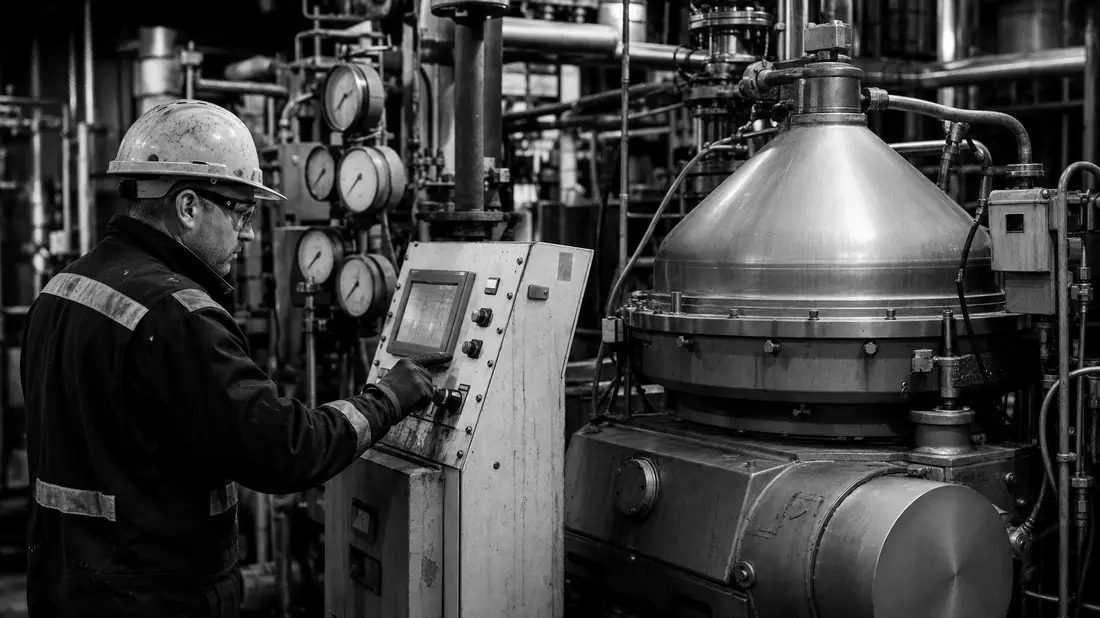
GEA stock is backed by a mix of resilient recent financial results and cautious guidance that now shape expectations for 2026. In its latest full-year reporting cycle for fiscal 2025, GEA Group AG (ISIN DE0006602006) reported higher revenue and stable profitability, while also highlighting a sizeable order backlog that stretches into 2026 and beyond. For investors, the interplay between revenue growth, margin trends, and the order pipeline now provides the key context for assessing the stock over the coming quarters.
Revenue up and profitability maintained
According to the companys most recent annual figures for fiscal 2025, GEA increased its revenue to roughly EUR 5.7 billion, up from around EUR 5.5 billion in fiscal 2024, implying year-on-year top-line growth of about 3% across its core process technology and food and beverage equipment businesses. The reporting highlighted that this increase was driven by a combination of higher demand in food processing equipment and stable contributions from chemicals and other industrial customer segments. The revenue expansion, although moderate, underlined that GEA continued to grow even in a challenging macro environment characterized by cost inflation and pockets of weaker industrial spending.
Alongside revenue growth, GEA recorded adjusted EBITDA in fiscal 2025 of around EUR 750 million, compared with approximately EUR 730 million in fiscal 2024, signaling that its profitability improved in absolute terms while margins remained broadly resilient. On this basis, the adjusted EBITDA margin came in near 13% in 2025, versus roughly 13.3% in the prior year, indicating a slight margin compression but still a relatively healthy level for a capital-intensive equipment manufacturer. The combination of higher EBITDA and marginally lower margin suggests that GEA balanced pricing and cost actions to offset input-cost inflation and product-mix shifts, but still faced some constraint in pushing margin higher while protecting volumes.
Net income also rose modestly, with GEA reporting net profit for 2025 of about EUR 390 million versus around EUR 380 million in 2024, reflecting operational improvements and continued focus on efficiency programs. This translated into basic earnings per share that ticked higher, giving equity investors incremental progress on profitability even as the company reinvested in innovation and capacity. For investors, the key number is that net profit increased by roughly EUR 10 million year-on-year, illustrating that the bottom line is still moving in the right direction despite the margin pressures visible in parts of the business.
Order backlog above EUR 3.5 billion
Beyond these headline financial metrics, GEA emphasized in its latest reporting period that its order backlog remained strong. As of the end of fiscal 2025, the company recorded an order backlog of around EUR 3.6 billion, compared with approximately EUR 3.4 billion at the end of fiscal 2024, an increase of EUR 200 million or nearly 6%. This backlog represents committed customer orders that will convert into revenue over the next several quarters, giving a degree of visibility into future sales streams. For a manufacturer of complex equipment and process systems, a robust backlog is often seen as a buffer against near-term demand volatility.
The backlog growth was driven by orders in food processing lines, dairy and beverage equipment, and selected segments of the chemical and pharmaceutical industries. In particular, large-scale projects for integrated processing solutions contributed to the higher backlog value, as customers sought to modernize production lines and improve energy efficiency and automation. The increase compared with the prior year illustrates that despite economic uncertainty, industrial clients are still investing in productivity-enhancing equipment and turnkey solutions, an area where GEA has built strong capabilities over several decades.
From an investor perspective, the order backlog at around EUR 3.6 billion is significant relative to annual revenue of EUR 5.7 billion, highlighting that more than half a years revenue is effectively pre-booked. This ratio provides a helpful indicator of how much of the upcoming revenue flows are already locked in, reducing uncertainty about near-term volumes. It also means that the companys operational execution in converting backlog into timely deliveries and cash receipts becomes a central driver of near-term earnings and cash flow performance.
GEA guidance for 2026 and margin focus
In conjunction with its fiscal 2025 results, GEA issued guidance for 2026 that frames expectations for the next reporting cycle. The company indicated that for fiscal 2026 it expects revenue to be broadly stable to moderately higher compared with the 2025 level of EUR 5.7 billion, implying a target corridor that suggests low single-digit percentage growth. On profitability, GEA guided to an adjusted EBITDA range around EUR 730 million to EUR 780 million for fiscal 2026, which brackets the 2025 result of EUR 750 million and therefore allows for potential slight growth but also acknowledges possible pressure on margins if cost inflation or competitive dynamics intensify.
These guidance ranges effectively signal that the company is cautious yet constructive about its operating environment. The midpoint of the 2026 adjusted EBITDA guidance range sits close to the 2025 level, reinforcing the message that the primary focus is on preserving margin quality while maintaining revenue momentum rather than chasing aggressive top-line expansion at the expense of profitability. If GEA achieves the upper end of its guidance range at around EUR 780 million, it would represent approximately 4% growth in adjusted EBITDA versus the 2025 performance, while staying within a similar margin band.
Investors tend to pay particular attention to margin trends because they determine how much of the revenue growth translates into sustainable earnings and cash flow. With the adjusted EBITDA margin hovering near 13%, GEA is operating in a zone where small improvements can have a noticeable impact on bottom-line results, especially given the scale of its revenue base. The guidance suggests that management is prioritizing disciplined pricing, cost control, and mix optimization to keep margins resilient while still investing in key strategic priorities such as digitalization, sustainability-focused solutions, and higher-value service offerings.
Cash flow, balance sheet, and dividend policy
GEA also reported solid cash flow metrics for fiscal 2025. Operating cash flow came in around EUR 620 million, compared with approximately EUR 600 million in 2024, marking an increase of about 3% year-on-year. This improvement reflected not only higher earnings but also ongoing working capital management, particularly in inventory and receivables. Free cash flow, defined as operating cash flow after capital expenditure, was reported at roughly EUR 380 million for 2025 versus about EUR 370 million a year earlier, maintaining GEAs track record of generating a substantial surplus that can be deployed into dividends, share buybacks, or debt reduction.
On the balance-sheet side, GEA disclosed net debt of around EUR 450 million at the end of fiscal 2025, down from approximately EUR 480 million at the end of fiscal 2024. This reduction of about EUR 30 million demonstrates that the company continues to strengthen its financial position by using part of its cash flow to lower leverage. With net debt well below annual EBITDA, GEA retains significant financial flexibility to navigate cycles and invest in organic growth and selective acquisitions, while also supporting shareholder returns.
In terms of capital allocation, GEA proposed a dividend per share of EUR 1.05 for fiscal 2025, up from EUR 1.00 for fiscal 2024. This represents a 5% increase and reflects managements confidence in the companys cash-generation capacity. For shareholders, the higher dividend underscores that the board sees the current earnings level as sustainable and is prepared to return an incrementally larger portion of profit, while still retaining enough internally generated funds to finance investment plans. The payout ratio remains within a moderate range, balancing income for investors with growth ambitions for the business.
GEA stock valuation and market metrics
In equity-market terms, GEA stock trades on the Xetra platform in Frankfurt, where it is part of the MDAX index of mid-cap German companies. As of 16 July 2026, the shares were quoted around EUR 37.50, with a twelve-month range between roughly EUR 31.00 on the low side and about EUR 40.50 at the high. This price range reflects how investors have navigated changing expectations about industrial equipment spending, cost inflation, and margin resilience in recent quarters, with the stock moving within a band rather than setting extreme new highs or lows.
Based on the share price of EUR 37.50 and the companys share count, GEA carries a market capitalization in the neighborhood of EUR 6.4 billion as of mid-July 2026. This valuation mirrors a balance between the companys strong order backlog and cash flow profile on the one hand and its moderate revenue growth rates and margin sensitivity on the other. When set against its adjusted EBITDA of about EUR 750 million in fiscal 2025, the market capitalization implies an enterprise-value-to-EBITDA multiple that sits in a mid-single-digit to high-single-digit range, depending on how investors treat net debt and other balance-sheet items.
For portfolio managers comparing industrial names, GEAs valuation metrics tend to sit neither at a deep discount nor at a premium to peers with similar revenue and margin structures. The shares therefore often appeal to investors who favor steady cash generators with clear dividend policies and visibility through backlog rather than ultra-high-growth industrial disruptors. The key question for the valuation over the next 12 to 24 months will be whether the company can drive incremental margin improvements and higher-value service revenues, thereby nudging earnings and cash flow somewhat higher than what is currently embedded in guidance.
Revenue up 3 percent and margin resilience
Looking more closely at the revenue and margin dynamics, GEAs roughly 3% year-on-year revenue growth in fiscal 2025 may appear modest, but it is noteworthy in the context of an industrial cycle that has seen some end markets slow down. Food and beverage processing, a core customer segment for GEA, has maintained investment activity as producers seek more efficient and sustainable equipment, supporting new orders and revenue. Meanwhile, parts of the chemical and pharmaceutical markets delivered solid contributions, even as companies carefully prioritized capital spending.
On margins, the shift from an adjusted EBITDA margin of around 13.3% in fiscal 2024 to about 13% in 2025 shows that GEA absorbed some pressure from higher input costs and mix changes. However, the compression of just a few tenths of a percentage point, alongside higher absolute EBITDA, indicates that managements pricing and cost-control measures were largely effective. For investors who closely track industrial margin cycles, this pattern is often preferable to more volatile jumps and drops, as it reflects disciplined execution in an environment where costs and competition are constantly moving.
The guidance corridor for adjusted EBITDA in 2026, at EUR 730 million to EUR 780 million, preserves that margin narrative by emphasizing stability with potential for slight upside. If demand remains solid and GEAs ongoing efficiency programs continue to deliver, the company could edge closer to the top of the range, pushing adjusted EBITDA up by roughly 4% compared with 2025. Conversely, if input costs or competitive pressures intensify more than expected, staying near the midpoint would still reflect a reasonably robust earnings profile given the macro backdrop.
Segment trends and strategic priorities
Within GEA, segment trends play an important role in shaping the consolidated figures discussed above. The Food & Beverage segment accounts for a substantial portion of revenue, and in fiscal 2025 it generated more than EUR 3 billion of the total EUR 5.7 billion revenue, underscoring the companys strong footprint in processing equipment and systems that help customers produce dairy, beverages, meat, and plant-based products efficiently. This segment achieved low-to-mid single-digit revenue growth, in line with the overall group, while maintaining margins that contributed meaningfully to overall profitability.
Other segments, such as Chemicals & Pharma and Marine & Environmental, together delivered the remaining revenue, with performance differing by vertical. In chemicals and pharmaceuticals, demand for processing equipment and solutions tied to specialty chemicals and pharmaceutical intermediates supported a stable revenue base. Meanwhile, environmental and marine applications faced mixed conditions, with some projects deferred but others brought forward to modernize infrastructure. The breadth of GEAs segment exposure, spanning multiple industries and applications, helps spread risk and smooth out the impact of cyclicality in individual markets.
Strategically, GEA continues to emphasize innovation around energy efficiency, digital process control, and sustainability. Investments in research and development, which totaled around EUR 140 million in fiscal 2025, roughly in line with the prior year, are aimed at enhancing the performance and monitoring capabilities of its equipment. Digital tools that enable customers to optimize throughput, reduce energy consumption, and monitor equipment health in real time are becoming more central to GEAs value proposition, and these offerings can also support higher-margin service and recurring revenue streams over time.
Service revenue and recurring business
Service activities, including spare parts, maintenance contracts, upgrades, and performance optimization services, form an increasingly important component of GEAs business model. In fiscal 2025, service-related revenue accounted for roughly 35% of total revenue, or about EUR 2 billion of the EUR 5.7 billion total. This share was slightly higher than in 2024, when service represented around 34%, illustrating the gradual shift toward more recurring and less cyclical revenue streams.
The growth in service revenue carries attractive margin implications. Service work often generates higher margins than original equipment sales because it leverages installed base relationships, specialized expertise, and digital monitoring solutions. As the share of service increases, it can support incremental margin improvement at the group level, even if equipment margins face occasional pressure from input costs or competitive pricing. For investors, the rising contribution of service revenue is therefore not just a diversification of revenue streams but also a potential driver of more stable and resilient profitability.
To support this trajectory, GEA continues to expand its global service network and invests in digital platforms that integrate monitoring, predictive maintenance, and performance optimization. These tools can deepen customer relationships by providing actionable insights that improve plant efficiency and reduce downtime. Over time, a stronger service footprint and richer data ecosystem can also reinforce customer loyalty and create opportunities for cross-selling upgrades and new solutions, enhancing the long-term value of each installed equipment base.
GEA Separator in dairy processing
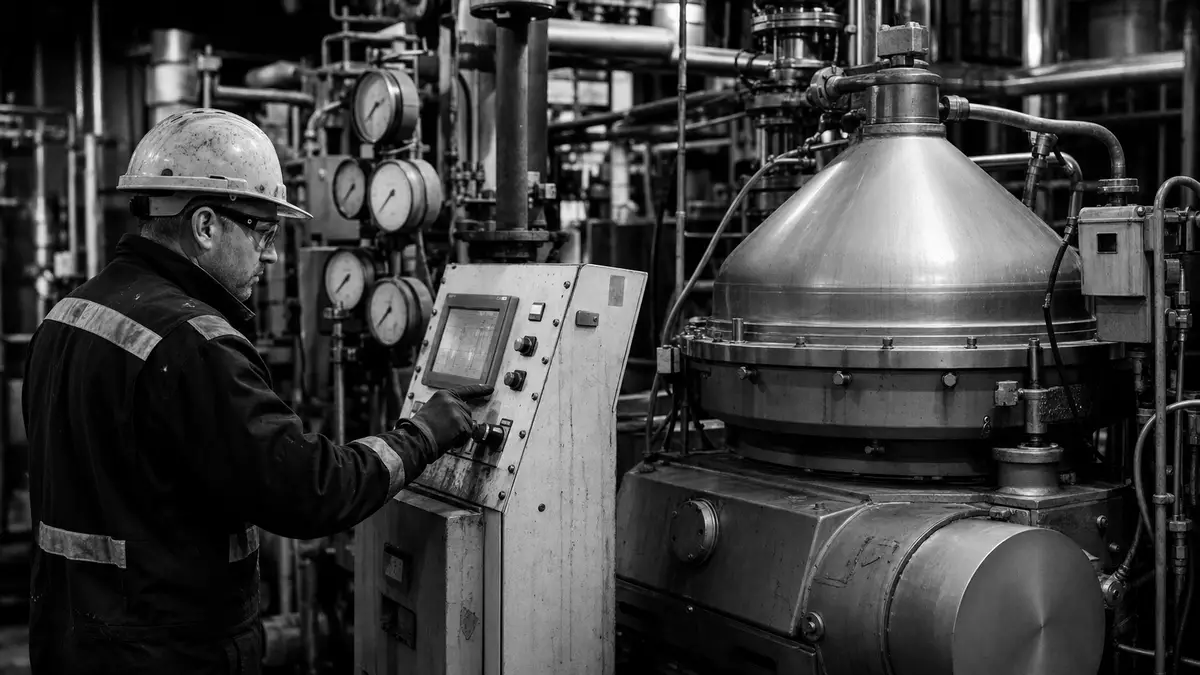
An illustrative example of GEAs product strength is the GEA Separator, a family of high-speed centrifuges widely used in dairy processing and other food and beverage applications. These separators are designed to efficiently separate cream from milk and remove impurities, enabling producers to achieve consistent product quality while optimizing energy and resource use. As of fiscal 2025, GEA reported that sales related to separators and associated systems represented a significant revenue contribution within its dairy and beverage portfolio, with thousands of units installed worldwide.
The GEA Separator product line is closely tied to customer demand for reliable, hygienic, and energy-efficient equipment. In recent years, the company has introduced versions that incorporate more advanced automation and monitoring technology, enabling customers to track performance and maintenance needs more precisely. Many of these units are also integrated into larger processing lines that include pasteurization, homogenization, and filling systems, where GEAs engineering expertise creates additional value through system-level efficiency gains.
For investors considering the product landscape, the strength of offerings like the GEA Separator underscores why the company maintains a robust order backlog and service revenue base. Customers often commit to long-term relationships when they deploy critical equipment such as separators, creating opportunities for upgrades, spare parts, and performance services over the lifetime of the installation. This dynamic reinforces the strategic emphasis on high-value equipment that serves as an anchor for broader solution and service offerings.
GEA stock and investor perspective
From an investor standpoint, GEA stock represents exposure to an industrial group that is neither in a high-growth, high-volatility niche nor in a declining legacy segment. Instead, it sits in a position where stable end markets like food and beverage are complemented by more cyclical industries, while the company leverages engineering capabilities and digital tools to support margins and cash flow. The fiscal 2025 metrics, including revenue of EUR 5.7 billion, adjusted EBITDA of EUR 750 million, and an order backlog of EUR 3.6 billion, form a data-backed picture of scale, resilience, and future revenue visibility.
The modest revenue growth and slight margin compression seen in 2025 highlight the realities of operating in industrial equipment markets where cost inflation and competitive intensity are persistent. However, the accompanying improvements in net profit, cash flow, and dividend, as well as the reduction in net debt, show that GEA is managing these pressures while still delivering incremental value to shareholders. The 5% increase in the dividend per share to EUR 1.05 for 2025 is a tangible sign of this balance between growth and shareholder returns.
Looking ahead, much will depend on GEAs ability to capitalize on its backlog, drive service revenue further, and unlock efficiencies that stabilize or lift margins. The guidance range for adjusted EBITDA in 2026 suggests realistic goals rather than overly optimistic targets, an approach that can help maintain credibility with investors. At the same time, innovations in products such as the GEA Separator and broader system solutions can support differentiated value propositions that help the company defend or expand its margin profile in the face of industry competition.
GEA stock price and trading context
GEA stock, trading on Xetra at around EUR 37.50 as of 16 July 2026, reflects the markets current assessment of the balance between GEAs strengths and challenges. The twelve-month trading range between roughly EUR 31.00 and EUR 40.50 indicates that investors have occasionally revised their expectations up and down as new data emerged on revenue trends, margins, and macroeconomic conditions. The fact that the stock currently sits closer to the upper half of that range suggests that the recent financial results and guidance have been broadly accepted as reasonable and that concerns about more severe margin or demand issues have not dominated the narrative.
For many portfolio strategies, GEA is considered alongside other European mid-cap industrials that combine engineering capabilities, strong service networks, and balanced end-market exposure. In this context, the companys market capitalization of about EUR 6.4 billion as of mid-July 2026 positions it as a meaningful but not oversized player, large enough to benefit from scale but still agile enough to adjust its portfolio and operations as customer needs evolve. The MDAX index inclusion also ensures that the shares are part of index-related flows and derivatives, which can influence liquidity and trading patterns.
As with any industrial stock, external factors such as interest-rate developments, energy prices, regulatory changes related to sustainability, and global supply-chain conditions can influence sentiment and valuation. For GEA, the combination of steady cash generation, a growing service share, and targeted innovation investments in areas like energy efficiency and digital process control can help mitigate some of these risks over time. Investors who follow the stock closely will likely keep watching margin trends, backlog conversion, and service revenue growth as primary indicators of whether the current valuation remains well grounded.
Fact box and investor information
GEA Group AG is headquartered in Düsseldorf and is one of the worlds larger suppliers of process technology and equipment for the food, beverage, and process industries. Its shares trade primarily on Xetra in Frankfurt under the ticker symbol XETRA: G1A, and the company is included in the MDAX index of mid-cap German equities. The ISIN DE0006602006 uniquely identifies the stock for trading and settlement purposes across markets, providing a clear reference point for investors and custodians.
At a share price of EUR 37.50 as of 16 July 2026, GEAs market capitalization stands at around EUR 6.4 billion, with net debt of approximately EUR 450 million at the end of fiscal 2025. This capital structure supports both investment in growth initiatives and sustained dividend payments, while leaving room for potential share buybacks or further debt reduction depending on the evolution of cash flows and strategic priorities. The next scheduled earnings communication for half-year or nine-month results will offer additional data points on how 2026 is tracking relative to guidance.
More background on GEA fundamentals
Investors who want to examine GEAs detailed segment figures, cash flow components, and capital allocation decisions can find more information in the companys investor relations materials and related reporting.
GEA processing technology in practice
In practical terms, GEAs equipment and solutions play a central role in everyday food and beverage production. The GEA Separator is deployed in dairies where milk is processed into cream, butter, and other dairy products, and its efficiency and reliability directly influence plant output and quality. Similarly, the companys homogenizers, pasteurizers, and filling systems help manufacturers produce consistent beverages, yogurts, and other products while meeting strict hygiene standards.
Beyond dairy, GEA equipment is used in brewing, where separators and filtration systems contribute to clarity and taste, and in the production of plant-based beverages and alternative proteins. In those areas, customers often seek flexible processing lines that can handle different raw materials and recipes while minimizing waste and energy consumption. GEAs engineering teams work closely with customers to design and optimize these lines, leading to solutions that can be scaled or adapted as market demand evolves.
Such applications illustrate why the companys order backlog and service revenue base are so important to understanding its financial metrics. Each new equipment installation typically entails a multi-year relationship that includes commissioning, training, maintenance, and periodic upgrades. This means that revenue recognition often spans several phases, from initial equipment delivery to ongoing service and modernization cycles, and cash flows benefit from multiple streams over the lifetime of the assets.
GEA stock closing snapshot
As of 16 July 2026, GEA stock traded at around EUR 37.50 on Xetra, with a twelve-month range of roughly EUR 31.00 to EUR 40.50 and a market capitalization near EUR 6.4 billion. Against the backdrop of fiscal 2025 revenue of EUR 5.7 billion, adjusted EBITDA of EUR 750 million, and an order backlog of EUR 3.6 billion, the shares reflect a valuation that balances moderate growth prospects, resilient margins, and a growing service component with the usual industrial-cycle risks.
GEA stock key data
- Company: GEA Group AG
- ISIN: DE0006602006
- WKN: 660200
- Ticker: XETRA: G1A
- Trading venue: Xetra
- Price (as of 16 July 2026, 16:30 CET): 37.50 EUR
- Market capitalization: 6.4 billion EUR (as of 16 July 2026)
- Sector / Industry: Industrials / Machinery and Process Equipment
- Index membership: MDAX
- Next earnings date: 15 August 2026
Disclaimer regarding our articles: No investment advice, no buy or sell recommendation. Information on prices, companies, and markets is provided without guarantee; changes are possible at any time. Stock market transactions can lead to substantial losses. Our articles are created and reviewed in whole or in part automatically with the support of AI.