Germany’s Push for 13-Hour Workdays Collides with World Cup Sleep Warnings
Published on 06/12/2026 at 00:52 | Redaktion boerse-global.de
As Germany prepares for the World Cup in North America, where 64 of 104 matches kick off after midnight local time, the federal government is simultaneously advancing a reform that could stretch the maximum workday to 13 hours. Sleep experts and labour lawyers are warning of a collision between football fervour and fatigue.
According to sleep medicine specialist Hans-Günter Weeß, losing just one hour of sleep raises the risk of a workplace accident by 30 percent. His advice for fans tuning in late: take a preventive nap during the day, or a power nap of 10 to 20 minutes. Avoid alcohol and caffeine before bed.
A survey by the online platform Kununu found that only 19 percent of employees consider midnight matches professionally acceptable. When kick-off times shift to 3 a.m., that figure drops to 7 percent. Just 11 percent plan to take holiday time for the tournament.
With sleep-related accident risk rising sharply, having proper safety documentation is more important than ever. Many UK companies unknowingly expose themselves to high fines because they lack essential health and safety documents. A free toolkit provides ready-to-use risk assessments and checklists that can be deployed immediately on site. Download the free Health & Safety Toolkit
No Legal Right to Sleep In
Labour law offers no special provisions for the World Cup. Employment lawyers stress that there is no statutory entitlement to time off after a late game. Streaming matches at the workplace without permission could result in a written warning — or even dismissal.
Fatigue caused by late-night TV does not justify absences from work. Companies are advised to set clear policies early and explore flexible options such as flexitime.
The government’s proposed reform of the Working Hours Act meanwhile aims to permit workdays of up to 13 hours. Labour law specialist Pascal Croset warns that productivity drops sharply after the tenth hour.
In an interview with ARD, former Trigema CEO Wolfgang Grupp dismissed the concept of work-life balance altogether, stating it never existed at his company.
Rising Mental Health Strain
Sick leave due to psychological stress is climbing steadily. In Switzerland, one in five women reports moderate to severe mental strain — often linked to the double burden of job and family.
Social media has popularised the “soft off day”: working from home at reduced intensity without formally calling in sick. Experts view this trend as a symptom of the difficulty of staying focused in a home-office environment.
The rise in psychological strain and new work-from-home patterns place legal duties on employers to protect workforce wellbeing. Is your company unknowingly violating the Health & Safety at Work Act? A free toolkit reveals common compliance gaps and provides checklists to address them before problems arise. Get the free Health & Safety at Work Act 1974 Toolkit
What Actually Helps
Chief physician Thomas Ihde recommends deliberately scheduling time for hobbies when pressure mounts. Employees should negotiate clear priorities with their supervisors and practise saying “no” in small steps.
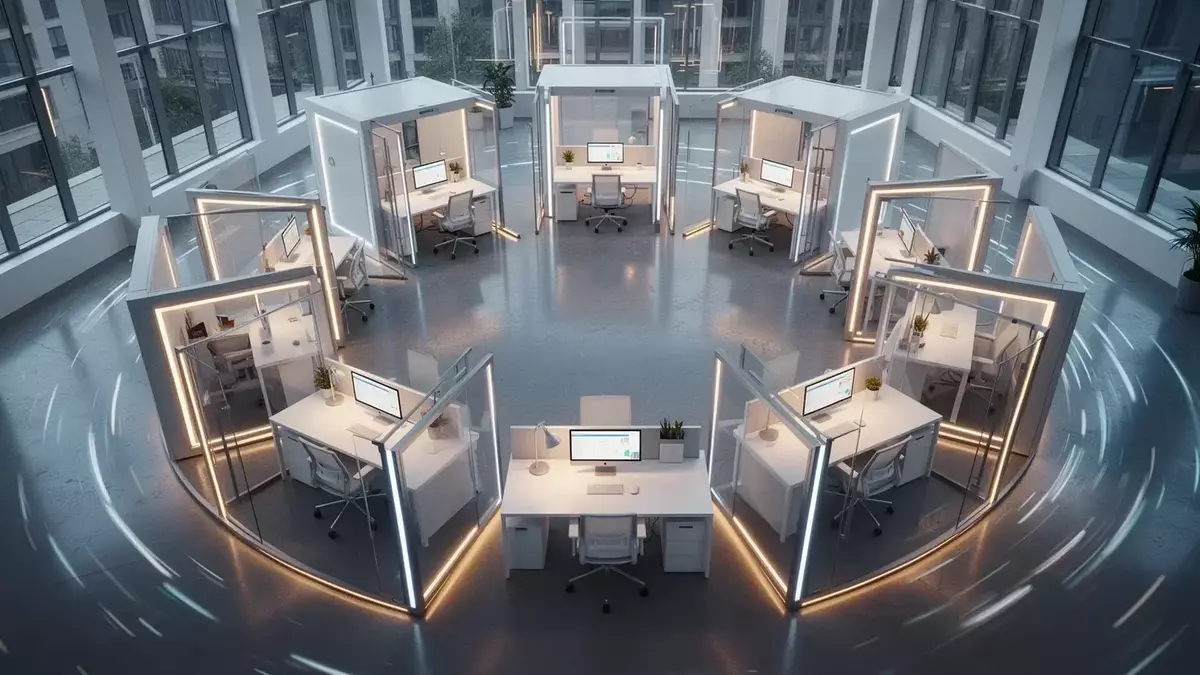
The physical workspace also matters. Houseplants can boost productivity by 15 percent. Ergonomic setups with natural daylight and regulated humidity improve well-being. Visual clutter, tangled cables and constant background noise should be minimised to ensure a stress-free end to the workday.
Disclaimer regarding our articles: No investment advice, no buy or sell recommendation. Information on prices, companies, and markets is provided without guarantee; changes are possible at any time. Stock market transactions can lead to substantial losses. Our articles are created and reviewed in whole or in part automatically with the support of AI.