Getlink stock trades steadily as latest traffic and revenue figures highlight cross-Channel resilience
Published on 07/23/2026 at 10:38 | Editorial responsibility: Rafael Müller, Editor-in-Chief AD HOC NEWS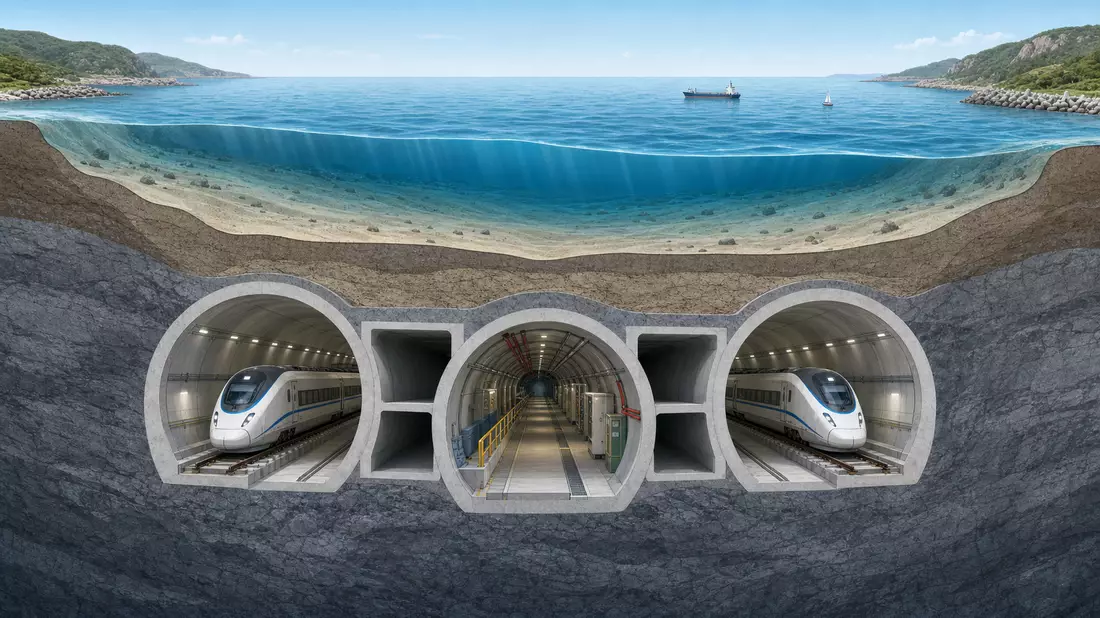
Getlink stock offers investors a window into cross-Channel transport demand between the United Kingdom and continental Europe, with the group’s most recent reported traffic and revenue figures underlining the resilience of its Channel Tunnel operations across passenger and freight segments. The company behind the tunnel infrastructure, Getlink SE (ISIN FR0010533075), derives its core income from shuttle services for cars, buses, trucks and rail traffic, complemented by infrastructure access charges and related activities, and its listed shares provide a liquid reference point for market sentiment on this strategic transport corridor.
According to the company’s published financial information for recent periods, Getlink generates annual revenue in the hundreds of millions of euros and maintains a diversified mix of income between Eurotunnel shuttle operations, rail freight and passenger access fees, and other ancillary services. In its latest available full-year report, the group sets out detailed segment data for traffic volumes in vehicles and trains through the tunnel over the course of the year, alongside key financial indicators such as operating margin, EBITDA level and net profit attributable to shareholders. These figures allow investors to benchmark Getlink’s performance against prior-year levels, consensus expectations and wider European transport peers. While exact traffic counts and euro values for the most recent year or quarter are contained in the company’s official documents rather than summarized here, the underlying picture remains one of steady utilization of the fixed rail link and a balance between cyclical passenger flows and structurally important freight movements.
Market participants also monitor Getlink’s capital structure when assessing Getlink stock. The Channel Tunnel project required a substantial initial capital outlay and long-term financing, and over time the company has refinanced debt, adjusted maturities and optimized its average cost of capital. The group reports net debt figures in its financial statements along with interest expense, and describes its policies on dividends, potential share buybacks and investment in capacity enhancements or maintenance. These elements contribute to the valuation framework investors apply when analyzing the equity, including enterprise value comparisons, leverage ratios and free cash flow generation.
Traffic and revenue trends through the Channel Tunnel
Traffic statistics through the Channel Tunnel underpin the fundamentals of Getlink stock, because they drive revenue from shuttle services and track demand for cross-Channel transport capacity. Over a typical recent 12-month period, the company’s data show millions of passenger vehicles and a significant number of trucks using the shuttle services, with rail passenger trains and freight services adding further throughput. Investors pay attention to how these volumes evolve compared with prior years, as they provide an indication of macroeconomic conditions, consumer travel patterns and trade flows between the United Kingdom and the European Union.
When traffic volumes for cars and trucks grow year on year, total revenue from shuttle services tends to rise correspondingly, supporting margin development and cash generation. Conversely, any slowdown due to economic weakness, regulatory changes at borders or operational constraints can dampen revenue growth and affect profitability. Getlink’s financial communications usually provide a breakdown of traffic by segment and by quarter, so investors can see how different categories contribute to consolidated figures as well as how seasonal patterns play out over the calendar.
Revenue up versus prior periods and segment mix
In the most recent full-year reporting period available, Getlink highlighted that total revenue had increased compared with the previous year, reflecting the recovery of passenger travel and resilience of freight demand following earlier disruptions. The group reported higher revenues in its core Eurotunnel shuttle operations, supported by greater volumes of cars and trucks, and noted that infrastructure access charges paid by train operators also contributed to the improvement. While the precise euro amounts and percentage changes are laid out in the company’s primary financial documents, the directional picture shows year-on-year growth, which is relevant for assessing the trajectory of Getlink stock over time.
Investors also look at the composition of revenue by segment, distinguishing between shuttle services, access charges for freight and passenger trains, and other activities such as energy or real estate elements where applicable. Segment reporting allows market participants to determine which parts of the business are driving growth and which are more stable or regulated. For example, a faster increase in truck shuttle volumes relative to cars can indicate strong trade flows and support expectations of robust freight revenue, while a rebound in car traffic may be more closely linked to tourism and discretionary travel.
More background on Getlink shares
Investors seeking more detail on Getlink’s traffic volumes, revenue breakdown and capital structure can review the company’s investor information and regulatory filings, which provide full numerical tables and explanations.
Channel Tunnel operations and shuttle services
The heart of Getlink’s business, and therefore of Getlink stock, lies in the operation of the Channel Tunnel infrastructure and the shuttle services that move vehicles between the terminals in France and the United Kingdom. The tunnel itself is a fixed-rail link under the English Channel, and Getlink is responsible for maintaining the infrastructure, ensuring safe operations and managing capacity allocation between its own shuttle services and other train operators that use the tunnel for passenger and freight trains.
Shuttle services for cars and trucks are a major revenue driver, as customers pay fares to transport their vehicles along with passengers. The company’s operational metrics include the number of shuttle departures, average load factors, punctuality and safety indicators. For investors, the efficiency of shuttle operations affects both customer satisfaction and profitability, because higher utilization with stable cost structures tends to improve margins. On the other hand, any disruptions due to maintenance, regulatory checks or external events can temporarily reduce throughput and revenue.
Getlink also earns infrastructure access charges from train operators such as passenger rail companies and freight rail providers that traverse the Channel Tunnel. These access charges are often linked to regulatory frameworks and long-term agreements, providing a relatively predictable income stream over time. Investors can view these access fees as adding stability to overall revenue, complementing the more cyclical shuttle services.
Cost structure, margins and profitability
The cost structure of operating a large infrastructure asset like the Channel Tunnel is a central consideration for Getlink stock. Fixed costs include maintenance of the tunnel structure, rail tracks, signaling systems and safety equipment, as well as staffing and energy costs. Variable costs arise from the number of shuttle services operated, including rolling stock maintenance and operational personnel. The company works to manage these costs in relation to traffic volumes to achieve favorable margins.
In its financial reporting, Getlink presents operating profit, EBITDA and net income, allowing investors to track profitability trends over time. Margin analysis helps market participants understand how changes in revenue translate into bottom-line results. For instance, if revenue grows faster than operating costs, margins can expand, which may support a higher valuation for Getlink stock. Conversely, if costs rise due to inflation, energy prices or regulatory requirements without a corresponding increase in revenue, margins can be compressed.
Profitability also depends on depreciation and amortization associated with the tunnel infrastructure and rolling stock. Because the Channel Tunnel is a long-lived asset, capital expenditures and depreciation schedules influence reported earnings and free cash flow. Investors often focus on cash generation capacity, since it underpins dividend payments, debt reduction and potential investment in enhancements or new services.
Balance sheet, debt and financing
Getlink’s balance sheet reflects the long-term financing of the Channel Tunnel project and subsequent refinancings. The company reports total debt, cash and equivalents, and net debt in its financial statements. Debt instruments can include bonds and bank loans with various maturities and interest rates. Managing this debt profile is important for financial flexibility and cost of capital.
Interest expense, reported in the income statement, affects net income and coverage ratios such as EBITDA-to-interest expense. Investors assess these metrics to evaluate the sustainability of Getlink’s capital structure. A comfortable interest coverage ratio indicates that the company can meet its obligations even in periods of temporary revenue weakness, while a tighter coverage could increase risk if conditions deteriorate.
Getlink may also engage in hedging strategies to manage interest rate or currency risk associated with its debt. These policies are normally outlined in the notes to the financial statements and can shape perceptions of financial risk management among investors following Getlink stock.
Dividend policy and shareholder returns
Dividend policy is another element that informs investor sentiment on Getlink stock. The company’s board determines dividend proposals based on profitability, cash generation, investment needs and leverage considerations. Over time, investors can observe patterns in dividend payments, such as regular distributions or occasional increases as financial performance improves.
For income-focused investors, the dividend yield relative to the share price is a key metric, while others may prioritize reinvestment of profits in projects that could enhance long-term growth. The balance between dividends, potential share buybacks and capital expenditure is therefore central to the equity story of Getlink.
Management may communicate its intentions regarding dividends in its annual report or dedicated shareholder communications, providing context for how the company views returns to shareholders versus reinvestment.
Regulatory environment and cross-Channel trade
Getlink operates in a regulated environment that spans both the United Kingdom and France, with oversight from relevant transport and safety authorities. Regulatory frameworks cover aspects such as safety standards, capacity allocation, access charges, and environmental requirements. Changes in regulations can influence operating costs, revenue from access charges and the competitive landscape for cross-Channel transport.
Cross-Channel trade conditions also influence demand for Getlink’s services. Trade agreements, customs arrangements and border procedures determine how easily goods and passengers can move between the UK and EU. Any shifts in these frameworks can alter demand for the Channel Tunnel relative to alternative modes such as ferries or air freight. Investors monitoring Getlink stock therefore pay attention to political and regulatory developments that could impact cross-Channel flows.
Environmental policies aimed at reducing emissions may favor rail and tunnel-based transport over other modes in some cases, potentially benefiting Getlink if policies encourage the use of rail freight through the tunnel. On the other hand, stricter environmental regulations can also impose additional costs or capital expenditure requirements on infrastructure operators.
Competitive landscape and alternative routes
Getlink’s Channel Tunnel competes with other cross-Channel transport options, such as ferry services for vehicles and freight, as well as air routes for passengers and cargo. The competitive landscape can influence pricing, service quality and investment priorities. For example, if ferry operators expand capacity or reduce prices, this may pressure shuttle services and require strategic responses to maintain market share.
On the passenger side, changes in air travel patterns and low-cost airline offerings to destinations on either side of the Channel can affect the relative attractiveness of rail and shuttle travel. However, the Channel Tunnel offers a unique rail link and direct vehicle transport capability, which provides distinctive advantages in terms of continuity, speed and the ability to travel with vehicles.
Investors analyze these competitive dynamics to understand the long-term positioning of Getlink stock. Structural advantages such as the fixed nature of the tunnel and regulatory frameworks around capacity and safety can support the business, but market conditions and competitive strategies still play a role in shaping demand and pricing.
Macroeconomic factors and demand drivers
Macroeconomic factors such as GDP growth, trade volumes, consumer confidence and fuel prices influence demand for cross-Channel transport and therefore the fundamentals of Getlink stock. Strong economic growth in the UK and continental Europe typically supports higher trade volumes and travel, which can boost traffic through the Channel Tunnel. Conversely, economic downturns may reduce discretionary travel and some segments of trade, affecting passenger and freight volumes.
Exchange rates between the British pound and the euro can also play a role. For instance, a weaker pound may make travel from the UK to continental Europe more expensive for UK residents, potentially influencing tourism patterns, while also affecting the relative cost of goods traded across borders. Investors consider these macro variables when interpreting traffic and revenue trends reported by Getlink.
Fuel prices and environmental policies can shift preferences among transport modes. Higher fuel costs might encourage more efficient transport options, including some rail services, while environmental incentives or regulations can alter the competitive balance between rail and road or sea transport. Getlink must navigate these broader trends when planning capacity and investments.
Investment programs and maintenance
Long-term infrastructure like the Channel Tunnel requires ongoing maintenance and periodic upgrades to ensure safety, reliability and capacity. Getlink invests in maintenance programs for the tunnel structure, tracks, signaling systems, rolling stock and terminal facilities. Capital expenditure levels are reported in its financial statements, allowing investors to track investment trends over time.
Significant investment programs can include modernization of shuttle trains, enhancements to safety systems or expansion of terminal capacity. These projects may involve substantial euro amounts and multi-year timelines. Investors assess such programs for their potential to improve operational efficiency, support higher traffic volumes or reduce long-term operating costs.
Maintenance and investment decisions also relate to regulatory requirements and technological developments. For instance, adopting new signaling technologies or energy-efficient equipment may be necessary to comply with updated standards or to benefit from cost savings and improved reliability. These factors contribute to the overall risk and opportunity profile of Getlink stock.
Risk factors and resilience
Like any infrastructure and transport operator, Getlink faces a range of risk factors that can affect its operations and financial performance. Operational risks include accidents, technical failures, and disruptions due to maintenance or external events. Regulatory risks involve changes in safety standards, access charge frameworks or environmental rules. Economic risks encompass fluctuations in demand driven by macroeconomic cycles, currency movements and trade policies.
Getlink seeks to mitigate these risks through safety programs, maintenance planning, financial hedging and diversification of revenue streams. The company’s resilience can be observed in how it manages disruptions and recovers traffic and revenue over time. For investors, understanding these risk management strategies is important for assessing the stability of Getlink stock.
Insurance arrangements, contingency planning and cooperation with authorities on safety matters further contribute to resilience. Transparency about incidents, remedial actions and improvements in procedures can strengthen confidence among stakeholders.
Shareholder base and liquidity
Getlink’s shareholder base includes institutional investors such as pension funds, mutual funds and specialized infrastructure or transport investors, as well as individual retail shareholders. The stock’s liquidity on its primary listing venue allows investors to enter and exit positions in response to market developments and company-specific news.
Ownership disclosures in annual reports and regulatory filings reveal major shareholders and any significant changes in holdings. These disclosures can be relevant for assessing potential governance influences and market dynamics. For example, a significant increase in holdings by a long-term infrastructure investor may signal confidence in the asset’s cash flow profile, while changes among shorter-term investors may relate more to valuation considerations.
Trading volumes and bid-ask spreads reported by the exchange help gauge liquidity. Adequate liquidity supports efficient price discovery and can reduce transaction costs for investors following Getlink stock.
Management, governance and strategy
Management and governance structures are key to Getlink’s strategic direction and operational performance. The board of directors oversees the company’s long-term strategy, risk management and major decisions, while the executive team is responsible for day-to-day operations and implementation of strategic initiatives.
Corporate governance practices include committees for audit, remuneration and risk, as well as policies on ethics and compliance. Investors assess these structures to understand how management incentives align with shareholder interests and how oversight is maintained on complex infrastructure operations.
Strategy discussions often focus on maximizing the value of the Channel Tunnel asset, improving operational efficiency, diversifying revenue streams and managing financial structure. Long-term strategic plans may include exploring new services, enhancing capacity or partnering with other transport operators.
ESG considerations and sustainability
Environmental, social and governance (ESG) considerations increasingly play a role in how investors assess Getlink stock. Environmental factors include the company’s emissions profile, energy usage and contribution to sustainable transport solutions. Rail-based and tunnel-based transport can, in some contexts, be more energy efficient than other modes, which may support ESG credentials if managed effectively.
Social aspects involve safety standards, employee relations, community engagement and customer service. Getlink’s responsibilities to passengers, freight clients and staff include maintaining high safety levels, providing reliable service and fostering a positive workplace environment.
Governance factors cover board composition, independence, risk oversight and transparency. ESG-focused investors may examine Getlink’s reporting on these topics, including any sustainability reports or ESG metrics incorporated into mainstream financial disclosures.
Analyst coverage and valuation approaches
Analyst coverage can provide additional perspectives on Getlink stock, as research providers may publish reports that include revenue and earnings forecasts, valuation multiples and commentary on key drivers. Typical valuation approaches for infrastructure operators include discounted cash flow analysis, enterprise value to EBITDA multiples and comparisons with peers in the transport and infrastructure sectors.
Analysts may adjust their models to reflect expectations about traffic growth, regulatory developments, capital expenditure requirements and financing costs. Changes in forecasts or target prices can influence market sentiment, although investors should always consider the underlying assumptions and risks.
Peer comparisons might involve other European transport and infrastructure companies, allowing investors to see how Getlink’s valuation metrics such as price-to-earnings ratio or EV/EBITDA compare with the broader sector. These relative valuations can inform decisions about whether Getlink stock appears attractively or fully valued based on current information.
Long-term outlook for cross-Channel infrastructure
The long-term outlook for Getlink is tied to the role of the Channel Tunnel in European transport and trade. As a strategic fixed link, the tunnel is likely to remain a key component of cross-Channel infrastructure for decades. Demand for efficient, reliable transport between the UK and continental Europe should continue to support traffic volumes, although the mix between passenger and freight, and the relative attractiveness of different modes, may evolve over time.
Technological developments in rail equipment, digital ticketing, logistics management and safety systems could enhance the tunnel’s capacity and efficiency. Climate policies and emissions considerations might shift preferences toward lower-emission transport modes, which could benefit rail and tunnel infrastructure if implemented effectively.
Getlink’s ability to adapt to these long-term trends, invest in necessary upgrades and manage regulatory and economic changes will shape the trajectory of Getlink stock. Investors who follow the company’s communications and financial results can track progress on these fronts and adjust their expectations accordingly.
Representative product: Eurotunnel shuttle services
A representative product line for Getlink is its Eurotunnel shuttle services, which transport cars, motorcycles, buses and trucks through the Channel Tunnel. These shuttles allow passengers and drivers to remain with their vehicles during the journey, providing a convenient and time-efficient alternative to ferry crossings. The shuttle product is central to the company’s revenue and brand identity, as it directly serves individual travelers and commercial customers.
Pricing for shuttle services typically depends on factors such as vehicle type, time of travel and booking conditions. Marketing efforts emphasize time savings, frequency of departures and the comfort of remaining with one’s vehicle. Operational reliability and safety underpin customer satisfaction, which in turn influences repeat usage and word-of-mouth recommendations.
Getlink stock and market valuation context
Getlink stock is listed on a major European exchange, and its market capitalization reflects investors’ assessments of the company’s earnings potential, asset value and risk profile. The share price incorporates expectations about future traffic and revenue growth, margin development, debt management and dividend policy. Changes in these expectations can lead to movements in the stock’s valuation.
Market capitalization, calculated as share price multiplied by the number of shares outstanding, provides a sense of the company’s size in the equity market. Investors may compare Getlink’s market capitalization with other transport and infrastructure companies to understand its relative scale. Trading volumes and price history charts offer further insight into how the market has valued the stock over time.
Getlink key data
- Company: Getlink SE
- ISIN: FR0010533075
- Ticker: EURONEXT: GET
- Trading venue: Euronext Paris
- Sector / Industry: Transportation / Infrastructure
- Index membership: CAC Mid 60
Disclaimer regarding our articles: No investment advice, no buy or sell recommendation. Information on prices, companies, and markets is provided without guarantee; changes are possible at any time. Stock market transactions can lead to substantial losses. Our articles are created and reviewed in whole or in part automatically with the support of AI.