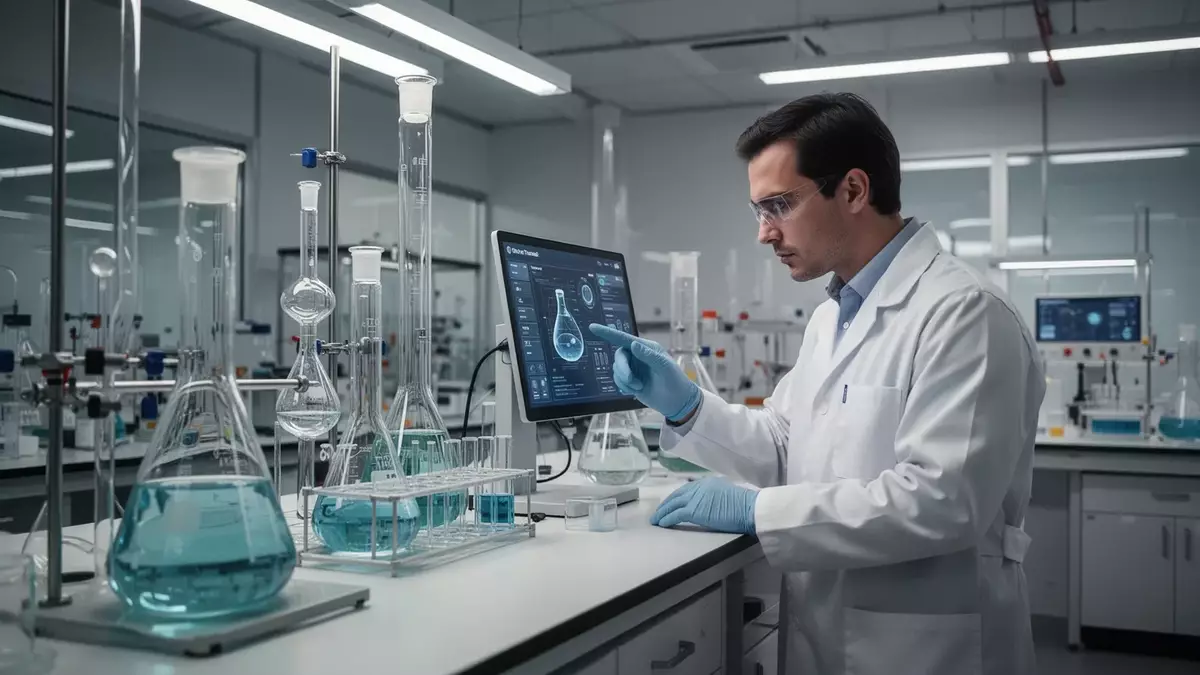
Global Regulatory Shift Reshapes Workplace Chemical Safety Standards
Published on 07/24/2026 at 11:47 | Redaktion boerse-global.de
Regulatory agencies and industry coalitions across multiple major economies have launched significant initiatives this week to overhaul how hazardous substances are managed in the workplace, signalling a broader international move toward risk-based oversight and the elimination of duplicative safety requirements.
The developments, spanning from the United States to East Asia, come as recent industrial disasters have highlighted critical gaps in safety maintenance and regulatory compliance.
Industry Coalition Pushes for Unified US Federal Standards
A coalition of 75 business and industry organisations, led by the American Chemistry Council (ACC), submitted a joint letter on 23 July 2026 to the Environmental Protection Agency (EPA), the Occupational Safety and Health Administration (OSHA), and the Office of Management and Budget (OMB). The group called for a single federal standard for occupational chemical regulation to resolve overlapping requirements under the Toxic Substances Control Act (TSCA).
The coalition recommended four key actions: creating a unified standard, improving coordination between federal agencies, aligning regulatory duties with specific agency expertise, and removing redundant rules that create compliance confusion for employers.
On the same day, OSHA reopened rulemaking records for 14 proposed rules concerning respiratory protection across various substance-specific standards, including benzene, lead, asbestos, and formaldehyde. While advisory committees recommended proceeding with most updates, they suggested halting progress on rules for acrylonitrile, 1,2-Dibromo-3-chloropropane (DBCP), vinyl chloride, and methylene chloride. Public comments on these records are due by 21 August 2026.
East Asia Moves Toward Risk-Based Oversight
South Korea’s Ministry of Employment and Labor, alongside the Korean Society of Industrial Health, held a policy forum on 24 July 2026 to discuss overhauling the national chemical substance management system. Officials emphasised a new framework where workplaces must identify specific hazards and implement active exposure reduction measures, rather than simply following a regulatory checklist.
Similar shifts are underway in Southeast Asia. On 23 July 2026, Singapore’s Ministry of Manpower launched the Alliance for Action on Safety and Health for Employment Longevity (AfA-SHEL), which includes an innovation programme and the upcoming beta launch of SAGE — an AI-driven platform designed to enhance workplace safety and health, due in August 2026. Malaysia also announced it would tighten its national guidelines for occupational diseases to address evolving industrial risks.
Keeping up with shifting regulatory frameworks and hazard identification can feel overwhelming. A free toolkit with 41 ready-to-use checklists and templates helps you document risks systematically and stay compliant with current standards. Download the free Risk Assessment Toolkit
Recent Disasters Expose Safety Maintenance Failures
The push for reform follows several high-profile industrial incidents that investigators have deemed preventable. On 21 July 2026, the US Chemical Safety Board (CSB) released its final report on a major 2024 chemical fire at a BioLab facility in Georgia. The investigation found that the facility had been operating with over 1,100 corroded sprinkler heads since at least late 2023. The corrosion, caused by chlorine fumes, led to a system failure that allowed water to contact approximately 14 million pounds of reactive pool chemicals — more than double the facility's planned storage capacity.
In India, authorities are managing the aftermath of multiple industrial tragedies. Rescue operations concluded on 23 July 2026 following a methane gas explosion at the Teesta Stage-VI Hydroelectric Project in Sikkim that killed 25 people on 20 July. Documents reviewed after the blast indicated that methane risks had been identified ten days prior to the explosion.
The Tamil Nadu government has initiated a statewide safety audit of ammonia-handling facilities following a June 2026 leak that killed 18 workers. In Puducherry, a Chemplast Sanmar ethylene dichloride (EDC) plant remains shut down after a fire on 17 July, with pollution control authorities ordering a full cessation of operations on 22 July until safety rectifications are completed.
When hazardous substances are involved, a proper COSHH risk assessment isn't just good practice — it's a legal requirement. A free COSHH toolkit provides 43 customisable templates and checklists to help you identify dangerous substances in your workplace and document your control measures. Get the free COSHH Toolkit
EPA Advances New Chemical Restrictions
The EPA also progressed specific chemical restrictions this week. On 23 July 2026, the agency issued a final Significant New Use Rule (SNUR) for multi-walled carbon nanotubes, requiring manufacturers to provide 90 days' notice before starting new production processes. The agency estimated that notification and user fees for these filings could cost large businesses approximately $82,000 per notice.
The EPA is currently seeking public feedback on a draft risk evaluation for the flame retardant TBBPA, which suggests the chemical poses unreasonable risks to workers through chronic inhalation. The comment period ends on 17 August 2026, with a virtual meeting of the Scientific Advisory Committee on Chemicals scheduled for 3 to 7 August 2026.
Disclaimer regarding our articles: No investment advice, no buy or sell recommendation. Information on prices, companies, and markets is provided without guarantee; changes are possible at any time. Stock market transactions can lead to substantial losses. Our articles are created and reviewed in whole or in part automatically with the support of AI.