Global Safety and Tech Updates: AI, Cybersecurity, and New Regulations Reshape Industrial Operations
Published on 07/26/2026 at 07:27 | Redaktion boerse-global.de
A wave of technological and regulatory changes swept through the industrial sector in late July 2026, as operators and authorities moved to integrate artificial intelligence, tighten cybersecurity controls, and update safety standards for aging infrastructure and energy storage systems.
AI and Digital Twins Transform Infrastructure Management
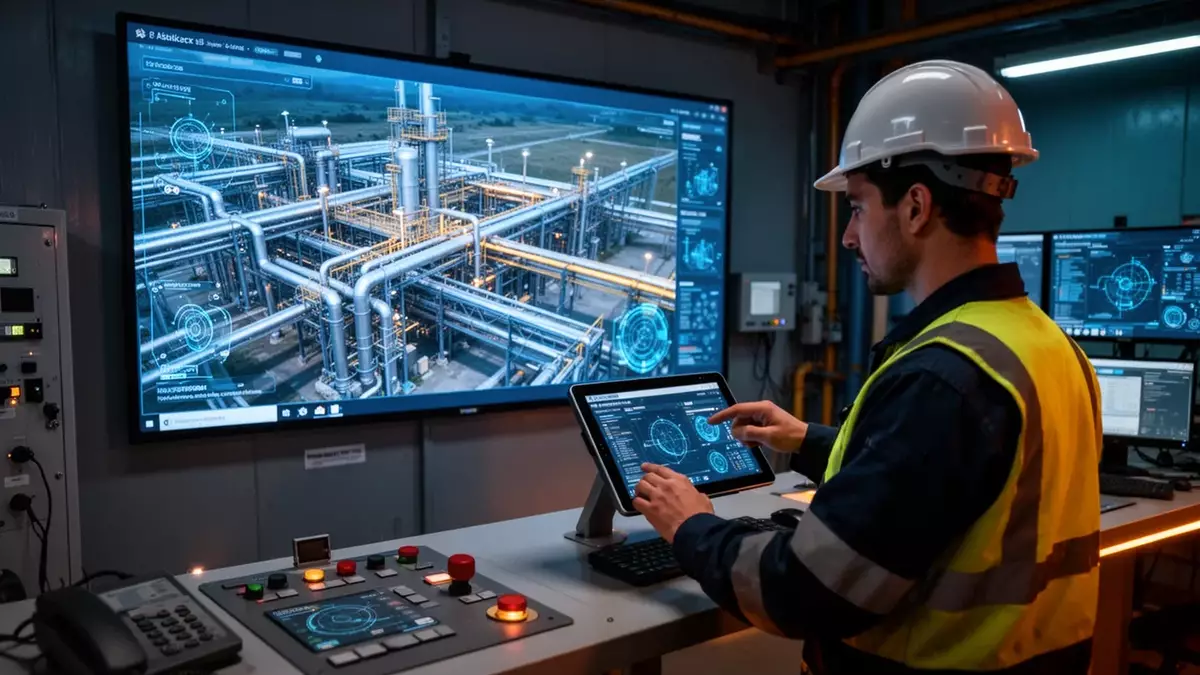
At the Cesium Developer Conference on July 26, Bentley Systems unveiled new capabilities for its iTwin platform, including AI agents and Mobile Content Platform (MCP) technology that let engineers interact with software using natural language. The company's iTwin Engage and iTwin Capture platforms provide immersive visualisation and automated monitoring of infrastructure assets throughout their lifecycle.
The transport sector is seeing similar digital shifts. On July 25, Southern Railway in India launched three in-house mobile applications — e-TSR, RBMS, and DOST — to digitise safety-critical routines and rail block management. General Manager R N Singh said the apps are designed to reduce manual errors and deliver real-time safety alerts to field staff.
In China, a 6 GW photovoltaic base in Ningxia, completed in February 2026, is using smart drones equipped with 5G and BeiDou navigation. The unmanned systems fly at 35 metres to detect 12 fault types, including microcracks and diode failures. With eight daily flights, the drones can replace roughly half a month of human labour at a facility generating 10.8 billion kWh annually.
Speaking of safety-critical routines — every UK employer has a legal duty to assess risks and keep their people safe, but many find the paperwork overwhelming. A free Health & Safety Toolkit gives you ready-to-use risk assessments, checklists, and toolbox talks that align with the Health & Safety at Work Act 1974. Download the free Health & Safety Toolkit
Tougher Standards for Energy Storage and Industrial Components
Regulators in Europe and the United States introduced new requirements for liquid-cooled Battery Energy Storage Systems (BESS) on July 24. A European Union draft proposal, COM/2026/412, would mandate certified real-time thermal runaway monitoring and digital twin interfaces for all imported liquid-cooled BESS containers from October 2026. The regulation is expected to increase bill-of-materials costs by approximately 7.3%.
On the same day, the U.S. Department of Energy launched a pilot programme requiring verification of thermal runaway and vibration coupling tests under UL 1973-2026 Version 4.2. These tests must be performed at recognised laboratories before the fourth quarter of 2026 for imported units.
Other regulatory developments include:
- Water Treatment: An EPA rule effective July 24 requires imported Mechanical Vapor Recompression (MVR) evaporators to feature native SCADA and digital twin interfaces, verified under IEC 62443-4-2 Level 2.
- Safety Glazing: The publication of ANSI Z97.1-2026 on July 25 marked the first major update to safety glazing standards since 2015, introducing specific qualifications for vacuum insulating glass (VIG).
- Fleet Maintenance: The Technology & Maintenance Council updated its lockout/tagout guidance on July 25 to address hazards specific to electric, hybrid, and automated vehicles in Classes 2 through 8.
Cybersecurity Threats and Legal Action
Federal agencies including CISA, the FBI, and the NSA updated a major advisory on July 22 regarding Iranian-affiliated actors targeting industrial control systems. The advisory warned that attackers are exploiting internet-exposed programmable logic controllers (PLCs) from manufacturers such as Rockwell, Schneider, and Siemens. The actors reportedly use legitimate engineering software to modify process logic and remove safety limits. Activity has been observed since March 2026 and has caused operational disruptions in the water and energy sectors.
In India, the Chhattisgarh High Court expressed concern on July 25 over a series of electrocution deaths linked to unsafe wiring and illegal fencing. The court directed the state and local power company CSPDCL to submit a status report by August 18, following the formation of a high-level committee earlier in July to establish new standard operating procedures for electrical safety.
When safety failures lead to serious incidents, the consequences can be severe. The Health & Safety at Work Act 1974 Toolkit helps UK employers stay compliant with nine ready-to-use tools, including risk assessments, checklists, and a director's liability guide. Download the free Health & Safety at Work Act 1974 Toolkit
Infrastructure Maintenance Under Pressure
While high-tech solutions such as the Ufbridge platform claim potential reductions of 20% in traffic congestion and 30% in maintenance costs, some regions face funding shortfalls. In Jersey, Infrastructure Minister Andy Jehan stated that the local road network is in a state of managed decline. Although preservation targets suggest major works every 20 years, current funding levels only allow for interventions every 30 years, leaving the island reliant on micro asphalt treatments to extend road life.
Disclaimer regarding our articles: No investment advice, no buy or sell recommendation. Information on prices, companies, and markets is provided without guarantee; changes are possible at any time. Stock market transactions can lead to substantial losses. Our articles are created and reviewed in whole or in part automatically with the support of AI.