Gold Consolidates at $4,570: PCE Data Meets Expectations as Market Awaits June Payrolls
Published on 05/31/2026 at 12:41 | Redaktion boerse-global.de
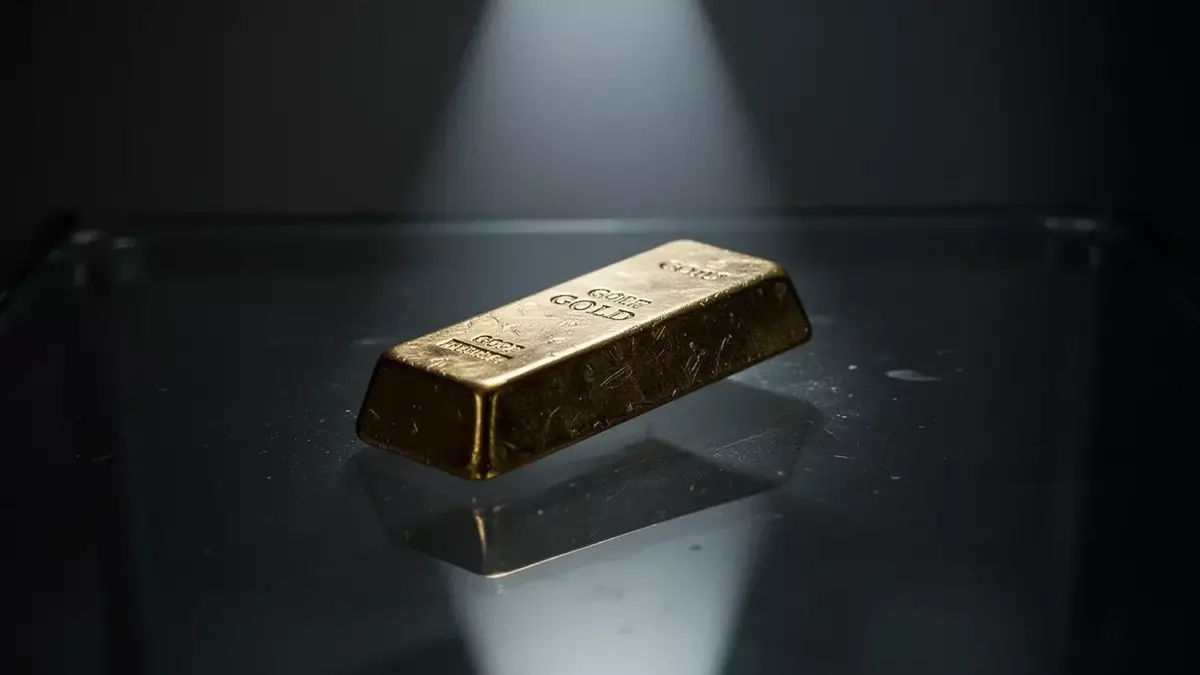
Gold eased into the weekend on a steady footing, closing Friday at $4,569.90 with a 1.57% gain — a move that came as US inflation data offered no nasty surprises. The core PCE price index, the Federal Reserve’s preferred gauge, rose 3.8% year-on-year, landing exactly where analysts had pencilled it in. That removed a layer of uncertainty that had kept the metal under pressure in recent weeks, and ten-year Treasury yields edged lower in response, reducing the opportunity cost of holding a non-yielding asset.
Technically, the picture remains one of consolidation. Gold has traded between $4,500 and $4,800 for months without managing a sustained breakout. Friday’s close left it just shy of the 50-day moving average at $4,639, which now serves as immediate resistance. The relative strength index sits at 49.8, reflecting a balanced tug of war between buyers and sellers. Below, the $4,400 level has held firmly in recent tests, and a break below that would open the door to the long-term trend support near $4,200. On the upside, resistance clusters at $4,580 and $4,650, with the next major bullish trigger at $5,000.
Behind the day-to-day price action, the macro winds are shifting. The prospect of an extended 60-day ceasefire between the US and Iran has stripped risk premiums out of energy markets, with Brent and WTI suffering double-digit monthly losses. Lower oil prices feed into lower inflation expectations, which in turn takes some sting out of the hawkish Fed narrative. That is a net positive for gold, even if the metal remains well below its January all-time high of $5,598. The pullback from that peak amounts to roughly 18%, but major investment banks see further upside ahead. JP Morgan has raised its year-end 2026 target to $6,300 an ounce, while Goldman Sachs is eyeing $5,400, both citing expected Fed rate cuts in the second half of the year and sustained central bank buying — particularly from China and other emerging economies.
Should investors sell immediately? Or is it worth buying Gold?
Yet the path to those targets is anything but straight. The appointment of a new Fed chair with a perceived restrictive tilt had earlier strengthened the dollar and weighed on gold, though the greenback has since stabilised alongside bond yields near 4.6%. Fed Governor Lisa Cook has signalled support for holding rates steady for now while leaving the door open to hikes if inflation picks up; her colleague John Williams has warned that consumer prices could briefly climb to 4%. That keeps gold’s appeal as a hedge intact, but also caps near-term upside.
The next major test comes on Friday, 5 June, when the US releases the May non-farm payrolls report. A softer jobs print would fuel rate-cut speculation and likely push gold towards the $5,000 milestone. A robust reading, by contrast, would reinforce the wait-and-see stance of the Fed and keep gold range-bound. With the metal still trading 16% below its January high of $5,450, there is ample room for a rally — but only if the data cooperate.
Ad
Gold Stock: New Analysis - 31 May
Fresh Gold information released. What's the impact for investors? Our latest independent report examines recent figures and market trends.
Disclaimer regarding our articles: No investment advice, no buy or sell recommendation. Information on prices, companies, and markets is provided without guarantee; changes are possible at any time. Stock market transactions can lead to substantial losses. Our articles are created and reviewed in whole or in part automatically with the support of AI.