Gold Holds Above $4,350 as Bank Forecasts Swing from $4,500 to $6,300 Amid Historic Demand Shift
Published on 06/17/2026 at 16:35 | Redaktion boerse-global.de
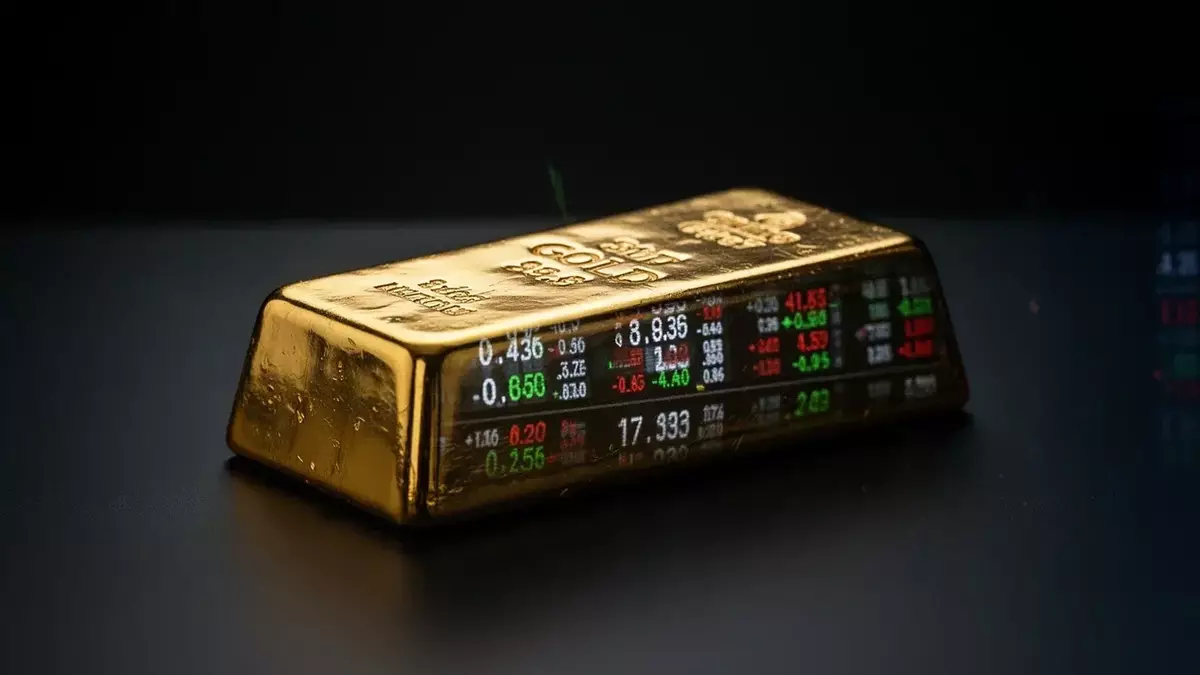
Gold is trading near $4,356 an ounce, extending a five-day winning streak that has lifted the metal by 6.5% in the space of a week. The rally pulls together three unusually powerful forces: a tentative US–Iran ceasefire, the first Federal Reserve policy meeting under new Chair Kevin Warsh, and a structural surge in central bank gold buying that is reshaping the market's demand profile.
The breakthrough came from diplomatic talks in Switzerland, where the US and Iran agreed to a 60-day ceasefire and pledged to reopen the Strait of Hormuz — a waterway that carries roughly 20% of the world's seaborne oil. President Trump signalled the strait could be fully navigable by Friday. Brent crude reacted by sliding below $80 a barrel, dragging the dollar to a 10-day low and stripping out a key energy-inflation premium that had weighed on gold since February. The dollar’s retreat has provided an immediate tailwind for the yellow metal, which remains about 22% below its January record of $5,627 an ounce.
Attention now shifts to the Fed’s first rate decision under Chair Warsh, which concludes its two-day meeting later today. No change in the target range of 3.50% to 3.75% is expected, but the updated dot plot — the central bank’s quarterly rate projections — will be scrutinised closely. The probability of a December rate hike has fallen from roughly 70% a week ago to 57–58%, according to the CME FedWatch Tool, as declining energy costs ease inflation concerns. For gold, which offers no yield, a slower pace of tightening translates into less competition from interest-bearing assets.
Should investors sell immediately? Or is it worth buying Gold?
The bullish case is not just about short-term catalysts. The World Gold Council’s latest survey of reserve managers, conducted between February and May, found that 45% plan to increase their gold holdings over the next twelve months — the highest reading since the survey began in 2018. A further 89% expect global central bank reserves to keep rising. That intent is already being realised: net central bank purchases hit 244 tonnes in the first quarter of 2026, according to data cited by Barclays, providing a steady floor under prices.
A structural shift in the composition of demand is also unfolding. Metals Focus projects that investment demand for gold bars and coins could overtake jewellery demand for the first time — a historic rebalancing that would mark a permanent change in the market’s centre of gravity. Alongside robust buying from China and India, that shift is reinforcing the argument that supply growth remains too constrained to meet the new demand profile.
Yet the outlook is far from unanimous. Forecasts from major banks span an unusually wide range, reflecting deep disagreement over how to weigh de-dollarisation, central bank hoarding, and geopolitical risk. Citibank recently raised its near-term target by $500 to $4,500 an ounce. Barclays sees the metal averaging $4,791 this year and $4,900 in 2027. Goldman Sachs is more bullish, targeting $5,400 by year-end 2026. At the top end, J.P. Morgan calls for $6,000 to $6,300 by the close of 2026 — a level that would require a further 44% advance from current prices.
Technically, gold has reclaimed key levels after dipping toward $4,000 in early March. The immediate resistance sits at around $4,381, just above yesterday’s close of $4,361.50. The next major catalyst arrives this afternoon with the release of the Fed’s dot plot and Chair Warsh’s first press conference. How the market reads that signal will determine whether the five-day rally gathers steam or fades into another period of consolidation.
Ad
Gold Stock: New Analysis - 17 June
Fresh Gold information released. What's the impact for investors? Our latest independent report examines recent figures and market trends.
Disclaimer regarding our articles: No investment advice, no buy or sell recommendation. Information on prices, companies, and markets is provided without guarantee; changes are possible at any time. Stock market transactions can lead to substantial losses. Our articles are created and reviewed in whole or in part automatically with the support of AI.