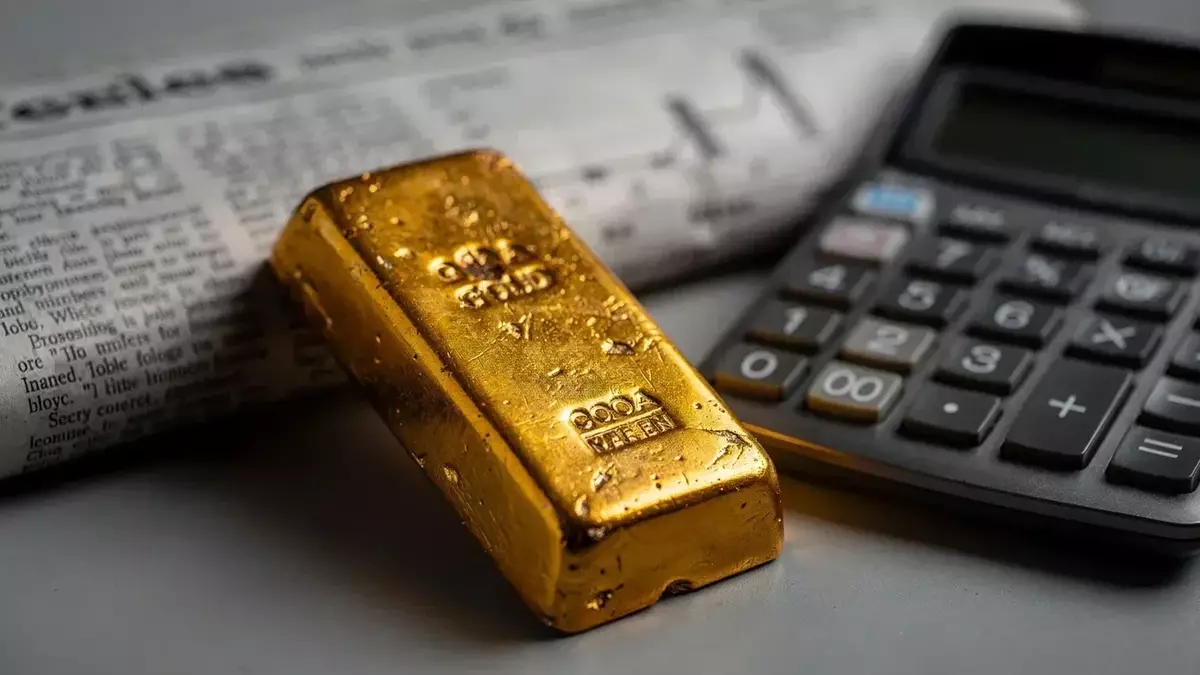
Gold’s $14.4 Billion Exodus and a Hawkish Fed Eclipse Middle East Flashpoints
Published on 07/20/2026 at 17:31 | Redaktion boerse-global.de
Gold has spent the past weeks oscillating around the $4,000 mark in a manner that defies conventional safe-haven logic. On Monday the precious metal changed hands at $4,007 per troy ounce, barely clinging to the four-figure threshold after repeatedly slipping below it in recent weeks. Over the past month the decline stands at nearly 4%, a move that has left market participants scratching their heads as military tensions between the US and Iran escalate and oil prices surge.
Normally, geopolitical fireworks would ignite a flight into bullion. This time, however, the same oil rally that should be gold’s tailwind has become its anchor. Crude’s advance fans inflation fears, which in turn cement expectations that central banks will keep interest rates elevated for longer. Gold pays no coupon or dividend, so higher real yields on government bonds act as a powerful gravitational pull away from the metal. Analysts have dubbed this dynamic the “safe-haven disconnect”: the very factor that ought to lift gold — rising geopolitical risk — actually suppresses it via the inflation channel.
The dollar remains the other giant foot on the brake. A robust greenback, buttressed by hawkish signals from the Federal Reserve, continues to cap gold’s upside. Cleveland Fed President Beth Hammack warned last Friday about persistent inflation, joining a growing chorus of officials urging caution before any policy pivot. Bond markets are listening: the implied probability of a Fed rate hike in September jumped from 47% to 53% in a single trading session, a sea change that directly raises the opportunity cost of holding gold.
Should investors sell immediately? Or is it worth buying Gold?
This backdrop pushed HSBC to slash its price forecast on July 9. The bank trimmed its average outlook for 2026 from $4,864 to $4,560, citing a more restrictive Fed stance and a stronger dollar. HSBC left its year-end 2025 target unchanged at $4,750, however, and sees the remainder of the year playing out within a $3,800 to $4,700 range. Longer-term supports remain intact, the bank notes: persistent worries over US fiscal deficits, high sovereign debt levels, and economic uncertainty all predate the latest Middle East flare-up and should keep a floor under prices.
The technical picture reinforces the bearish near-term tone. Gold is trading roughly 6.6% below its 50-day moving average, and the Relative Strength Index stands at 39.7 — territory that signals weak momentum rather than panic. Cash metal closed at $4,021.30 on Friday, a modest 1% gain on the day, but that still leaves it just 3.08% above its 52-week low.
Meanwhile, the ETF market tells a story of heavy institutional selling punctuated by a flicker of buying. Between March and July, the SPDR Gold Shares (GLD) bled a cumulative $14.4 billion, shrinking its net assets to just under $128.6 billion. March alone accounted for a record $8.5 billion outflow, followed by $1.7 billion in April, $0.87 billion in May, and another $3.2 billion in June. Yet last week the fund logged a $446.8 million inflow, and the number of outstanding shares ticked up — a sign that some institutional investors are using the price dip to build positions.
That isolated pickup has not reversed the broader downtrend, but it hints at divergent views among large players. For now, gold remains trapped between two opposing forces: the gravitational pull of higher real rates and strong dollar versus underlying fiscal anxieties and a still-volatile geopolitical landscape in the Middle East. The direction this week may hinge on Thursday’s European Central Bank rate decision and the release of flash purchasing managers’ indices from major economies. If oil continues to climb and choke the Strait of Hormuz, the inflation-fear loop will likely keep gold pinned near $4,000. If data softens and the Fed’s hawkish rhetoric moderates, the metal could finally catch a bid.
Ad
Gold Stock: New Analysis - 20 July
Fresh Gold information released. What's the impact for investors? Our latest independent report examines recent figures and market trends.
Disclaimer regarding our articles: No investment advice, no buy or sell recommendation. Information on prices, companies, and markets is provided without guarantee; changes are possible at any time. Stock market transactions can lead to substantial losses. Our articles are created and reviewed in whole or in part automatically with the support of AI.