Gold’s $4,000 Balancing Act: Central Bank Frenzy Meets Hawkish Fed
Published on 07/19/2026 at 22:31 | Redaktion boerse-global.de
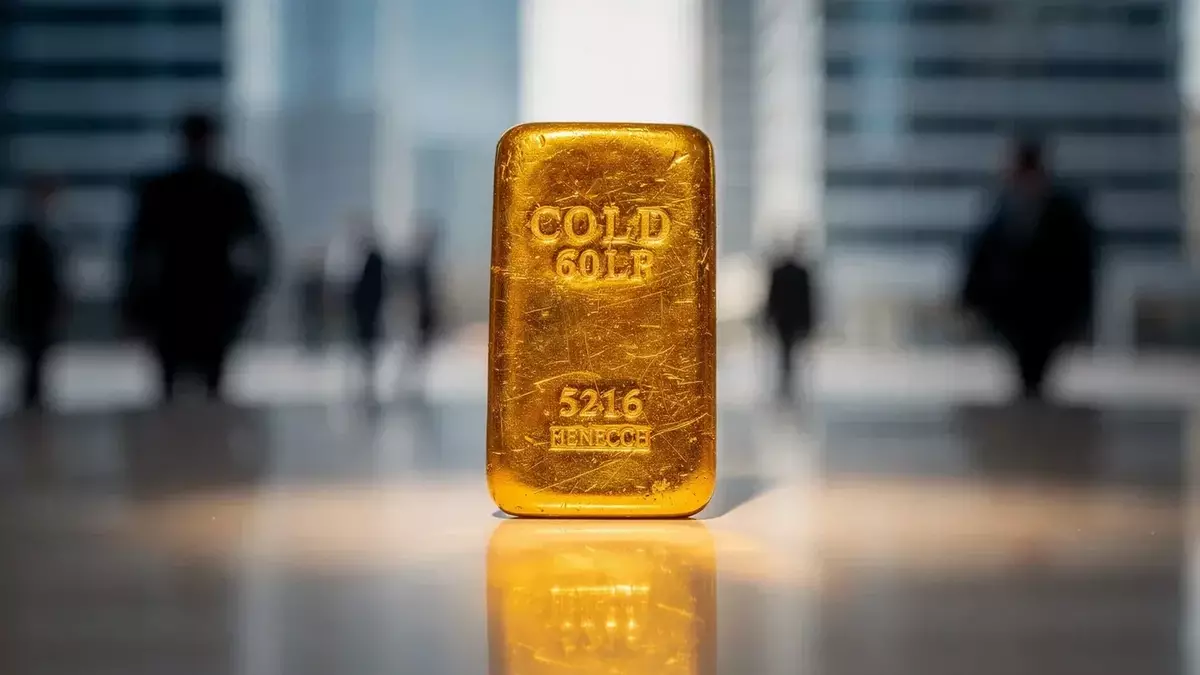
Gold is trapped in a peculiar tug-of-war. While the People’s Bank of China and other official institutions are accumulating the metal at a historic clip, the yellow metal continues to struggle under the weight of a hawkish Federal Reserve and a strengthening dollar. The result is a market that rallied 1.03 percent on Friday to $4,021.30 an ounce but remains 5.98 percent in the red for the month and 7.19 percent lower on the year.
The weekly close at $4,016 represented a roughly 2.5 percent decline from the prior week, although the session did mark a recovery from a trough of $3,959. That level — just above the $3,960 zone where buyers stepped in during the sell-off — has become a critical near-term floor. Technical indicators, however, suggest the metal is not yet out of the woods: the Relative Strength Index sits at 40.6, a reading that points to lingering weakness without confirming an oversold condition. Gold remains 6.57 percent below its 50-day moving average of $4,304.16, and the 52-week high of $5,626.80 set in late January is now 28.53 percent away.
The immediate catalyst for the recent slide has been a double dose of headwinds. Military escalation between the U.S. and Iran, including renewed Iranian attacks on American facilities and intensified pressure on the Strait of Hormuz, has driven oil prices more than 14 percent higher in a week to a 19-week peak. That geopolitical risk premium has historically been a boon for gold, but this time it is being overshadowed by the dollar’s rally and rising real yields. Meanwhile, Federal Reserve officials have turned increasingly hawkish. Dallas Fed President Lorie Logan publicly called for another rate increase, and Vice Chair Philip Jefferson signaled he would back tighter policy if inflation does not improve in the near term. The fed funds futures market now prices in roughly a 50 percent probability of a rate hike at the September meeting.
The next major test arrives on July 28–29, when the Federal Open Market Committee convenes. While no updated economic projections are scheduled, the meeting will be closely watched for any shift in tone under new Chair Kevin Warsh. The dot plot from the previous gathering already surprised markets by penciling in a potential rate increase instead of a cut, marking a dramatic reversal from the easing expectations that prevailed earlier in the year. The rate decision and press conference, scheduled for 8:00 p.m. MESZ on July 29, are likely to set the tone for gold through the summer.
Should investors sell immediately? Or is it worth buying Gold?
Wall Street sentiment has turned decisively bearish in the run-up to the FOMC meeting. A Kitco survey found 79 percent of analysts expecting further declines in the coming week, with only 7 percent betting on a rebound. The gloom is reflected in specific price targets: broker FxPro sees gold falling to around $3,300 by September, while the CPM Group has issued a sell recommendation with a target of $3,820. Economists like Alasdair Macleod described the retreat from the metal’s record high near $5,500 as unusual, though he maintained that the long-term bull market is not over.
Not everyone is ready to capitulate. Paul Wong of Sprott views the market as oversold and believes a bottom could form if a catalyst emerges. Adrian Day expects sideways action until the Fed provides clearer guidance, and Chris Gaffney identifies the $4,000 mark as a crucial psychological line. Among major investment banks, forecasts remain a mixed bag: Goldman Sachs targets $4,900 by year-end, Commerzbank $4,800, Bank of America $4,360, and Saxo Bank sees a wide range of $3,950–$4,200. Morgan Stanley trimmed its second-half forecast to $5,200, while UBS is even more bullish at $5,200 within 12 months, citing sustained central bank demand.
That demand is indeed real. The PBOC expanded its gold reserves for the 20th consecutive month, adding 480,000 ounces to reach 75.44 million ounces by the end of June. The buildup reflects a broader trend: central banks worldwide purchased an estimated 244 tonnes of gold in the first quarter of 2026, exceeding both the previous quarter and the five-year average. Gold has now overtaken U.S. Treasuries as the single largest component of global official reserve assets, accounting for 27 percent of the total at the end of 2025 versus 22 percent for Treasuries. The World Gold Council’s proprietary valuation model currently pegs fair value near $4,100, with a margin of about 5 percent, assuming a rate hike by October.
Gold at a turning point? This analysis reveals what investors need to know now.
Yet the structural accumulation from official institutions is being partially offset by weak private-sector appetite. Chinese gold ETFs have suffered net outflows, and jewelry demand in the country slumped by more than a third in the first quarter. That divergence underscores the challenge gold faces in building a sustainable rally.
Looking ahead, the European Central Bank’s rate decision on Thursday will add another layer of complexity, particularly after eurozone inflation was confirmed at 2.8 percent in June. Combined with upcoming U.S. economic data, the EZB meeting could either reinforce or erode the dollar’s strength, with direct consequences for gold. For now, the metal remains suspended between two powerful forces: a central-bank buying spree that provides a long-term floor and a hawkish Fed that keeps the short-term ceiling firmly in place. Friday’s recovery above $4,000 suggests buyers are willing to defend that level, but whether they can hold it through the FOMC meeting remains the open question.
Ad
Gold Stock: New Analysis - 19 July
Fresh Gold information released. What's the impact for investors? Our latest independent report examines recent figures and market trends.
Disclaimer regarding our articles: No investment advice, no buy or sell recommendation. Information on prices, companies, and markets is provided without guarantee; changes are possible at any time. Stock market transactions can lead to substantial losses. Our articles are created and reviewed in whole or in part automatically with the support of AI.