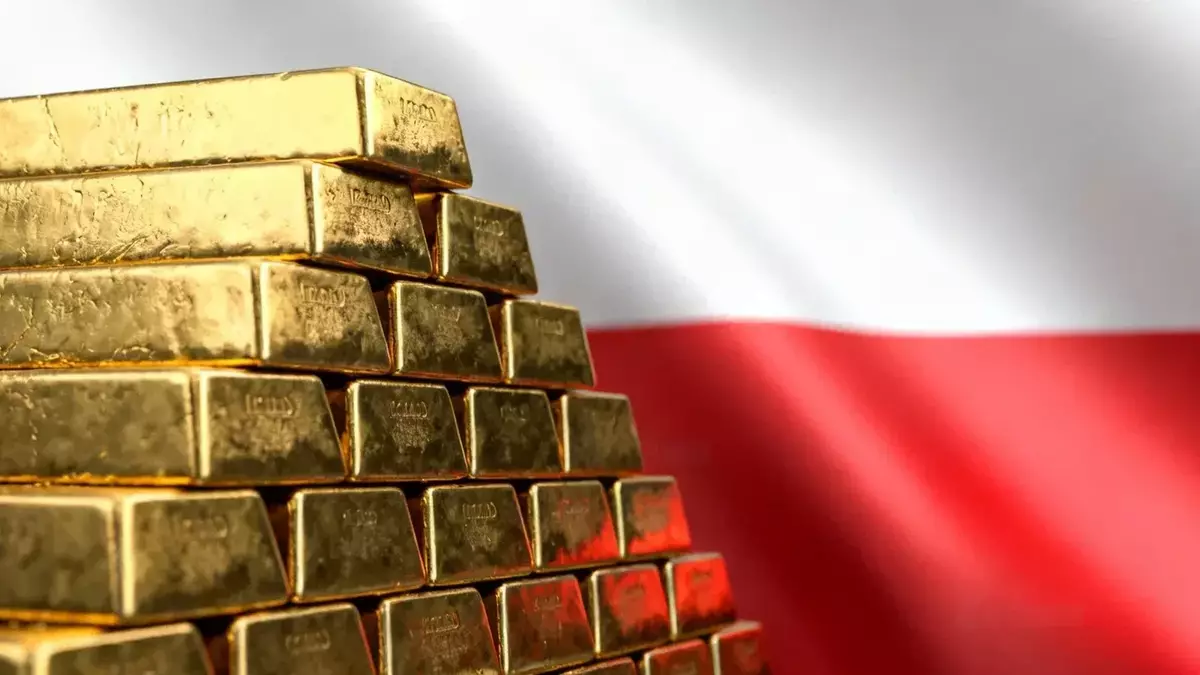
Gold's $4,000 Gridlock: A $14.4 Billion ETF Exodus Meets a 20-Month Central Bank Buying Streak
Published on 07/20/2026 at 16:04 | Redaktion boerse-global.de
Gold is locked in a tug-of-war between two powerful but opposing forces. On one side, institutional investors have been stampeding out of the SPDR Gold Shares (GLD) exchange-traded fund to the tune of $14.4 billion between March and July, driving net assets down to roughly $128.61 billion. On the other, the People’s Bank of China extended its unbroken buying spree to 20 consecutive months in June, adding a further 14.93 tonnes to its vaults and lifting total official reserves to 2,346 tonnes. The result: a precious metal that cannot break decisively above or below the psychologically charged $4,000-an-ounce level.
At last check, spot gold traded at $4,012.80, marking a 0.21% decline on the day and leaving it just 2.86% above its 52-week low of $3,901.30, set on 28 October 2025. The metal has been hovering around that mark for four weeks, unable to muster a sustainable rally. Technical indicators offer little comfort: the current relative strength index of 40.1 points to a market that is neither oversold nor overbought — just deeply uncertain.
Oil Shock and a Hawkish Fed Tighten the Vise
The most acute near-term headwind comes from the oil market. Brent crude surged past $90 a barrel on 20 July after the United States launched a ninth wave of airstrikes against Iranian targets, according to the Handelsblatt. President Donald Trump vowed to hit Iran “very hard” in retaliation for lost American soldiers, while Tehran responded by striking Kuwaiti infrastructure and triggering explosions aboard two oil tankers in the Strait of Hormuz. The Pentagon has since deployed additional F-16 and F-35 jets to the region, and the toll of U.S. service members since the conflict began has reached 17.
Rising crude prices feed inflation expectations, which in turn fuel bets on higher interest rates — a toxic cocktail for a zero-yielding asset like gold. The yield on 10-year German Bunds climbed to 3.16%, its highest since late May, while German producer prices jumped 1.8% year-on-year in June, led by a 23.7% surge in mineral oil products. Across the Atlantic, Cleveland Federal Reserve President Beth Hammack warned on Friday that inflation remains stubborn, joining a growing chorus of central bankers cautioning against a premature policy pivot. Markets have responded by pricing in a 53% probability of a Fed rate increase in September, up from 47% just a day earlier. The implied odds of a December move have also risen notably compared with a week ago.
Should investors sell immediately? Or is it worth buying Gold?
Diverging Forecasts and a Glimmer of Institutional Demand
The hawkish shift prompted HSBC to slash its average gold price forecast for 2026 from $4,864 to $4,560 an ounce on 9 July, though the bank left its year-end 2025 target unchanged at $4,750. HSBC now sees a trading range of $3,800 to $4,700 for the rest of the year. By contrast, Goldman Sachs holds firm at a $4,900 target for end-2026, while JPMorgan calls for an average of $4,300 in the third quarter and $4,500 in the fourth, both citing sustained central bank buying and geopolitical risk premiums as structural supports.
Yet even within the ETF exodus, there are flickers of renewed appetite. After bleeding $8.5 billion in March — the largest monthly outflow in the fund’s history — followed by $1.7 billion in April, $0.872 billion in May, and $3.2 billion in June, GLD recorded a weekly inflow of $446.8 million and a rise in outstanding shares. That is a far cry from reversing the broader trend, but it suggests that some institutional investors see the current price weakness as an opportunity to rebuild exposure.
A Market Waiting for a Catalyst
Short-term analysts remain split. Bears warn that if gold breaks the critical support zone between $3,886 and $3,940, a slide toward $3,500 cannot be ruled out. Bulls counter that the relentless central bank buying — which has helped push gold’s share of global official reserve assets to 27% from 20%, according to the European Central Bank, while the share of U.S. Treasuries has slipped from 25% to 22% — combined with the unresolved Middle East crisis, should put a floor under prices.
Gold at a turning point? This analysis reveals what investors need to know now.
For now, the metal is stuck in purgatory. The direction over the coming weeks hinges on the next batch of U.S. economic data and whether tensions along the Strait of Hormuz escalate further. More airstrikes and a continued oil-price bid would reinforce inflation fears and the rate-hike narrative, piling more pressure on gold. A de-escalation paired with softer U.S. figures, however, could erode the case for a September move and give the bull camp the upper hand. The market has positioned itself for a move; it just does not yet know which way.
Ad
Gold Stock: New Analysis - 20 July
Fresh Gold information released. What's the impact for investors? Our latest independent report examines recent figures and market trends.
Disclaimer regarding our articles: No investment advice, no buy or sell recommendation. Information on prices, companies, and markets is provided without guarantee; changes are possible at any time. Stock market transactions can lead to substantial losses. Our articles are created and reviewed in whole or in part automatically with the support of AI.