Gold’s $4,055 Crossroads: When $100 Oil Becomes a Headwind Instead of a Tailwind
Published on 07/26/2026 at 04:11 | Redaktion boerse-global.de
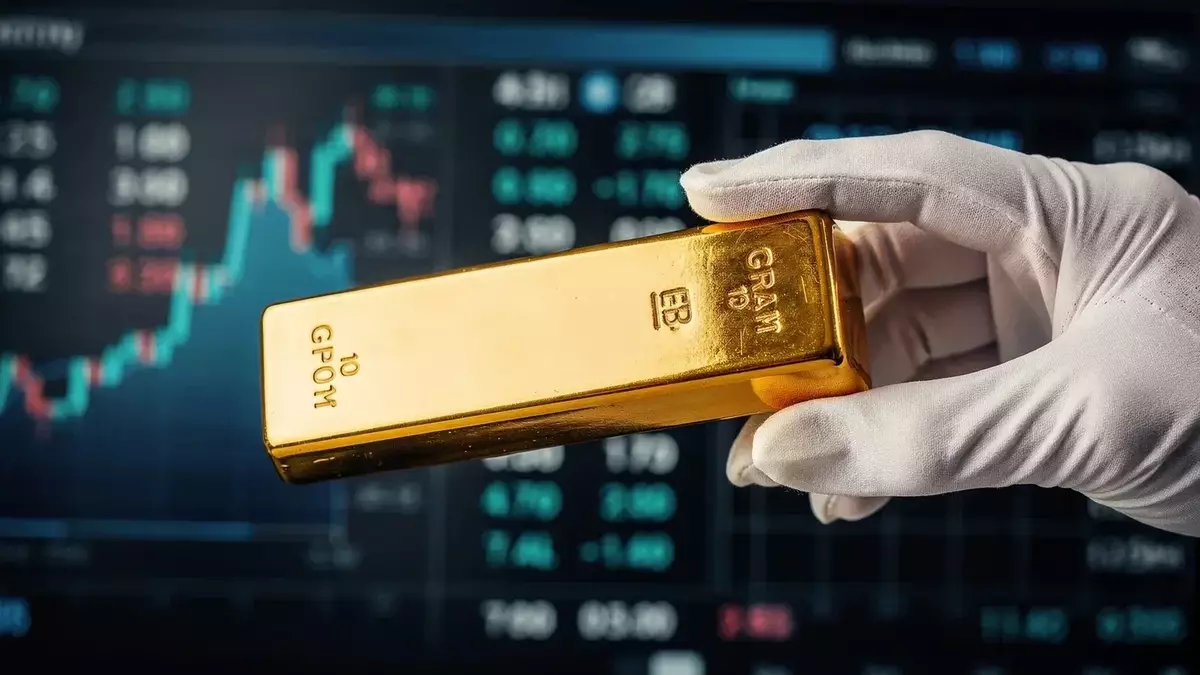
Gold is navigating one of its most paradoxical moments in recent memory. The precious metal closed Friday at $4,055.70 per ounce, eking out a modest 0.08% gain on the day, but the broader picture tells a more complicated story. Since hitting a 52-week high of $5,626.80 on January 29, bullion has shed 27.92% of its value — a correction of more than $1,500 that has left investors questioning whether the long-term uptrend is intact or merely taking a well-deserved breather.
The year-to-date performance is equally sobering: gold sits 6.40% in the red, a stark reversal from the euphoric rally that marked the start of 2025. Yet despite the steep decline, the metal has so far held above the psychologically critical $4,000 threshold, a level that market participants are watching closely as a potential line in the sand.
The Oil Paradox That’s Confounding Traders
What makes the current sell-off particularly unusual is its timing. Escalating tensions in the Middle East would normally provide powerful tailwinds for gold as a safe-haven asset. The United States has reportedly struck targets inside Iran after Tehran declared a previously agreed ceasefire void, while Houthi rebels continue to threaten shipping lanes in the Bab al-Mandab strait. Brent crude has responded by climbing above $100 per barrel for the first time since May.
But here’s the twist: higher oil prices are actually weighing on gold. The mechanism runs through inflation expectations. Surging energy costs fan fears that the Federal Reserve will keep monetary policy tight for longer, and a higher-for-longer rate environment is anathema to a non-yielding asset like bullion. Markets are now pricing in a 34% probability of a rate hike at the upcoming Fed meeting, with September odds climbing above 81%. The dollar, strengthened by these expectations, adds another layer of pressure.
Should investors sell immediately? Or is it worth buying Gold?
President Donald Trump’s warning that Tehran will be held responsible for future Houthi attacks on commercial vessels in the Red Sea has only deepened the uncertainty. New US tariffs of 10% to 12.5% on imports from key trading partners are further muddying the outlook, keeping risk appetite in check across asset classes.
Central Banks Keep Buying, But It’s Not Enough
The structural case for gold remains intact, according to Brad Dunkley of Waratah Capital, who views the current decline as a correction within a still-viable uptrend. Central banks continue to provide a powerful floor under prices: they purchased approximately 244 tonnes of gold in the first quarter of 2026 alone, a volume that underpins physical demand even as spot prices retreat.
The analyst community remains deeply divided on where gold heads next. Goldman Sachs sees potential for a rally to $5,400, while Morgan Stanley targets $5,200. At the more conservative end, Deutsche Bank and ING peg their expectations around $4,300. The wide dispersion reflects how differently market participants weigh the interplay of geopolitical risk, monetary policy, and central bank buying.
Several major institutions have actually trimmed their year-end 2026 forecasts. Goldman Sachs, HSBC, J.P. Morgan, and StoneX have all lowered their projections, with the new range spanning $4,000 to $4,900. The common thread: expectations that the Fed will deliver few, if any, rate cuts in 2026.
Physical Markets Show Cracks
The correction is reverberating through physical gold markets. In Vietnam, SJC gold bars dropped by 7 million dong per ounce on the buying side and 6 million dong on the selling side within a single week, after months of tracking global prices higher. Local dealers are now quoting SJC bars between 137.5 million and 141.5 million dong per ounce — a decline that underscores the anxiety following the sharp retreat from record highs.
Asian demand presents a mixed picture. India, traditionally a major buyer, has seen discounts widen to a seven-week high as elevated prices curb appetite. China, by contrast, is showing signs of renewed interest, with buying activity picking up noticeably.
Technicals Offer Little Comfort
The chart picture remains bruised. The Relative Strength Index sits at 44.7, a neutral reading that signals neither oversold nor overbought conditions. More tellingly, gold is trading below all of its major moving averages — the 50-day, 100-day, and 200-day — suggesting that consolidation is likely to persist without a clear directional bias.
Gold at a turning point? This analysis reveals what investors need to know now.
The zone between $3,900 and $4,100 has emerged as the key battleground. As long as gold can defend that support band, the broader constructive narrative remains intact. A break below $4,000, however, would likely accelerate selling pressure and test the patience of even the most committed bulls.
The Week Ahead: Fed, Data, and Geopolitics
All eyes now turn to a pivotal week. The Fed’s rate decision on July 29 will be the marquee event, preceded by the ADP employment report on July 28. The following days bring US GDP data for the second quarter, weekly jobless claims, the Chicago PMI, and the University of Michigan inflation expectations survey.
The European Central Bank held rates steady on Thursday but left the door open for a September move, adding another layer of complexity to the global rate outlook. For gold, the calculus is straightforward: a hawkish Fed would boost the dollar and pressure bullion further, while any dovish surprise could reignite the safe-haven bid that has been conspicuously absent during the current geopolitical turmoil.
For now, gold is caught between competing forces — central bank buying and geopolitical risk on one side, rising oil prices and hawkish monetary policy on the other. The next few days will likely determine whether $4,000 holds as a floor or becomes a ceiling.
Ad
Gold Stock: New Analysis - 26 July
Fresh Gold information released. What's the impact for investors? Our latest independent report examines recent figures and market trends.
Disclaimer regarding our articles: No investment advice, no buy or sell recommendation. Information on prices, companies, and markets is provided without guarantee; changes are possible at any time. Stock market transactions can lead to substantial losses. Our articles are created and reviewed in whole or in part automatically with the support of AI.