Gold’s Conflicting Signals: Ceasefire Hopes and Rate Jitters Battle for Control
Published on 07/22/2026 at 18:03 | Redaktion boerse-global.de
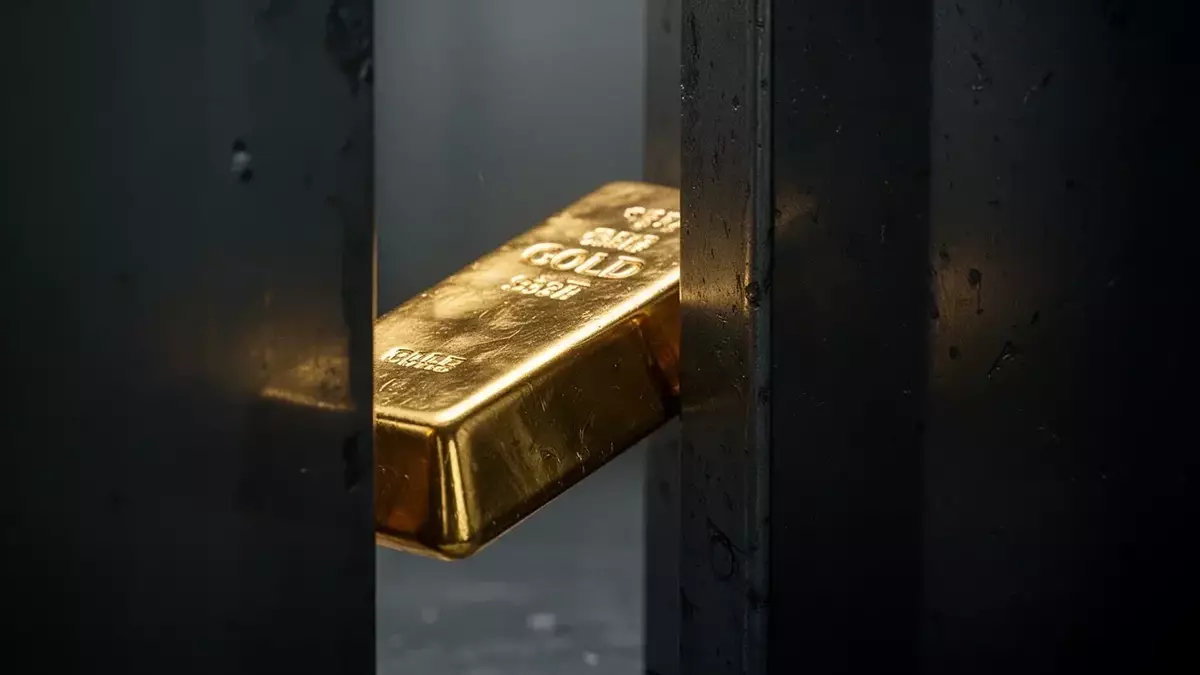
Gold is caught in a tug-of-war between geopolitical crosscurrents and monetary policy expectations, with the precious metal trading near $4,150 as investors weigh conflicting signals from the Middle East and the Federal Reserve.
The yellow metal climbed to $4,152.90 an ounce on Wednesday, a 1.74% gain from the previous session, as US military strikes against Iran entered their eleventh consecutive night. President Trump warned of further attacks and threatened retaliation if Iran-aligned Houthi rebels continue disrupting shipping in the Red Sea, while Secretary of State Marco Rubio left the door open for a potential agreement with Tehran — albeit with skepticism about acceptable terms.
Yet the rally tells only part of the story. Gold remains roughly 26% below its 52-week high of $5,626.80 reached in January, and the 200-day moving average of $4,541.65 sits about 8.6% above current levels. The metal’s inability to reclaim those heights reflects a powerful counterforce: rising interest rate expectations.
Rate Expectations Cast a Shadow
All eyes are on the Federal Reserve’s next policy meeting on July 28-29, with the decision due at 2:00 PM ET on the 29th, followed by a press conference 30 minutes later. Markets overwhelmingly expect no change to interest rates at this meeting, but the outlook for September tells a different story.
Should investors sell immediately? Or is it worth buying Gold?
Traders now price in a greater than 55% probability of a rate hike in September, with two quarter-point increases fully anticipated by March 2027. ADP data showing weakening employment growth — an average of just 16,500 jobs per week in the four weeks through July 4, marking the fourth consecutive decline — has done little to shift these expectations.
The bond market reinforces the message. Ten-year US Treasury yields hover above 4.6%, while two-year notes yield over 4.22%, both raising the opportunity cost of holding non-yielding gold.
Oil’s Dual Role
Energy prices add another layer of complexity. Oil has climbed on supply disruptions from the Red Sea and attacks on the Caspian Pipeline Consortium terminal on Russia’s Black Sea coast, alongside Trump’s downplaying of short-term talks with Iran. Higher oil prices fuel inflation concerns, which in turn support the case for higher-for-longer interest rates — a headwind for gold.
But a potential diplomatic breakthrough could change the calculus. On July 20, a senior Iranian official confirmed that mediators had presented a proposal for a ten-day ceasefire, raising hopes for an interim agreement. That news initially pushed oil prices lower, briefly easing inflation fears and providing some relief for gold bulls.
Silver Steals the Spotlight
While gold’s advance remains modest, its sister metals are showing far more dramatic moves. Silver surged 4.1% to $58.72 an ounce, while platinum gained 1.9% to $1,623.63 and palladium rose 2.4% to $1,282.25. The US gold futures contract for August delivery climbed 1.5% to $4,076.40.
Silver’s relative gain was more than six times that of gold, a divergence that analysts attribute to stronger industrial and speculative demand in the smaller precious metals markets. Gold, by contrast, remains more heavily influenced by the rate outlook, which acts as a brake on its upside.
Gold at a turning point? This analysis reveals what investors need to know now.
The relative strength index for gold stands at 45.9 — a neutral reading that captures a market oscillating between geopolitical hedging and interest rate concerns without establishing a clear direction.
A Market in Limbo
The physical gold market remains relatively subdued despite the geopolitical tensions, with investor attention increasingly shifting to the July 29 Fed decision. The interplay between Middle East developments and monetary policy will determine whether gold can close the gap with its outperforming peers or continue to lag.
For now, the metal’s trajectory hinges on two questions: whether the Iran ceasefire talks gain traction and ease oil-driven inflation fears, and whether the Fed signals a more hawkish path when it meets next week. The answers will likely determine whether gold breaks out of its current range or remains stuck between the competing forces of safe-haven demand and rate headwinds.
Ad
Gold Stock: New Analysis - 22 July
Fresh Gold information released. What's the impact for investors? Our latest independent report examines recent figures and market trends.
Disclaimer regarding our articles: No investment advice, no buy or sell recommendation. Information on prices, companies, and markets is provided without guarantee; changes are possible at any time. Stock market transactions can lead to substantial losses. Our articles are created and reviewed in whole or in part automatically with the support of AI.