Gold's Deepening Rout: Fed Hawks Overshadow Central Bank Buying as Prices Plunge 25% from Peak
20.06.2026 - 13:06:56 | boerse-global.de
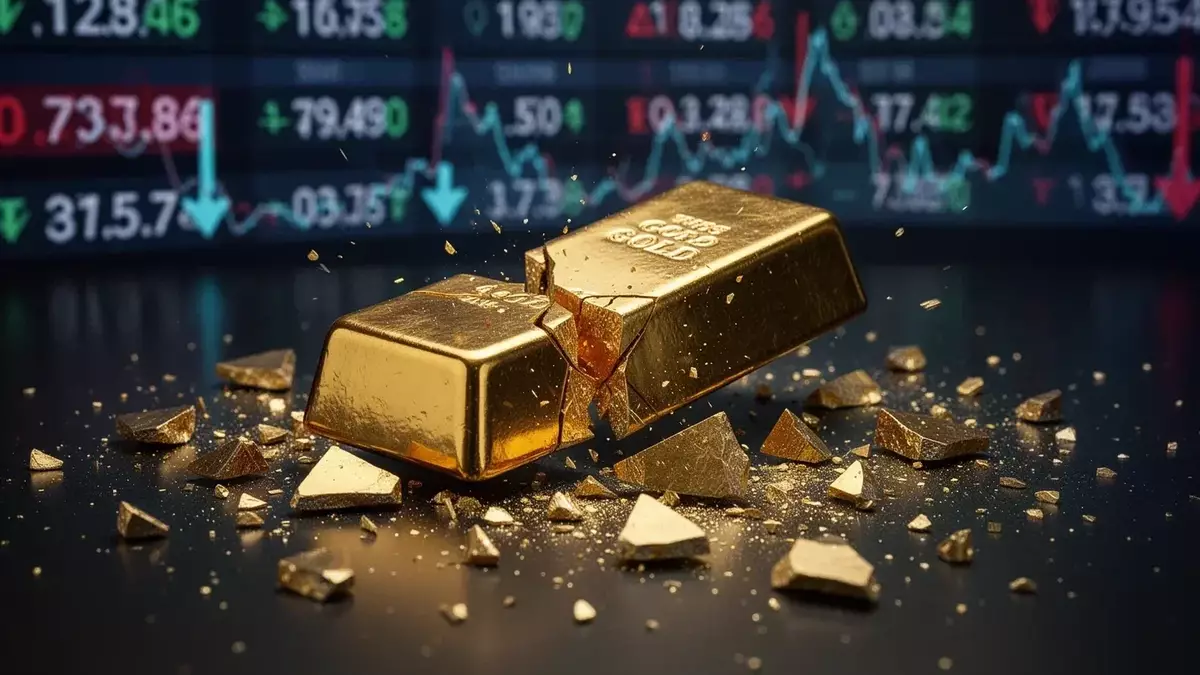
Gold extended its selloff on Friday, closing at $4,172.90 an ounce and sealing a 7.91% monthly loss that leaves the precious metal more than a quarter below its all-time high. The drubbing has been driven by an increasingly hawkish Federal Reserve, with nine of the 19 FOMC members now backing a rate increase in 2026. Markets have priced in roughly a 70% probability of a rate move as early as September.
Paradoxically, the very inflation that usually fuels gold demand is now working against it. US consumer prices climbed to 4.2% in May, pushing real interest rates higher and making the non-yielding asset less attractive. The dollar surged to its highest level since May 2025, compounding pressure on bullion priced in the greenback for overseas buyers.
Central banks have been adding to their reserves at a brisk clip — net purchases of 244 tonnes in the first quarter followed by another 17 tonnes in April, with China leading the charge. Yet this buying has failed to stem the tide. “The macro driver is the Fed, and that overwhelms everything right now,” a market strategist noted.
Should investors sell immediately? Or is it worth buying Gold?
The analyst community is deeply divided on where gold heads next. Goldman Sachs slashed its end-2026 target by $500 to $4,900, warning that if the Fed actually hikes, a drop to $4,400 is possible in the near term. JPMorgan still sees $6,000 by year-end, while Morgan Stanley targets $5,200. UBS remains bullish at $5,500, citing central bank demand. On the bearish side, Citibank trimmed its three-month forecast to $4,000, signalling that the volatility is far from over. The spread between the highest and lowest official targets now stands at $1,500 — a telling measure of market uncertainty.
Technically, gold has broken decisively below its 200-day moving average, a bearish signal that puts the March low near $4,100 in play. Should that give way, the next support lies at the October 2025 trough of $3,887, though a falling wedge pattern in the chart offers a glimmer of hope for the bulls. The relative strength index sits at 35.4, teetering on oversold territory. A recovery would require regaining the 200-day line — no small feat given the current headwinds.
Adding to the downward pressure, Fed Chair Kevin Warsh has announced a reform of the central bank’s communication strategy, injecting further uncertainty into an already nervous market. The key data point to watch will be the core PCE price index, due on June 25. That measure is the Fed’s preferred inflation gauge, and an upside surprise could accelerate the selloff. A weaker reading, however, might offer a short-term reprieve and allow gold to bounce from its oversold condition.
For now, the yellow metal remains firmly in bear market territory, its fate tied to the next move from Washington — and the widening rift between the central bank's tightening bias and the bullion community's stubbornly high price targets.
Ad
Gold Stock: New Analysis - 20 June
Fresh Gold information released. What's the impact for investors? Our latest independent report examines recent figures and market trends.