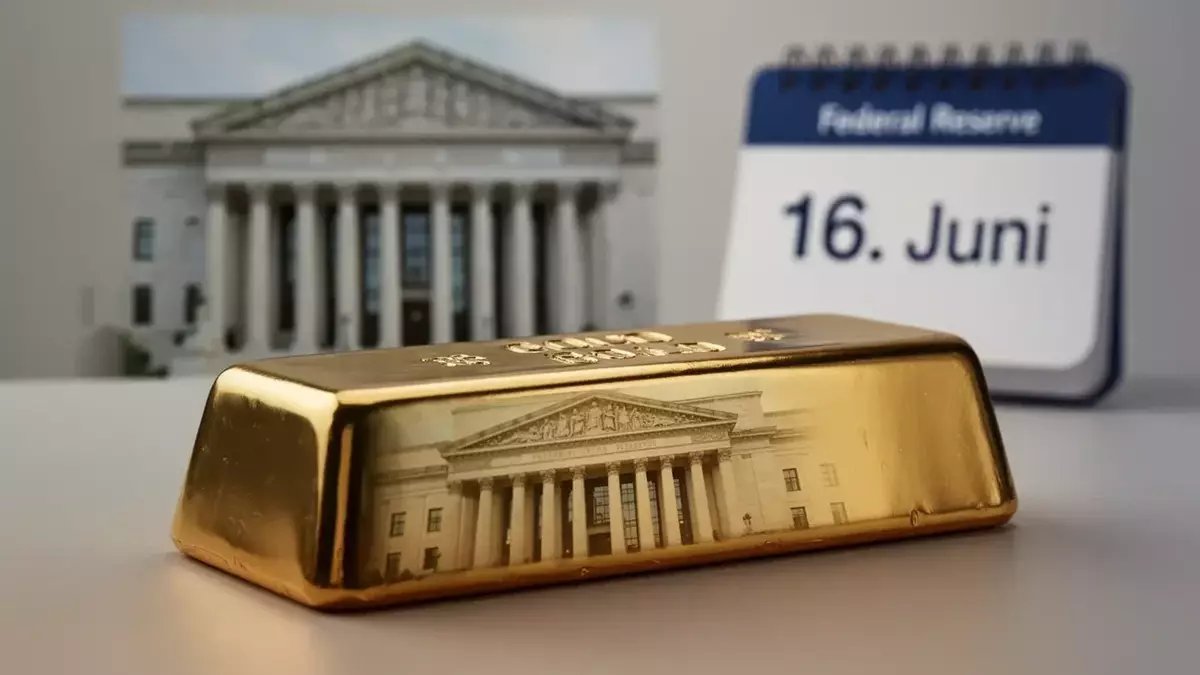
Gold's Fourth Straight Weekly Loss Masks Record Central Bank Hoarding and Physical Bottlenecks
27.06.2026 - 17:45:01 | boerse-global.de
Gold has logged its fourth consecutive weekly decline, sliding 1.66% to $4,103.70, as a hawkish Federal Reserve and a thaw in Middle East tensions drained speculative interest. Yet beneath the surface, the physical market is flashing a very different signal: central banks are buying at a record pace, deliverable futures contracts are piling up, and a new Ghanaian regulation threatens to tighten supply. The precious metal now sits more than 27% below its 52-week high of $5,626.80, but institutional demand is building a floor that analysts say could limit the downside.
The catalyst for the latest leg lower came from the Fed’s preferred inflation gauge. The PCE price index rose to 4.1% in May, with the core reading at 3.4% — both exactly as expected but offering no justification for monetary loosening. Fed Chair Kevin Warsh had already reset the tone by raising the central bank’s 2026 inflation forecast from 2.7% to 3.6%. Nine of the 18 FOMC members have signaled willingness to hike at least once in the second half of the year, and Minneapolis Fed President Neel Kashkari bluntly told markets that rate cuts in 2026 are off the table, with a further increase now on the radar. Futures markets now price in a 63% probability of a rate move in September. The dollar strengthened accordingly, pushing the yield on 10-year Treasuries to roughly 4.4%, raising the opportunity cost of holding a non-yielding asset.
Geopolitical forces that had propped up gold earlier in the year are also reversing. Reports of a framework agreement between the US and Iran, along with the scheduled June 19 signing to reopen the Strait of Hormuz, have slashed the risk premium embedded in bullion prices. Oil prices followed suit, and lower energy costs dampen inflation expectations, further reducing the metal’s appeal as a hedge. Speculative investors have been shedding positions, driving the spot price below $4,100.
Should investors sell immediately? Or is it worth buying Gold?
The paper market’s weakness, however, obscures a surge in physical demand. At the June expiry on the COMEX, requests for physical delivery reached 38,614 contracts—roughly 120 metric tons, the highest mark since February. Central banks are the primary force behind that trend. The People’s Bank of China has continued its buying spree, and according to a World Gold Council survey of 76 central banks, 89% expect global reserves to rise in the next year, with 45% planning to increase their own holdings—a record proportion. In the first five months of 2026, central banks have already purchased around 850 tonnes, led by BRICS nations seeking to diversify away from the dollar. Meanwhile, a new rule in Ghana, taking effect July 1, will require mining companies to sell one-third of their output to the state, potentially further squeezing free-market supply.
Technically, gold is oversold. The relative strength index sits at 37.3, a level that historically has preceded short-term bounces. Yet the 50-day moving average at $4,481 looms far overhead, and the formation of a death cross in June signals ongoing downward momentum. Should the price break sustainably below $4,000, multiple chart watchers see room for a correction to $3,600. For now, the structural bid from official institutions appears to be holding the line.
The next major test arrives on July 2 with the release of US nonfarm payrolls. A strong print would reinforce the hawks’ position and add fresh pressure to gold, potentially dragging it through the $4,000 threshold. A weaker number, by contrast, could spark a relief rally toward $4,150. Additional guidance is expected from Fed Chair Warsh and ECB President Christine Lagarde, both of whom are scheduled to speak in the coming days. With the Ghanaian supply rule also coming into effect, the divergence between paper pessimism and physical underpinning seems set to intensify.
Ad
Gold Stock: New Analysis - 27 June
Fresh Gold information released. What's the impact for investors? Our latest independent report examines recent figures and market trends.