Gold’s Three-Way Tug-of-War: Central Bank Buying, Inflation Relief, and Oil Shock Keep Prices Tethered Near $4,040
Published on 07/16/2026 at 08:24 | Redaktion boerse-global.de
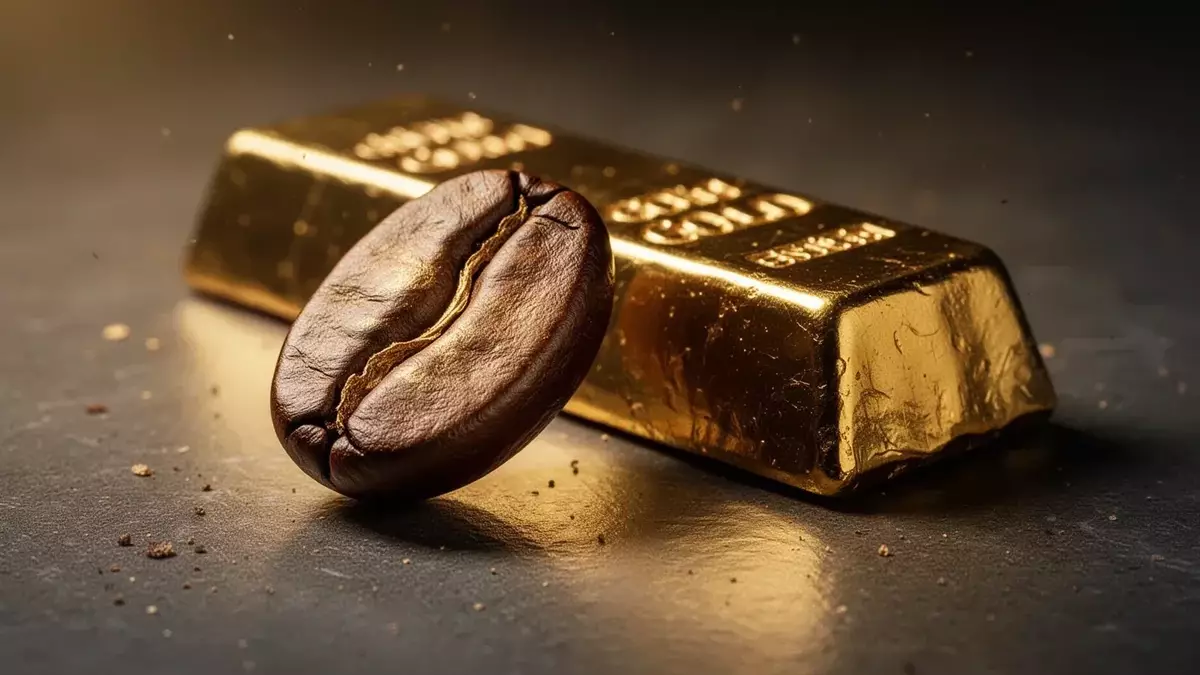
Gold is hovering around $4,040 per ounce, clinging to a level that markets view as both a psychological floor and a temporary ceiling. The metal slipped 0.46 percent on Wednesday to $4,040.60, extending a weekly decline of 1.15 percent and a monthly loss of 6.71 percent. From its late-January record of $5,626.80, the price has now fallen more than 28 percent.
The steady erosion masks a fierce battle playing out beneath the surface. Three powerful forces are pulling gold in different directions: an unrelenting wave of central bank buying, a brief reprieve from inflation data that raised hopes of a Fed pause, and a new oil shock from the Strait of Hormus that threatens to reignite the very inflation pressures gold was hoping to escape.
The People’s Bank of China continues to be the most aggressive state buyer, adding roughly 480,000 fine ounces to its reserves in June — the 20th consecutive monthly increase and the largest monthly haul since October 2023. Beijing’s strategy is explicit: reduce dollar dependence and diversify its war chest. Poland is also piling in. On the other side, Russia sold about 34 tonnes of gold in the first half of 2026, cutting nearly 2 percent of its reserves, partly to compensate for lower oil revenue tied to the Hormus disruptions.
The breadth of institutional demand is striking. A World Gold Council and YouGov survey of 74 central banks found that 45 percent intend to buy gold over the next twelve months — the highest reading since the survey began in 2018. Only one central bank signaled a reduction. Three-quarters of respondents expect the dollar’s share of global reserves to shrink further, with geopolitical uncertainty and diversification cited as the primary motives.
Should investors sell immediately? Or is it worth buying Gold?
That structural support, however, has done little to lift the spot price in recent weeks. Short-term traders see a market that is tired and directionless. The 14-day relative strength index stands at 40.2, below the neutral 50 level, while gold trades 6.7 percent under its 50-day moving average and 11 percent beneath the 200-day average. Annualized volatility over the past 30 days is 28 percent — enough to keep nerves frayed but insufficient to break the metal out of its tightening range.
Tuesday’s US consumer price index should have provided a catalyst. The June headline reading came in at 3.5 percent year-on-year, softer than expected, while core inflation cooled to 2.6 percent. Markets immediately reduced bets on further Federal Reserve rate increases, pushing the probability of a September pause higher. The dollar weakened and the yield on the 10-year Treasury fell to roughly 4.59 percent, giving non-yielding gold a brief lift to $4,089.
That rally evaporated almost as quickly as it appeared. The reason: oil prices surged past $80 a barrel as tensions in the Strait of Hormus escalated. Higher energy costs stoke fears that inflation will prove sticky, forcing the Fed to keep rates restrictive for longer. The very geopolitical tension that usually sends investors running to safe havens is now feeding the dollar and yield strength that cap gold’s advance.
Gold at a turning point? This analysis reveals what investors need to know now.
New Fed Chairman Kevin Warsh, making his first congressional appearances on July 14 and 15, reinforced the message. He stressed the central bank’s commitment to price stability and its independence, but the weak inflation data took immediate pressure off the September meeting. The net effect is that gold remains trapped between two opposing gravity wells: a strong fundamental floor built by central banks and a short-term lid reinforced by oil-driven rate expectations.
For now, the $4,000 level is the line in the sand. With the 52-week low just 3.6 percent below current prices, and the 200-day moving average still a distant memory, traders are watching which force ultimately wins. If institutional buying continues to absorb the selling pressure from rising real yields, gold could mount a slow recovery toward the 50-day average and, eventually, the record high. If oil keeps feeding dollar strength and rate anxiety, the current consolidation may become a full-blown retreat.
Ad
Gold Stock: New Analysis - 16 July
Fresh Gold information released. What's the impact for investors? Our latest independent report examines recent figures and market trends.
Disclaimer regarding our articles: No investment advice, no buy or sell recommendation. Information on prices, companies, and markets is provided without guarantee; changes are possible at any time. Stock market transactions can lead to substantial losses. Our articles are created and reviewed in whole or in part automatically with the support of AI.