Gold’s Uneasy Balance: Oil Spike Ignites Rate Hike Expectations, Caping Safe-Haven Gains
Published on 07/21/2026 at 03:41 | Redaktion boerse-global.de
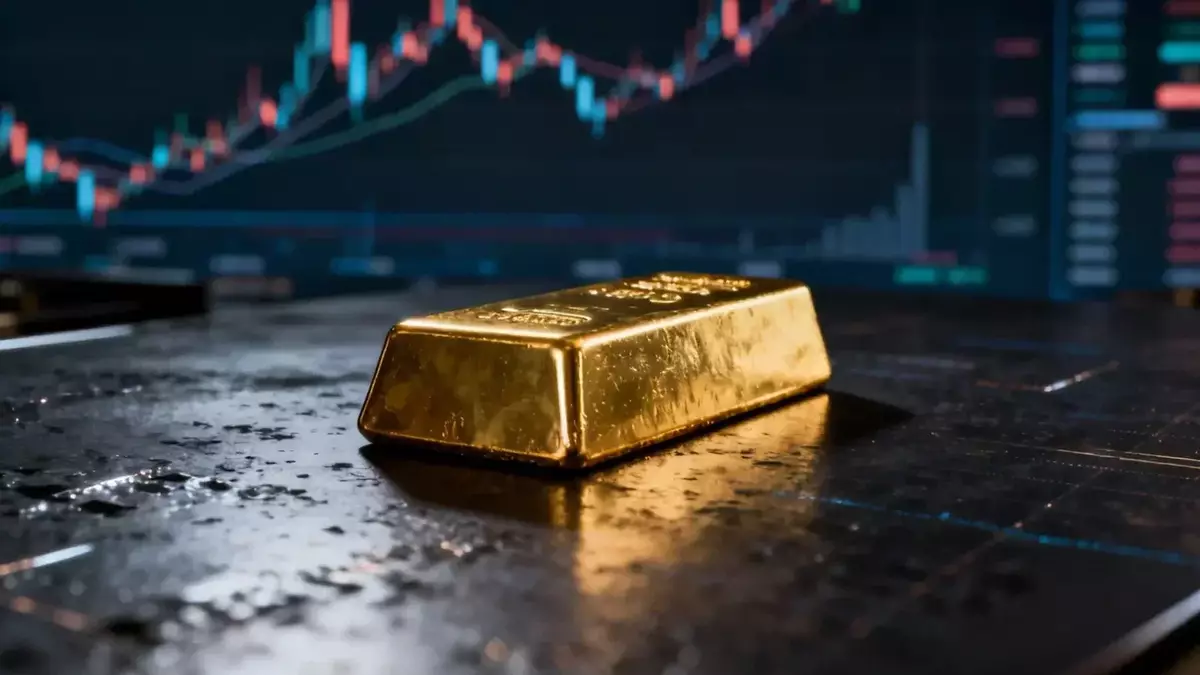
Gold is testing the $4,000 threshold for a fourth consecutive session, but the metal remains trapped in a narrow range as two opposing forces pull it in different directions. Escalating military conflict in the Middle East should normally fuel a flight to safety, yet a sharp rise in oil prices has instead stoked inflation fears, reinforcing bets that the Federal Reserve will keep interest rates higher for longer. The result is a stalemate that has left gold vulnerable to further downside.
The geopolitical picture darkened dramatically over the past 48 hours. US airstrikes against Iranian targets entered a ninth wave, prompting retaliatory strikes on Kuwaiti oil fields and a desalination plant, according to reports. Iran’s Revolutionary Guard confirmed explosions on two oil tankers in the Strait of Hormuz — a critical chokepoint for global crude shipments — while Houthi rebels threatened to blockade the Red Sea against Saudi Arabia. Brent crude surged above $90 a barrel in response. Diplomatic channels remain open: US Secretary of State Rubio signaled willingness to negotiate a binding agreement, and Iran’s foreign ministry acknowledged receiving mediator proposals while insisting on a robust defense posture.
Normally, such a toxic mix of conflict and energy disruption would divert capital into gold as a classic hedge. But this time the opposite dynamic is taking hold. Rising energy costs are feeding expectations that the Fed — soon to be headed by Kevin Warsh — will maintain its aggressive tightening posture. Markets now price an 82% probability of a rate hike by December, up from 73% previously. The yield on 10-year German Bunds climbed to 3.16%, its highest since late May, making non-yielding gold less attractive by comparison. In Germany, producer prices already rose 1.8% year-on-year in June, adding to the inflation narrative.
Should investors sell immediately? Or is it worth buying Gold?
The technical picture reinforces the bearish undertow. Gold closed Monday at $4,015.70, down 0.14% on the day, after earlier trading near $4,021. The metal has lost 4.61% on a month-to-date basis and 7.32% since the start of the year. From the all-time high of $5,626.80 set in late January, the decline now stands at 28.63%. The relative strength index sits at 40.2, suggesting no oversold bounce is imminent, while the price is 6.38% below its 50-day moving average of $4,289.56 — a clear sign of short-term downward momentum. The 52-week low of $3,901.30 is only 2.93% away, offering slim buffer.
Analysts flag a critical support level at $3,886. A breach below that could trigger a slide toward $3,500, according to chart watchers. Resistance is pegged between $4,030 and $4,100. OANDA’s Kelvin Wong describes the current tug-of-war between safe-haven demand and interest-rate pressure as the defining feature of the market.
Despite the near-term gloom, long-term sentiment remains cautiously optimistic. HSBC holds to a year-end price target of $4,750, even as consensus forecasts have edged lower. Jan Lechem of Royal Asset Management, speaking at a trading forum in Berlin, predicted a structurally rising gold price underpinned by persistent geopolitical instability, ongoing accommodative monetary policy, and sustained institutional buying. Central bank purchases continue to provide a floor under the market, he noted.
For now, the path of least resistance appears lower until the Fed signals a pause or the Middle East crisis escalates to a degree that overwhelms rate concerns. The coming weeks, with further Fed guidance and developments in the Strait of Hormuz, are likely to determine whether gold can defend the $4,000 mark or break decisively below it.
Ad
Gold Stock: New Analysis - 21 July
Fresh Gold information released. What's the impact for investors? Our latest independent report examines recent figures and market trends.
Disclaimer regarding our articles: No investment advice, no buy or sell recommendation. Information on prices, companies, and markets is provided without guarantee; changes are possible at any time. Stock market transactions can lead to substantial losses. Our articles are created and reviewed in whole or in part automatically with the support of AI.