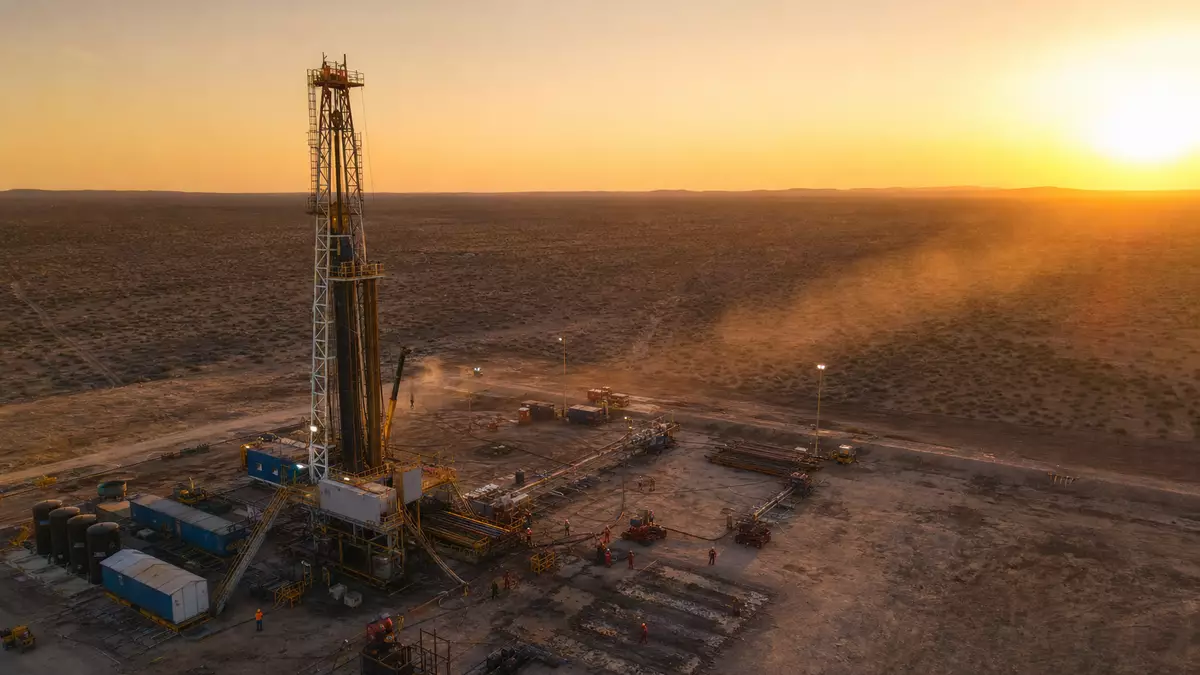
Halliburton stock rises after stronger Q2 2026 margins and North America growth
Published on 07/23/2026 at 11:15 | Editorial responsibility: Rafael Müller, Editor-in-Chief AD HOC NEWS
Halliburton Company (ISIN US4062161017) reported higher profitability in Q2 2026, with Halliburton stock reflecting improved margins and steady demand in key oilfield services markets as of 22 July 2026.
Q2 2026 revenue tops prior year
In its Q2 2026 results, Halliburton reported total revenue of $5.60 billion, compared with $5.30 billion in Q2 2025, marking an increase of about 5.7% year on year according to the companys investor materials.
This revenue performance was driven by ongoing activity in both North America and international markets, where drilling and completion operations continued at solid levels through the quarter.
Investors in Halliburton stock pay close attention to how revenue trends translate into cash generation, as higher activity can improve operating leverage but also requires disciplined capital spending.
Operating margin expands in Q2 2026
Halliburton reported an operating margin of 16.5% in Q2 2026, up from 15.0% in Q2 2025, reflecting a 1.5 percentage point improvement year on year based on the companys quarterly disclosures.
The margin increase was supported by pricing discipline, favorable service mix, and efficiency measures in the Completion and Production division as described in Halliburtons reporting.
For investors, this margin expansion matters because it helps support earnings growth even when revenue increases are moderate, and it can strengthen the companys ability to sustain dividends and share repurchases over time.
Halliburtons management highlighted that consistent margin improvement remains a key objective as the company navigates the current oil and gas spending cycle.
Further Halliburton stock and earnings detail
Investors who want to explore Halliburtons latest earnings reports, historical metrics, and regulatory filings can find more detailed information via the ISIN overview and the companys Investor Relations portal.
North America revenue up over 10 percent
Within Halliburtons geographic breakdown, Q2 2026 revenue in North America reached $2.60 billion, compared with $2.35 billion in Q2 2025, an increase of roughly 10.6% year on year according to management commentary and segment data.
This growth reflects continued activity in shale basins and offshore projects, where customers maintained spending on completions, stimulation services, and production enhancement solutions.
Halliburtons North America business remains critical for the companys overall performance, and double digit growth in this region can provide a buffer against potential volatility in other markets.
Halliburton stock often reacts to shifts in North American rig counts and completion activity, as these indicators feed into future revenue trends for the company.
International operations contribute stable growth
International revenue for Halliburton in Q2 2026 amounted to $3.00 billion, slightly higher than $2.95 billion in Q2 2025, indicating low single digit year on year growth based on the companys reported figures.
The company described steady demand across Middle East, Latin America, and Asia, with particular strength in long term contracts for drilling, well construction, and integrated services.
For investors, the international business provides diversification away from short cycle North American spending, which can help smooth earnings through different phases of the commodity cycle.
Halliburton has emphasized that long duration international projects support visibility on cash flows and help underpin its capital allocation framework.
Net income and EPS support capital returns
Halliburton reported net income of $750 million in Q2 2026, compared with $680 million in Q2 2025, an increase of around 10.3% according to its quarterly results.
Diluted earnings per share came in at $0.83 for Q2 2026, up from $0.74 in the prior year period, illustrating that margin improvements translated into higher per share earnings.
Halliburton indicated that these earnings support a balanced approach to shareholder returns, including maintaining its dividend and continuing share repurchases subject to market conditions and board approvals.
Investors in Halliburton stock often evaluate EPS trends relative to peers in the oilfield services sector to gauge the companys competitive position and earnings resilience.
Free cash flow supports balance sheet strength
In Q2 2026, Halliburton generated free cash flow of $650 million, compared with $600 million in Q2 2025, reflecting stronger cash conversion from operations and disciplined capital expenditure according to management.
Total capital expenditures were $350 million in Q2 2026, slightly above $330 million a year earlier, as the company invested in equipment upgrades and technology initiatives.
Halliburton reported that net debt stood at $7.20 billion as of 30 June 2026, down from $7.50 billion as of 30 June 2025, indicating gradual deleveraging from ongoing cash generation.
This combination of free cash flow and lower net debt can make Halliburton stock more attractive to investors who prioritize balance sheet health alongside growth.
Dividend and share repurchases remain part of strategy
Halliburton declared a quarterly dividend of $0.16 per share for Q2 2026, unchanged from $0.16 per share in Q2 2025, underscoring a stable distribution policy.
The cash dividend for Q2 2026 represents an annualized dividend of $0.64 per share if maintained, corresponding to a modest yield on recent share price levels that balances income with flexibility.
Halliburton also continued share repurchases during the period, buying back $200 million worth of shares in Q2 2026, compared with $150 million repurchased in Q2 2025.
By reducing shares outstanding over time while maintaining earnings growth, the company can support EPS expansion and potentially enhance long term returns for holders of Halliburton stock.
Guidance for full year 2026 underpins expectations
Alongside the Q2 2026 report, Halliburton reaffirmed its outlook for full year 2026 revenue in a range of $22.3 billion to $23.0 billion, pointing to mid single digit growth relative to 2025 disclosed by management.
The company guided for full year 2026 operating margin to be between 16% and 17%, implying sustained margin improvement compared with the 15.2% reported for full year 2025.
Halliburton expects capital expenditures for full year 2026 to be in the range of $1.4 billion to $1.6 billion, aligned with its strategic priorities in technology, digital solutions, and asset upgrades.
Investors assess these guidance ranges when forming expectations for earnings and free cash flow, and deviations from guidance in future quarters could influence the valuation of Halliburton stock.
Oilfield services cycle shapes demand outlook
Halliburtons performance in Q2 2026 is closely linked to the broader oilfield services cycle, where exploration and production companies adjust spending in response to commodity prices and long term energy strategies.
Higher utilization of rigs and completion crews across key regions, including US shale and Middle East offshore, supported stable demand for Halliburtons services during the quarter.
The companys portfolio spans drilling, evaluation, completion, and production services, allowing it to capture value across the life cycle of oil and gas wells.
As energy companies balance short term returns with decarbonization initiatives, Halliburton is investing in technologies that enhance efficiency, reduce emissions, and support lower cost production.
Comparison with peers in oilfield services
Investors often compare Halliburton with other large oilfield services providers when analyzing sector exposure and performance.
Relative to peers, Halliburtons Q2 2026 revenue growth and margin expansion demonstrate a solid competitive position in core markets.
Halliburton has historically been more leveraged to North American unconventional activity than some competitors, which can amplify swings in demand but also create upside when US shale spending rises.
Over time, the companys strategy to deepen its international presence and expand integrated services offerings aims to balance its geographic and product mix.
Technology and digital solutions focus
Halliburton continues to invest in technology and digital solutions that can improve well construction, reservoir understanding, and production optimization for its customers.
These initiatives include data driven platforms, advanced completion tools, and real time monitoring services that can reduce operating costs and enhance recovery.
By offering integrated solutions that combine hardware, software, and services, Halliburton seeks to differentiate its offerings and build long term customer relationships.
The company plans to allocate a meaningful portion of its capital expenditure budget in 2026 to these technology oriented projects, while maintaining discipline in overall spending.
Environmental and efficiency considerations
Halliburton has reported efforts to improve the environmental footprint of its operations, including reducing emissions from equipment and optimizing logistics.
For many energy companies, selecting service partners that can support emissions reduction and compliance with regulatory standards is increasingly important.
Halliburtons focus on efficiency and lower emissions solutions can help reinforce its position with customers that are under pressure to decarbonize their portfolios.
These factors, while not the sole driver of performance, contribute to the qualitative assessment that investors make when evaluating Halliburton stock alongside financial metrics.
Risk factors for Halliburton stock
Despite the positive Q2 2026 trends, Halliburton faces several risk factors that investors consider.
Commodity price volatility can influence customers capital spending plans and lead to changes in drilling and completion activity.
Regulatory shifts, geopolitical developments, and changes in environmental policies can also affect project approvals and timelines for oil and gas developments.
Halliburton addresses these risks by maintaining a diversified geographic footprint, offering a broad range of services, and managing its cost base, but uncertainty remains a defining feature of the sector.
Halliburton product and service portfolio
Halliburtons portfolio includes well construction, completion, and production services, along with related technologies such as drilling tools, cementing products, and stimulation equipment.
One representative line is its hydraulic fracturing and stimulation services, where Halliburton provides equipment, fluids, and expertise to enhance production from unconventional reservoirs.
Revenue from these services contributes meaningfully to the Completion and Production segment, which benefited from higher activity in North America during Q2 2026.
As customers seek efficiency and improved recovery, Halliburton aims to deliver solutions that reduce cost per barrel and extend the productive life of wells.
Halliburton stock level and market context
Halliburton stock traded at $35.40 on the New York Stock Exchange as of the close on 22 July 2026, placing it within a 52 week range that has seen lows near $28.00 and highs around $38.50 based on market data.
At this share price, Halliburtons market capitalization stands at approximately $31.0 billion as of 22 July 2026, reflecting investor expectations for continued cash generation and sector exposure.
Halliburton stock key data
- Company: Halliburton Company
- ISIN: US4062161017
- Ticker: NYSE: HAL
- Trading venue: New York Stock Exchange
- Price (as of 22 July 2026, 16:00 ET): 35.40 USD
- Market capitalization: 31.0 billion USD (as of 22 July 2026)
- Sector / Industry: Energy / Oilfield Services
- Index membership: S&P 500
- Next earnings date: 19 October 2026
Disclaimer regarding our articles: No investment advice, no buy or sell recommendation. Information on prices, companies, and markets is provided without guarantee; changes are possible at any time. Stock market transactions can lead to substantial losses. Our articles are created and reviewed in whole or in part automatically with the support of AI.