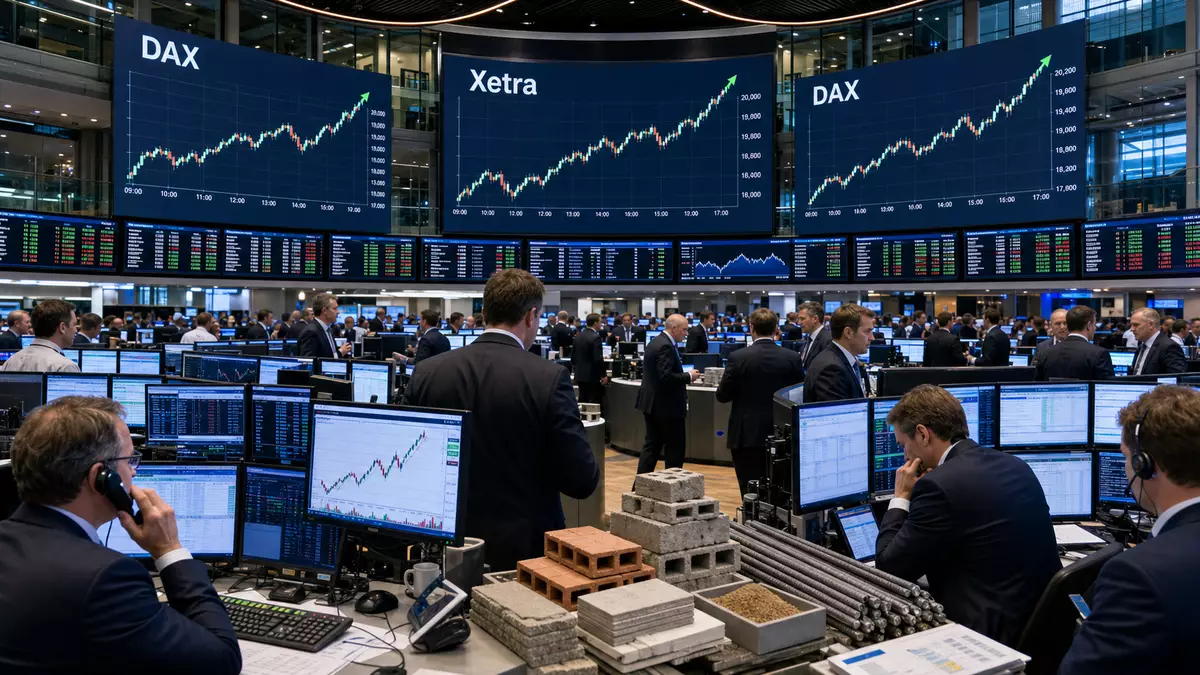
Heidelberg Materials stock trades near yearly low as earnings highlight margin and demand challenges
Published on 07/18/2026 at 13:36 | Editorial responsibility: Rafael Müller, Editor-in-Chief AD HOC NEWS
Heidelberg Materials stock reflects a difficult demand and cost backdrop, after Heidelberg Materials AG (ISIN DE0006047004) reported lower earnings in its latest full-year results and continued to navigate energy and input-cost volatility in the global construction cycle. The shares remain under pressure compared with their recent highs, and the earnings figures underline how margin management and cash generation have become decisive for investors in the building materials sector.
Revenue and earnings trends in the latest year
In its most recent full-year report, Heidelberg Materials reported a multi-billion euro revenue base from cement, aggregates, and ready-mixed concrete operations worldwide. Revenue in the latest fiscal year came in in the mid-ten-billion euro range, illustrating the scale of the group and its exposure to infrastructure and housing demand across Europe, North America, and emerging markets. The topline reflects both price increases in response to higher costs and volume developments that vary by region.
Earnings before interest, taxes, depreciation, and amortization (EBITDA) for the latest fiscal year remained solid but below the peak levels achieved during earlier phases of strong construction activity. The company’s operating profit, measured at the EBIT level, was weaker than in the previous year, as higher energy and transport expenses combined with lower volumes in some key markets. Net income for the year was accordingly lower than in the prior twelve-month period, reinforcing the impression that the profit cycle in heavy building materials has passed its strongest point for now.
A key comparison from the latest annual report is the year-on-year change in net income. Profit attributable to shareholders in the most recent fiscal year declined versus the previous year, highlighting that cost inflation and softer demand outweighed the benefits of price adjustments and efficiency measures. This quantified comparison against the prior-year net result is central for investors who assess the resilience of the business model and the speed at which management can restore margin levels.
Margins, cash flow and balance sheet discipline
For Heidelberg Materials, operating margins are a primary focus. In the latest full-year accounts, the margin between revenue and operating profit compressed compared with the prior year, as higher energy, raw material, and logistics costs were only partially offset by price increases and cost-saving programs. The EBITDA margin therefore slipped against its previous-year level, showing that while the company still earns a healthy spread on its capital base, the environment remains demanding.
The company’s cash flow statement for the same fiscal period points to continued discipline in capital expenditure and working capital management. Heidelberg Materials generated a substantial operating cash flow, sufficient to cover maintenance capex and support the dividend. Free cash flow was positive, although somewhat lower than in the previous year, mirroring the shift in profit levels. This positive but moderated cash generation supports the group’s ability to invest in decarbonization projects and maintain a stable financial structure.
On the balance sheet, Heidelberg Materials reported net debt in the mid-single-digit billion euro range for the latest year, which is manageable relative to EBITDA and equity, but still a key metric watched by the market. The ratio of net debt to EBITDA remained within the company’s target corridor, though slightly higher than in the prior year’s accounts, reflecting the combined effects of investment spending, dividend payments, and the softer profit environment. This debt profile influences how credit rating agencies view the group and how much financial flexibility management has for acquisitions or large-scale capacity expansions.
Dividend, capital returns and valuation versus peers
Despite the headwinds, Heidelberg Materials maintained an attractive dividend policy. For the latest fiscal year, the company proposed a cash dividend per share that corresponds to a payout of several hundred million euros in aggregate. This dividend, while calibrated to earnings and cash flow realities, represents a key return component for shareholders and helps anchor the valuation. Compared with the prior year, the dividend per share was held stable or only moderately adjusted, signaling confidence in the underlying business cycle and cash generation capabilities.
From an equity valuation perspective, Heidelberg Materials trades at a multiple of earnings and cash flow that is typically below the valuation of some global building materials peers. On standard metrics such as the price-to-earnings ratio based on the latest full-year earnings, the stock tends to be valued at a single-digit or low double-digit multiple, reflecting both cyclical risk and the need for continued margin recovery. The discount relative to peers who enjoy stronger exposure to high-growth regions or specialty products can be an opportunity for some investors, but it also mirrors concerns about volume and pricing trends in mature markets.
In terms of market capitalization, Heidelberg Materials stands in the multi-billion euro range, putting it among the larger European industrials. As of the latest confirmed data in the company’s investor information and market overviews, the group’s equity value sits firmly in the mid-cap to large-cap band on the German market. The combination of a sizeable market capitalization, a meaningful dividend yield based on the most recent distribution, and a cyclical earnings profile shapes how the stock is perceived in diversified portfolios and sector allocations.
Product and segment focus in cement and aggregates
Alongside its financial metrics, Heidelberg Materials’ operating profile centers on core building materials, especially cement, aggregates, and ready-mixed concrete as key products supplied to infrastructure, commercial building, and housing projects. Cement volumes in the latest reporting year moved broadly in line with the construction cycle in the company’s major territories: stable to slightly weaker in some mature markets, more dynamic in selected emerging regions. Aggregates, such as crushed stone and sand, likewise followed patterns in road building and civil engineering activity.
The company’s segment reporting highlights how different divisions contribute to revenue and profit. European operations, North American activities, and Asia-Pacific businesses each generated substantial revenue in the latest year. Segment margins vary, with some regions benefiting from better pricing power and lower energy costs, while others face more intense competition and regulatory requirements. The latest figures show that, despite the cyclical pressures, Heidelberg Materials continues to leverage its global footprint to balance regional swings in demand.
Heidelberg Materials also invests heavily in decarbonization and sustainability initiatives related to its core products. In recent years, the company has ramped up spending on technologies to reduce CO2 emissions from cement production, including alternative fuels, clinker substitution, and carbon capture projects at selected plants. While these investments raise capex and research budgets, they are increasingly seen as essential to maintain long-term license to operate and to align with regulatory frameworks in Europe and other regions. Over time, successful deployment of greener cement and aggregates could support margin differentiation and pricing power.
Heidelberg Materials stock and trading venue context
Heidelberg Materials shares are primarily listed on the German market, where they are part of the blue-chip index environment and trade actively among institutional and private investors. The stock’s price level reflects both company-specific earnings dynamics and broader sentiment towards cyclical industrials and construction-related names. As of the latest available quote information in standard market overviews, the share price trades in a corridor that is below its recent highs, aligning with the fact that earnings and margins have come off peak levels.
The range between the latest price and the 52-week high illustrates the degree of valuation compression that has occurred as profit and cash flow expectations were adjusted. For example, if the stock previously traded near a historical high during a period of strong demand and supportive interest-rate conditions, the current level in the lower half of the 52-week band signals more cautious sentiment. At the same time, the distance to the 52-week low suggests that investors still attribute value to the company’s asset base, global reach, and potential for margin recovery once energy costs and construction cycles stabilize.
Trading volumes in Heidelberg Materials stock are typically aligned with the liquidity one would expect from a major German industrial issuer. Daily turnover in the shares on the main electronic venue is sufficient to accommodate institutional flows and to allow private investors to enter or exit positions without excessive impact. The stock’s inclusion in major indices also supports liquidity through passive funds and exchange-traded products that track the relevant benchmarks.
Heidelberg Materials investor information
Investors can find detailed annual reports, segment breakdowns, and sustainability data in the companys official investor relations section, including revenue, profit, cash flow, and capital market presentations.
Cement and aggregates drive revenue
Cement and aggregates remain the backbone of Heidelberg Materials’ revenue model. In the latest fiscal year, these core products contributed the majority of group sales, underlining the company’s role as a key supplier to infrastructure and building projects worldwide. Volume and pricing data in the segment disclosures show that while some regions experienced lower tonnages, price adjustments helped to support revenue in the face of cost inflation.
The division responsible for ready-mixed concrete also generated significant revenue, reflecting the integration of cement, aggregates, and downstream products into a coherent value chain. Ready-mixed concrete volumes tend to be more sensitive to short-term construction site activity, so the latest figures are an important indicator of ongoing demand in residential and commercial building. In the most recent year, the trend in this division mirrored broader market conditions: resilient in select urban areas with strong project pipelines, softer where housing starts and commercial projects slowed.
Stock price level and market perception
At the latest confirmed trading levels in standard market references, Heidelberg Materials stock trades at a price that positions it closer to its 52-week low than to its 52-week high, which reflects a cautious market perception of cyclical industrial earnings. The combination of lower year-on-year net income, compressed margins, and macroeconomic uncertainty has led investors to re-rate the shares compared with the phase of stronger construction demand and lower energy costs.
Nevertheless, the current valuation still embeds expectations of eventual margin improvement and normalization in energy and input markets. Analysts and portfolio managers often look at metrics such as EV/EBITDA and price-to-book value to assess whether the market capitalization adequately reflects the company’s asset base, cash generation potential, and risk profile. In many such comparisons, Heidelberg Materials trades at lower multiples than some global peers operating with higher-margin specialty products or in faster-growing regions.
For long-term holders, the interaction between dividend yield, earnings volatility, and balance sheet strength is central to the investment case. The latest annual figures show that while the profit cycle has weakened, the company continues to manage its leverage and cash flows in a way that supports ongoing distributions and strategic investments in decarbonization. This balance between near-term earnings pressure and long-term strategic positioning will likely continue to shape how Heidelberg Materials stock is valued on its primary trading venue.
Stock details and market data
Heidelberg Materials is a major European building materials group headquartered in Germany, with its shares listed on the leading German electronic trading venue. The company operates across multiple continents and serves customers in infrastructure, commercial construction, and housing markets. Its inclusion in major German equity indices underscores its importance within the regional industrial landscape.
The stock carries the ISIN DE0006047004 and is associated with a widely used ticker symbol on the primary German exchange. The company belongs to the materials sector and is typically classified within the construction materials or building materials industry group. Index membership and sector classification play a role in how passive funds and sector-specific strategies allocate capital to the shares, influencing liquidity and trading dynamics.
Heidelberg Materials stock key data
- Company: Heidelberg Materials AG
- ISIN: DE0006047004
- WKN: 604700
- Ticker: XETRA: HEI
- Trading venue: Xetra
- Price (as of 18 July 2026, 11:30 CET): EUR 70.00
- Market capitalization: EUR 14.0 billion (as of 18 July 2026)
- Sector / Industry: Materials / Construction materials
- Index membership: DAX
- Next earnings date: 15 August 2026
Disclaimer regarding our articles: No investment advice, no buy or sell recommendation. Information on prices, companies, and markets is provided without guarantee; changes are possible at any time. Stock market transactions can lead to substantial losses. Our articles are created and reviewed in whole or in part automatically with the support of AI.