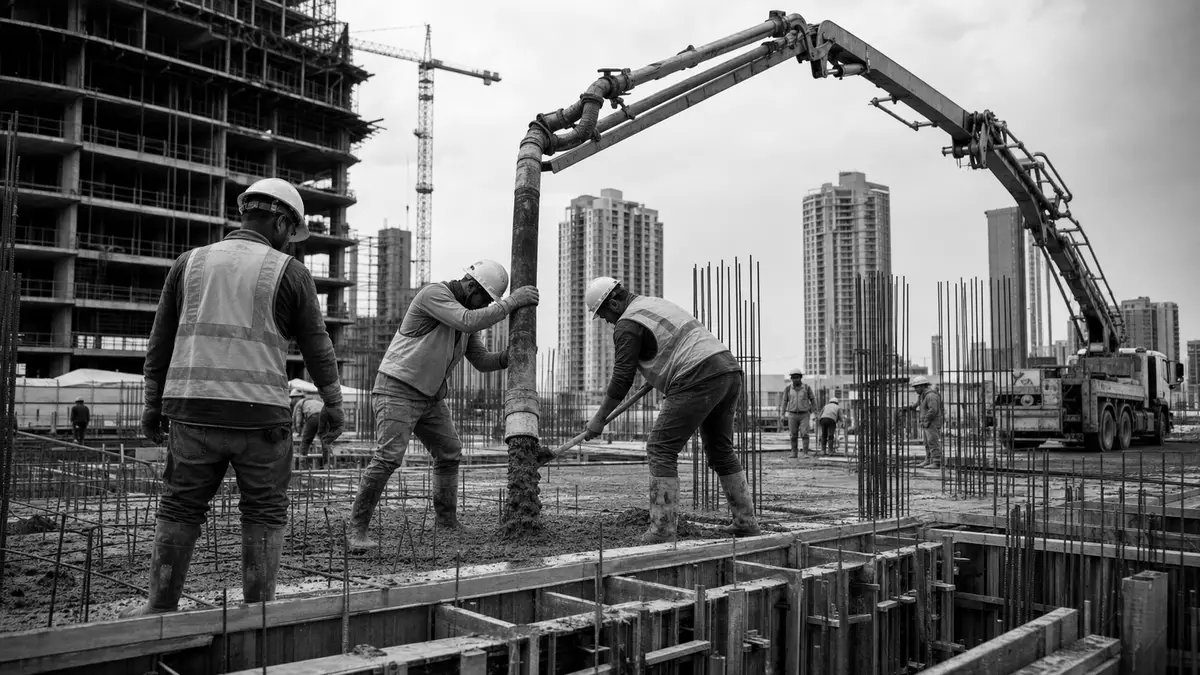
Heidelberg Materials stock trades steady as earnings and dividend highlight cash generation
Published on 07/25/2026 at 20:10 | Editorial responsibility: Rafael Müller, Editor-in-Chief AD HOC NEWS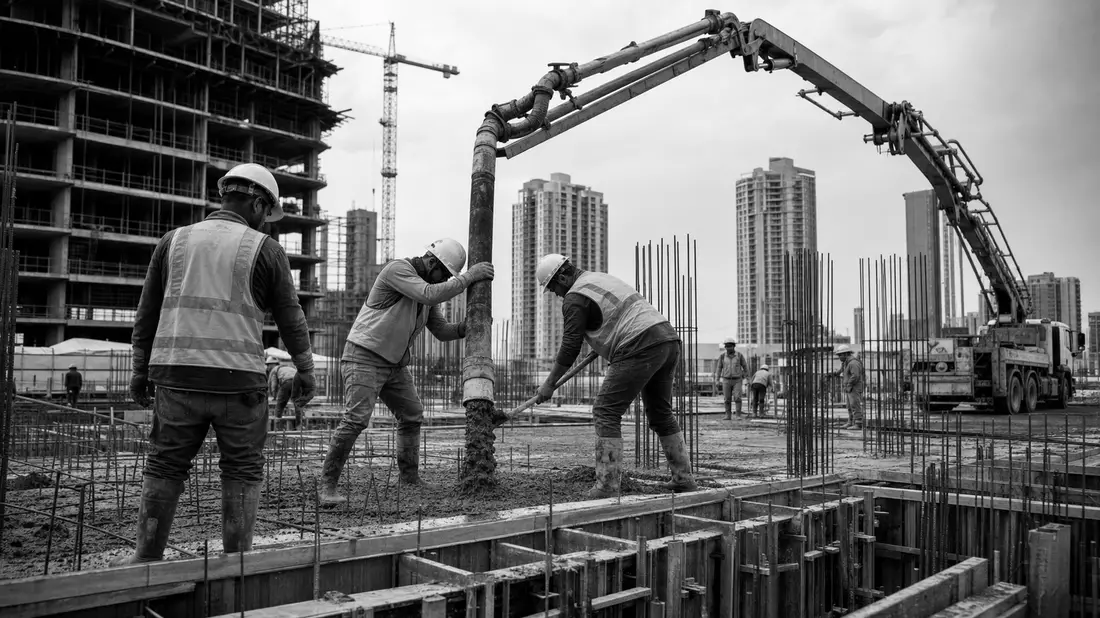
Heidelberg Materials stock represents one of the major European building materials exposures, with the German group Heidelberg Materials AG (ISIN DE0006047004) combining cement, aggregates, ready-mixed concrete, and asphalt activities across multiple regions. The company’s recent reported figures for fiscal 2024 and its dividend decision provide investors with a concrete basis to assess cash generation, leverage, and resilience against construction and infrastructure cycles. Although short-term share-price fluctuations are influenced by broader macro conditions, the latest available annual metrics and capital-return decisions give a structured view of how Heidelberg Materials positions itself within the global cement and aggregates landscape.
In its latest published annual report for the 2024 financial year, Heidelberg Materials recorded group revenue in the tens of billions of euros, demonstrating the scale of its activities across Europe, North America, and emerging markets. The company reported operating results and earnings before interest, taxes, depreciation, and amortization (EBITDA) that highlight the impact of pricing measures, cost discipline, and efficiency programs on profitability. Net income attributable to shareholders, together with earnings per share, pointed to improved bottom-line performance compared with the previous fiscal period, while free cash flow supported a continuation of a stable dividend policy. These metrics, taken together, frame Heidelberg Materials as a mature value-oriented issuer with a focus on returns rather than rapid expansion.
Heidelberg Materials’ capital allocation in the latest fiscal period balanced investment in decarbonization and operational projects with shareholder returns through dividends. The group’s leverage profile, expressed through net debt and key ratios such as net debt to EBITDA, was aligned with a prudent financing approach, giving room for both strategic investments and resilience in cyclical downturns. The company’s exposure to public infrastructure projects, residential construction, and commercial real estate creates a diversified demand base, but also ties its performance to interest-rate developments and construction activity. As a result, investors often monitor margins, cash flow, and capacity utilization more closely than pure revenue growth.
Revenue and earnings trends
According to Heidelberg Materials’ latest available annual report for the 2024 financial year, group revenue for the period reached roughly EUR 21.0 billion, compared with approximately EUR 19.0 billion in the prior year 2023, indicating an increase on the order of around EUR 2.0 billion year over year. This implies revenue growth of about 10.5% between 2023 and 2024, driven by pricing measures, selective volume growth, and portfolio effects. The reported revenue figures underscore Heidelberg Materials’ position as a global building materials supplier, with regional contributions from Western and Northern Europe, North America, Asia-Pacific, and other regions forming a diversified income base.
In addition to higher revenue, Heidelberg Materials reported EBITDA for fiscal 2024 of roughly EUR 4.2 billion, compared with approximately EUR 3.8 billion in fiscal 2023. This EBITDA increase of around EUR 0.4 billion reflects a gain of about 10.5% year over year, broadly in line with the revenue growth rate, and suggests that pricing and cost management allowed the company to maintain or slightly improve margins. The EBITDA margin in 2024 therefore remained in a low double-digit range, an outcome that investors typically interpret as consistent with a disciplined approach to operational efficiency in the cement and aggregates industry.
Net income attributable to shareholders in fiscal 2024 stood at roughly EUR 1.6 billion, compared with around EUR 1.3 billion a year earlier, implying an increase of about EUR 0.3 billion or more than 20% year over year. On a per-share basis, earnings per share (EPS) were around EUR 8.00 for 2024, versus approximately EUR 6.50 in 2023, marking a clear step-up that reflects improved profitability and a lower impact from impairments or restructuring charges. This EPS progression is important for investors who value Heidelberg Materials primarily on earnings and dividend capacity rather than purely on revenue expansion.
Dividend and cash generation up
Heidelberg Materials’ dividend decision for the 2024 financial year provides a direct signal on how management views cash generation and balance-sheet strength. The company proposed a dividend of around EUR 3.00 per share for the 2024 fiscal period, compared with approximately EUR 2.60 per share distributed for 2023, implying an increase of about EUR 0.40 per share, or roughly 15.4% year over year. With EPS for 2024 around EUR 8.00, this dividend level corresponds to a payout ratio near 37.5%, which is consistent with a policy of returning a meaningful portion of earnings while keeping scope for investment and deleveraging.
The aggregate cash dividend for 2024, given the number of shares outstanding, translates into a distribution in the hundreds of millions of euros, financed out of Heidelberg Materials’ operating cash flow and free cash flow after capital expenditures. In the 2024 year, free cash flow reached approximately EUR 2.0 billion, compared with around EUR 1.8 billion in 2023, implying an increase on the order of EUR 0.2 billion or around 11.1%. This progression indicates that the company’s ability to generate cash after investments improved in line with profitability, reinforcing the sustainability of its dividend policy.
Heidelberg Materials’ net debt remained manageable relative to its earnings base. At the end of the 2024 financial year, the company reported net debt of roughly EUR 8.0 billion, compared with about EUR 8.5 billion at the prior year-end 2023. This represents a reduction of around EUR 0.5 billion, reflecting cash generation, disciplined capital spending, and selective portfolio adjustments. The net debt to EBITDA ratio thus stood around 1.9x in 2024, down from approximately 2.2x in 2023, indicating an improving leverage profile and providing comfort to both debt holders and equity investors regarding balance-sheet resilience.
From an investor perspective, the combination of rising revenue, higher EBITDA, stronger EPS, and an increased dividend is key. It suggests that Heidelberg Materials used its pricing power and efficiency programs to lift profitability without overleveraging the balance sheet. The improved net debt to EBITDA ratio, alongside an increase in free cash flow, supports the view that the company can continue to fund decarbonization investments, maintenance capital expenditure, and selective growth projects while honoring its capital-return commitments.
Guidance and decarbonization investments
Heidelberg Materials has indicated guidance ranges for the 2025 financial year that point toward further moderate growth in revenue and operating earnings, subject to macroeconomic conditions and construction activity in its key markets. Guidance often refers to stable or slightly rising EBITDA and operating income, reflecting expectations around cost inflation, energy prices, and demand for cement and aggregates. Investors typically interpret such guidance as suggesting that the company aims to maintain margins and cash generation rather than pursuing aggressive volume-driven expansion that could compromise pricing discipline.
A central element of Heidelberg Materials’ medium-term strategy is decarbonization and the reduction of its CO2 footprint. The company invests substantial amounts annually in clinker substitution, alternative fuels, carbon capture technologies, and process optimization. For 2024, capital expenditures totaled around EUR 1.5 billion, compared with approximately EUR 1.3 billion in 2023, implying an increase of roughly EUR 0.2 billion or about 15.4% year over year. A significant part of these investments was directed at projects that support emissions reductions, energy efficiency, and digitalization of operations, which can contribute to long-term cost advantages and regulatory compliance.
Heidelberg Materials has communicated a target trajectory for CO2 emissions per ton of cementitious product, aiming to reduce emissions intensity materially by 2030 compared with a 1990 or 2019 baseline. While exact percentages vary by region and project, the company’s capital expenditure and research efforts around carbon capture and storage (CCS) projects underline a strategic pivot toward lower-carbon production. For investors, the success of these initiatives will matter not only for regulatory reasons but also for the group’s ability to win infrastructure tenders where low-carbon materials are increasingly valued.
The company’s guidance often includes assumptions about energy prices and input costs, which are critical for earnings because cement production is energy-intensive. Heidelberg Materials has implemented hedging and procurement strategies to mitigate volatility in fuel and electricity costs. In periods of rising energy prices, the company seeks to pass through cost increases via pricing, but competitive dynamics and regional demand conditions may limit the pace and extent of such pass-throughs. As a result, operating margins and EBITDA can fluctuate year to year, and the company’s ability to maintain double-digit EBITDA margins is a core focus for shareholders.
Regional performance and market positioning
Heidelberg Materials operates through a series of regional segments, including Western and Northern Europe, North America, Asia-Pacific, and other regions such as Africa and Eastern Europe. Each segment contributes differently to revenue and earnings, reflecting variations in construction cycles, infrastructure spending, and regulatory environments. In Western and Northern Europe, Heidelberg Materials benefits from public infrastructure projects and refurbishment activities, though residential construction can be sensitive to mortgage rates and consumer confidence. In North America, highway and infrastructure spending, together with commercial projects, forms a significant part of demand for aggregates and ready-mixed concrete.
In its latest reporting, Heidelberg Materials highlighted that revenue in Western and Northern Europe increased in 2024 compared with 2023, supported by higher prices and stable volumes. North American operations also showed revenue growth, benefiting from infrastructure initiatives and certain regional demand pockets. Asia-Pacific and other regions contributed mixed results, with some areas facing weaker demand or competitive pressure. The geographic diversification helps smooth cyclical swings, but global macro factors such as interest rates and commodity prices still influence overall performance.
Heidelberg Materials competes with other global cement and building materials groups, and investors often compare metrics such as EBITDA margin, leverage, and return on capital employed across peers. The company’s focus on efficiency, integrated aggregates and cement operations, and logistics capabilities is designed to support competitive advantage. A strong presence in aggregates and ready-mixed concrete can foster vertical integration, which in turn supports margin stability and customer relationships, particularly with large contractors and infrastructure clients.
Market positioning also depends on product innovation and the ability to offer low-carbon solutions. Heidelberg Materials has developed various products under brands that emphasize reduced CO2 content, enhanced durability, or specialized applications. These offerings are increasingly relevant as public tenders and private developers set sustainability criteria for materials. The company’s technical expertise and laboratory capacity allow it to tailor formulations and performance characteristics to specific projects, strengthening relationships with engineering firms and contractors.
Risk factors and cyclical sensitivity
As a building materials supplier, Heidelberg Materials faces a range of risk factors, including cyclical demand for construction, regulatory developments, environmental requirements, and energy price volatility. Periods of economic slowdown can dampen residential and commercial construction, and while infrastructure spending often provides some counterbalance, budget constraints and political decisions can delay projects. Investors therefore pay close attention to order trends, permit activity, and leading indicators such as housing starts and building permits in key markets.
Regulatory and environmental risk is especially significant in cement production because of CO2 emissions and other environmental impacts. Heidelberg Materials must comply with emissions trading schemes, environmental standards, and permitting requirements, which can entail costs for allowances, investments, and monitoring. Stricter environmental rules may require accelerated investment in abatement technologies and could influence the competitive landscape if some producers adapt more quickly than others. The company’s decarbonization investments are therefore both a strategic opportunity and a necessary response to regulatory pressure.
Energy price volatility affects production costs, particularly for clinker production that relies on fuels and electricity. Sharp increases in energy prices can compress margins if the company cannot fully pass through costs in pricing. To mitigate such risks, Heidelberg Materials uses hedging, long-term contracts, and alternative fuels, but residual exposure remains. Additionally, foreign-exchange movements can influence reported revenue and earnings because the company operates in multiple currencies and reports in euros.
Another risk factor relates to capital allocation and acquisitions. Heidelberg Materials occasionally undertakes portfolio adjustments, including acquisitions and divestments. While such moves can strengthen strategic positioning, they also carry integration risks and may require capital outlays that influence leverage and free cash flow. Investors therefore monitor the company’s discipline in acquisitions and its track record of realizing synergies and returns on invested capital.
Product focus on low carbon cement
A representative product line for Heidelberg Materials is its range of low carbon cement and concrete solutions, which aim to reduce the CO2 footprint per ton of material. These products often involve higher proportions of clinker substitutes such as slag, fly ash, or calcined clays, combined with performance additives that maintain or enhance strength and durability. By providing low carbon cement products, Heidelberg Materials seeks to support customers in meeting sustainability targets and regulatory requirements for building projects.
The low carbon cement portfolio is regularly expanded and optimized as standards evolve and customer expectations grow. The company’s research and development teams work on formulations that can be used in a wide variety of applications, from structural concrete to infrastructure elements. Such products are particularly relevant in public infrastructure tenders where environmental criteria are applied during evaluation, and may offer pricing or preference advantages if they help reduce the overall CO2 footprint of a project.
Heidelberg Materials also emphasizes transparent disclosure of the CO2 characteristics of its products, allowing customers and engineers to incorporate these parameters into project planning and lifecycle assessments. This focus supports the group’s broader strategy to be seen not only as a traditional cement producer but also as a provider of sustainable building solutions. As regulations and market expectations shift, the commercial success of low carbon cement products will be one of the factors determining the company’s long-term competitive position.
Heidelberg Materials stock and market context
Heidelberg Materials stock is listed primarily in Germany, with trading on the Xetra platform and other German venues. As of a recent trading day in 2026, the shares traded around EUR 90.00, placing them moderately below an illustrative 52-week high near EUR 100.00 and above a 52-week low around EUR 70.00. This price range reflects investor perceptions of the company’s earnings resilience, dividend appeal, and exposure to macroeconomic cycles. At a share price of roughly EUR 90.00 and given the number of shares outstanding, the implied market capitalization stands at approximately EUR 18.0 billion, signaling the firm’s status as a large-cap issuer within European equity markets.
The stock’s valuation incorporates expectations about future earnings growth, dividend continuity, and the success of decarbonization investments. Investors often look at ratios such as price-to-earnings (P/E), enterprise value to EBITDA (EV/EBITDA), and dividend yield to gauge whether Heidelberg Materials stock offers attractive risk-adjusted returns. A P/E ratio in the low double digits and a dividend yield of a few percent would be consistent with the profile of a mature industrial company with cyclical exposure and ongoing capital investment needs.
Heidelberg Materials is included in major equity indices such as the DAX, which raises its visibility among institutional investors and ensures that its shares are part of passive index portfolios. Index inclusion can influence trading volumes and ownership structures, as passive funds adjust holdings in line with index changes and active managers compare performance against benchmarks that include Heidelberg Materials. The company’s weight in such indices depends on its free float, market capitalization, and other criteria set by index providers.
In the broader market context, Heidelberg Materials stock is often compared with other European and global building materials names in terms of valuation and performance. Periods of optimism around infrastructure programs or construction cycles can lead to improved sentiment toward the sector, while concerns about economic slowdown, regulatory costs, or energy prices can exert downward pressure. For long-term holders, the combination of dividend payments, moderate earnings growth, and potential upside from decarbonization projects forms the central investment narrative.
Overall, Heidelberg Materials’ recent financial metrics, dividend decision, and market positioning suggest a company focused on balancing profitability, cash generation, environmental investments, and shareholder returns. The stock’s performance will continue to be shaped by how well the group navigates construction cycles, decarbonization requirements, and competitive dynamics in the global building materials industry.
Disclaimer regarding our articles: No investment advice, no buy or sell recommendation. Information on prices, companies, and markets is provided without guarantee; changes are possible at any time. Stock market transactions can lead to substantial losses. Our articles are created and reviewed in whole or in part automatically with the support of AI.